








An analysis of the mental and interpersonal factors that support infidelity, its implications that go beyond the relationship, and what clinical studies recognise as the basis for avoidance and repair.
Imagine a couple who, on most observable measures, seem to have built a firm together with mutual responsibilities, sincere affection, as well as a lifetime of lived past. But one of them has gradually started to feel invisible in that relationship. Small efforts to interact go unnoticed; the feeling of being truly known by another person slowly dissolves.
At some point, talking with a colleague who pays attention attentively and asks genuine concerns turns into the only place where a sense of being heard is available. What starts as relief slowly and without conscious intent turns into something no one expected. This course, in which long-term emotional separation within a fundamental relationship leads to and allows for a relational violation beyond it, constitutes one of the most consistently recognised trends in empirical research upon cheating (Gottman & Silver, 2012; Rokach & Chan, 2023).
It needs to be made clear from the start that this structure is not a comprehensive or universal narrative. The research documents a range of causal pathways toward infidelity, including opportunism, poor impulse regulation, entitlement, and personality factors, and no single psychological explanation encompasses all of them (Warach et al., 2024). This article focuses specifically on the emotional and relational conditions that research has linked to infidelity in a meaningful proportion of cases. It then examines the consequences that extend outward beyond the couple, including the documented impact on children, before addressing what clinical evidence identifies as the conditions for prevention and, where both partners choose to pursue it, repair.
Read More: Emotional Resettling in Close Relationships: A Psychological Lens
The Relational Conditions That Precede Infidelity
Affairs rarely begin where they appear to begin. The visible event typically has a long and often unnoticed history within the primary relationship. Gottman and Silver explain this historical process by describing a cascade toward separation, a process in which small complaints turn into chronic criticism, conflict remains pending, and partners become increasingly distant from the emotional touch that initially created the relationship (Gottman & Silver, 2012).
This process takes a while enough that each partner generally identifies the moment when the connection grew effectively separate, while by the moment either side understands the separation between them, it has continued growing for a while.
Experimental study on the precursors of defiance consistently finds missing emotional requirements, erosion of interpersonal quality, and reduced relationship satisfaction as a few of the more reliably recorded that lead situations (Rokach & Chan, 2023; Warach et al., 2024). Someone whose needs are repeatedly met with rejection, deflection, or tiredness may eventually stop trying to communicate them. The silence that develops in the aftermath of this withdrawal is not neutral. It creates a state of chronic unmet need in which vulnerability to external connection grows, often without conscious awareness.
Read More: The link between Personality Traits and Relationship Satisfaction
When Emotional Boundaries Begin to Shift
Gottman’s research identifies one mechanism within this process that carries particular clinical significance: when a partner begins confiding the substance of their inner life, their doubts, disappointments, and private preoccupations to someone outside the relationship rather than to their partner, a critical boundary in the architecture of the primary bond has already been crossed (Gottman & Silver, 2012). The act of physical transgression, where it occurs, frequently arrives considerably later than this earlier and less visible breach. Understanding infidelity accurately, therefore, requires attending to what preceded the visible event, not only to the event itself.
Loneliness Within an Intact Relationship
There is a type of social loneliness that is given little clinical care since it carries no apparent marker: the sense of feeling persistently unseen or emotionally unattainable within a connection that persists to function socially as well as family-wide. The U.S. Surgeon General describes solitude as the “distressing feeling that occurs when one perceives gaps between their desired and actual levels of social connection” (U.S. Surgeon General, 2023). This description applies within connections as precisely as it applies to social exclusion as a whole, and its physical effects are well-known, independent of the relationship setting in which it arises.
A 2024 review in World Psychiatry found that poor social and emotional connectedness was a major predictor of poor health results, including a 29 per cent increased risk for cardiac artery heart condition and 32 per cent increased risk for strokes (Holt-Lunstad, 2024). Similar data from the CDC linked loneliness to higher rates of depressive disorders in adults (Bruss et al., 2024). The self does not differentiate between relational neglect through family life, along with deprivation in the absence of close relationships. Physiological responses to stress are similar in both.
In a deep connection, this manifests as recurring unanswered concerns regarding whether the other person still knows oneself, whether real communication is a possibility, and whether separation is fixed. When those concerns remain unanswered long enough, some people start to move toward connection elsewhere, often without the sense of deliberate intention. The consequence of relationship-based isolation is not inevitable, and it might be misleading to suggest that it is. The study suggests that long-term emotional isolation can increase vulnerability to infidelity (Rokach & Chan, 2023).
The Cumulative Weight of Sustained Responsibility
Infidelity does not occur exclusively in relationships where affection has diminished or where evident dysfunction is present. It also occurs in relationships where both partners are, by all available evidence, genuinely committed to managing careers, raising children, sustaining households, and attempting to preserve emotional connection across the accumulated demands of adult life.
The depletion of personal resources that accompanies sustained responsibility over time, which clinicians sometimes refer to as relational exhaustion, progressively reduces the bandwidth available for authentic engagement with a partner, even when the desire for that engagement remains present (Rokach & Chan, 2023).
In the context of physical distance, whether from occupational demands, long-distance arrangements, or extended caregiving responsibilities, the vulnerability associated with unmet relational needs is amplified. Extended periods without the ordinary forms of physical and emotional proximity that sustain a bond create conditions in which connection is sought through whatever channels are accessible.
The relational need does not abate because the structural conditions for meeting it within the primary relationship have become constrained; it persists and, for some individuals under these conditions, finds expression through alternative channels when no other means of addressing it have been developed (Gottman & Silver, 2012; Rokach & Chan, 2023).
The Coexistence of Love and Betrayal
Among the characteristics of cheating that make it most difficult for someone who was betrayed to assimilate, and often for those who transgressed, to accept is that it can happen within a connection in which honest bonding continues to exist. There are clinical narratives and research articles that describe examples in which the person who has suffered an affair expresses ongoing, true love for their main partner during and after the affair (Perel, 2017). The deepest connections and their gravest transgression are not reducible to a simple cognitive reason, and efforts to compress them into one usually lead to more deception than clarity. Research does not support any single causal explanation for this behaviour (Warach et al., 2024).
In therapeutic contexts, this apparent contradiction is engaged directly rather than set aside. Gordon and colleagues describe couples therapy following infidelity as a process in which both partners are guided to examine the relational environment, including communication failures, accumulated unmet needs, and the gradual erosion of emotional availability that may have contributed to the conditions in which the affair became possible (Gordon et al., 2023). This examination does not redistribute moral responsibility for the transgressive choice. The individual who made that choice carries full responsibility for it. The examination provides a context necessary for genuine repair. Without it, the event is addressed while its underlying conditions remain unchanged.
Read More: The Psychological Impact of Betrayal Trauma on Trust and Attachment in Adult Relationships
The Many Pathways to Infidelity
Just as crucial is to understand that a large number of affairs are not mainly accounted for by emotional suffering, relational deprivation, or communication problems. Multiple routes for such actions have been identified within studies, such as impulsivity, impulsiveness, privilege, and stable personality traits associated with seeking out risks or low conscious behaviour (Warach et al., 2024). Both accounts have scientific backing. A credible review of the topic must allow for each, and not conflate them.
Connection Insecurity and Relationship Self-Sabotage
Attachment theories help explain an independent psychological pathway to infidelity. Within a systematic examination and meta-analysis conducted by Heliyon, insecure attachment, including avoiding attachment patterns, was found to be a significant and reliable risk factor in several studies on correlations of insecurity. (Ghiasi et al., 2024). Individuals whose early interpersonal contexts taught them that closeness is inaccurate or dangerous may find that, as a core connection deepens to the degree of genuine weakness, a factor in them turns toward conflict instead of away from deeper involvement.
The clinical account of this process is counterintuitive but well-documented. The most valued relationship can become the most vulnerable under the pressure of deep attachment. People often engage in anticipatory defence outside conscious awareness: if they view loss as inevitable, they may engineer it themselves to avoid experiencing abandonment.
In this account, infidelity is less a pursuit of something external than an expression of anxiety about the primary bond. For the betrayed partner, this clinical account has a specific implication: the behaviour. However devastating in its effects, it was not a response to any deficiency on their part. It originated in a relational history that substantially predates the relationship itself.
Read More: Attachment Insecurity Linked to Breadcrumbing in Young Adults in India and Spain
The Impact Beyond the Couple
The harm produced by infidelity does not remain within the couple. It extends through social networks, family systems, and, where children are part of the household, across generational lines. People often overlook these effects when the immediate crisis absorbs all attention.
Social networks and extended family members are frequently drawn into the aftermath: friends are expected to take sides, families grieve relationships built with someone who may now be absent from their lives, and those who carried knowledge they did not act upon often find themselves managing their own guilt alongside the distress of people they care about. Research on trauma and social support confirms that the individuals who provide support after betrayal absorb a genuine psychological cost in doing so (Bruss et al., 2024).
The Lasting Effects on Children
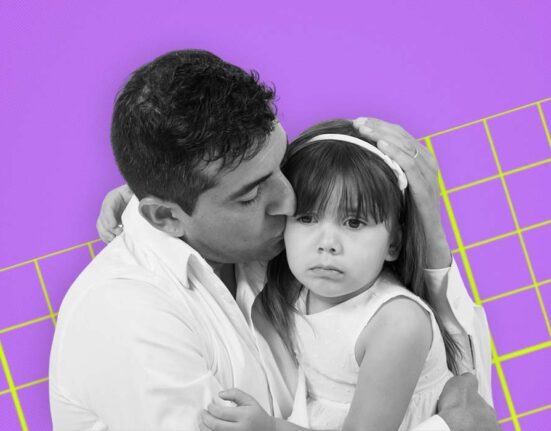
Research has documented the effects on children as some of the most enduring consequences of parental infidelity Clinical psychologist Ana Nogales, drawing on survey data from adult children of parents who had been unfaithful, reported that 75 percent described persistent feelings of betrayal toward the parent who transgressed, 80 percent reported that witnessing the infidelity had shaped how they subsequently understood love and intimate relationships, and 70 percent identified lasting effects on their concept of what love means and whether it can be trusted (Nogales, 2009).
Research published in Family Process found that children who grew up in households marked by parental infidelity were 30 per cent more likely to encounter sustained difficulties forming trusting bonds in their own adult relationships, having internalised during formative years a model of intimate partnership in which fidelity is conditional and trust is ultimately unsafe. A meta-analysis examining longer-term outcomes found elevated rates of commitment avoidance among adults raised in homes where parental infidelity occurred, with some choosing to forgo long-term partnership entirely as a consequence of what they observed.
Research confirms that the psychological effects on children of unfaithful parents often persist beyond childhood. They surface in adulthood as grief that was never processed, uncertainty about personal identity, and patterns of hypervigilance or emotional avoidance within the individual’s own relationships (Ban et al., 2022). These outcomes are not universal. Researchers have documented these effects consistently enough to warrant recognising them as part of the full harm caused by infidelity. The damage initiated within one couple’s relationship frequently travels forward in time, shaping the relational capacities of the next generation in ways the original couple rarely anticipates at the moment of crisis.
Clinical Approaches to Prevention and Repair
Effective clinical work with couples affected by infidelity rests on a principle that is non-negotiable in the therapeutic literature. The partner who transgressed accepts unambiguous and complete responsibility for that choice, without qualification or deflection. This is the necessary foundation on which any further work proceeds. Alongside it, therapists guide both partners to examine the relational conditions. The cumulative failures of communication, the unaddressed needs, and the erosion of emotional availability over time may have created the environment in which the affair became possible (Gordon et al., 2023).
A randomised controlled trial examining the efficacy of Gottman Method Couples Therapy specifically in cases involving infidelity found significantly greater improvement across measures of trust, conflict management, relational satisfaction, and sexual quality compared with treatment-as-usual approaches (Irvine et al., 2024). The principles underlying this approach are relevant not only to repair but to prevention, as they identify the relational conditions that, when maintained, significantly reduce the likelihood of the disconnection that research associates with increased vulnerability.
Key Factors in Relationship Recovery
Clinical and empirical literature identifies the following as consistently associated with relational protection and recovery:
1. Sustained emotional attunement
Gottman’s research identifies the quality of a couple’s ordinary, daily interactions, their responsiveness to each other’s bids for attention and connection as more predictive of long-term relational stability than the management of major conflicts. Partners who remain emotionally accessible across ordinary exchanges maintain the connective tissue of the relationship in ways that reduce the slow drift toward disengagement (Gottman & Silver, 2012; Rokach & Chan, 2023).
2. Constructive conflict engagement
Consistent conflict avoidance, often mistaken for harmony, can signal a gradual withdrawal from honesty in a relationship. Emotionally Focused Therapy assists partners in identifying the negative interaction cycles that drive escalation or withdrawal, developing the capacity to communicate underlying emotional states safely, and responding to one another with attunement rather than reactivity. Research indicates that 70–75% of couples who complete EFT move from relational distress to recovery (Alba Wellness, 2025).
3. Deliberate investment in emotional intimacy
Research supports emotional accessibility, the experience of being genuinely reachable and genuinely met by one’s partner as a structural precondition for sexual and relational intimacy, rather than a by-product of it. Restoration of emotional connection is therefore not ancillary to recovery but central to it (Akbari et al., 2026).
4. Seeking professional support before a crisis develops
Clinical observation consistently indicates that most couples do not seek professional assistance until the relational damage has already become severe. Gottman and Silver emphasise that the cascade toward disconnection and betrayal proceeds gradually through identifiable stages, and that therapeutic intervention is substantially more effective when it engages with those patterns at an early point rather than after they have consolidated (Gottman & Silver, 2012).
The American Psychological Association has similarly noted that unaddressed relational stress is associated with measurably elevated rates of anxiety, depression, and somatic disturbance, and that timely support prevents the entrenchment of patterns that become significantly harder to address once established (APA, 2023).
Conclusion
The harm produced by infidelity is real, wide-ranging, and documentably serious. It extends beyond the couple, affecting social networks, family systems, and, through its impact on children, the relational patterns of the next generation. The reviewed literature neither mitigates the harm nor treats betrayal differently from what it is.
Research provides a more accurate picture of the conditions under which infidelity occurs for many people. In many documented cases, the act of betrayal was not primarily a verdict on the betrayed partner’s worth or adequacy. It was the expression of something occurring within the individual who made the choice accumulated emotional deprivation, attachment-rooted anxiety, relational exhaustion that was never named or addressed at a point when it might have been and of a relational environment in which both partners had lost the capacity to genuinely reach one another (Gottman & Silver, 2012; Ghiasi et al., 2024; Rokach & Chan, 2023). That account does not distribute moral responsibility. It does, however, offer a more precise understanding than the one most betrayed partners initially carry, an understanding that can, over time, replace the self-directed narrative of inadequacy with something more clinically and empirically accurate.
The Possibility of Repair
For those who pursue repair, clinical evidence indicates that meaningful recovery is achievable when both partners engage genuinely with the therapeutic process and when the work is professionally supported. Research suggests that couples who work through infidelity with appropriate guidance frequently describe the relationship that follows as more honest and more deeply connected than what existed before the crisis (Baltimore Therapy Group, 2025; Irvine et al., 2024). This outcome is not universal, and its attainment requires conditions that not every situation can support. Clinical research suggests that genuine repair becomes possible when people accurately understand what happened.
References +
- Akbari, M., et al. (2026). Effectiveness of emotion-focused couple therapy and reality therapy-based couple therapy on sexual intimacy following infidelity. KMAN Counselling & Psychology Nexus, 4. https://journals.kmanpub.com/index.php/psychnexus/article/download/4605/8419/24574
- Ban, G., et al. (2022). Long-term effects of parental infidelity on adult children: Unresolved grief and identity conflicts. KMAN Journal of Applied Psychology and Behavioural Sciences. https://journals.kmanpub.com/index.php/jayps/article/download/4440/7953/25178
- Bruss, K. V., Seth, P., & Zhao, G. (2024). Loneliness, lack of social and emotional support, and mental health issues — United States, 2022. MMWR Morbidity and Mortality Weekly Report, 73, 539–545. https://doi.org/10.15585/mmwr.mm7324a1
- Garcia, J. R., et al. (2010). Associations between dopamine D4 receptor gene variation and both infidelity and sexual promiscuity. PLOS ONE, 5(11), e14162. https://doi.org/10.1371/journal.pone.0014162 Ghiasi, N., Rasoal, D., Haseli, A., & Feli, R. (2024). The interplay of attachment styles and marital infidelity: A systematic review and meta-analysis. Heliyon, 10(1), e23261. https://doi.org/10.1016/j.heliyon.2023.e23261
- Gordon, K. C., Mitchell, E. A., Baucom, D. H., & Snyder, D. K. (2023). Couple therapy for infidelity. In J. L. Lebow & D. K. Snyder (Eds.), Clinical handbook of couple therapy (6th ed., pp. 413–433). The Guilford Press.
- Gottman, J. M., & Silver, N. (2012). What makes love last?: How to build trust and avoid betrayal. Simon & Schuster.
- Holt-Lunstad, J. (2024). Social connection as a critical factor for mental and physical health: Evidence, trends, and intervention implications. World Psychiatry, 23, 312–332. https://doi.org/10.1002/wps.21224
- Irvine, T. J., Peluso, P. R., Benson, K., Cole, C., Cole, D., Gottman, J. M., & Gottman, J. S. (2024). A pilot study examining the effectiveness of Gottman Method Couples Therapy over treatment-as-usual approaches for treating couples dealing with infidelity. The Family Journal, 32(1), 81–94. https://doi.org/10.1177/10664807231210123
- Nogales, A. (2009). Parents who cheat: How children and adults are affected when their parents are unfaithful. HCI Books.
- Perel, E. (2017). The state of affairs: Rethinking infidelity. Harper Collins.
- Rokach, A., & Chan, S. H. (2023). Love and infidelity: Causes and consequences. International Journal of Environmental Research and Public Health, 20(5), 3904. https://doi.org/10.3390/ijerph20053904
- Snyder, D. K., Baucom, D. H., & Gordon, K. C. (2008). Getting past the affair. Guilford Press.
- Stavrova, O., Pronk, T., & Denissen, J. (2023). Estranged and unhappy? Examining the dynamics of well-being surrounding infidelity. Psychological Science. https://journals.sagepub.com/doi/10.1177/09567976221116892
- van der Kolk, B. (2014). The body keeps the score. Viking.
- Warach, B., et al. (2024). The current state of affairs in infidelity research: A systematic review and meta-analysis. Personal Relationships, 31(4), 1001–1026. https://doi.org/10.1111/pere.12571
- Alba Wellness. (2025). Emotionally focused therapy: Research and outcomes. https://www.albawellness.com
- American Psychological Association. (2023). Relationship stress and mental health. https://www.apa.org Baltimore Therapy Group. (2025). Recovering from infidelity: A complete guide. https://www.therapistsinbaltimore.com/therapy-insights-blog/2025/10/21/recovering-from-infi delity-in-a-relationship-a-complete-guide
- U.S. Surgeon General. (2023). Our epidemic of loneliness and isolation. https://www.hhs.gov/sites/default/files/surgeon-general-social-connection-advisory.pdf




Leave feedback about this