







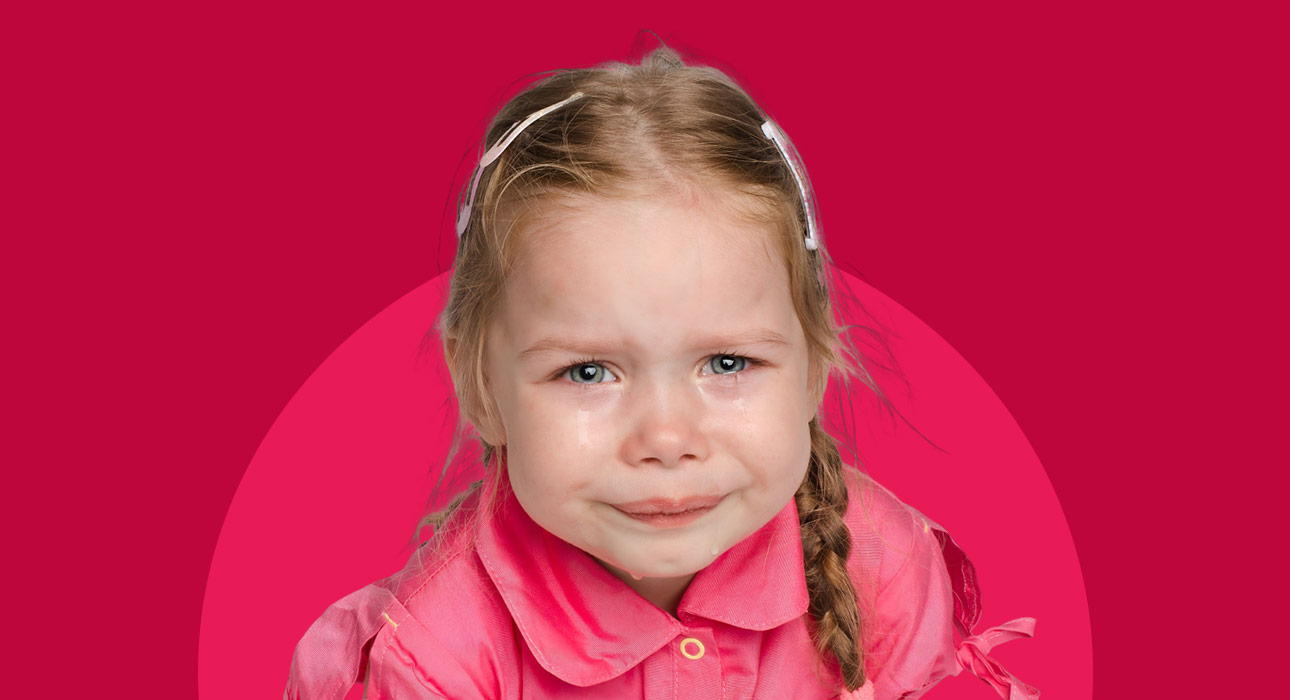
Have you ever heard a child say, “I want it,” “It’s not fair,” or “I don’t want to!” in a long, drawn-out voice? For parents, whining can become frustrating very quickly, especially when it happens over things that seem minor. But for children, whining is not necessarily just a way of being difficult. It can be a way of expressing a need, feeling, frustration, or desire when a child has not yet learned how to put it into words. Children are still developing their communication skills, so their behaviour can sometimes express what they cannot say directly. This article looks at what whining may communicate, how development and emotional regulation can influence it, and how parents’ responses can shape the behaviour. Most importantly, it considers how parents can respond to whining without overlooking the child’s underlying need or unintentionally making the behaviour more frequent.
What Is Whining Communicating?
Whining can usually be recognised through a stretched-out tone, repeated requests, complaints, or a voice that sounds more distressed than ordinary speech. Although it may irritate adults, whining can have a communicative function. Children might use it when they want attention, need assistance, feel frustrated, are tired, or cannot find the right words for what they are experiencing.
Imagine a child who has been playing happily for some time and is suddenly told that it is time to leave. They may respond, “I don’t want to go,” in a whining voice. This might look like simple refusal. But the child could actually be tired, disappointed about ending an enjoyable activity, or finding the transition difficult. Similarly, when a child says, “Mom, I want juice!” the request may involve more than wanting a drink. The child could be hungry, thirsty, looking for attention, or struggling to wait.
Children’s ability to express emotions develops gradually. Younger children, especially, may not yet have the language or emotional skills to say, “I’m disappointed because I wanted to keep playing.” Instead, that feeling may appear through crying, complaining, or whining. Research suggests that children develop different ways of dealing with frustration as they grow (Cole et al., 2000).
Whining may also be an effective way of attracting an adult’s attention. Research examining the attention-getting quality of children’s whines found that adults responded more strongly to whining than to neutral speech (Chang & Thompson, 2010). This suggests that whining can act as a signal that something requires attention, even when a child is unable to explain exactly what they need.
Read More: Why Do Children Whine in the Classroom? A Psychological Guide for Teachers
When Feelings Become Whining
One reason children may whine is that their ability to regulate emotions is still developing. Emotional regulation refers to the ability to understand, manage, and respond to emotions in ways that suit the situation. Children do not begin life with fully developed regulation skills. These abilities gradually grow through development and through everyday interactions with caregivers.
Frustration is particularly relevant. A child may become upset when they cannot have a toy, are asked to stop playing, have to wait, or are unable to do something independently. These situations may appear small from an adult’s perspective, but they can feel much more significant to a young child. When the emotion becomes difficult to handle, whining may be one of the responses the child relies on.
Developmental differences also matter. A three-year-old and a nine-year-old may both whine, but the reasons and abilities behind their behaviour may be quite different. A younger child may struggle more with naming emotions or waiting for something they want. An older child may have stronger language skills but can still resort to whining when they feel overwhelmed, tired, frustrated, or in need of reassurance.
Research on parent-child co-regulation suggests that children benefit from caregiver support when they face challenging situations. Flexible and responsive interactions between parents and children are associated with the development of children’s self-regulation skills (Verhagen et al., 2024). In simple terms, children do not learn emotional control only by being told to “calm down.” They also develop these skills through repeated experiences of being supported while dealing with difficult emotions.
Parents’ own emotional responses matter as well. A systematic review found that parents’ ability to regulate their own emotions is connected to the ways they respond to their children’s emotions, with stronger parental regulation associated with more supportive emotion-related parenting behaviours (Hajal & Paley, 2020). When a tired parent hears repeated whining, staying patient can be challenging. However, the way a parent responds can also become part of what a child learns about dealing with difficult emotions.
Read More: The Psychology of Early Intervention in Child Development
How Responses Can Reinforce Whining
Sometimes whining continues because the behaviour gets a result. This does not necessarily mean that a child is deliberately trying to manipulate a parent. Instead, children learn from what happens after they behave in a particular way.
For instance, imagine a child repeatedly asking for a chocolate bar in a whining voice. The parent initially refuses, but after several minutes of whining, gives the child the chocolate simply because they want the noise to stop. From the child’s perspective, the experience may teach them that continuing to whine can eventually lead to getting what they want. As a result, the behaviour may appear again in a similar situation.
Attention can work in a similar way. Repeated arguing, lengthy explanations, or scolding may still give a child considerable attention. Research on parent interventions suggests that behaviours such as whining and arguing can sometimes be unintentionally maintained by attention, while positive behaviours can be encouraged through consistent praise and attention (PriCARE, 2024).
However, this does not mean that parents should ignore every situation in which a child whines. Whining may be communicating a genuine need, and responding to that need is different from rewarding the way it is being expressed. Parents can recognise the child’s message while helping them find a more appropriate way to communicate it.
For example, instead of continuing to respond to a whining request, a parent could say, “I know you want the toy. Try asking me again in a calm voice.” If the child then asks appropriately, the parent can respond positively. This communicates that the child’s feelings and needs matter while also teaching a more effective way of expressing them.
Helping Children Say What They Mean
Parents do not have to eliminate every instance of whining. A more practical goal is to help children gradually move towards clearer and more appropriate communication. The following strategies can help:
- Name the emotion: If a child is upset, a parent might say, “You seem frustrated because we have to leave.” This helps the child connect the feeling they are experiencing with words.
- Acknowledge the need without rewarding the whining: Parents can recognise what the child wants while calmly encouraging them to ask again in a clearer voice.
- Model the communication you want: Children learn from what they observe. Parents can demonstrate phrases such as “Can you help me?” or “I don’t like this” rather than responding with anger.
- Notice positive communication: When a child asks calmly, waits, or explains what they need, recognising that behaviour can encourage them to communicate in the same way again.
- Prepare children for transitions: Giving a child some warning before an activity ends, such as “Five more minutes. Then we’re going home,” can give them time to adjust rather than facing an unexpected change.
- Take a pause: Parents do not have to respond perfectly every time. When whining becomes overwhelming, taking a moment to pause before responding can help prevent the interaction from becoming a cycle of frustration.
These strategies support the development of emotional regulation rather than simply trying to stop an unpleasant behaviour. Research on parenting and emotion socialization suggests that supportive parental responses can contribute to children’s developing ability to regulate emotions (De Raeymaecker & Dhar, 2022). Parenting programmes that teach caregivers to help children work through their emotions have also shown promise in strengthening supportive parenting behaviours (England-Mason & Gonzalez, 2020).
Read More: Gifted Children and Emotional Sensitivity: A Guide for Caregivers
Conclusion
Whining can certainly be frustrating, but it is not always meaningless misbehaviour. For children, it may be one way of expressing needs and emotions that they have not yet learned to communicate clearly. Tiredness, frustration, wanting attention, difficulty with transitions, and developing emotional skills may all contribute to it.
What happens after the whining also matters. When whining repeatedly results in attention or eventually gives the child what they want. The behaviour may become more likely to occur again. This does not necessarily mean that children are consciously manipulating their parents. Rather, they are learning from the consequences of their behaviour.
The goal, then, is not simply to make whining disappear. Parents can try to understand the message behind the behaviour, acknowledge the child’s feelings, set appropriate boundaries, and encourage clearer communication. With patience and consistent responses, children can gradually learn that their needs can be heard without relying on whining. Sometimes, instead of saying, “Stop whining,” a more helpful response may be, “I want to understand what you need. Tell me in a way I can understand.”
References +
- Chang, R. S., & Thompson, N. S. (2010). The attention-getting capacity of whines and child directed speech. Evolutionary Psychology, 8(2), 260–274. https://doi.org/10.1177/147470491000800209
- Cole, P. M., Dennis, T. A., Smith-Simon, K. E., & Cohen, L. H. (2000). Preschoolers’ emotion regulation strategy understanding: Relations with emotion socialization and child self regulation. Child Development, 71(2), 320–335.
- De Raeymaecker, K., & Dhar, M. (2022). The influence of parents on emotion regulation in middle childhood: A systematic review. Children, 9(8), 1200. https://doi.org/10.3390/children9081200
- England-Mason, G., & Gonzalez, A. (2020). Intervening to shape children’s emotion regulation: A review of emotion socialization parenting programs for young children. Emotion, 20(1), 98–104. https://doi.org/10.1037/emo0000638
- Hajal, N. J., & Paley, B. (2020). Parental emotion and emotion regulation: A critical target of study for research and intervention to promote child emotion socialization. Developmental Psychology, 56(3), 403–417. https://doi.org/10.1037/dev0000864
- Kopp, C. B. (1989). Regulation of distress and negative emotions: A developmental view. Developmental Psychology, 25(3), 343–354. https://doi.org/10.1037/0012-1649.25.3.343
- Morris, A. S., Silk, J. S., Steinberg, L., Myers, S. S., & Robinson, L. R. (2007). The role of the family context in the development of emotion regulation. Social Development, 16(2), 361–388. https://doi.org/10.1111/j.1467-9507.2007.00389.x
- Verhagen, C., Boekhorst, M. G. B. M., Kupper, N., van Bakel, H., & Duijndam, S. (2024). Coregulation between parents and elementary school-aged children in response to challenge and in association with child outcomes: A systematic review. Developmental Psychology. https://doi.org/10.1037/dev0001864
- Eisenberg, N., Cumberland, A., & Spinrad, T. L. (1998). Parental socialization of emotion. Psychological Inquiry, 9(4), 241–273. https://doi.org/10.1207/s15327965pli0904_1
- Grusec, J. E., & Goodnow, J. J. (1994). Impact of parental discipline methods on the child’s internalization of values: A reconceptualization of current points of view. Developmental Psychology, 30(1), 4–19. https://doi.org/10.1037/0012-1649.30.1.4


Leave feedback about this