







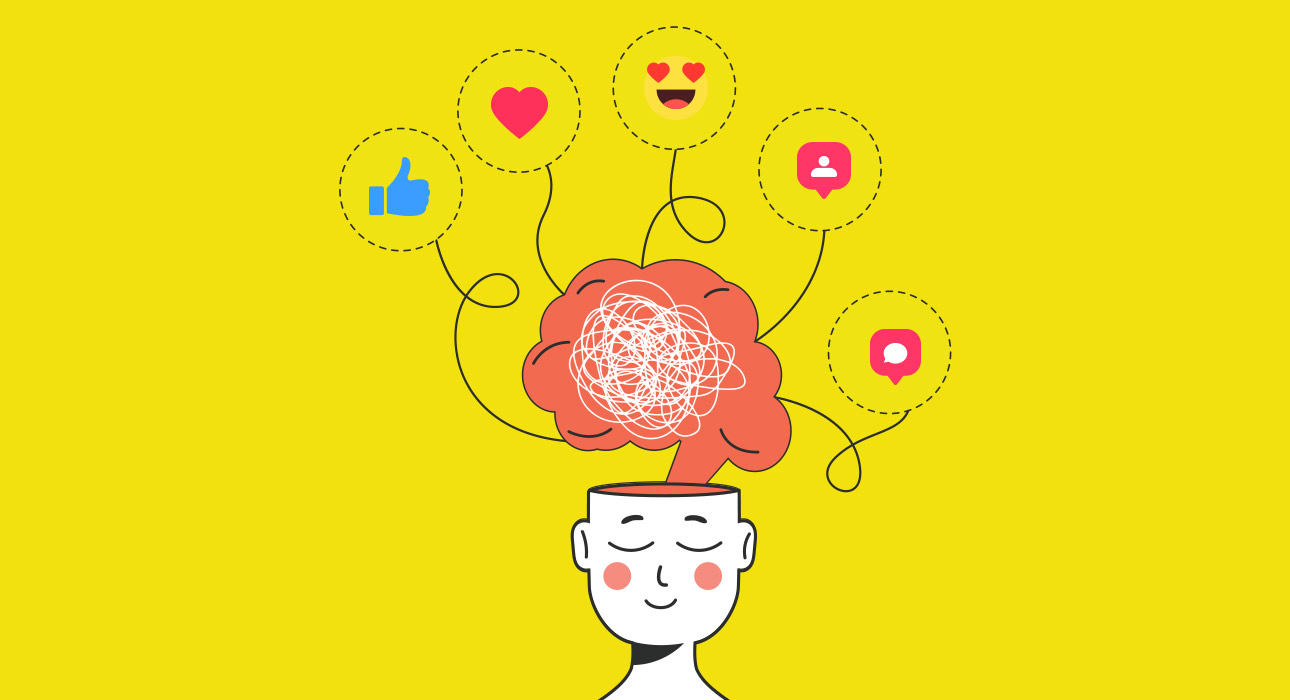
This study examines how the brain cells of young adults and other types of prefrontal cortex function in response to social network information, why digital worlds harm this trait, and what happens when the barrier between digital communication and real danger disappears.
By mid-2025, a young woman from the Islamabad area of Pakistan had gained widespread recognition on the social network app Instagram. She grew her following, posted content regularly, and followed the same path as several thousand other young adults each day. She looked for true connections. When she looked for common ground, she looked for recognition from others through social media.
Some men who followed her posts became obsessed. Afterwards, when she turned down working with him, he headed over to her house and killed her. The murder wasn’t by chance. It simply wasn’t an accident and reflected a pattern that the study in both digital mental health and neuroscience has been trying to grasp for many years: someone developed a deep, one-sided sense that contact existed, was socially rejected in a way his mind identified as highly risky, and acted violently (Weekes et al., 2025).
It assigns greater value to peer feedback than the adult brain does, and it takes more risks when peers are watching. And it is significantly less equipped than the adult brain to regulate the emotional consequences when social feedback turns negative. When digital platforms provide social input in the sense of comments, likes, follower numbers, and dismissals to a brain in this specific growth condition, the neurological impacts aren’t trivial. This article looks at the effect of such factors and the reasons they trigger impulsive internet use, along with how a response to online abuse may extend further than teenage years to embrace everyone whose basic social and emotional requirements aren’t met anywhere else.
Read More: The Psychology Of Early Social Media Exposure: Growing Up Online
The Growing, Developing Young Adult Brains
Childhood is not just a societal change; it’s also a time of profound neurological change. It is one of those severe periods of neurological evolution in human development and growth, especially compared to the early two-year period of human existence. The prefrontal cortex, which governs emotions, evaluates risks, and regulates impulses, undergoes major structural changes during adolescence and does not reach full cognitive development until approximately the mid-twenties (Blakemore & Robbins, 2012). Throughout that same duration, the fundamental limbic system, composed of the amygdala, develops substantially more quickly. The result is that this emotion-responsive subcortical brain system functions without the full regulatory power of a developing prefrontal cortex, providing the neurological basis for the extreme emotions, impulsive actions, and social anxiety that characterise young adulthood. (Steinberg, 2008).
It is marked by a certain sensitivity in the brain’s reward-processing system, known as the striatum. The brain’s social sensitivity peaks in middle adolescence, around age 16, and then gradually decreases to adult sensitivity levels, a growth-related course triggered by hormonal shifts and developmental timing, when little knowledge is available (Crone and Konijn, 2018). Crucially, this reward attitude is not just restricted to traditional rewards like money or food. It is special and extends strongly to social benefits such as approval, acknowledgement, and favourable comments from those around them.
Read More: How the Amygdala Shapes Our Emotions and Behaviour
Impact from Peers on the Brains of Young Adults
Researchers have directly examined the specific brain response to peer evaluation during adolescence using functional magnetic resonance imaging studies designed to simulate real social interactions. An attraction learning study by Sherman and colleagues employs an fMRI structure inspired by attending to Instagram to determine how young adult brains reacted to getting comments and likes on their pictures (Sherman et al., 2016).
Young adults showed substantially higher stimulation in both the ventral area and the middle prefrontal cortex areas linked to reward handling, social thinking, and self-reference thinking when observing pictures that had received high amounts of social network likes. Importantly, when young adults watched peer-inspired pictures depicting dangerous conduct such as tobacco use, drinking, or violent conduct, controlled neural activity decreased. The brain was upregulating the gratification message of acceptance from peers and downregulating the regulatory capacity that would normally serve to reduce reactions to danger.
This phenomenon is a systematic trend in young adult neuroscience literary works. Neuroimaging analyses focusing on social judgment among different age categories consistently indicate that expecting a positive social input involves both the ventral striatum and the central prefrontal cortex with greater depth among teenagers compared to among younger children and older adults (Güroğlu and others, 2014).
A long-term inquiry investigating neural responses to interpersonal comments for more than two years concluded that cortex and anterior conduction reactivity through expectations and getting public input explained the link between peer anxiety and depression signs over the years, indicating that a strong neural response towards social input is both a weakness in current circumstances and, likewise, a significant index of a reduced state of mind once interactions with other people get difficult (Lindquist et al., 2023).
The medial prefrontal cortex is particularly important for understanding digital behaviour. The middle portion of the prefrontal cortex is involved in processing social evaluations and in the perception of oneself relative to others, including how one perceives oneself in relation to others, how one compares oneself to one’s peers, and how one’s social standing changes (Blakemore & Robbins, 2012). Details: The mPFC is most sensitive to social input during adolescence, as establishing an identity and peer relationships are the primary developmental tasks. goals of that period of life. From an evolutionary standpoint, adolescents do not luxuriate in treating social acceptance as optional. The brain treats peer acceptance and rejection as survival-relevant signals accordingly.
Read More: Peer Connections and the Psychology of Belonging in Youth
Digital Platforms and Reward Exploitation
The neurological design of the teenage social brain helps reframe what is really going on when a young adult accesses a social network application. They provide social input in the shape of likes, comments, following numbers, share counts, and peer approval in a continuous, measurable, uncertain, and infinitely competitive format. Each of these traits is associated with a specific neurological system that specifically increases young adult reward sensing.
Random incentives cause higher levels of dopamine impulses than foreseeable ones, an effect called ‘variable rewards scheduling’ that supports both betting dependence and the addictive checking conduct that constitutes heavy social networking activity (Zhang et al., 2025). A review released in Frontiers magazine by Psychology clearly identified the following trend: digital media always promotes dopamine secretion within unplanned reward delivery, such as impulsive likes and machine-generated amplified content, slowly transforming participation from free will to obsessive engagement (Zhang et al., 2025).
The scale of the documented impact is significant. The WHO Regional Office conducted the European Health Conduct in School-aged Children study, which surveyed almost 280,000 young adults aged 11, 13, and 15 across 44 territories and nations in 2022. The study found that instances of harmful social networking access among young adults rose from 7% to 11% between 2018 and 2022, with girls regularly reporting more cases than boys (WHO, 2024).
Young adults who average in excess of three hours each day on social networks are roughly twice as likely to confront negative effects on their mental health, in line with this. U.S. Surgeon General’s guidance (U.S. Surgeon General, 2023). The addition of social media was consistently associated with health-risk behaviours in young adults, such as drug use and disordered eating behaviours, as well as suicidal ideation, according to a meta-analysis and a systematic review published in the British Medical Journal in 2023 (Purba et al., 2023). The research examined took place from 1997 to 2022.
Neuroscience does not claim that the web is universally bad. The concern is more specific: a brain neurologically primed to treat peer social feedback as a primary reward signal is now receiving that feedback through systems engineered to maximise engagement, delivering it unpredictably, quantifiably, and continuously, and stripped of the embodied social context that would ordinarily allow the adolescent brain to calibrate the significance of what it receives.
When the Digital Relationship Is Constructed
The neurological vulnerability described above not only creates conditions for psychological harm through social comparison and rejection. It also creates conditions that others deliberately identify and exploit. ‘Parasocial relationships, referred to as philosophically one-sided relationships in which one person develops feelings of kinship toward another person, entirely unaware of the other’s reality, have been documented in psychological works since the 1950s. But social media transformed the scale, depth and accessibility of those dynamics in ways these early scholars could not have foreseen (Schramm et al., 2024).
Studies on paranormal connection always recognise loneliness and social exclusion as arguably the most powerful predictors of intense single-sided online engagement: the less well someone’s relationship needs are met in real-world relationships, the less the emotional system invests in digital replacements (Szeto, 2025). This vulnerability does not respect age. It is a human response to unmet belonging needs, and it renders individuals across all life stages susceptible to those who understand the mechanism and use it deliberately.
The case described in the introduction represents the most violent point on a spectrum of harm that manifests in many forms. In the United States, shown cases have included those creating fabricated social media profiles based on a sense of high-profile ties, influencer status, or a competent chance to recruit dangerous people, mostly women, into predatory and sometimes criminal circumstances. In each instance, the process is identical: the genuine desire of the target for connection, awareness, or possibility becomes apparent, and a digital persona is manufactured to seem to fill it.
Often, by the time anyone discovers the deception, the victim has already become emotionally involved in the relationship. “Offenders of online assault are frequently showing weaknesses in effective social skills coupled with increased social media engagement, with digital platforms providing a point of reference and a tool for developing a false relationship-based closeness” (Weekes et al., 2025).
A separate case from Japan illustrates the same behavioural pattern from a different perspective. A woman with a large social media following cultivated the appearance of a mutual emotional connection with male followers through private messaging. One follower, having accumulated significant personal debt to financially support her, eventually travelled to confront her and killed her during a live stream in front of an online audience. The psychological trajectory here, from loneliness through parasocial attachment to a constructed digital identity, to financial and emotional depletion, to violence, directly mirrors what the convergent literatures on social media dependency and parasocial relationships identify as the dangerous intersection of unmet attachment needs, platform-driven dopaminergic behaviour, and the absence of grounding in real-world relationships (Zhang et al., 2025; Szeto, 2025).
Read More: Limerence: Understanding Intense One-Sided Attachment in Today’s Relationships
Who Carries the Risk
The preceding sections have focused on adolescence because the neuroscientific evidence is clearest there: the developing brain is measurably more responsive to social input and demonstrably less protected against peer influence than the adult brain. But treating risk as exclusively a developmental issue would misrepresent what the research actually shows. The underlying vulnerability is not primarily a function of age; it is a function of relational need.
Individuals whose real-world social and emotional needs are chronically unmet experience neurologically similar pulls toward online social reward, comparable susceptibility to parasocial attachment, and an equivalent impairment in risk assessment when social belonging appears to be on offer. A study released beyond web-based media and global communications concluded that social media relationships with prominent figures lowered loneliness through the interplay of psychological bonding, sense of belonging, and apparent social assistance, but that these short-term reductions in isolation increased reliance on the platform while slowing the growth of genuine, real-life connection benefits (Juan & Jung-Sook, 2024). It’s a self-perpetuating cycle: online socialising meets some of the needs for belonging but also perpetuates the sense of isolation that drives this commitment.
For people who find themselves socially isolated, whether they are adolescents who become alienated by those around them, adults who struggle with different environments, or anyone else who has experienced loss, significant life transitions, or long-term loneliness, creating an online character that becomes apparent to communicate real-world connections, awareness, understanding, and growth is neurologically attractive to an extent that logical threat assessment by itself is not even close to being able to counteract.
Conclusion
The adolescent brain’s heightened reactivity to peer evaluation is not a flaw in design. It is the cognitive expression of a developmental imperative, the formation of social bonds and the building of interpersonal identity, both of which proved essential to human survival across evolutionary history. The heightened striatal response to social reward and the sustained medial prefrontal cortex activity around social self-assessment are not signs of a brain malfunction. They are the signature features of a brain doing precisely what its development has equipped it to do at this stage of life (Crone & Konijn, 2018; Sherman et al., 2016; Blakemore & Robbins, 2012).
The problem is not the brain’s responsiveness. The problem is the environment in which that responsiveness now operates, one that delivers social feedback through systems engineered for maximal engagement, without the embodied social context that would ordinarily allow the brain to calibrate what that feedback actually means.
What the extreme cases in this article make visible is that these same mechanisms do not respect developmental boundaries. The conditions for exploitation are present wherever loneliness, unmet belonging needs, and access to a platform designed to simulate intimacy converge, regardless of age. The WHO data documenting rising rates of problematic adolescent social media use, the neuroscientific evidence for striatal and mPFC hyper-reactivity to online social feedback, and the clinical literature on parasocial attachment together form a coherent account of why what happens in the digital social world is neither trivial nor merely virtual and why it carries real consequences for how people think, feel, and act far beyond the screen (WHO, 2024; U.S. Surgeon General, 2023; Weekes et al., 2025).
References +
- Blakemore, S. J., & Robbins, T. W. (2012). Decision-making in the adolescent brain. Nature Neuroscience, 15(12), 1184–1191. https://doi.org/10.1038/nn.3243
- Crone, E. A., & Konijn, E. A. (2018). Media use and brain development during adolescence. Nature Communications, 9, 588. https://doi.org/10.1038/s41467-018-03126-x
- Güroğlu, B., van den Bos, W., & Crone, E. A. (2014). Sharing and giving across adolescence: An experimental study examining the development of prosocial behaviour. Frontiers in Psychology, 5, 291. https://doi.org/10.3389/fpsyg.2014.00291
- Juan, L., & Jung-Sook, L. (2024). Social media influencers and followers’ loneliness: The mediating roles of parasocial relationship, sense of belonging, and social support. Online Media and Global Communication, 3(4), 607–630. https://doi.org/10.1515/omgc-2024-0025
- Lindquist, K. A., et al. (2023). Neural sensitivity to peer feedback and depression symptoms in adolescents: A 2-year multiwave longitudinal study. PMC.https://pmc.ncbi.nlm.nih.gov/articles/PMC9840696
- Purba, A. K., Thomson, R. M., Henery, P. M., Pearce, A., Henderson, M., & Katikireddi, S. V. (2023). Social media use and health risk behaviours in young people: Systematic review and meta-analysis. BMJ, 383, e073552. https://doi.org/10.1136/bmj-2022-073552
- Schramm, H., Liebers, N., Biniak, L., & Dettmar, F. (2024). Research trends on parasocial interactions and relationships with media characters: A review of studies from 2016 to 2020. Frontiers in Psychology, 15. https://doi.org/10.3389/fpsyg.2024.1418564
- Sherman, L. E., Payton, A. A., Hernandez, L. M., Greenfield, P. M., & Dapretto, M. (2016). The power of the like in adolescence: Effects of peer influence on neural and behavioural responses to social media. Psychological Science, 27(7), 1027–1035.
- https://doi.org/10.1177/0956797616645673
- Steinberg, L. (2008). A social neuroscience perspective on adolescent risk-taking. Developmental Review, 28(1), 78–106. https://doi.org/10.1016/j.dr.2007.08.002
- Szeto, T. (2025). Parasocial relationships, social media, and mental health [Master’s thesis, California State University]. ScholarWorks.https://scholarworks.calstate.edu/downloads/8623j716d
- Weekes, C. J., Storey, J. E., & Pina, A. (2025). Cyberstalking perpetrators and their methods: A systematic literature review. Trauma, Violence, & Abuse.https://doi.org/10.1177/15248380251333411
- Zhang, Y., et al. (2025). The emotional reinforcement mechanism of and phased intervention strategies for social media addiction. Frontiers in Psychology. https://pmc.ncbi.nlm.nih.gov/articles/PMC12108933
- U.S. Surgeon General. (2023). Social media and youth mental health: The U.S. Surgeon General’s advisory.https://www.hhs.gov/sites/default/files/sg-youth-mental-health-social-media-advisory.pdf
- World Health Organisation Regional Office for Europe. (2024). Teens, screens and mental health: New WHO data reveals a sharp rise in problematic social media use. https://www.who.int/europe/news/item/25-09-2024-teens–screens-and-mental-health





Leave feedback about this