







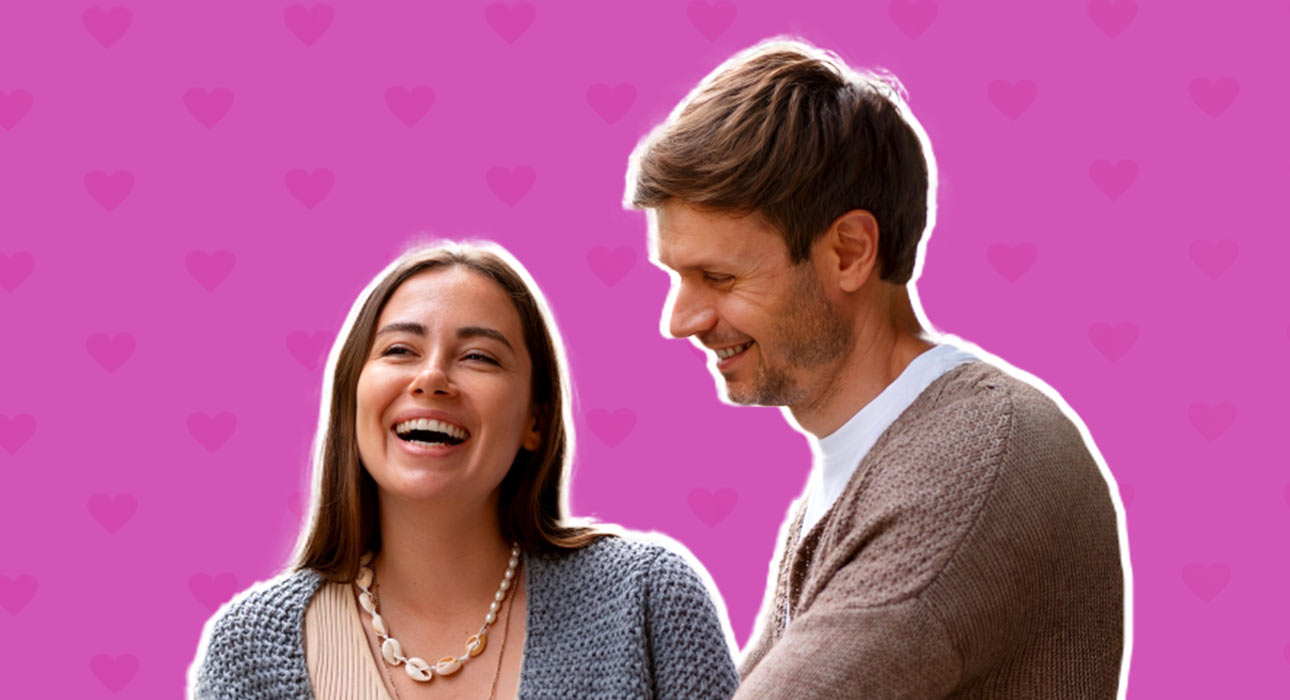
Trust is a strange thing to build and an even stranger thing to lose. It does not happen in such a way that one wakes up one day and decides that he will now learn to trust the stranger on the street, the lover in bed, or even the regime in power; rather, it happens through a million little unimportant things, and sometimes it takes only one thing to take away what it took years to build. That fragility feels sharper today than ever before: a single news story about fraud, corruption, or violent crime can travel across the world in seconds, and each fresh headline leaves the average person a little more guarded and a little less willing to extend the benefit of the doubt to a stranger, a neighbour, or an institution.
In this sense, trust has become not just personal but increasingly complicated, shaped as much by the world reported on our screens as by the people standing in front of us. Yet, it works much harder than any other element in our human life because it makes the baby sleep in the arms of another person, makes the labourer leave his labour without any authentication whatsoever, and makes people all use the same money, walk on the same roads, and speak the same language. For years scientists have tried to find out where trust lies within the human mind, within one’s childhood, between couples, and within societies and, increasingly, why it seems to grow harder to sustain in a world saturated with stories of betrayal.
Read More: How Fear, Uncertainty, and Trust Shape Buying Behaviour in Crises
The Chemistry of Belief
Trust was a purely sociological and ethical issue before; the problem of trust was believed to have nothing to do with biology, being an issue of one’s character rather than chemistry. The perspective has changed, however, once researchers have started to observe the biological processes that occur within our bodies during the act of trusting someone.
For example, in one famous study, the level of oxytocin, which is a neuropeptide that contributes to the attachment of mothers to their children, rises when people get information about the willingness of their unknown partners to trust them with money (Kosfeld et al., 2005). However, oxytocin is not a mere outcome of the process of trusting someone; it turns out that the hormone itself provokes people to trust strangers. The studies have shown that people become significantly more altruistic under the influence of oxytocin (Zak et al., 2007).
All these studies have been conducted by the neuroeconomic researcher Paul Zak and his colleagues, thus changing people’s opinions on trust. In particular, Zak and his colleagues have discovered that the connection between trust and oxytocin existed even for people from absolutely different cultures, including the indigenous population of Papua New Guinea, which means that the phenomenon is probably universal (as stated in Zak, 2017). However, this discovery does not imply that trust is “just” an issue of some chemicals; there can be many other factors involved in the process. It implies only that each handshake, each answered phone call, each kept promise influences our nervous system somehow. Trust is not only felt; it is actually metabolised.
Read More: How Core Beliefs Shape Our Perspective and Behaviour
Trust Is Built Before Memory Begins
Before the word “trust” has even been spoken, people learn about whether the world deserves it. In the framework of the theory of psychologist Erik Erikson, the first task of the psychosocial development stage for humans occurs within the first year or one and a half years of life and includes the resolution of the conflict of trust versus mistrust (Erikson, 1963). For an infant who has always been attended to when they cry, fed when hungry and comforted when scared, a certain assumption is made unconsciously and subconsciously: the world responds to me and can be counted on. On the contrary, an infant whose needs have been satisfied inconsistently makes an opposite conclusion. And this conclusion remains with the individual.
What is extraordinary about this stage of development is not the fact that it takes place, like any other milestone, but the length of time that its aftermath lasts. The trust and suspicion developed during the infant’s first year of life become sort of a template that is taken forward by individuals and affects their perception of ambiguous situations, assumptions about receiving support and ease in letting others come closer in the future. It may seem strange how the negotiations that an adult makes at thirty-five or a contract that they negotiate at fifty have anything to do with consistent attendance of the individual at six months old. Trust is not just a decision about others; it shapes how we see them.
The Sliding-Door Moments of Trust
Trust, shaped in childhood, is sustained or shattered by subtle moments in adulthood. In years of studying couples, psychologist John Gottman discovered that trust was less of a character trait than a continually fluctuating score, determined by something Gottman called “bids for connection”: a spouse referencing a difficult day at work, pointing out a sunset, or simply taking a deep breath while seated in the same room. Couples who regularly “turn towards” such bids, acknowledging and engaging with them, create, according to Gottman, a trust score that rises steadily with time, while couples who consistently “turn away” do the opposite, even without an explicit betrayal (Gottman, 2011).
These everyday instances Gottman refers to as “sliding-door moments” are based on the notion that life consists of forks on which one may opt for either connection or indifference, and rarely realises it. This ability lies at the core of this notion: attunement, according to Gottman, is the capacity to notice, be tolerant of a partner’s different perspective, and listen without defence (Gottman, 2011). What makes this finding especially thought-provoking is its underlying assumption: trust is not built by the big acts, the vacation, the gift, the grand apology, but rather in whether one raises one’s head from a phone while a partner speaks the first words of a sentence. Betrayal makes the news. Inattention creates the damage.
When Trust Breaks, and How It Mends
Looking at the issue of social trust from a broader perspective, the picture starts to seem quite grim. While in 1972, 46% of Americans believed that people can generally be trusted, in 2018, the number decreased to 34%, and the trend continues, as it has not been reversed since then (Pew Research Centre, 2025). The statistic itself may not necessarily mean much. Lower social trust reduces willingness to help others, lend money, or expect return favours (Pew Research Centre, 2025).
In their 2023 advisory on loneliness and isolation, the U.S. Surgeon General pointed out that lower social connectedness is a significant public health problem that is associated with an increased risk of developing cardiovascular diseases, dementia, and even early mortality in scientific research (Office of the U.S. Surgeon General, 2023; Holt-Lunstad et al., 2010). Trust cannot really be seen as just a social virtue. It can be seen as social infrastructure whose failure costs dearly.
The optimistic point here is that trust, even when violated, is not automatically dead forever. In the field of organisational research, it has been demonstrated that trust recovery relies heavily on the type of violation. Failure in terms of competence is usually related to an error of judgment or delay. An apology can be quite effective for recovery because, in this case, there are no doubts about the individual’s character. However, integrity violations such as deception or breach of promise require much longer time for recovery; apologising is not enough. But it is only the pattern of actions that restores trust (Kim et al., 2009). There is much more significance to this division than just business.
Read More: How to Build Trust in Yourself After Betrayal: According to Psychologist
Conclusion
Thus, the essence of trust turns out to be multiple in its nature: it is a hormone circulating in the bloodstream, a lesson taught even prior to the existence of language, a score written between two sentences, and a resource available to entire civilisations and capable of actual depletion. These lessons share one idea: trust is not an individual trait that some people possess, and others do not. Trust is a process built through communication, small promises, and consistency after failure.
None of which needs heroic deeds on behalf of any person. No ideal caregiver is required for the baby; no endless romance is expected of the spouse. No unrealistic optimism, only promises sufficient to make another one possible. The idea that emerges here is rather surprising in its simplicity. The same way trust is ruined step-by-step, it can be restored one small step at a time. The next step towards building it is much closer than one may think. Maybe it lies at the corner of the next conversation someone is going to have today.
References +
- Erikson, E. H. (1963). Childhood and society (2nd ed.). W. W. Norton & Company.
- Gottman, J. M. (2011). The science of trust: Emotional attunement for couples. W. W. Norton & Company.
- Holt-Lunstad, J., Smith, T. B., & Layton, J. B. (2010). Social relationships and mortality risk: A meta-analytic review. PLoS Medicine, 7(7), e1000316. https://doi.org/10.1371/journal.pmed.1000316
- Kim, P. H., Dirks, K. T., & Cooper, C. D. (2009). The repair of trust: A dynamic bilateral perspective and multilevel conceptualisation. Academy of Management Review, 34(3), 401– 422. https://doi.org/10.5465/amr.2009.40631887
- Kosfeld, M., Heinrichs, M., Fischbacher, U., & Fehr, E. (2005). Oxytocin increases trust in humans. Nature, 435(7042), 673–676. https://doi.org/10.1038/nature03701
- Office of the U.S. Surgeon General. (2023). Our epidemic of loneliness and isolation: The U.S. Surgeon General’s advisory on the healing effects of social connection and community. U.S. Department of Health and Human Services.
- Pew Research Centre. (2019). Trust and distrust in America. https://www.pewresearch.org/politics/2019/07/22/trust-and-distrust-in-america/
- Pew Research Centre. (2025). Americans’ trust in one another. https://www.pewresearch.org/2025/05/08/americans-trust-in-one-another/
- Zak, P. J. (2017). The neuroscience of trust. Harvard Business Review, 95(1), 84–90.
- Zak, P. J., Stanton, A. A., & Ahmadi, S. (2007). Oxytocin increases generosity in humans. PLoS ONE, 2(11), e1128. https://doi.org/10.1371/journal.pone.0001128


Leave feedback about this