







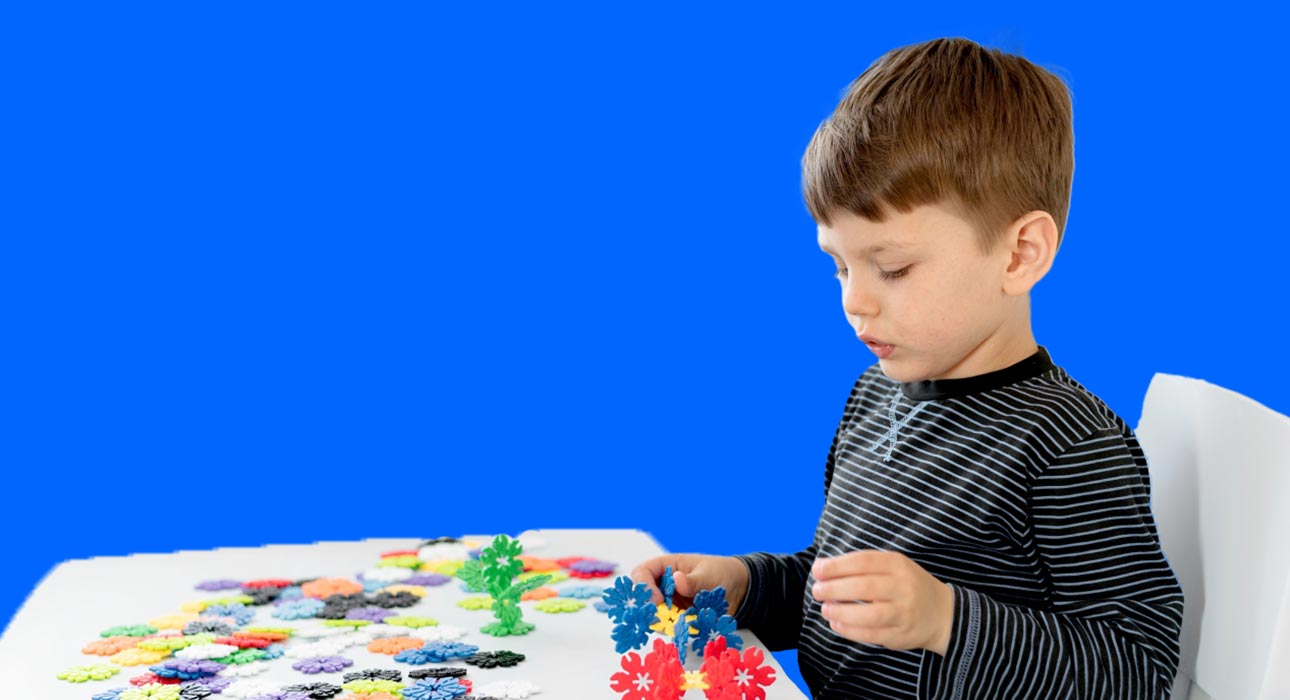
Amidst the digital era, where the screen time of children is increasing rapidly, sensory play offers active exploration. Sensory play involves splashing water, squishing clay, digging through sand, finger painting and similar activities that allow the child to have a meaningful learning experience by engaging multiple senses. Indulging themselves in such activities helps the child strengthen their cognitive, emotional and motor abilities. Researchers have concluded that the best way of learning for a child is to actively interact with the environment rather than passively consume information (Cankaya et al., 2023; Chen & Morry, 2026).
What is Sensory Play?
Sensory play refers to the process of learning through direct sensory experiences. These experiences play a crucial role in strengthening a child’s neural connections, which improves attention and memory retention, enhances motor abilities and also strengthens the child’s immune system. The child gets a hands-on experience to explore texture, patterns and cause-and-effect relationships. Such engagements help the brain to process information more efficiently (Arjulayana, 2025). Some examples of sensory play have been listed below.
- Playing with sand, water, or mud and creating different structures.
- Exploring or collecting natural materials such as pebbles.
- Finger painting.
- Smelling flowers and other scented objects.
- Exploring the texture of different materials like rice, leaves, flower petals, etc.
According to developmental theorists such as Jean Piaget, actively interacting with the environment benefits a child’s cognitive growth (Piaget, 1952).
Understanding Piaget’s Theory: Learning Needs Exploration
Sensory play is a process that involves active learning using senses such as touch, smell, taste, hearing, sight, etc. This process of learning can be linked with Jean Piaget’s Cognitive Development Theory. Piaget had proposed four stages of cognitive development. The first stage ranges from birth to 2 years of age and is termed the “sensorimotor” stage. In the Cognitive Developmental Theory, Piaget proposed that infants learn through senses and actions in the sensorimotor stage.
In simpler words, a child is said to develop knowledge by actively interacting with the environment by touching, moving, experimenting and observing outcomes (Piaget, 1952). According to Piaget, when a child explores through experimentation such as stacking blocks, understanding texture or pouring water in different containers, they develop mental structures termed “schemas”. These schemas help the individual to organise and understand newer information (Scott & Cogburn, 2023).
Schemas can be understood as mental “folders” (similar to computer folders) where the experience and corresponding knowledge are stored. The knowledge can be used to understand newer objects (experiences) which may have some similarity with the existing schema. Modern research has supported Piaget’s view that physical interaction with the environment plays a pivotal role in cognitive growth (Lifter et al., 2021).
Neuroplasticity: The Brain Is Crafted by Experiences
Modern neuroscience is a strong supporter of the idea of sensory play. Neuroplasticity refers to the brain’s ability to reorganise itself by forming and strengthening neural connections in response to experiences. During the days of early childhood, the brain is vulnerable to changes, thereby making sensory experiences exceptionally influential. When a child engages themselves with activities, the neural pathways associated with attention, movements, memory and similar abilities become activated.
Continuous repetitive activation strengthens the neural pathways, which is beneficial for future learning. Researchers have concluded that sensory experiences actively help in cognitive development by distributing information across distinct brain regions (Chen & Monroy, 2026). Sensory play exposes children to making predictions, experimenting, understanding outcomes and adjusting their actions accordingly, which collectively helps in the neurological and psychological development of the child.
Information Processing Theory: The Brain Must Be Trained
In the twentieth century, researchers began comparing the human brain with a computer that is capable of retrieving, storing and processing information, which was later termed the Information Processing Theory. When a child is engaged in sensory play, they often encounter stimuli that capture their attention. Studies suggest that attention is the key to learning. When information is unattended, it is likely not to be remembered. Through sensory play, a child learns to differentiate between important and unimportant information.
For instance, a child searches for a specific toy in the house. The child must observe carefully, ensuring that they do not misinterpret a similar-looking object as the toy, and the child must remember the previously searched region and the outcome of the search in that region. Such actions not only strengthen the child’s memory and attention but also benefit their problem-solving abilities, which are the basic components of information processing (Cankaya et al., 2023). Alongside this, experiences involving multiple senses require multiple memory pathways, which get encoded more deeply than information that requires a single pathway.
Experiential Learning: First Do It, Then Believe It
David Kolb’s Experiential Learning Theory also aligns with the concept of sensory play. The theory states that learning is a cyclic process of experience, reflection, conceptualisation and experimentation (Kolb, 1984). For instance, consider a child mixing colour with fingers to paint. At first, they experience the colour directly by touch, then they observe the outcome of mixing, then they develop the concept of colour mixing, and eventually, they understand the concept further by mixing different colours.
In the above example, with respect to David Kolb’s experiential theory, touching the colour is an experience; observing the outcome is reflection, i.e., understanding the outcome; the development of the concept of colour mixing is conceptualisation; and repeating the process with different colours is experimentation. In this process, a sensory experience develops to be meaningful knowledge for the child. Experiential learning research illustrates that actively interacting and participating benefits a child’s learning and creativity.
Conclusion
Sensory play is influential not only in terms of cognition but also helps in emotional regulation (Arjulayana, 2025). Repetitive activities like scooping sand and swirling water help in reducing stress. Alongside emotional regulation, sensory play helps in the betterment of motor abilities and coordination. (Chen & Monroy, 2026). It is important to understand that while digital media is a powerful tool for learning, it cannot replace sensory play, which provides children with exposure to active learning and experimentation alongside sensory and motor experiences. Sensory experiences should not be a part of an optional curriculum; instead, they should be treated as the fundamental building block of healthy development.
References +
- Piaget, J. (1952). The origins of intelligence in children (M. Cook, Trans.). International Universities Press. (Original work published 1936)
- Kolb, D. A. (1984). Experiential learning: Experience as the source of learning and development. Prentice Hall.
- Wynberg, E. R., Boland, A., Raijmakers, M. E. J., & van der Veen, C. (2022). Towards a comprehensive view of object-oriented play. Educational Psychology Review, 34, 197–228.
- Lifter, K., Mason, E. J., Minami, T., Cannarella, A., & Tennant, R. (2022). Emergent patterns in the development of young children’s object play. Acta Psychologica, 224, 103524.
- Cankaya, O., Rohatyn-Martin, N., Leach, J., Taylor, K., & Bulut, O. (2023). Preschool children’s loose parts play and the relationship to cognitive development: A review of the literature. Journal of Intelligence, 11(8), 151.
- Scott, H. K., & Cogburn, M. (2023, January 9). Piaget. In StatPearls. StatPearls Publishing.
- Arjulayana. (2025). Sensory play in early childhood education: The key to stimulating the brain and creativity of young children. Gemilang: Early Childhood Education Programs, 2(3).
- Chen, C.-H., & Monroy, C. D. (2026). Moving, seeing, hearing, smelling and tasting: How sensory-motor experiences shape early cognitive development. Behavioral Sciences, 16(2), 255.

Leave feedback about this