







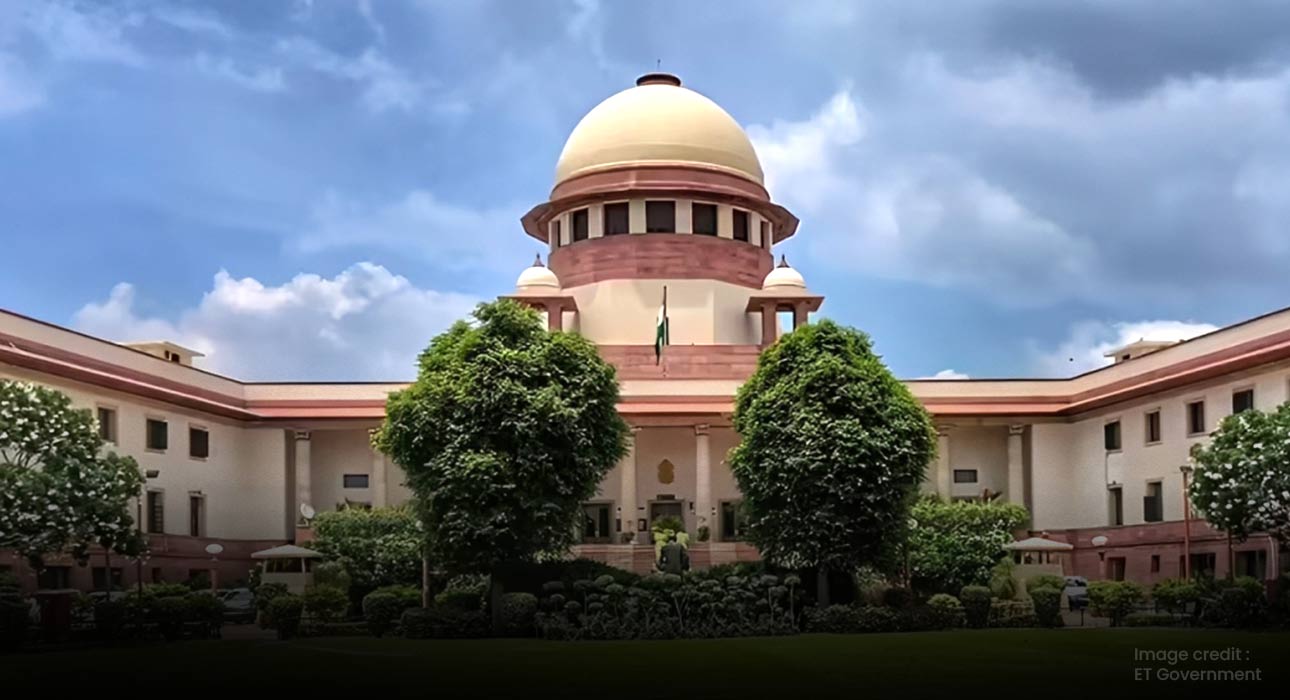
The Supreme Court announced national guidelines to prevent misuse of the Prevention of Child Sexual Offences (POCSO) Act, 2012, during marriage disputes. This is to protect spouses from being wrongfully accused of sexually abusing their children during divorce and custody disputes. The special bench stated that such lies can lead to long-lasting damage, public humiliation and wrongful arrest before the accused can prove their innocence.
The decision came after the Supreme Court rejected an FIR filed by a woman against her husband for sexually abusing their minor daughter. This was done after a Central Bureau of Investigation (CBI) investigation found the accusations unreliable. The bench also found such cases rising during ongoing marital disputes. The Supreme Court bench noted that while Section 22 of the POCSO Act punishes false information, delayed truth could bring severe mental and physical harm to the falsely accused person. The guidelines are mandatory procedures that the police and special courts must follow under the specific circumstances mentioned by the court.
Application of Guidelines
The Court has specified that the guidelines can be applied only under two particular conditions. The first is that an offence under the POCSO Act must be reported against a parent or family member living under the same roof as the child victim. The second is that there must be an ongoing matrimonial dispute between the parents, proving that they have a strained relationship. The court stated that the officer who receives the complaint must verify whether there is an ongoing matrimonial dispute when the complaint is received.
No Rushed Arrests
The Supreme Court has declared that police cannot rush to arrest a suspect under Section 35 of the Bharatiya Nagrik Suraksha Sanhita 2023 (BNSS). This law allows police to arrest a suspect without a warrant or valid reason to believe that a crime has been committed by that individual. The negative impact of this law is the wrongful arrest of an accused without valid proof.
Evaluation Of The Child
The Special Juvenile Police Unit (SJPU) must consult an expert in child or adolescent psychiatry or clinical psychology and the District Child Protection Unit (DCPU) to evaluate the child first. The court has specifically ordered the SJPU not to make any forced or random arrests until this procedure is completed. The SJPU is the special unit formed under POCSO rules to provide assistance, protection and primary support to child victims of abuse.
Expert Report Decides Arrest
The mental health expert’s evaluation report has to be considered along with other evidence to decide whether arrest of the accused is justified. The court stated that there is a growing misuse of the POCSO Act and children’s falsified testimonies by parents who are involved in marital and custody disputes.
Professional Judgment In Direct Complaints
A psychiatric expert must evaluate the child in cases where parents approach the special POCSO court with a direct complaint under section 33 of the POCSO Act. The expert’s decision will determine whether the case moves forward and whether the accused must be summoned in a special court. POCSO courts are special courts created to ensure speedy trial of child abuse cases under the POCSO Act. These special courts also aim to create a child-friendly and safe courtroom environment for minor victims to testify.
Conclusion
The Supreme Court’s judgment comes as a timely warning to individuals who misguide and mentally pressure minor children to lie about sexual abuse. The court’s decision is a larger safeguard to protect young children from such toxic and mental abuse. It is also sending a message to use legal and just ways to solve marital disputes without dragging children into it. The judgment marks a historic move by India’s top court to not only protect children’s rights but also guard innocent individuals from being wrongfully accused, shamed and jailed.


Leave feedback about this