







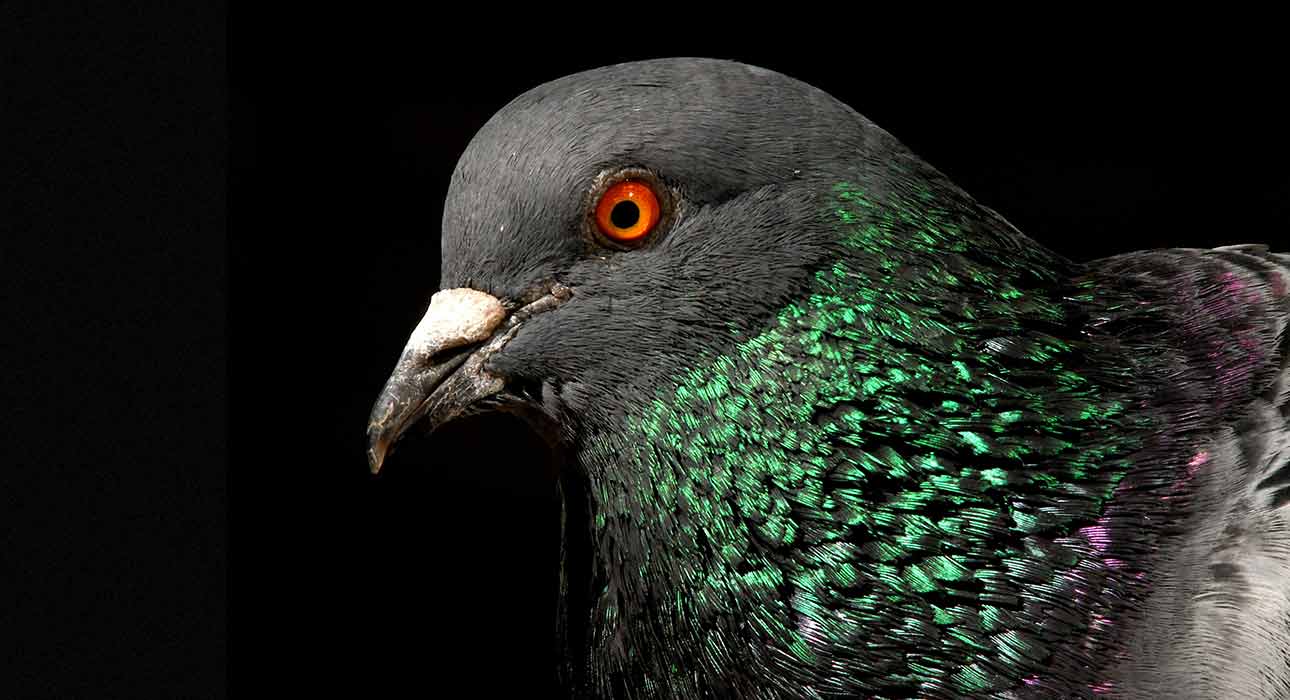
A team of researchers from the University of Iowa conducted an experiment to test the working of the Law of Effect. Any normal living being is very likely to stick towards a particular action that leads them towards a reward, isn’t it? If a teacher offers a kid chocolate for doing their homework on time, there are high chances and probably a possibility that the kid would not want to lose their teacher’s favour and work on time for some time.
It works not just on humans but also applies to animals. A parrot will mimic its words again & again for rewards, and dogs will fetch the disk for food & care. However, the scientists in their research at Iowa discovered something very different from this! Their research to test the Law of effect included the help of pigeons, and it was a surprise that pigeons were not as easy to predict!
The flexible feather: pigeon’s survival on the edge of chaos
When the scientists at the University of Iowa tried to test the effect of the (law of effect), which states that animals of any kind tend to repeat the behaviours that provide them with rewards, they found pigeons were built differently. The test and experiment were conducted in a way in which pigeons were offered food in exchange for pecking 5 buttons in any 120 orders list. However, the test was surprising, because while the pigeons certainly preferred some sequences, they never repeated the same act! They were highly consistent in changing the sequences of their patterns and experimenting with new ways, which makes them biologically flexible and naturally adaptive to this unpredictable world.
Research details
The team of researchers further explained the whole process in which they conducted this experiment. During the whole experiment, pigeons were offered food as a reward but only after they had completed an activity which required pecking of 5 buttons in 120 decided orders. However, the birds were free-spirited and kept their choices open by never falling for a single similar sequence. During this experiment, all the pigeons very consistently opted for unique ways. The researchers had worked with 6 pigeons to peck 5 buttons in 120 sequences.
During the whole experiment, the birds were given no instructions and placed within different chambers. Also, the buttons were placed in a computerized touch screen. The buttons disappeared when the pigeons pecked on them. After the completion of 5 pecks, they were given a reward. Each of the pigeons performed all 120 sequences.
It was a surprise for the researchers to discover that the pigeons never fully stayed on any preferred sequence. The pigeons preferred a 5-button sequence that rose and fell throughout the 8 months and 30,000 times they performed this task. The pigeons kept on trying different and unique ways. They did not repeat any sequence continuously. A similar test, on Mouse, rats, cats, and pigs, was conducted where they reduced their options and worked for the reward.
Research Findings
While other animals, along with human beings, prove with their actions that the law of effect works on them, pigeons are different. They do not suppress themselves and get adaptive with limited options. But rather try a different way, even though performing similar sequences offers them a reward in return for the act. Such behaviours are obviously not consistent with and in terms of the law of effect.
Author’s perspective
Ed Wasserman, who is a professor at the department of psychology and brain science, marks the activities of pigeons in the research as responding at the very edge of chaos. According to Wasserman, the research clearly shows and proves to the world that there is something that keeps and prevents the pigeons from becoming like a machine. It might be a mechanism that prevents the pigeons from this changing world. It might be in their best interests and extremely essential for their survival.
“Maybe other behaviours like playing some kind of instruments, composing music or creating some art are similar kinds of adaptive ways among humans” is the perspective of Odysseus study co-author and UGI graduate from the Science.
Conclusion
The experiment concludes that the law of effect works on many animals, birds and even humans, but not on pigeons. The pigeons consistently opted for a unique sequence rather than following a similar act, which would have offered them and provided them with a reward, which suggests that this changing behaviour that they hold, it might be essential for their survival in this constantly changing world.

Leave feedback about this