







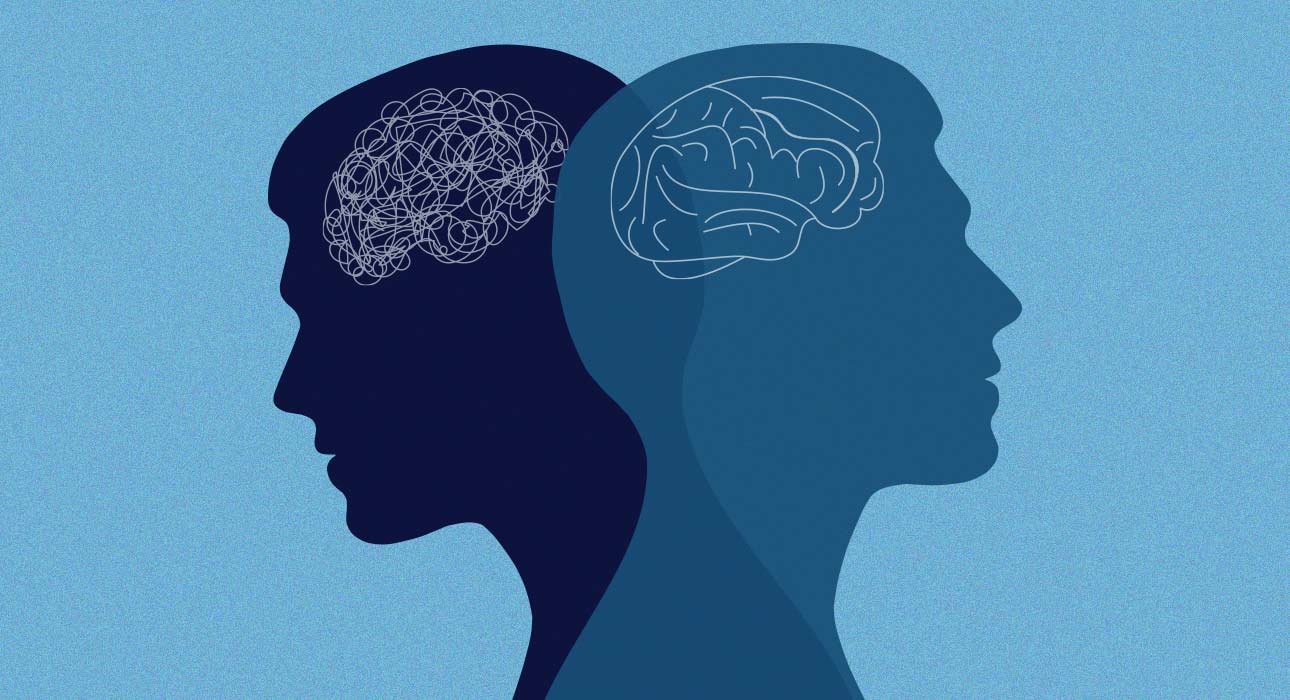
Perfectionism has been found to serve as a risk factor across diagnoses. The unending need to become “better” at something, essentially the ability to do something “better” today than you did yesterday, propels us into a state of perfectionism. Success and perfectionism may seem synonymous; however, they are not! Perfectionism is not merely related to success—success is only the first stage of creating an actual psychological disorder. As you begin to cross the “Bridge of Perfectionism,” you will ultimately lose sight of anything outside of the extreme distance you are aiming for on the horizon.
Is success guaranteed by pursuing perfection? I personally do not think so. In fact, I would argue that perfectionism is really a barrier between you and your mental/physical success and your ability to achieve and find peace. The pursuit of “better” is in direct opposition to our biological need to find balance (homeostasis) within ourselves. Continually trying to achieve perfection may lead to creating many mental illnesses, otherwise known as anxiety disorders, eating disorders, or OCD.
The Psychology Behind the Need to Be Perfect
A perfectionist will work hard to achieve perfection and constantly evaluate themselves negatively for their lack of achievement. A perfectionist will also worry that others will evaluate their performance negatively. Research from a variety of populations has shown that perfectionistic tendencies have increased since the late 1980s. Studies show that Gen Z college and university students are becoming more and more perfectionists. This trend may be influenced by increased social media exposure, unachievable beauty standards, and higher performance expectations.
The perfectionist has an obsessive, relentless drive for unattainable/asinine goals. So much so that many become distracted from other portions of their life. They become excessively focused on achieving and being productive, and will base their entire self-esteem on their accomplishments and productivity (to date).
Numerous hypotheses have attempted to break down the perfectionist’s overall behavioural tendencies; e.g., neurotic vs. normal perfectionism; perfectionistic concerns vs. perfectionistic strivings. Within the realm of perfectionism, some have proposed that it could be detrimental, whereas others have proposed that perfectionism is goal-oriented; therefore, its existence could be constructive.
Theoretical arguments later determined that self-evaluation during an individual’s performance will lead to psychopathology-based perfectionism. Is perfectionism innate or learned? It’s the same as the nature vs nurture it can be either. Perfectionism is often divided into two extremes, as D. E. Hamachek distinguished between normal (adaptive) and neurotic (maladaptive) forms of perfectionism in the 1978 publication “Psychodynamics of Normal and Neurotic Perfectionism”. People who are considered normal perfectionists have high expectations for themselves that are realistic, and they enjoy putting forth the effort to meet them.
In contrast, neurotic perfectionists are motivated by fear of failing and the anxiety associated with it; thus, they have unrealistic and unattainable expectations that they will never be able to reach.
The individual who demonstrates perfectionism can be extremely critical of themselves and/or those around them and has a tendency to distance themselves from their perceived inadequacies. Conversely, perfectionists typically have difficulty determining the difference between success and failure as they usually experience a temporary high when experiencing any sense of success; while also viewing the demands of everyday life as unimportant; therefore, due diligence does not occur until after the accomplishment is met (race).
Perfectionism as a Transdiagnostic Risk Factor
Researchers have studied whether perfectionism also acts as a common risk factor across many types of mental disorders. A transdiagnostic process is not tied to a diagnostic category but tends to put people at increased risk for multiple disorders and then continues to support them over time.
Perfectionism has been found in multiple studies—both longitudinal and cross-sectional—to precede the emergence of symptoms associated with many mental disorders, such as eating disorders, obsessive–compulsive disorder (OCD), depression, and anxiety disorders, as well as several other emotional symptoms. Perfectionism appears to act as an underlying psychological process common to many mental disorders rather than simply as a symptom of them.
Perfectionists can engage in all-or-nothing thinking patterns, exhibit a high level of fear regarding making mistakes, and interpret minor setbacks as negative reflections of their self-worth. These types of thinking patterns result in increased emotional suffering, self-criticism, and rumination—processes that have already been identified as contributing factors to many mental illnesses.
Additionally, perfectionism gives rise to avoidance. Those who have a fear of being imperfect often delay tasks, overprepare and fully avoid any potential obstacles. While short-term avoidance leads to lessening anxiety, they contribute to the extended duration of symptoms across all illness types via the reinforcement of protracted psychological pain.
Another important factor with perfectionists is conditional self-worth. The identity of an individual can be damaged if they feel their worth is based on the accomplishments they achieve or do not achieve. Therefore, any failure that they perceive brings them to vulnerability; this will help illustrate how perfectionism appears in many of the different diagnoses and also links to compulsive behaviours, anorexia, depression, and performance anxiety.
To distinguish between excellence and perfection, you must understand that there is a marked difference between the two terms. The use of perfectionism by many motivated people as a badge of honour is the most anecdotal of distinctions. The only real distinction lies in the fact that perfectionism is a pursuit of perfection only, while striving for excellence allows you to create meaningful results through progress and continuous opportunities to learn.
Constantly needing to control everything and therefore continually trying to do everything better than before changes how someone thinks and can cause depression or, in extreme cases, lead to suicidal thoughts. Just because perfectionism is usually related to success does not mean that perfectionism will be present when an individual cannot handle failure. Overall, self-criticism reduces the individual’s confidence and their self-image.
Perfectionism Beyond Psychological Disorders
The concept of perfectionism is becoming more apparent in lifestyle identities as well as in academic or psychological performance. The quest for an ideal body is a reflection of the same strict standards seen in perfectionism, and the modern “fitness freak” culture can also be linked to perfectionistic tendencies. In these situations, people may progressively lose the capacity to discriminate between what can and cannot be reversed, causing their bodies to go beyond their inherent limitations.
Perfectionism not only can have psychological effects but also physical ones. The drive to be physically perfect creates serious health problems, such as heart problems, the use of performance-enhancing drugs, and self-harm inflicted during training. What begins as self-improvement could ultimately become self-punishment if perfection replaces health.
In time, perfectionism can shift from an internally driven personality characteristic to a wanted outgrowth driven by the desire for social approval, social comparison, and social validation. During this transition, characteristic traits of narcissism and traits associated with perfectionism can exist together and are connected to self-value being based on the ideal expression of oneself and the admiration received from others, rather than to self-acceptance.
Therefore, perfectionism is a complex, multi-faceted idea, and the rigidity of perfectionistic expectations may create results that are less beneficial and even damaging to both your physical and mental well-being. The initial result may be perceived as positive or commendable; however, it may produce more harm than benefit through continued adherence to rigid standards of perfectionism.
Conclusion
Perfectionism can subtly become a psychological burden, even though it’s frequently viewed as the ideal of success. The unrelenting quest for perfection separates people from mental health, balance, and acceptance. Knowing that perfectionism is a transdiagnostic risk factor enables us to see that the problem is not an attempt to improve but rather a loss of psychological flexibility. Learning to live with imperfections while retaining mental stability may be a better indicator of true growth than striving for perfection.
References +
Perfectionism – Universität Bremen By Anon Year: 2023 Container: Uni-bremen.de URL: https://www.unibremen.de/en/klips/research/research-focus/perfectionism
The Life of a Neurotic Perfectionist
By Ariana Dee Year: 2017 Container: Medium URL: https://medium.com/@rddee/the-life-of-a neurotic-perfectionist-d16cb55667dd
Perfectionism, mattering and loneliness in young adulthood of Generation-Z
By Bushra Shafiq, Anam Ali, Hidna Iqbal Year: 2024 Container: Heliyon Publisher: Elsevier BV Volume: 10 Issue: 1 Page: e23330-e23330 DOI: 10.1016/j.heliyon.2023.e23330
Kulsum, Z. A., & Akshaya, A. (2023). Perfectionism and anxiety in Generation Z and the Millennials. Heliyon. Retrieved from
https://www.sciencedirect.com/science/article/pii/S240584402310538X
Kelly, J. D. IV. (2015). Your best life: Perfectionism—The bane of happiness. Clinical Orthopaedics and Related Research, 473(10), 3108–3111. https://doi.org/10.1007/s11999-015- 4279-9
Egan, S. J., Wade, T. D., & Shafran, R. (2011). Perfectionism as a transdiagnostic process: A clinical review. Clinical Psychology Review, 31(2), 203–212.





Leave feedback about this