







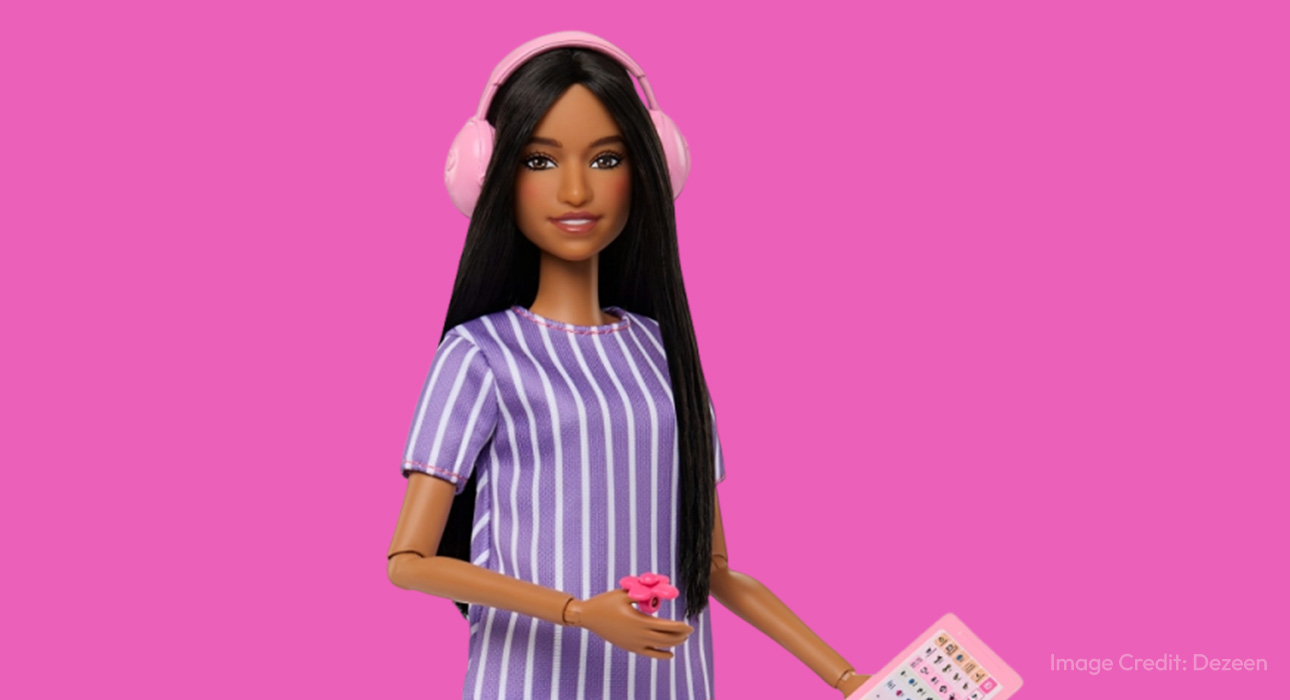
Picture those old Barbie dolls, blonde hair, bright eyes, everywhere you looked in stores. Now things shifted. A doll once made one way back in 1959 now comes in shapes, shades, sizes, and stories. Not just variety for show. Kids see people unlike themselves while playing, not during lessons later on. Seeing the difference early? That plants quiet understanding.
Different faces, bodies, lives, they speak without words. Play becomes a mirror that some kids rarely seen before. Back then, playthings usually pushed one idea of looks and self. Think early Barbies, slim, pale, fitting an old mould of “pretty.” These figures quietly shaped kids’ sense of belonging, suggesting which types mattered most. Studies found that seeing just one kind of shape, the classic Barbie form, affects how young girls see bodies and beauty ideals (Dittmar et al., 2006).
Nowadays, Barbie looks more like real life. What changes is how young minds pick up on society’s cues during make-believe, pretend games, let children step into various lives, picture new paths ahead, and test views about others nearby. Studies piling up suggest that playthings showing variety, such as figures with varied complexions, curls, or ways of moving through the world, guide kids toward understanding feelings, lessen unfair judgments, and strengthen who they feel they are inside (Nesbitt et al., 2019).
Read More: First Autism Doll: A Landmark Step Toward Inclusive Representation
Beyond One Look: The Rise of Inclusive Barbies
Nowadays, the company behind Barbie makes fashion dolls showing more kinds of people. Some have rounder bodies, others are slim, and their faces differ just like real folks. Skin shades range widely, and hair comes in styles you actually see on the streets. A few wear hearing aids, some use wheelchairs, and others use insulin pumps. Not every doll walks, talks, or sees the same way. These choices reflect how life really looks. Starting back in 2019, Mattel began expanding its Barbie line to reflect more kinds of lives. One version rolls on a wheelchair, another wears leg braces you can see.
Some hold hearing devices behind their ears, and others have skin patterns showing vitiligo. A recent addition features facial traits linked to Down syndrome. Instead of hiding differences, they’re simply present, like anyone else. Because in neighbourhoods, schools, stores, people just aren’t all the same. Seeing that mix early might shape how children notice who belongs. Value isn’t earned by looking typical. It’s already there, built in.
By 2025, progress had deepened through broader inclusion. A new Barbie featuring Type 1 diabetes arrived bearing tools such as a glucose sensor and insulin delivery device, shaped alongside experts from a health-centred nonprofit. Meanwhile, another doll emerged, one reflecting autism, crafted after listening closely to self-advocates who described personal ways of engaging with surroundings (The Guardian; AP News).
A doll released in 2024 broke new ground – Barbie without sight, made alongside the American Foundation for the Blind to mirror how those with limited vision live. Touch-based details shape its form, built from actual lived experience rather than guesswork. Kids now hold figures showing more of life’s variations, not just one narrow view. Reality slips into toy boxes through subtle textures and intentional shapes. Seeing oneself in a childhood object? That possibility grows wider here.
How Different Toys Change How Kids See the World
Here is why it counts. Study after study over many years finds that kids who interact with figures showing varied cultures form wider views on fairness and belonging. Research into growing minds points out that dolls or action characters reflecting real-world diversity support understanding others, lessening bias because pretend scenarios let young ones live alternate experiences briefly (Times of India coverage about inclusive playthings).
That moment a kid spots a toy matching their own look, skin colour, hair type, ability, or heritage, it does something quiet but deep. Belonging clicks in. A message forms without words: I matter here just like anyone else. Children whose lives aren’t mirrored right away among playthings might still grow through watching how others live. Seeing differences closely teaches feeling with people, not just about them. This kind of learning sticks, shaping how they connect later in life.
Just seeing someone who looks like you isn’t the whole story. One look at Black Barbie dolls reveals kids notice more than just skin tone – they absorb messages about value and belonging. Because when toy shelves separate certain faces into limited runs, it quietly sends a message: different means less normal. How companies market playthings shapes young minds far beyond the packaging. Even well-meaning designs risk falling short if tucked away in novelty corners. Presence alone does not fix an imbalance. Lasting impact comes from making space every day – not once a season. Inclusion fades when it feels like an afterthought.
Inclusion Through Play Goes Beyond Appearance
Not just a toy on the shelf, Barbie’s variety quietly introduces kids to lives unlike their own. Take the one with Type 1 diabetes, she might spark talks about constant care, invisible struggles, because real days include insulin checks. Then there is the autistic version, carrying noise-dampening ear gear and a tablet meant for talking, showing how some minds work better with support tools since sound or speech isn’t always easy.
These figures don’t preach – they sit, they exist, yet still hint at deeper stories through small details that match actual routines. Playing matches what experts know about how kids learn best – it helps them pick up social rules and handle emotions. Because they act out situations with toys or dream up stories unlike real life, they start to see things through someone else’s eyes without even realising it.
Toy choices shape how kids view differences – when figures look different but play the same, oddness fades. Because every day exposure slips inclusion into their minds without fanfare. Unusual becomes routine when variety shows up on shelves. Seeing varied faces while growing means fewer assumptions later. These small moments stick around far past childhood.
Read More: Small Talks: Assessing Social Communication in Neurodivergent Children
Beyond Barbie: Other Shifts in How Kids Play
Out there beyond Barbie, movement stirs across toy makers. LEGO slips in faces from every corner of the world, while Lottie Dolls shape limbs to match real lives. American Girl steps forward, too, weaving threads of varied heritages into cloth bodies. Stories spun on bedroom floors now stretch wider, shaped by small hands clutching figures who look like classmates, cousins, neighbours.
The difference isn’t highlighted, it simply shows up, quiet and ordinary, inside the plastic and fabric. This move into inclusion ties to wider moves showing a world rich in skin tones, physical traits, sizes, backgrounds, yet also limits. Though playthings by themselves cannot erase deep social divides, still they hand kids views on fairness plus belonging right from young years, so seeing difference becomes ordinary within growth (Zipdo, 2023).
Challenges And The Path Forward
Even with progress, problems still exist. Back then, early versions of Barbie drew criticism for pushing limited ideas about looks and unnatural physiques – ideas tied to worries about how girls see their own bodies (Dittmar et al., 2006; Nesbitt et al., 2019). Those findings show that real change in toys isn’t just about different faces – it’s about what kids absorb when they learn who matters, how people should look, and why.
How toys get shown and sold makes a difference. When inclusive dolls sit out of sight or feel like extras, kids treat them as less normal. Studies point to this effect clearly (Amirah S. 2025). So it falls on parents, teachers, and toy creators to team up not only to make inclusive toys but also to lift them, put them in sight, and weave them into daily play.
More Than a Toy: A Tool for Inclusion
Starting as just one polished figure, Barbie now appears in many forms, each different from the last. Not only playthings, these figures quietly suggest a world where size, shade, skill, and origin aren’t barriers. From the start, looks changed slowly, yet kept pace with real life outside toy boxes. Because of this shift, kids see value in variety without being told outright. Worth isn’t tied to how someone seems; it shows up in how they’re shown. Through small plastic faces, big ideas take shape: fairness, presence, dignity, without speeches or slogans. Over time, what once felt fixed became fluid, opening space for everyone.
Playing with different kinds of dolls helps children notice uniqueness while treating fairness like everyday air. A child might start seeing worth in their own skin, then spot it in someone else too, slowly shaping a picture where no one stands outside. These versions of Barbie do more than sit on shelves; they whisper lessons about feeling seen, staying true, and belonging.
References +
An autistic Barbie joins Mattel’s line of diverse dolls | AP News https://apnews.com/article/autistic-barbie-doll-9c33f493a04c4f52bb8d08026b6f5f53
Nesbitt, A., Sabiston, C. M., DeJonge, M., Solomon-Krakus, S., & Welsh, T. N. (2019). Barbie’s new look: Exploring cognitive body representation among female children and adolescents. PloS one, 14(6), e0218315.
Why does diversity in dolls matter? | Blue Patch https://www.bluepatch.org/why-does-diversity-in-dolls-matter/
Ahmed, J. U., Ananya, A. T., Mim, K. P., Ahmed, A., & Iqbal, S. (2020). Barbie in a wheelchair: Mattel’s respect for customer voice. FIIB Business Review, 9(3), 181-186.
Dittmar H, Halliwell E, Ive S. Does Barbie make girls want to be thin? The effect of experimental exposure to images of dolls on the body image of 5- to 8-year-old girls.
‘Representation matters’: Barbie launches first doll with type 1 diabetes https://www.theguardian.com/film/2025/jul/08/barbie-launches-first-doll-with-type-1-diabetes
Dev Psychol. 2006 Mar;42(2):283-92. doi: 10.1037/0012-1649.42.2.283. Erratum in: Dev Psychol. 2006 Nov;42(6):1258. PMID: 16569167.
Why multicultural toys are important for kids – The Times of India https://timesofindia.indiatimes.com/life-style/parenting/moments/why-multicultural-toys-are-important-for-kids/articleshow/105787318.cms
‘A positive step forward’: Mattel launches first blind Barbie | Disability | The Guardian https://www.theguardian.com/society/article/2024/jul/23/a-positive-step-forward-mattel-launches-first-blind-barbie
Mattel unveils new inclusive toys, including Barbie with hearing aids https://www.axios.com/2022/05/11/mattel-barbie-diverse-dolls-american-girl
CSUF Student Researcher Explores Black Barbie’s Effect on Children’s Self-Image https://news.fullerton.edu/press-release/csuf-student-researcher-explores-black-barbies-effect-on-childrens-self-image/
Almeida, D. B. L. D. (2017). On diversity, representation and inclusion: New perspectives on the discourse of toy campaigns. Linguagem em (Dis)curso, 17(02), 257-270.
García-Estévez, N. Toys with a purpose: values of inclusion and diversity in brands targeting children. Analysis of the impact and social projection.



Leave feedback about this