For over half a century, each morning, a man would get up and think, “Oh, it’s still 1953”. He didn’t even recognise himself in the mirror; he was expecting to see a young man, not an old man! He was able to hold a conversation, solve puzzles and remember detailed things from his childhood. But he was unable to recall what had transpired five minutes prior, and unable to learn the names of each person he encountered daily and didn’t know the world had progressed without him.
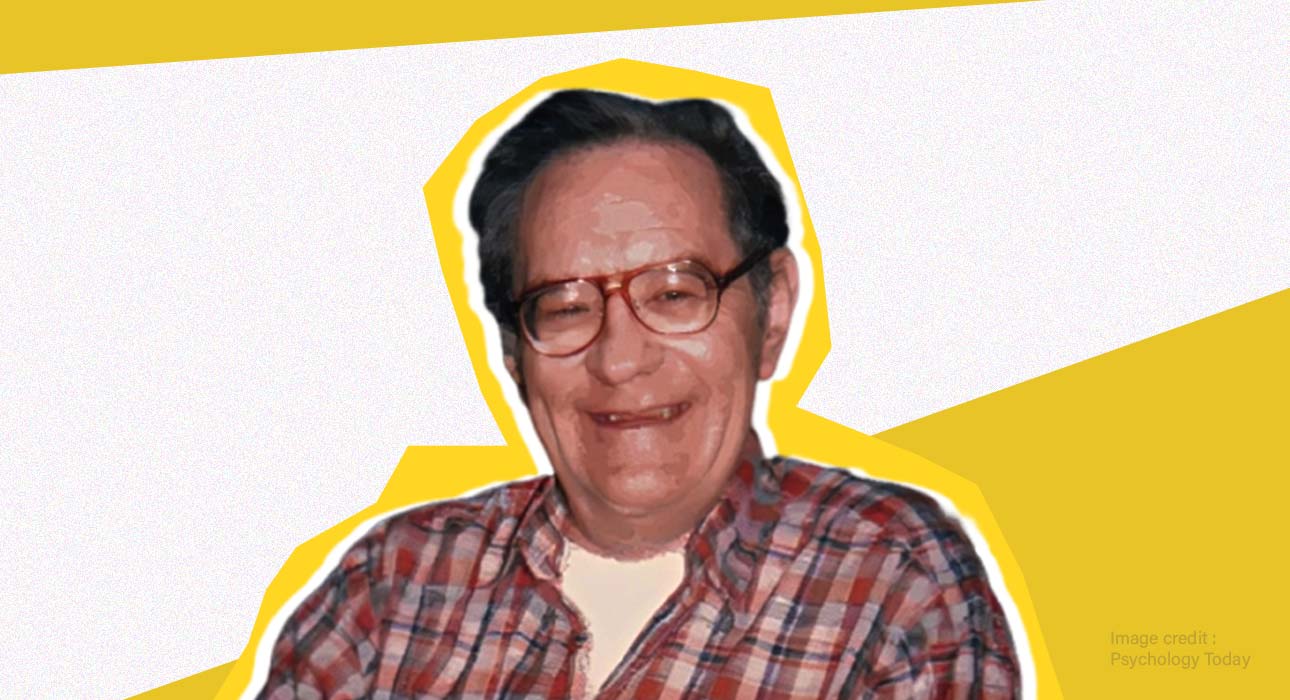
His name was Henry Molaison, a subject for most of his life. Patient H.M. was one of the most researched people in the history of neuroscience. It was the same surgery in 1953 that altered his life that also altered what scientists knew about the workings of memory in the human brain. This article explores what happened to H.M., the lessons learned from his case, and why his contribution to science remains unparalleled, and in many ways, unknown to him.
Read More: Memory Trajectories in Lonely Individuals: Evidence from a 7-Year Longitudinal Study
The Man and the Surgery: What Was Done and Why
Henry Molaison was born in Hartford, Connecticut, on 26 February 1926. He started having seizures, which are characterised by sudden, uncontrolled movements, loss of consciousness, or convulsions that are caused by abnormal electrical activity in his brain, as a child. The seizures were so severe and so frequent by his late teens that he could hardly function. At the time, normal drugs failed to offer much relief. By the time he was in his mid-20s, Henry had quite a regular occurrence of multiple grand mal seizures, the most severe type, which included convulsions and loss of consciousness, once every week (Scoville & Milner, 1957).
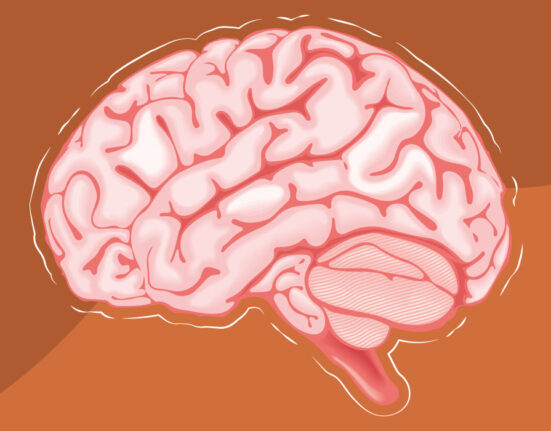
In 1953, a brain surgeon named Dr William Beecher Scoville came up with a revolutionary idea. The seizures seemed to start in the medial temporal lobe, an area of the brain located deep within the temporal lobes, including a brain structure known as the hippocampus. Scoville proposed that he’d have to have large sections of the medial temporal lobe on both sides of Henry’s brain removed to reduce or eliminate the seizures. Henry and his family agreed. In August 1953, Scoville performed the operation, excising about eight centimetres of tissue on both sides of Henry’s medial temporal lobe, nearly all of both hippocampi (Scoville & Milner, 1957).
The surgery was a success, to some extent. Henry’s seizures gradually became much less severe. However, the cost was unfathomable and completely surprising. Henry woke up from the surgery unable to create any new long-term memories. He had a fair memory of his life until about two years prior to the surgery. Except that as soon as he stepped out of the operating room, he forgot every new experience happened within minutes. He would meet somebody, converse with him, and after that, when that person was gone and came back, he spoke as if they were strangers. Also, he must have read the same magazine articles over and over again, new every time. He was unable to recall the location, what he ate or who visited him (Milner, 1962).
This is known as anterograde amnesia- the inability to create new, long-term memories, while retaining old ones. Amnesia is the term used for memory loss. Memory loss that progresses from a certain point in time forward, rather than backwards, is called anterograde. Henry also experienced some retrograde amnesia, some loss of memory of events that occurred prior to the surgery, but it was less severe and less complete. Taken together, these two types of deficits led scientists to a radical re-thinking of the nature of memory and the organisation of the brain to store memories (Milner et al., 1968).
What H.M. Revealed: Memory Is Not One Thing
Prior to H.M., scientists considered memory as one, cohesive system, a general memory capacity of the brain that was on or it was off. This was completely overturned with the case of H.M. After years of research, in particular by Brenda Milner, a neuropsychologist at the Montreal Neurological Institute, the result was the finding that memory is not a single entity. It consists of several separate subsystems, each of which is controlled by various brain structures, which function largely independently of each other (Milner et al., 1968).
The most basic difference H.M. uncovered was between declarative memory and non-declarative memory. The explicit memory, also known as declarative memory, is the type that is most commonly associated with the word memory. It encompasses episodic memory (memory of personal experiences and events: yesterday’s events, where they went on holiday, who was at a birthday party) and semantic memory (general knowledge and facts: what is the capital of France, what does a particular word mean, how to solve a math problem). H.M. was unable to make any new declarative memories of either type. Each new fact, each new event vanished within minutes (Squire, 2009).
However, non-declarative memory or implicit, procedural memory, was very well preserved. This form of memory is outside of conscious awareness, like the memory of riding a bike, how to type, button a shirt, etc. In a famed experiment, Milner had H.M. trace a star shape in the mirror; this is particularly tricky because the mirror flips left and right. After many sessions, H.M.’s performance gradually became much better. He forgot each day whether he ever did the work before. But his hands recalled. His brain had retained the skill but in a system that had not been destroyed (Milner, 1962).
The results were significant. It proved that the hippocampus, the area which had been removed in H.M.’s case, was necessary to form a new declarative memory but not for procedural learning. Skills and habits are stored in other structures such as the basal ganglia and cerebellum. Memory, it was discovered, was actually a group of separate biological functions, all of which resided in different areas of the brain (Squire & Dede, 2015).
Another really significant finding was on the distinction between short-term memory and long-term memory. H.M. was capable of retaining information in mind for several seconds: If someone told him a number and asked him to say it back right away, he could. However, any information that was not attended to disappeared once more. This showed that there is no single process involved in short-term memory (what someone is thinking of right now) or long-term memory (what someone stores for later), but two separate systems. The hippocampus seems to serve as a switchboard or hub for transforming short-term experiences into long-term memories. If it is not there, that gateway is forever closed (Baddeley, 2003).
Read More: Understanding Short-Term and Long-Term Memory: How We Retain What Matters
How Patient H.M. Started the Journey
Henry Molaison, who was never able to grasp the extent of what he was giving up to researchers, willingly and consistently participated in researchers’ experiments for fifty-five years! Every time the scientists arrived to test him, he spoke to them as if they were strangers. He thought it was the first time each time he performed a task for which he had hundreds of occasions before. His demeanour was at all times very gentle and equable, in part because he couldn’t form new worries, leading researchers to believe he spent much of his life in the here and now (Corkin, 2013).
The basic research was done largely by Brenda Milner, who started studying H.M. in 1955 and worked with her for many years. There, Milner’s careful and precise work led to crucial findings of the differences between declarative and procedural memory, along with the distinct function of the hippocampus. She has alluded to H.M. as the most significant case in the history of memory research, as did many others in the neuroscience community (Milner et al., 1968). Later, neuropsychologist Suzanne Corkin became the primary caretaker of H.M. and studied him until his death in 2008, publishing a thorough biography of him and his legacy (Corkin, 2013).
Henry passed away on 2nd December 2008, and his brain was donated to science. It was preserved, frozen and then cut into 2,401 tissue slices, each of which was photographed and was available to researchers around the world in a process that took 10 hours and was streamed online. The detailed anatomical mapping that ensued validated and clarified decades of behavioural testing: which structures were removed, and what they had been doing (Annese et al., 2014). H.M. hasn’t stopped influencing the field since his death.
His true identity only became known to the public posthumously, after his lifetime of research participation had been kept anonymous. The identification was made by Corkin and colleagues as a form of recognition: a means of providing this man with a whole person, rather than just initials on a page.
Read More: How the Brain Remembers Trauma Differently: Understanding Traumatic Memory
A Neuro Legacy, Rewritten
It is difficult to overestimate the scientific effect of H. M’s case. The original 1957 report by Scoville and Milner has been cited in more than 12,000 scientific papers, one of the most cited papers in the history of neuroscience and psychology (Squire, 2009). The findings regarding H.M. were not simply an accumulation of data from what has already been learned. They really were changing the questions they were asking, the way they were using the tools, and the assumptions they were making.
Prior to H.M., many scientists thought that memory was a general function of the cerebral cortex (the outer layer of the brain) and that there was no brain region that was dedicated to creating new memories. H.M. has proven them wrong. The hippocampus was determined as the essential and crucial region for consolidating new declarative memories. This knowledge now guides the treatment of other forms of amnesia, traumatic brain injury, and post-traumatic stress disorder (PTSD), among other conditions, such as Alzheimer’s disease, which is a progressive disorder that disrupts the hippocampus and nearby structures early in its course, and causes a pattern of memory loss that is similar to that of H.M. (Squire & Dede, 2015).
The H.M. case also helped to develop an understanding of memory consolidation, the gradual stabilisation and storage of a new experience in the brain over hours, days and weeks. Studies since H.M.’s have revealed that the hippocampus encodes and relays the day’s events during sleep to the cortex for long-term memory. Disrupting sleep disrupts this process, which is one of the reasons sleep deprivation so strongly impairs memory (Walker, 2017). All of this could not have been so clearly understood, so quickly, if the window H.M. opened hadn’t been in the broken memory system.
Furthermore, the case of H.M. provided a significant ethical issue that is still pertinent to the present day. But he was involved in hundreds of studies over five decades that involved some minor discomfort. But which he never could have given informed consent to in the traditional sense. Since he could never remember consenting. This study was conducted with the help of family members and, eventually, a legal guardian. This is an issue that he raised regarding consent, identity and the ethics of research with cognitively impaired participants. This continues to be discussed in the bioethics literature (Carey, 2008).
Read More: False Memory Syndrome: Between Truth and Belief
Conclusion
Henry Molaison lived a quiet, gentle, largely contented life; he lived in a permanent present tense. Every day was a fresh and unburdened one. He welcomed the researchers who came to see him. He was patient with the constant testing. Also, he was seemingly satisfied with a world that he could never quite keep. What he gave science: memory’s map, the role of the hippocampus, the difference between knowing and doing. He gave without fully realising what the gift is.
It is a case study of the kinds of discoveries that can happen when scientists are exceptionally attuned to a person whose experience of the world is very different from ours. These discoveries do not happen in laboratory settings. They also do not happen when scientists are conducting a specific experiment. When Brenda Milner began her research into memory, she didn’t have the intention of changing the face of science. She went out to know one man. This knowledge of memory came next.
References +
- Annese, J., Schenker-Ahmed, N. M., Bartsch, H., Maechler, P., Sheh, C., Thomas, N., … Corkin, S. (2014). Postmortem examination of patient H.M.’s brain based on histological sectioning and digital 3D reconstruction. Nature Communications, 5, 3122. https://doi.org/10.1038/ncomms4122
- Baddeley, A. (2003). Working memory: Looking back and looking forward. Nature Reviews Neuroscience, 4(10), 829–839. https://doi.org/10.1038/nrn1201
- Carey, B. (2008, December 4). H. M., an unforgettable amnesiac, dies at 82. The New York Times. https://www.nytimes.com/2008/12/05/us/05hm.html
- Corkin, S. (2013). Permanent present tense: The unforgettable life of the amnesiac patient H. M. Basic Books.
- Eichenbaum, H. (2013). Memory on time. Trends in Cognitive Sciences, 17(2), 81–88. https://doi.org/10.1016/j.tics.2012.12.007
- Milner, B. (1962). Les troubles de la mémoire accompagnant des lésions hippocampiques bilatérales [Memory impairment accompanying bilateral hippocampal lesions]. In P. Passouant (Ed.), Physiologie de l’hippocampe (pp. 257–272). Centre National de la Recherche Scientifique.
- Milner, B., Corkin, S., & Teuber, H. L. (1968). Further analysis of the hippocampal amnesic syndrome: 14-year follow-up study of H.M. Neuropsychologia, 6(3), 215–234. https://doi.org/10.1016/0028-3932(68)90021-3
- Scoville, W. B., & Milner, B. (1957). Loss of recent memory after bilateral hippocampal lesions. Journal of Neurology, Neurosurgery, and Psychiatry, 20(1), 11–21. https://doi.org/10.1136/jnnp.20.1.11
- Squire, L. R. (2009). The legacy of Patient H.M. for neuroscience. Neuron, 61(1), 6–9. https://doi.org/10.1016/j.neuron.2008.12.023
- Squire, L. R., & Dede, A. J. O. (2015). Conscious and unconscious memory systems. Cold Spring Harbour Perspectives in Biology, 7(3), a021667. https://doi.org/10.1101/cshperspect.a021667
- Walker, M. P. (2017). Why we sleep: Unlocking the power of sleep and dreams. Scribner.