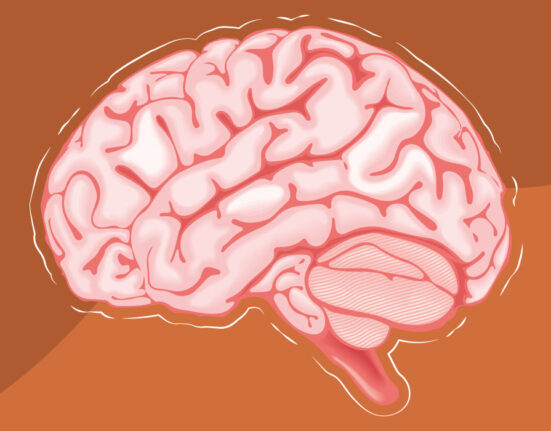
The fascinating story of Ben McMahon, an Australian man who was the victim of a serious car accident, is one of the ways we see the mysteries of the brain in real life. He woke up from a coma in 2012 speaking fluent Mandarin Chinese despite having only studied it briefly in high school (Catherine Garcia, 2015). His English eventually returned, but he retained his fluency in Mandarin, later moving to China and hosting a dating show.
This rare phenomenon is sometimes referred to by researchers as Foreign Language Syndrome, where brain trauma causes the brain to “re-wire” and access a dormant or partially learned language (Eghzawi et al., 2025). This is a classic example of how trauma changes the brain indefinitely and in a way that is difficult to explain. In this article, we will be exploring this topic in depth with the help of pioneering psychological theories.
What is Trauma?
Trauma is any disturbing experience that results in significant fear, helplessness, dissociation, confusion, or other disruptive feelings intense enough to have a long-lasting negative effect on a person’s attitudes, behaviour, and other aspects of functioning (APA, 2018).
Traumatic memories are a complicated psychological phenomenon, where some experiences are never forgotten but can only be remembered in fragments. Traumatic memories are not as complete or coherent as regular memories. Even if its details are absent, the actual event can still make a strong impression (Van der Kolk et al., 2008).
What is Memory?
Memory is the capacity of the mind to learn, store and recall information as required. Memory allows us to remember things over time and therefore act upon them in the future (Zlotnik & Vansintjan, 2019). Traumatic memories are not normal memories. Typical memories are often in proper, organised sequence and are logical. Traumatic memories, however, are disorganised and fragmented. They may not fall into the usual pattern used to store information in the mind. There are four stages in the process of normal memory (Cleveland Clinic, 2024):
- Gathering – the brain is taking in information from the outside world.
- Encoding – The brain converts this information into a storage format.
- Storage – The brain stores and retains information.
- Retrieval –The brain can select and recall information when necessary.
Read More: Trauma on Repeat: Why the Past Keeps Showing Up in the Present
The working of the brain
Memories are stored, encoded, recalled and collected in a certain manner by the brain. The synchronised activity of the neurons, neurotransmitters, synapses, and some parts of the brain is responsible for this process. The hippocampus is one of the major structures involved in this process (Cleveland Clinic, 2024).
The hippocampus is a small area of the brain that plays a role in many functions, such as learning and memory. It plays a role in processing, storing, and recalling memories, as well as in converting short-term memory into long-term memory. The hippocampus belongs to a group of brain structures involved in emotional and autonomic functions, such as heart rate, breathing, and sweating, known as the limbic system.
The two brain regions that are regarded as the sections responsible for making memories and eliciting emotional responses are the hippocampus and the amygdala. The hippocampus links the hypothalamus and the amygdala, which are responsible for both the “fight-or-flight” reaction in the body (Cleveland Clinic, 2024).
For example, if a student puts forward a wrong answer in class and the teacher corrects them politely instead of berating them, the hippocampus and amygdala will create a positive memory. Now, if the teacher has a negative response towards them, the hippocampus and amygdala will form a negative memory, possibly one where the student does not ever answer again in that teacher’s class.
Read More: Understanding Short-Term and Long-Term Memory: How We Retain What Matters
How does a traumatic experience affect memory?
Trauma can cause some people to have gaps in their memory. Some may recall certain parts of the event, but other important parts are lost. Some people can’t remember anything. They might only have a general sense that something’s gone wrong. At times, they can experience strong emotional responses to some triggers that they may not know where they are originating from (Dorothy, 2025). This is a protective and defensive reaction of the brain. If the experience is too overwhelming, the brain may shut down to prevent the person from experiencing it again. This is sometimes referred to as dissociative amnesia and may result in a memory that is not complete, is not remembered at all, or doesn’t exist (Cleveland Clinic, 2023).
It can be distressing for people to have difficulties with memory. They may think that there is something wrong with them due to their memory. May doubt if the traumatic event ever actually occurred. This may result in shame and embarrassment. These thoughts can impact a person’s self-perception as well. This is, however, a normal way that the brain protects itself and is more common than most people realise.
Theory of Dissociation
Dissociation is a phenomenon that occurs in a healthy mind as it brings together sensory experiences, memories, and emotions to form a whole, according to Pierre Janet’s theory. If mental stress is a lot, the mind can be split. This stress can make it difficult to connect them and create a disconnection between the various parts of the mind. These dissociative elements lie in the subconscious and can then act on their own. Traumatic memories can be lost and can enter a “fixed idea” and cause obsessive or re-enacting behaviours. These memories do not become part of the person’s personal history. This gives rise to a lack of awareness, suggestibility or awareness of the surrounding environment, bringing the person further out of the centre of his consciousness (van der Hart & Horst, 1989).
Cognitive Model
This is also known as the Ehlers & Clark Cognitive Model (Ehlers and Clark, 2000). Based on this model, chronic PTSD occurs when individuals think of or remember the trauma in ways that result in a feeling of continual threat. This persistent feeling of danger is typically based on over-negative interpretations of the trauma or traumatic aftermath and inadequacies in trauma memory integration or traumatic aftermath integration. This is a disintegration that lets the memory be accessed easily, and thus the constant emotional and psychological anguish.
Trauma Memory Theory
Van der Kolk’s theory on trauma memory is that trauma is not a narrative to be recalled but lived, and that the trauma memory is experienced in the body in the form of disorganised, sensory-motor body memories. This theory emphasises the significance of the “body keeps the score” and also notes that traumatized individuals are not necessarily conscious of the event, but instead they will certainly feel various events in their body when it is triggered. The rational brain is unable to differentiate between past danger and present security, and extreme stress closes off the rational brain and activates the emotional part of the brain, which then prevents the hippocampus from correctly placing the event in context (Van der Kolk, 1994).
Dual Representation Theory
The Dual Representation Theory is a psychological theory that attempts to explain the symptoms of PTSD, such as nightmares and flashbacks. Trauma memories are being stored in two memory systems – Verbal Accessible Memory (VAM), which is information that can be recalled by will and Situationally Accessible Memory (SAM), which is sensory (sounds, smells, sights), and strong emotions during trauma often result in vivid, involuntary flashbacks. High fear levels during a traumatic event can disrupt the VAM system, and the memory will become SAM-driven (Brewin et al, 1996).
Conclusion
The brain, at its core, is a survivor. Whether it is rewiring itself after trauma to surface a forgotten language, as in Ben McMahon’s remarkable case, or fragmenting a memory to shield a person from unbearable pain, every mechanism described in this article points to the same truth, which is that the brain is constantly working to protect us, even when that protection comes at a cost.
Trauma does not simply leave a mark on the mind; it reshapes the very architecture through which we remember, feel, and understand ourselves. The hippocampus struggles to place events in context. The amygdala fires in response to triggers that the conscious mind cannot explain. Memories that cannot be spoken are stored instead in the body, in sensation, in reflex. Across the frameworks explored here, from Janet’s theory of dissociation to Van der Kolk’s somatic understanding of trauma, from the Cognitive Model to Dual Representation Theory, a consistent picture emerges that traumatic memory is not a failure of the mind, but an adaptation of it.
Understanding this is not merely an academic exercise. For those living with fragmented memories, unexplained emotional responses, or a persistent sense of threat, knowing that these experiences are neurologically grounded can itself be a source of relief. The mind is not broken. It is doing what it was built to do, surviving, moment by moment, the weight of what it has been through. Healing, then, begins not with the erasure of those memories, but with gently teaching the brain that it is, finally, safe.
References +
- Catherine Garcia. (2015). A man wakes up from a coma, able to speak an entirely different language. The Week. https://theweek.com/speedreads/446689/man-wakes-from-coma able-speak-entirely-different-language
- Bessel A van der Kolk et al. (2008). Exploring the Nature of Traumatic Memory. Research Gate.
- https://www.researchgate.net/publication/261582549_Exploring_the_Nature_of_Trauma tic_Memory
- Gregorio Zlotnik & Aaron Vansintjan. (2019). Memory: An Extended Definition. PubMed. https://pmc.ncbi.nlm.nih.gov/articles/PMC6853990/
- Author. (2024). Memory. Cleveland Clinic. https://my.clevelandclinic.org/health/articles/memory
- Ansam Eghzawi et al. (2025). Foreign Language Syndrome: Neurological and Psychiatric Aspects. PubMed. https://pmc.ncbi.nlm.nih.gov/articles/PMC12388630/
- Author. (2024). Hippocampus. Cleveland Clinic. https://my.clevelandclinic.org/health/body/hippocampus
- Jake Dorothy. (2025). “Big chunks of blank memory”: complex trauma and dissociative body memory. PubMed. https://pmc.ncbi.nlm.nih.gov/articles/PMC12380955/
- Author. (2023). Dissociative Amnesia. Celveland Clinic. https://my.clevelandclinic.org/health/diseases/9789-dissociative-amnesia
- Onno Van der Hart & Rutger Horst. (1989). The dissociation theory of Pierre Janet. Research Gate. https://www.researchgate.net/publication/226524345_The_dissociation_theory_of_Pierr e_Janet
- A Ehlers & D M Clark. (2000). A cognitive model of posttraumatic stress disorder. PubMed. https://pubmed.ncbi.nlm.nih.gov/10761279/
- Bessel A. Van Der Kolk. (2002). Trauma and memory. Wiley Online Library. https://onlinelibrary.wiley.com/doi/full/10.1046/j.1440-1819.1998.0520s5S97.x
- C. R. Brewin et al. (1996). A dual representation theory of posttraumatic stress disorder. PubMed. https://pubmed.ncbi.nlm.nih.gov/8888651/