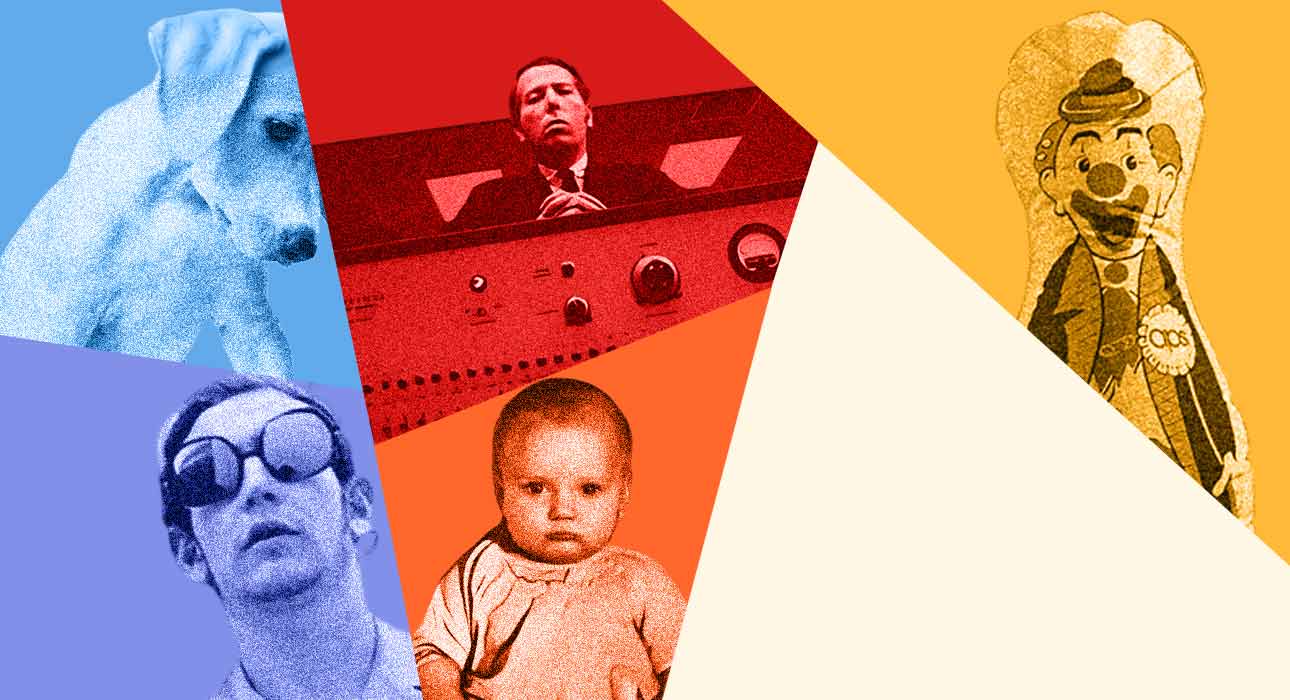
Should science be allowed to go so far? When the quest for knowledge can prove detrimental to the very people it studies? Psychology began as a science in the late 1800s, and throughout its history, it has generated some of the most illuminating insights into human thinking that have ever been recorded. Embedded in that history, however, is a darker thread: Psychological Experiments that were conducted with actual children, prisoners, patients, or animals who were unable to refuse or even know what was being done to them.
A few of these studies were not done in secret. They were widely published in premier journals, hailed by the profession, and became the basis for whole fields of psychological theory that continue to be cited and studied today. The ethical misdeeds they embody aren’t the actions of bad people, but rather of scientists who were often acting with the best of intentions, believing that the knowledge they were acquiring was worth the sacrifice. That belief and the harm it allowed did eventually lead to a question that the field had not explicitly addressed: Is it worth acquiring the knowledge at that cost?
Five Experiments That Changed Psychology
1. Watson’s Little Albert Experiment (1920)
In 1920, American psychologist John B. Watson and his assistant Rosalie Rayner embarked on an experiment to test the hypothesis that fear could be conditionally elicited in a child, that is, by repeated association. The subject was a baby, “Little Albert”, who was around 9 months old when the experiment began. Albert was first shown several animals and objects, such as a white rat, a rabbit, and a dog, all of which were normal. Albert was first shown some normal animals and objects, including a white rat, a rabbit, and a dog. He did not have fear.
Then Watson started to show the rat to Albert, and suddenly, behind his head, he made a loud sound, like a metal bar hitting him, making him feel surprised and uneasy. Albert eventually began crying at any white, furry object (Watson & Rayner, 1920) and, after repeated pairings, cried just at the sight of the rat.
The study was never reversed. Watson soon left Johns Hopkins University and Albert, whose true name was finally revealed years later as Douglas Merritte, a child with neurological issues from birth that Watson knew of, died from a different cause at the age of six (Fridlund et al., 2012). The conditioned fear was never extinguished. Ethically, the study is now recognised as an unmistakable violation because the infant could not have consented, and he was knowingly and intentionally traumatised for the sake of the theory.
Read More: John B. Watson’s Personal Scandal and the Fall of Behaviourism’s Public Image
2. Milgram’s Obedience Experiments (1961–1963)
Social psychologist Stanley Milgram was interested in finding out how ordinary people had been able to commit such extraordinary atrocities, in this case, the Holocaust. So, would people hurt a stranger if someone told them to do so? In his infamous experiment, participants were informed as if they were part of a learning study. They were told to deliver a more and more intense electric shock to another person (actually an actor, but the subject was not told that) whenever they gave an incorrect response. The shock labels were: slight shock, danger: severe shock, and XXX (Milgram, 1963).
Even when the actor was screaming and begging him to stop, claiming a heart condition, about 65 per cent of participants gave the maximum shock level. There was no shock administered, but the participants were unaware of this. Some were visibly upset, shook and sweated but still went on. The results of Milgram’s study were shocking and disturbing. The participants were, however, deceived, subjected to extreme psychological stress, and many reported persisting feelings of guilt and anxiety following the study (Baumrind, 1964). Milgram himself admitted that there was an emotional price to be paid, but hailed the scientific value.
Read More: The Milgram Experiment: Understanding Obedience to Authority
3. The Stanford Prison Experiment (1971) by Zimbardo
Social psychologist Philip Zimbardo was inspired by Milgram’s work to create a mock prison in the basement of Stanford University’s psychology department. 24 male college students were randomly selected to take the role of guards or prisoners. Zimbardo himself played the role of the prison superintendent. The simulation quickly spiralled out of control: guards started to psychologically humiliate prisoners, solitary confinement, sleep deprivation and degrading work were used as punishments. Several prisoners cried. The experiment was originally scheduled for two weeks, but lasted only six days before Graduate Student Christina Maslach observed the conditions and objected (Zimbardo, 1973; Haney et al., 1973).
Perhaps most importantly, Zimbardo’s study was one of the most cited in social psychology. This demonstrates the influence of roles and situations on individual behaviour. However, it has been subject to many ethical and scientific criticisms since then. The participants were not informed that they had the option of leaving, the “guards” were instructed about their roles, and Zimbardo’s role as both experimenter and prison warden skewed the objectivity of the study (Le Texier, 2019).
4. Learned Helplessness Experiments (Seligman & Maier, 1967)
During the late 1960’s, Martin Seligman and Steven Maier did a series of experiments on dogs to examine the connection between control and learning. The dogs were strapped in harnesses and shocked with electric shocks they could not avoid. When later placed in a shuttle box- where they could jump over a barrier to avoid the shocks, most of the previously restrained dogs did not try. Although now they could run, they lay down and suffered through the pain. This phenomenon, Seligman termed “learned helplessness” – animals (or people) repeat exposure to an uncontrollable event, and they stop trying even if conditions change (Seligman & Maier, 1967).
The research yielded a concept that completely revolutionised the understanding of depression and motivation in psychology. It did so, however, by wilfully inflicting pain on animals that were unable to give their free and informed consent and unable to understand what was being done to them. Such an approach would not be acceptable to modern animal welfare law.
5. Bandura’s Bobo Doll Experiment (1961)
Albert Bandura’s Bobo Doll experiment examined how children learn aggressive behaviour through observation. Children were exposed to an adult model who either played calmly or physically and verbally attacked an inflatable Bobo doll- punching it, hitting it with a mallet, and shouting aggressive phrases. Children who watched the aggressive model were significantly more likely to reproduce those aggressive behaviours when later placed in a room with the doll (Bandura et al., 1961). The findings formed the foundation of social learning theory, which stated the idea that behaviour is learned not just through direct experience but through observation.
The ethical concern centres on the deliberate induction of aggressive behaviour in young children without adequate follow-up to undo any modelling effects. Children in the aggressive condition were deliberately frustrated before the observation phase- their toys were removed, which raises additional concerns about the emotional manipulation of child participants (Crain, 2005).
Read More: Bandura’s BOBO DOLL Experiment: Unveiling Child Aggression
Why These Studies Were Ethically Troubling
Across all five studies, a set of recurring ethical failures stands out. Participants, whether children, adults, or animals, were rarely given meaningful information about what they were agreeing to, removing their ability to make a genuinely free choice. Many were actively deceived: told the study was about something entirely different from its real purpose. In several cases, that deception caused direct psychological harm, like participants in Milgram’s study reported lasting guilt and anxiety, and the children in Watson’s experiment were never returned to their prior emotional state (Baumrind, 1964; Harris, 1979).
A particularly significant concern is the use of vulnerable populations- infants, children, animals, and adults in controlled or institutional settings, who had little or no power to resist or even question what was being done to them. Vulnerability in research is not simply a matter of age or ability. It is also a matter of the power relationship between the researcher and the participant. When that imbalance is extreme, the risk of exploitation increases significantly (Beauchamp & Childress, 2013).
Several studies also lacked proper debriefing, which is the process of explaining to participants after a study what really happened and why, and helping them process any distress. Without this, the emotional costs of participation lingered unchecked. It is now understood that adverse effects in research participants, including negative psychological outcomes, are far more common than the field once acknowledged, and that systematic monitoring for them is an ethical requirement, not an optional courtesy (Bystedt et al., 2014).
What Changed: Ethics Reforms Born From These Failures
The ethical failures of these Psychological Experiments, along with others, including the Tuskegee syphilis study and Nazi medical experiments during World War II, built pressure that eventually produced a formal overhaul of how research involving human participants is conducted. The Nuremberg Code of 1947 established that voluntary, informed consent is a non-negotiable requirement for any human experimentation (Shuster, 1997). This was followed by the Declaration of Helsinki in 1964, which set standards specifically for medical and psychological research and introduced the requirement of independent ethical review before a study could begin (World Medical Association, 2013).
In the United States, the National Research Act of 1974, passed in direct response to the Tuskegee scandal, led to the Belmont Report of 1979, which remains a cornerstone of research ethics. The report set out three core principles: respect for persons (the right to informed consent and special protection for vulnerable groups), beneficence (the duty to maximise benefit and minimise harm), and justice (ensuring the burdens of research are not placed unfairly on those least able to refuse) (National Commission, 1979). The American Psychological Association’s own ethical guidelines have undergone repeated revisions, each tightening protections around deception, consent, debriefing, animal welfare, and participant withdrawal (APA, 2017).
Institutional Review Boards- known as IRBs- now exist in universities and research institutions worldwide. Every study involving human or animal participants must be reviewed and approved by an IRB before it begins. Researchers must demonstrate that risks are minimised, that the potential benefits justify those risks, and that participants have been fully informed and can withdraw at any time without penalty. Studies like Watson’s, Milgram’s, or Zimbardo’s would not pass ethical review under today’s standards.
Conclusion
The Psychological Experiments described in this article succeeded scientifically. Watson confirmed that fear could be conditioned. Milgram showed how far ordinary people would go under authority. Zimbardo demonstrated the corrupting power of roles. Seligman mapped the psychology of helplessness. Bandura revealed how children absorb behaviour through watching others. Each study yielded findings that genuinely changed the course of psychological theory and continue to be cited in clinical practice, education, and policy.
But each also left behind a legacy of harm. Children experienced long-lasting fear and anxiety. The study convinced participants they had seriously hurt another person. The experiments caused unnecessary suffering to animals. Participants were left without explanation, support, or closure. The knowledge gained does not erase those costs, and the field’s long silence about them was itself a form of ethical failure.
The ethics frameworks that grew from these failures- informed consent, IRBs, debriefing requirements, protections for vulnerable groups are not bureaucratic inconveniences. These protections were created because past research harmed real people. Psychological research is not flawless now. New technologies and methods continue to raise new ethical questions. But the dark history of the discipline remains a constant reminder: participants are not instruments of inquiry. Science must always respect the humanity of its participants.
References +
- American Psychological Association. (2017). Ethical principles of psychologists and code of conduct (2002, amended effective June 1, 2010, and January 1, 2017). https://www.apa.org/ethics/code
- Bandura, A., Ross, D., & Ross, S. A. (1961). Transmission of aggression through imitation of aggressive models. Journal of Abnormal and Social Psychology, 63(3), 575–582. https://doi.org/10.1037/h0045925
- Baumrind, D. (1964). Some thoughts on the ethics of research: After reading Milgram’s “Behavioural Study of Obedience.” American Psychologist, 19(6), 421–423. https://doi.org/10.1037/h0040128
- Beauchamp, T. L., & Childress, J. F. (2013). Principles of biomedical ethics (7th ed.). Oxford University Press.
- Bystedt, S., Rozental, A., Andersson, G., Boettcher, J., & Carlbring, P. (2014). Clinicians’ perspectives on the negative effects of psychological treatments. Cognitive
- Behaviour Therapy, 43(4), 319–331. https://doi.org/10.1080/16506073.2014.939593
- Crain, W. (2005). Theories of development: Concepts and applications (5th ed.). Pearson Prentice Hall.
- Fridlund, A. J., Beck, H. P., Goldie, W. D., & Irons, G. (2012). Little Albert: A neurologically impaired child. History of Psychology, 15(4), 302–327. https://doi.org/10.1037/a0026720
- Haney, C., Banks, W. C., & Zimbardo, P. G. (1973). Interpersonal dynamics in a simulated prison. International Journal of Criminology and Penology, 1(1), 69–97.
- Harris, B. (1979). Whatever happened to Little Albert? American Psychologist, 34(2), 151–160. https://doi.org/10.1037/0003-066X.34.2.151
- Le Texier, T. (2019). Debunking the Stanford Prison Experiment. American Psychologist, 74(7), 823–839. https://doi.org/10.1037/amp0000401
- Milgram, S. (1963). Behavioural study of obedience. Journal of Abnormal and Social Psychology, 67(4), 371–378. https://doi.org/10.1037/h0040525
- National Commission for the Protection of Human Subjects of Biomedical and Behavioural Research. (1979). The Belmont Report. U.S. Department of Health, Education, and Welfare. https://www.hhs.gov/ohrp/regulations-and policy/belmont-report/index.html
- Seligman, M. E. P., & Maier, S. F. (1967). Failure to escape traumatic shock. Journal of Experimental Psychology, 74(1), 1–9. https://doi.org/10.1037/h0024514
- Shuster, E. (1997). Fifty years later: The significance of the Nuremberg Code. New England Journal of Medicine, 337(20), 1436–1440. https://doi.org/10.1056/NEJM199711133372006
- Watson, J. B., & Rayner, R. (1920). Conditioned emotional reactions. Journal of Experimental Psychology, 3(1), 1–14. https://doi.org/10.1037/h0069608
- World Medical Association. (2013). Declaration of Helsinki: Ethical principles for medical research involving human subjects. JAMA, 310(20), 2191–2194. https://doi.org/10.1001/jama.2013.281053
- Zimbardo, P. G. (1973). On the ethics of intervention in human psychological research: With special reference to the Stanford Prison Experiment. Cognition, 2(2), 243– 256. https://doi.org/10.1016/0010-0277(72)90014-5