







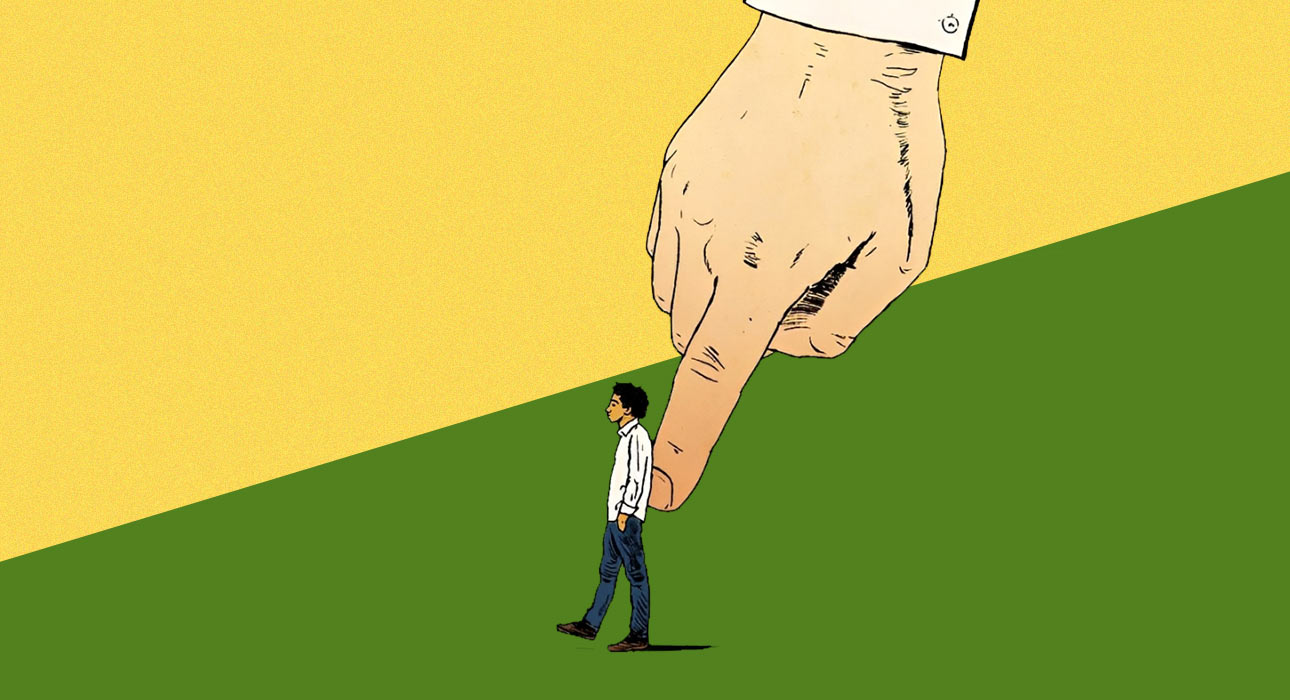
People often love to imagine themselves making rational, well-considered decisions about things based on weighing up all the pros and cons. But research into what’s called behavioural economics suggests otherwise: that actually lots of the time it’s more a matter of how alternatives were initially presented.
Nudge theory, which holds that little, intentional changes to an individual’s surroundings might encourage them to make better decisions without restricting their ability to choose different decisions, is based on this realisation (Thaler & Sunstein, 2008). Nudge Theory doesn’t rely on monetary rewards or punishments, nor does it compel anybody to do anything. It just makes one choice more noticeable or simpler to select than the others. That’s proven useful enough that governments, schools, hospitals, companies, and environmental agencies have all started building nudges into how they operate.
Naturally, as nudging has gained popularity, it has been questioned more and more, mostly about whether discreetly influencing individuals in this way, even for their own benefit, crosses the line into manipulation. This article explains the theory’s origins, how it manifests itself in health, finance, education, and sustainability, provides some actual instances of its application, and explains where the ethical line truly lies.
Read More: The Psychology of Everyday Decisions: How We Make Decisions Without Realising It
Where the Theory Comes From
Richard Thaler and Cass Sunstein first used the expression in their 2008 book Nudge: Improving Decisions About Health, Wealth, and Happiness. A nudge is any component of “choice architecture” that often modifies behaviour without limiting alternatives or altering prices.
The basic logic is provided by behavioural economics, which integrates psychology and economics to explain the difference between our perceived and actual decision-making processes. People usually depend on mental shortcuts, or heuristics, rather than thoroughly weighing every option since comprehensive thought is cognitively expensive (Kahneman, 2011). Although those shortcuts reduce labour, prejudice and inaccuracy might also arise from them.
Choice architecture is just the term for how a decision gets set up: what’s the default, what’s visible, what’s buried. Move any of those and, often without anyone noticing, behaviour shifts too.
In Healthcare
Health is where nudging has probably had its clearest wins. Something as simple as putting fruit at eye level in a cafeteria and pushing the fries further back measurably increases healthier choices, without banning anything (Thaler & Sunstein, 2008). Organ donation is another good case study. Countries that default people into being donors (opt-out) see far higher donation rates than countries that require people to actively sign up (Johnson & Goldstein, 2003). Same choice, same freedom to say no, wildly different outcome, just because of which box is pre-checked.
Appointment and medication reminders work on the same principle. They’re not changing what people want, just helping them act on intentions they already had. Vaccination messaging that says “most of their neighbours are already vaccinated” does something similar. It leans on social norms rather than persuasion.
In Personal Finance
People are notoriously bad at prioritizing future- self over present-self, which is exactly why defaults matter so much in saving. Auto-enrollment into retirement plans is the textbook example. Employees can opt out any time, but once it’s the default, most people just stay in (Madrian & Shea, 2001). Some banks take it further with auto-transfers that quietly move part of every paycheck into savings before they get the chance to spend it. Bill reminders prevent late fees. Budget check-ins nudge people toward better spending awareness. Even something as small as a progress bar toward a savings goal gives people a visual reason to keep going.
In Education
Schools use the same tools: deadline reminders to fight procrastination, default course enrollment (with the freedom to switch) so students don’t fall through the cracks, and social-norm messaging from teachers, pointing out strong attendance or participation so it starts to feel like the standard, not the exception. Digital learning platforms lean on this even harder, with streaks, badges, and progress trackers that keep students coming back and reinforce consistency over time.
For the Environment
Sustainability is a newer space for nudging, but it works well here too, since most eco-friendly behaviour only needs a small push. Hotels telling guests “most people staying in this room reused their towel” measurably increases reuse rates and cuts water and energy use (Goldstein, Cialdini, & Griskevicius, 2008). Nowadays, utility providers frequently inform their clients how their consumption compares to that of their neighbours. If they’re over average, it’s usually enough to have them cut back. Supermarkets encourage customers to use reusable bags by charging a modest cost for plastic ones (Tilley et al., 2014). Recycling bins with visible labels that are positioned where people act.
Nudging in Practice
Several governments have set up dedicated “behavioural insights” teams to put this into policy. The UK’s team is probably the best-known example; their work has been credited with boosting tax compliance and organ donor registrations, which in turn helped cut transplant wait times (Halpern, 2015). It’s a good illustration of how a small shift in communication, especially delivered digitally, can scale into a real public benefit at low cost.
The US has run similar playbooks around retirement savings and healthier school food choices. And outside government, tech companies use nudges constantly: default settings, notification design, “recommended for” them often woven so seamlessly into an app that most users never register it as a nudge at all.
Why It Works in Its Favour
The core appeal of nudging is that it doesn’t take choice away. People can always decline the nudged option, with no penalty attached, unlike a law backed by a fine (Lau et al., 2023). That makes it a cheap, low-friction way to shift behaviour at scale, which is part of why it’s been picked up by so many different sectors rather than staying a niche economics idea.
When Nudging Becomes a Concern
The catch is that nudges work because people usually don’t notice them, which is also what makes critics uneasy. If a person does not know they are being influenced, can they really call the resulting choice fully their own (Hausman & Welch, 2010)? That tension gets sharper in commercial settings, where “nudge” starts blurring into “dark pattern”: countdown timers, pre-ticked subscription renewals, checkout flows designed to rush a purchase. The mechanics look identical to an ethical nudge; the difference is who it’s actually serving.
There’s also an equity question: nudges should ideally help everyone, not just quietly steer the people least equipped to notice or resist them. The line that keeps nudging defensible is transparency: an easy way to opt out, and solid evidence that the nudge is actually improving outcomes for the person being nudged, not just for whoever designed it.
Where That Leaves Us
In essence, nudge theory serves as a reminder that design affects behaviour, frequently in subtle ways, as opposed to depending only on willpower or reason. Individuals are better able to make decisions that reflect their genuine preferences when they recognise how their environment influences them. That is the useful portion. The uncomfortable part is that “it works” was never the same question as “it’s fine to use this way”, and that’s the question worth sitting with every time nudging shows up somewhere new.
References +
Cialdini, R. B., Reno, R. R., & Kallgren, C. A. (1990). A focus theory of normative conduct: Recycling the concept of norms to reduce littering in public places. Journal of Personality and Social Psychology, 58(6), 1015–1026. https://doi.org/10.1037/0022-3514.58.6.1015
Goldstein, N. J., Cialdini, R. B., & Griskevicius, V. (2008). A room with a viewpoint: Using social norms to motivate environmental conservation in hotels. Journal of Consumer Research, 35(3), 472–482. https://doi.org/10.1086/586910
Halpern, D. (2015). Inside the nudge unit: How small changes can make a big difference. WH Allen.
Hausman, D. M., & Welch, B. (2010). Debate: To nudge or not to nudge. Journal of Political Philosophy, 18(1), 123–136. https://doi.org/10.1111/j.1467-9760.2009.00351.x
Johnson, E. J., & Goldstein, D. (2003). Do defaults save lives? Science, 302(5649), 1338–1339. https://doi.org/10.1126/science.1091721
Kahneman, D. (2011). Thinking, fast and slow. Farrar, Straus and Giroux.
Kahneman, D., & Tversky, A. (1979). Prospect theory: An analysis of decision under risk. Econometrica, 47(2), 263–291. https://doi.org/10.2307/1914185
Madrian, B. C., & Shea, D. F. (2001). The power of suggestion: Inertia in 401(k) participation and savings behaviour. Quarterly Journal of Economics, 116(4), 1149–1187. https://doi.org/10.1162/003355301753265543
Samuelson, W., & Zeckhauser, R. (1988). Status quo bias in decision making. Journal of Risk and Uncertainty, 1(1), 7–59. https://doi.org/10.1007/BF00055564
Simon, H. A. (1957). Models of man: Social and rational. John Wiley & Sons.
Thaler, R. H., & Sunstein, C. R. (2008). Nudge: Improving decisions about health, wealth, and happiness. Yale University Press.




Leave feedback about this