







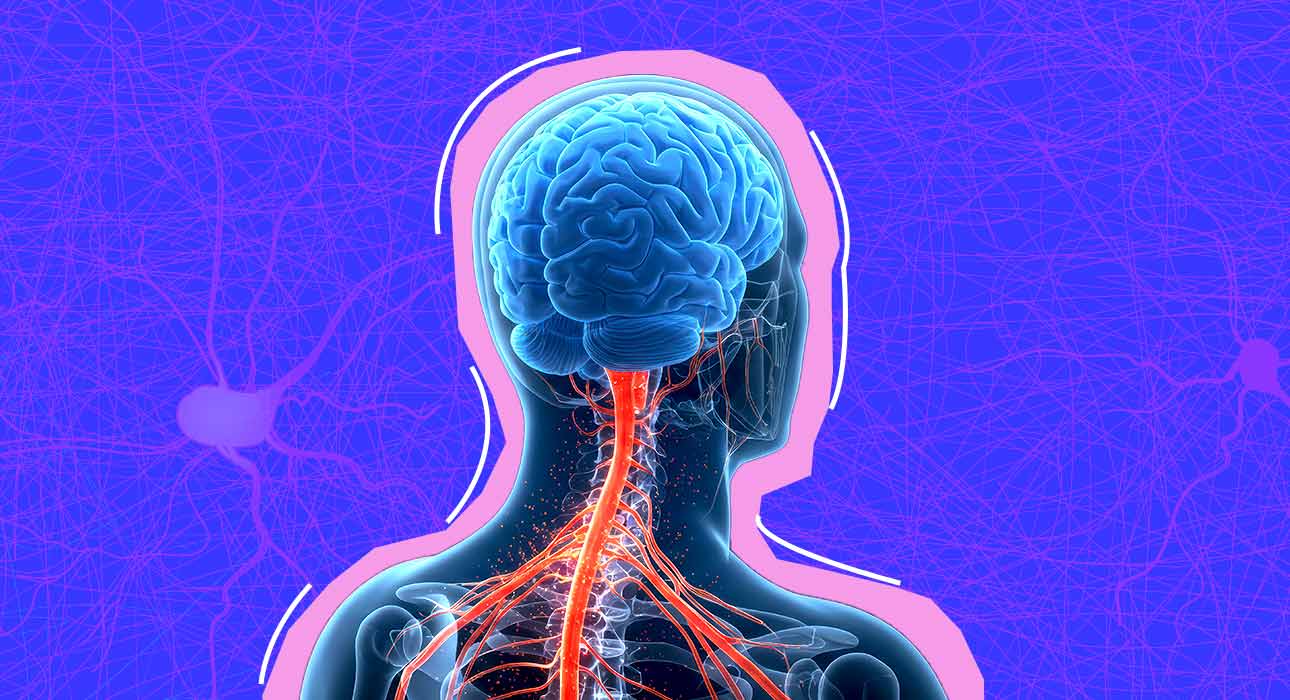
A swollen ankle, a red wound, or a fever is easily detected as an inflammatory response because they are visible or readily experienced. But what happens if there is inflammation inside the brain? Could this affect how one feels, thinks, remembers, or responds to stress and tension? These are the types of concerns that scientists are currently attempting to address by investigating “neuroinflammation,” a general term for inflammatory processes in the brain and spinal cord.
The immune system’s reaction to hostility is inflammation, which is vital for the body’s defence but needs to be strictly regulated. In fact, scientists think that neuroinflammatory responses contribute immensely to conditions including schizophrenia, psychosis, anxiety, and depression. A person’s view of their surroundings, their response to stressful situations, and various cognitive abilities can all be negatively impacted by even slight inflammation. However, the connection between brain inflammation and mental health issues is not absolute; rather, it is a link in a complicated web that involves behavioural, psychological, genetic, and socioeconomic variables.
The article ahead explores what neuroinflammation is and its effects on the brain, including its possible links with depression, anxiety, schizophrenia, and cognitive decline. It also sheds light on current research and its implications for these connections, the potential of anti-inflammatory approaches as treatments, and the future directions of research in this field.
What is Neuroinflammation?
The brain has its own sophisticated immune mechanisms that protect it from harm. The microglia – a type of brain immune cell help in maintaining homeostasis, eliminating dead cells, and defending the brain against infections. Astrocytes, another kind, help in controlling the central nervous system, which includes the brain and spinal cord. Inflammatory cytokines may be released as a result of microglia and astrocyte activation, which may be advantageous if the reaction is transient. On the other hand, persistent inflammation often causes tissue damage and can result in illness (Sălcudean et al., 2025).
Depending on the situation, neuroinflammation can have both positive and negative consequences. Therefore, classifying it as “good” or “bad” is meaningless. Most significantly, a prolonged pro-inflammatory response disrupts essential activities such as mood regulation, cognition, and behaviour by interfering with neural transmission.
Read More: What is Psychoneuroimmunology?
How does Neuroinflammation affect the Brain?
An important question that comes up is how the immune response can bring about such complex changes in mood, behaviour, or thoughts. One possibility is through changes in neurotransmitters. Inflammatory cytokines affect the production and release of monoamines such as glutamate, dopamine, and serotonin, which may affect Mood, motivation, reward, cognition, and behaviour. (Sălcudean et al., 2025).
The hypothalamic-pituitary-adrenal (HPA) axis, a component of the body’s stress response system and a potential cause of immunological dysfunction, may also be impacted by inflammation. A self-sustaining loop may result from these two systems driving one another.
Inflammation due to alterations in the kynurenine pathway can be a factor in mood and cognitive issues. The system is dysregulated by changes in serotonin and glutamate activity and tryptophan availability. Furthermore, inflammation can aggravate neuroinflammation by producing oxidative stress and disrupting the blood-brain barrier (Kim & Jeon, 2018).
Another crucial mechanism is the blood–brain barrier (BBB), a specialised system that controls the movement of substances from the circulation into the brain. Immunological signals like cytokines can alter the structure and function of the blood-brain barrier (BBB) during inflammation, potentially improving connections between the central nervous system and the body’s peripheral immunological responses. Therefore, changes in BBB function have been investigated as a possible connection between certain neurological or psychiatric conditions and systemic inflammation (Sălcudean et al., 2025).
Read More: The Body Remembers: How Stress, Trauma, and Emotion Shape Autoimmune Disease
Neuroinflammation and Depression
Studies show that some people with depression have elevated inflammation. According to research that combined the findings of 107 independent investigations with 5166 patients with depression and 5083 control patients, C-reactive protein (CRP), interleukin-6 (IL-6), and tumour necrosis factor-alpha (TNF-α) are among the pro-inflammatory biomarkers that are significantly elevated in people with depression (Osimo et al., 2020).
Therefore, inflammation most likely plays a part in some particular pathways related to depression. For example, pro-inflammatory cytokines may affect the brain’s monoamine metabolism and function, disrupt stress-response systems, and damage neurocircuits that control mood and other associated processes, all of which may lead to the emergence of depressive symptoms.
However, there is no indication that elevated inflammation is a universal characteristic of depression, for various reasons. In particular, depression might lead to the development of poor sleeping habits, low exercise, dysregulated eating, increased stress, and poor physical health, all of which are known to contribute to higher levels of inflammation in the body. Thus, researchers can hypothesise that inflammation levels in depressed patients may depend on their physical health. Thereby varying from one individual to another (Osimo et al., 2020).
Read More: How Sleep Shapes Mental Health: A Psychological Perspective
Neuroinflammation and Anxiety
Anxiety disorders involve fear, worry, apprehension, and other related emotions. Physiological arousal and threat processing become dysregulated. The causality of inflammatory processes in the development of these dysregulations has become a topic of research interest.
The immune-kynurenine hypothesis suggests that pro-inflammatory signalling can disrupt normal tryptophan metabolism, leading to decreased serotonin production and altered glutamate signalling, while some of the byproducts of this reaction disrupt neuronal function through oxidative stress pathways (Kim & Jeon, 2018). This may lead to affecting the emotional regulation and anxiety-related processes.
Neuroinflammation and Schizophrenia
A systematic review that investigated cytokine expression in patients with schizophrenia found changes in inflammatory mediators such as IL-1β, IL-6, TNF-α, and IFN- γ, among others (Lv et al., 2024). In addition, most studies had inconsistent results, and each of them found different connections between these variables.
Inflammation has the ability to interact with dopaminergic and glutamatergic systems, oxidative stress, and neuronal activity, which are all implicated in the pathophysiology of schizophrenia (Lv et al., 2024). As a result, there is a growing body of evidence connecting sickness and mental illness. Researchers aim to identify the specific clinical symptoms or disease mechanisms that inflammatory processes may influence.
However, there is no singular cause for schizophrenia. The presence of genetic predispositions, variations in neurological development, diverse environmental influences, and a wide range of individual experiences and reactions all contribute to the complexity of the aetiology. Therefore, it is more acceptable to think of neuroinflammation as a possible contributor to the condition rather than a causal element based on what is now known.
Neuroinflammation and Cognitive Dysfunction
Neuroinflammation can accelerate brain ageing and impair cognitive abilities. The brain has immune cells called ‘Microglia’, which remove cellular waste and respond to potential threats, thereby maintaining neuronal health. But they can also block neuronal function or cause injury by producing inflammatory chemicals if they remain active for a long time (Wang et al., 2023).
Extensive studies on Alzheimer’s disease show that neuroinflammation is highly related to characteristics like amyloid-beta plaque accumulation and progressive nerve cell death. Although microglial activation is not inherently damaging, the long-term inflammation might worsen the degeneration of brain cells and cause memory loss along with other cognitive impairments (Wang et al., 2023).
What does the recent research tell us?
Although research into Mental Health and Neuroinflammation has advanced considerably, many doubts remain. Neuroimaging methods are being used to detect inflammatory markers in the cerebrospinal fluid in order to evaluate microglial activation and to comprehend immune-related genes and molecular pathways.
Distinguishing between correlation and causation is a central challenge. Infections, obesity, stress, exercise, medication usage, and other physical health concerns can all have an impact on inflammatory marker levels. Therefore, researchers cannot use high levels of these markers as conclusive evidence that neuroinflammation causes mental health symptoms (Osimo et al., 2020). Growing research reveals a more complex picture, with inflammation potentially playing a crucial role only in some subgroups of persons with mental health disorders. Identifying these distinct groups remains a primary goal of contemporary study.
Potential Treatments
As a result of growing understanding that inflammation may have an impact on mental health, scientists are investigating whether medications that target inflammatory pathways might help reduce symptoms. Major depressive disorder has been the main focus of research into anti-inflammatory drugs and similar substances, either alone or in conjunction with conventional psychiatric therapies.
Certain anti-inflammatory medications may aid with depression, according to previous research. However, different studies provide different outcomes (Simon et al., 2023). A recent, thorough review supports these findings and highlights the need for larger, better-controlled trials while recognising their potential (Yang et al., 2024).
Personalised mental health treatment has become more popular as a result of these discoveries. In the future, biological indicators may aid in determining which patients are more likely to react to various therapies. However, researchers need more evidence before they can widely use anti-inflammatory drugs as routine treatments for mental health conditions.
Future Directions and Conclusion
Future studies must ascertain if inflammation occurs as a consequence of mental health issues, contributes to their onset, or has a reciprocal link. The relationships between the gut, brain, and immune system, genetic variations, inflammatory biomarkers, and therapies aimed at specific inflammatory pathways are now being studied by researchers.
Neuroinflammation research emphasises the close interaction between the brain and the body. It could be one part of a larger and more complex biological framework rather than the only factor contributing to mental disease. Understanding neuroinflammation may help explain why mental health disorders differ from person to person and ultimately promote more customised preventive and treatment approaches.
References +
- Kim, Y. K., & Jeon, S. W. (2018). Neuroinflammation and the immune-kynurenine pathway in anxiety disorders. Current neuropharmacology, 16(5), 574-582.
- Lv, H., Guo, M., Guo, C., & He, K. (2024). The interrelationships between cytokines and schizophrenia: a systematic review. International journal of molecular sciences, 25(15), 8477.
- Osimo, E. F., Pillinger, T., Rodriguez, I. M., Khandaker, G. M., Pariante, C. M., & Howes, O. D. (2020). Inflammatory markers in depression: a meta-analysis of mean differences and variability in 5,166 patients and 5,083 controls. Brain, behavior, and immunity, 87, 901-909.
- Sălcudean, A., Bodo, C. R., Popovici, R. A., Cozma, M. M., Păcurar, M., Crăciun, R. E., … & Strete, E. G. (2025). Neuroinflammation—a crucial factor in the pathophysiology of depression—a comprehensive review. Biomolecules, 15(4), 502.
- Simon, M. S., Arteaga-Henriquez, G., Fouad Algendy, A., Siepmann, T., & Illigens, B. M. (2023). Anti-inflammatory treatment efficacy in major depressive disorder: a systematic review of meta-analyses. Neuropsychiatric disease and treatment, 1-25.
- Wang, C., Zong, S., Cui, X., Wang, X., Wu, S., Wang, L., … & Lu, Z. (2023). The effects of microglia-associated neuroinflammation on Alzheimer’s disease. Frontiers in Immunology, 14, 1117172.
- Du, Y., Dou, Y., Wang, M., Wang, Y., Yan, Y., Fan, H., … & Ma, X. (2024). Efficacy and acceptability of anti-inflammatory agents in major depressive disorder: a systematic review and meta-analysis. Frontiers in Psychiatry, 15, 1407529.





Leave feedback about this