






Imagine walking into a busy shopping centre on a Saturday afternoon, with chatter all around, music playing, bright lights flashing, and people brushing past you. Some people hardly notice any of it. Others find it exhausting or even painful and cannot think clearly until they leave. Now imagine a sudden loud noise, like a fire alarm. One person flinches and feels fine a few seconds later, while another feels overwhelmed for hours. Neither person is overreacting.
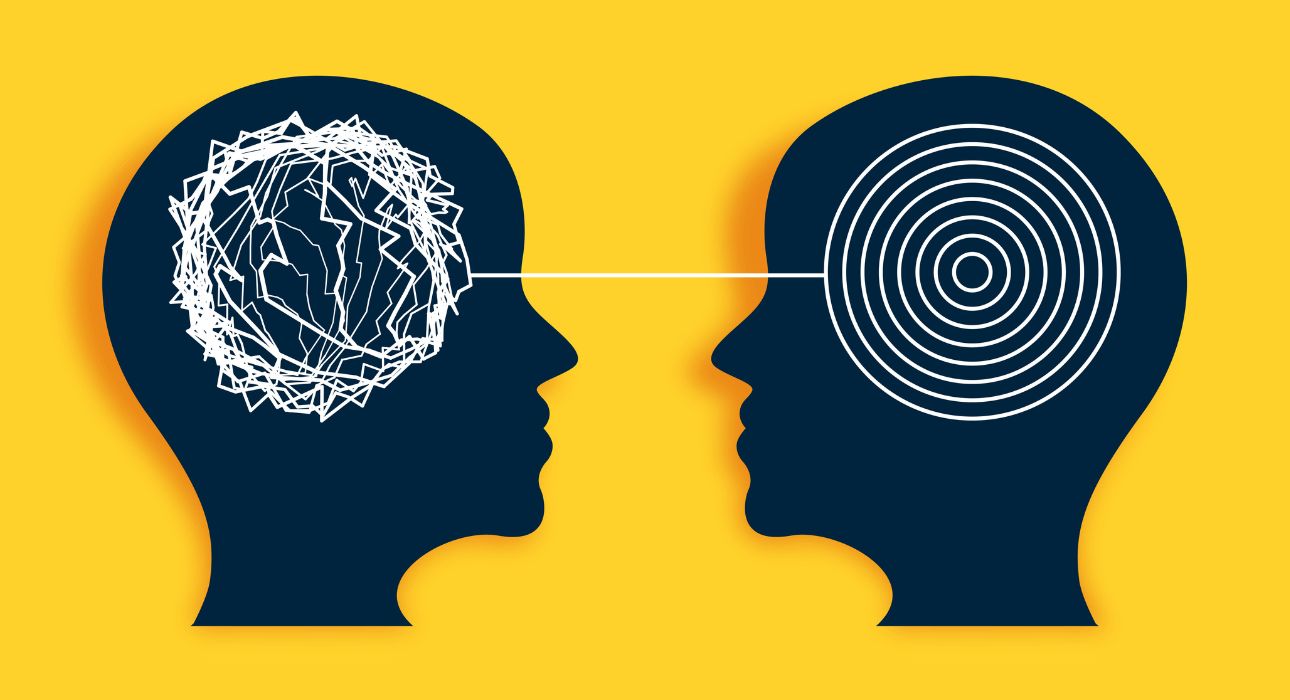
Their brains are simply receiving and processing the same sensory information in different ways. This is where neurodiversity and neurodivergence come in. “Neuro” refers to the brain, and “diversity” refers to differences, so neurodiversity means that every person’s brain takes in information, learns and responds in its own way (Baumer & Frueh, 2021). Most people are described as neurotypical, meaning their brains process information in ways society generally expects. People whose brains work differently from this pattern are described as neurodivergent.
For someone who is neurodivergent, a crowded place or a loud sound may not be a mild annoyance but a genuinely overwhelming experience. Sensory processing is only one area of difference, as neurodivergence can also affect attention, learning, communication and movement. These differences are celebrated rather than diminished. About 1 in 7 people in the UK are neurodivergent, yet only one in three people with Autism are in work. The gap between those numbers is partly a gap in understanding, which starts with what the words “neurodiversity” and “neurodivergence” mean (Choudhary, 2025).
Neurodiversity covers all the differences between people, though it is often associated with Autism spectrum disorder, Attention deficit hyperactivity disorder and other neurological or developmental conditions. The idea gained importance in the 1990s as a way of increasing acceptance of all kinds of people, especially those with neurological differences. The Australian sociologist Judy Singer coined the term “neurodiversity” (Baumer & Frueh, 2021).
Neurodivergent people may differ from others in their skills and abilities. Their differences are often classed as disorders or learning disabilities, yet many neurodivergent people also have strengths such as exceptional memory, the ability to imagine 3D objects, or the ability to perform difficult calculations mentally. An analogy may help. Think of neurodiversity as the water that reaches every crop on a farm. Each crop needs a different amount, with some taking 2 litres over three weeks and others far less, depending on its own growth. Those different needs are like neurodivergence.
Differences in Cognition & Behavior
Neurodivergence could be defined as a set of variations in the ways people receive and process the information coming from their senses. Thus, neurodivergent people could have issues with perception, cognition, attention, learning, movement, communication, and other functions. For instance, those who have trouble processing stimuli coming from sensory receptors could have difficulties filtering the information, which makes them physically uncomfortable.
Moreover, neurodivergent people could experience a wave of emotional energy when exposed to extreme sensory experiences in their environment. Such an emotional surge could lead to the occurrence of anxiety, anger, or frustration in people with neurodivergence. Emotional regulation is a set of processes enabling people to control the intensity or the timing of an emotional response.
In some cases, emotional regulation could be exhausting and consume a lot of energy in neurodivergent people. As a result, their emotional response could look inappropriate or unrelated to the stimulus that occurred. Furthermore, it could take a neurodivergent person some time to return to normal after experiencing intense emotions. Cultures define what is appropriate and inappropriate for people in their society to do or say in a particular context and how they should act in various settings. Most often, these rules are created with like-minded people.
Similarly, cultural norms often overlook neurodivergent people by considering their behaviour to be wrong in some way, even when it is correct for a particular mindset. Executive function refers to a group of cognitive abilities that people use to operate their everyday lives, control their emotions, and problem-solve. Executive function relies on working memory, flexible thinking, self-control, and other cognitive skills.
All of these cognitive skills play a vital role in everyday life, as they are essential in learning and remembering information, understanding and following directions, and controlling behaviour. Neurodivergent people may have deficiencies in one or more areas that comprise their executive function. (Baumer & Frueh, 2021)
Conditions Associated with Neurodivergence
Neurodivergence is an umbrella term commonly applied to conditions such as autism, ADHD, dyslexia and dyspraxia and more. Not all neurodivergent people see themselves as disabled. These conditions are grouped together under one label, each involving a different pattern of cognition, so neurodivergence should not be thought of as a single, uniform experience. Autism and ADHD, for example, are both characterised by differences in executive functions such as planning and cognitive flexibility, but weaker response inhibition is more characteristic of ADHD (Craig et al., 2016)
These differences have both strengths and weaknesses. Adults with ADHD have talked of strengths such as energy, resilience, courage and cognitive dynamism (Sedgwick et al., 2019). Examples of famous and successful people who are neurodivergent include: Animal scientist and author Temple Grandin, Oscar-winning actor Sir Anthony Hopkins, Musician and singer Florence Welch, Nobel Prize-winning theoretical physicist Albert Einstein, and artist Vincent Van Gogh.
Autistic people often perform better than non-autistic people on tasks that measure visual-spatial abilities, basically the ability to have impressive imagination. Autistic people often camouflage their traits to fit in socially, and higher levels of camouflaging are associated with poorer mental health (Cook et al., 2021). (Baron Cohen, 2017) argues that autism involves both difference and disability, but not disorder, which does not describe the condition as an illness but still acknowledges the difficulty.
It challenges purely deficit-oriented accounts. If the topic being discussed seems interesting to a neurodivergent person, they will showcase in-depth processing of information, especially people with autism (Sinclair, 2010). For people with ADHD, the system that doesn’t allow them to pay attention to routine tasks provides them with deep engagement; when they find something interesting and challenging, their brain instantly gets a dose of dopamine and allows them to focus. (Sinclair, 2010).
It suggests that strengths and weaknesses are not separate categories since both can arise from the same cognitive differences. Hence, we should therefore avoid both romanticising neurodivergence and reducing it to deficit.
Identity & Inclusion
Neurodivergence is increasingly conceptualised not only as disease but as an identity, and this informs what constitutes inclusion. (Botha et al., 2024) The concept of neurodiversity was collectively created by autistic communities, which is why the campaign strongly emphasises lived experience versus diagnosis. ( Kapp et al.,2013) Research found that awareness about neurodiversity correlated with more people perceiving autism as a positive identity than a defect that is required to be cured.
However, medical and neurodiversity perspectives were largely overlapping, meaning that accepting one’s identity does not invalidate the need for support. Living openly with this identity is not always safe: autistic people who engage in camouflage report worse mental health, although the correlation is largely cross-sectional, which means that causation cannot be established (Cook et al., 2021).
Concealment is therefore a reaction to the environment as much as it is a personal choice. Doyle (2020) captures this in a biopsychosocial model, in which outcome is determined in part by the fit between individual and workplace. Authentic inclusion thus requires modification of the environment: through training, awareness and policies, not expecting the individual to accommodate. Only then can neurodivergent people live openly as who they are.
Busting Misconceptions
1. “Neurodiversity” is a modern term; all of this did not exist in the past “ These days everyone is just neurodivergent”
Neurodiversity was something that existed throughout human history, though it’s the attempts to bring awareness towards it that have increased. People have started recognising it more as compared to the last 20-30 years (Hanrui, 2025).
2. “Neurodivergent people are just easy to recognise; I could probably take a look at my classmates and figure out who’s neurodivergent”
Identifying someone who’s neurodivergent is not easy, as for them to fit in society, they adapt to many survival strategies to be considered normal by others. Autistic students might not show up on the day they feel they lack their verbal abilities, or for dyslexic students, they might be spending hours practising the tasks they have to perform the next day in class so that others wouldn’t figure out any differences between them and other peers (Hanrui, 2025).
3. “ I know what autism is. I have seen so many cases of it; some of my friends have mild autism yet are studying for a degree, and I am also aware that severe autism is; I have watched a lot of actors playing autistic characters”
People should not define autism simply as mild or severe because it is a neurodevelopmental condition, not an illness. All people who fall under the category of autism can rather have divisions on what level of support they need: “high support” or “ low support”. Non- autistic people tend to use terms like “mild” for someone’s autism because what they don’t see is the hidden efforts, the burnouts that they suffer through, the conscious effort to control intrusive thoughts. Pursuing a degree does not make someone more or less autistic; rather, the support they receive helps them manage daily life and develop their abilities (Hanrui, 2025).
4. “ All autistic people have super brain powers”
In the past, people often overlooked the intellectual abilities of autistic individuals and underestimated their intelligence. Later, researchers proved that it isn’t the case with every autistic person; some people are very strong in the creative aspect, excelling in amazing memory capacity and imagination power. However, that does not mean that all autistic people have a super brain; rather, they have different aspects that they are really good at. ( Hanrui, 2025)
5. “ Everyone is a bit on the spectrum”
Neurodivergent traits are simply human traits. It follows by Definition that these traits will probably appear in many, if not all, Individuals. This does not imply that everyone is neurodivergent; rather, it means that we are all human. For a diagnosis of neurodivergence, such traits must be pervasive across all (or most) areas of life and have a significant impact on a person’s capacity to function and thrive. A person with ADHD, for instance, will process dopamine differently from someone who does not have it; one does not merely respond to dopamine in ways that vary by degree. So while individual characteristics and traits may be universal, the intensity and patterns of those traits, and possibly the various biological markers for them, are not. ( Hanuri, 2025)
6. “People are born with neurodivergent disorders, and nothing can change that”
There are at least two major factors for this. The first involves how we classify neurodivergence in terms of impact on someone’s life. Some conditions have overlapping impact, and it can be good to classify them together in order to ensure people get appropriate support and accommodations. The second involves changes in people themselves, such as traumatic brain injuries, or the impact of trauma in precipitating PTSD, for example, leading to people developing the type of functional and neurological symptoms associated with neurodivergence.
Conclusion
Neurodiversity and neurodivergence mean different things. Neurodiversity describes the natural variations in how people think and process information across the population, whereas neurodivergence refers to individuals whose cognitive functioning differs from what society considers typical. Autistic people and those with ADHD or dyslexia belong to the neurodivergent community because their brains process information differently, which may sometimes create challenges in daily life.
The same traits, however, are responsible for giving these people energy, focus, determination, and unique perspectives on life. Their unique central processing might, however, be accompanied by some impairments, like problems with executive functions, or with a manifestation of their traits due to societal expectations. People continue to debate whether society should recognise neurodivergent people as disabled, and neither perspective fully captures the complexity of the issue.
Neurodivergent people developed the concept of neurodiversity, making it an essential term in both academic and everyday settings. Inclusivity is important because the surrounding environment can influence a person’s ability to function successfully in daily life. Therefore, society must assess the level of inclusivity in workplaces and educational settings.
Understanding neurodiversity and neurodivergence helps people function effectively in society. It also raises awareness of the challenges faced by minority groups. Furthermore, it helps create inclusive environments that accommodate everyone.
References +
- ACAS. (2025, March 5). Neurodiversity at work – research paper. Acas. https://www.acas.org.uk/neurodiversity at-work
- Hanrui. (2025). Neurodivergent Education for Students, Teaching & Learning (NESTL) Toolkit: Key Resource 6 – Myth Busting [Toolkit]. https://www.education.ox.ac.uk/wp-content/uploads/2024/06/NESTL-Toolkit Key-Resource-6-Myth-Busting.pdf
- Overview. (n.d.). Retrieved October 8, 2026, from https://healthymindsbc.gov.bc.ca/wp content/uploads/2025/11/1-Overview-Final.pdf
- Crompton, C. J., Alcorn, A. M., Cebula, K., & Fletcher-Watson, S. (2024). Neurodiversity Can Explain Differences in How People Experience Everyday Life. Frontiers for Young Minds, 12. https://doi.org/10.3389/frym.2024.1434143
- Cleveland Clinic. (2022, June 2). Neurodivergent: What It Is, Symptoms & Types. Cleveland Clinic. https://my.clevelandclinic.org/health/symptoms/23154-neurodivergent
- Woods, S. E. O. N., & Estes, A. (2023). Toward a more comprehensive autism assessment: the survey of autistic strengths, skills, and interests. Frontiers in Psychiatry, 14. https://doi.org/10.3389/fpsyt.2023.1264516
- Baumer, N., & Frueh, J. (2021, November 23). What is neurodiversity? Harvard Health Publishing; Harvard Medical School. https://www.health.harvard.edu/blog/what-is-neurodiversity-202111232645
- Botha, M., Chapman, R., Onaiwu, M. G., Kapp, S. K., Ashley, A. S., & Walker, N. (2024). The neurodiversity concept was developed collectively: An overdue correction on the origins of neurodiversity theory. Autism, 28(6). https://doi.org/10.1177/13623613241237871
- Cook, J., Hull, L., Crane, L., & Mandy, W. (2021). Camouflaging in autism: A systematic review. Clinical Psychology Review, 89(0272–7358), 102080. https://doi.org/10.1016/j.cpr.2021.102080
- Doyle, N. (2020). Neurodiversity at work: a biopsychosocial model and the impact on working adults. British Medical Bulletin, 135(1), 108–125. https://doi.org/10.1093/bmb/ldaa021
- Kapp, S. K., Gillespie-Lynch, K., Sherman, L. E., & Hutman, T. (2013). Deficit, difference, or both? Autism and neurodiversity. Developmental Psychology, 49(1), 59–71. https://doi.org/10.1037/a0028353
- Choudhary, Z. (2025, March 7). Neurodivergent workers continue to face significant barriers to employment, report finds. Workplace Journal. https://workplacejournal.co.uk/2025/03/neurodivergent-workers continue-to-face-significant-barriers-to-employment-report-finds/
- Sedgwick, J. A., Merwood, A., & Asherson, P. (2018). The positive aspects of attention deficit hyperactivity disorder: A qualitative investigation of successful adults with ADHD. ADHD Attention Deficit and Hyperactivity Disorders, 11(3), 241–253. https://doi.org/10.1007/s12402-018-0277-6
- Sinclair, J. (2010). Being Autistic Together. Disability Studies Quarterly, 30(1). https://doi.org/10.18061/dsq.v30i1.1075
- Baron-Cohen, S. (2017). Editorial Perspective: Neurodiversity – a revolutionary concept for autism and psychiatry. Cam.Ac.Uk. https://doi.org/10.17863/CAM.12197



Leave feedback about this