







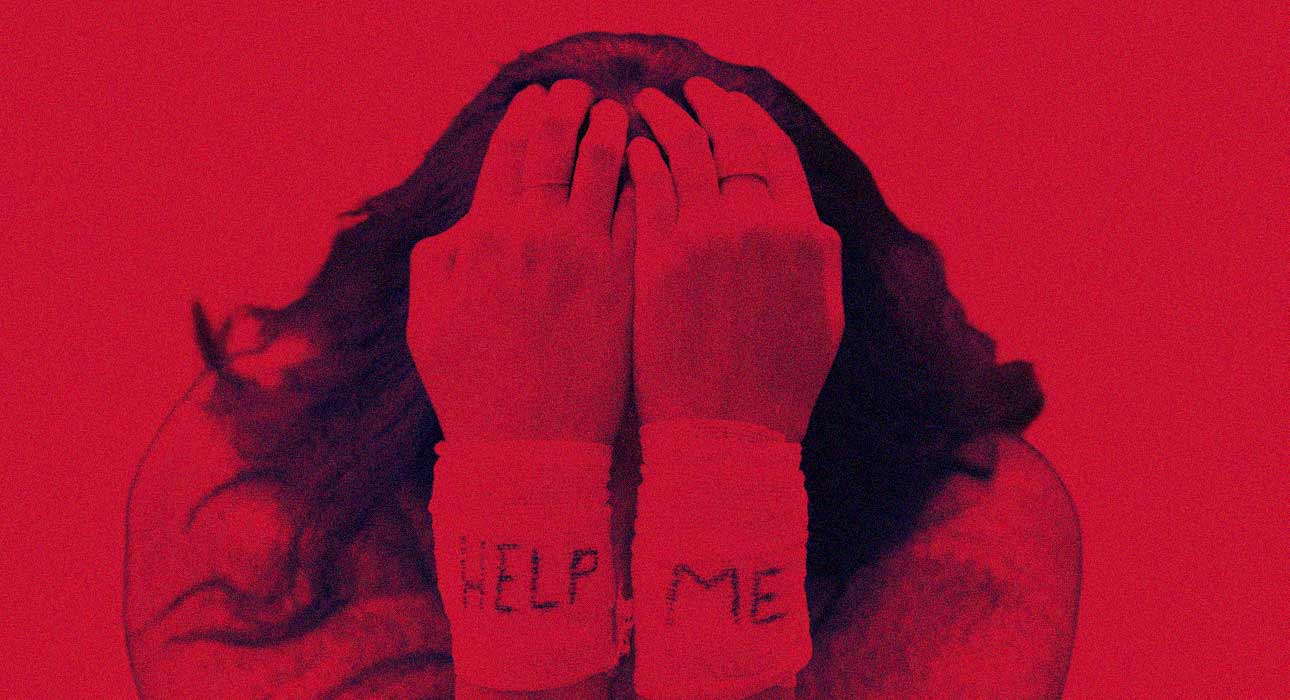
An estimated 150,000 people kill themselves each year in India, according to the WHO, although this number refers to documented suicide cases. But people who cannot even answer who died by suicide and self-harm are many, due to the sheer humiliation, shame and stigma attached to this very act. As a result of all this, people can’t share how they are really feeling, get the help that they need, and can’t have help provided when they get to that point of no return.
The public is now recognising mental health, but that doesn’t mean they can understand what suicide is and that people hurt themselves and do not necessarily mean to kill themselves. Some don’t even know of all the various ways people physically hurt themselves (cutting themselves, for example) and the ways self-harming acts and methods are trivialised and dismissed as attention-seeking or “drama” or “for show”. Receiving a reply such as this would only make one feel more isolated.
Suicide & Self-Harm
Suicide, also known as taking one’s own life, is an act of intentionally killing oneself. There are often many reasons, rather than one singular reason, why someone may kill himself; rather, the person endures numerous elements such as stress, mental illness, previous trauma, distress, social pressure, and environmental factors until life is too much to handle.
There are 700,000+ suicide deaths per year, according to the WHO. Non-Suicidal Self-Injury, or NSSI, is any action the self-hurting individual commits to try to injure themselves but not die by suicide. There are many instances when someone will self-harm as their feelings will become too overwhelming for them to handle. Some may even use self-harm to cope with emotional pain, to feel in control. People sometimes confuse suicide and NSSI. This mistake is responsible for perpetuating negative stigma and incorrect information.
Read More: Suicide Crisis Intervention and Prevention in Not Today
Indian Legal Guidelines Explained
In India, for several years now, attempting suicide was actually a punishable crime, as stated in Section 309 of the earlier Indian Penal Code, 1860. It was only when the Mental Healthcare Act, 2017, was introduced that the act of attempting to die by suicide, through section 115 of the said law, was finally recognised as having occurred due to extreme emotional disturbance. Thus, the whole angle is of care, rehabilitation and treatment instead of punishment. It truly signifies movement from an attitude of blame to one of sympathy and concern toward mental health issues, although it is undeniable that stigma still clings to us due to outdated mindsets.
Myths believed and reasons why
Myth 1: Anyone who states that they wish to die by suicide merely wants attention
Fact: Most people who kill themselves have either said or acted in some kind of way to show they have the will to kill themselves.
Reason: Most people feel embarrassed when somebody expresses their emotions so strongly and wants everyone to see this.
Myth 2: Self-harm is the same thing as a suicide attempt
Fact: 7/10 people inflict self-harm because they are unable to bear intense pain.
Reason: the physical act of inflicting oneself seems to equal ending it all for most people.
Myth 3: “Strong people don’t have suicidal thoughts.”
Fact: one could seem okay on the outside but feel immense emotional pain.
Reason: vulnerability sometimes is associated with weakness.
Myth 4: “A suicidal person would kill themselves no matter what anyway.”
Fact: suicide is preventable if adequate intervention is present.
Reason: It is easy to simplify suicide to the extreme point that it is unstoppable.
Myth 5: “Talking to people about suicide gives them the idea to harm themselves.”
Fact: Sometimes just talking openly can make a person feel less alone.
Reason: People fear saying the wrong thing.
The Real Effect of These Myths
This wrong thinking greatly affects the ways in which we behave with emotionally exposed individuals. To give an example, calling someone a person “seeking attention” may prevent an individual from expressing their feelings at all, let alone sharing how they feel with others. It is these fears of shame and being looked down on that cause many to seek help far later than they would have liked, but that also results in feelings of utter loneliness. Ignoring one’s feelings, dismissing emotion, only allows for more feelings of loneliness.
Why do these myths still exist?
Myths continue to circulate about mental health, due to a lack of knowledge on it being established in so many places. Lack of knowledge combined with fear and shame are part of the reason the society feels uncomfortable with dealing with suicide and self-harm, the reasons are numerous, and may include not many people feel willing to have the difficult conversation; a lack of general knowledge surrounding mental health; how it’s perceived that the population is supposed to ‘man up’ mentally, misinformation from the media and the social stigma surrounding counselling or admitting to mental health issues.
Read More: How Fear and Shame Shape Indian Parenting and Affect Children’s Mental Health
Closing Thought
Sometimes acting out through self-injurious/suicidal behaviour is a sign of distress and deep pain, which an individual can no longer tolerate by themselves (World Health Organisation, 2023). Although changes have been made in India where a suicide attempt has been made illegal by the reason of being evidence of emotional distress, there is a high degree of stigma about mental illness and suicide in the country as well (Mental Healthcare Act, 2017; World Health Organisation, 2023).
It is important to know the distinction between suicide and non-suicidal self-injury so that we can be more empathetic towards suicidal individuals than they may otherwise receive. Therefore, if the suicidal individual is heard, taken seriously or encouraged to seek help if required, the suicidal individual is likely to receive the best kind of support possible. Sometimes empathy delivered over a very short interaction may have a significant effect.
References +
Chandrashekar, H., Sneha, V., Madhusudhan, S., & Prashanth, Nr. (2018). Decriminalisation of suicide as per Section 115 of the Mental Health Care Act 2017. Indian Journal of Psychiatry, 60(1), 147. https://doi.org/10.4103/psychiatry.indianjpsychiatry_335_17
Dazzi, T., Gribble, R., Wessely, S., & Fear, N. T. (2014). Does asking about suicide and related behaviours induce suicidal ideation? What is the evidence? Psychological Medicine, 44(16), 3361–3363. https://doi.org/10.1017/s0033291714001299
Fawcett, J. (2013). APA PsycNet. Apa.org. https://psycnet.apa.org/record/2013-36082-004 Gratz, K. L., Dixon-Gordon, K. L., Chapman, A. L., & Tull, M. T. (2015). Diagnosis and Characterisation of DSM-5 Nonsuicidal Self-Injury Disorder Using the Clinician Administered Nonsuicidal Self-Injury Disorder Index. Assessment, 22(5), 527–539. https://doi.org/10.1177/1073191114565878
Haregu, T., Chen, Q., Arafat, S. M. Y., Cherian, A., & Armstrong, G. (2023). Prevalence, correlates and common methods of non-suicidal self-injury in South Asia: a systematic review. BMJ Open, 13(11), e074776. https://doi.org/10.1136/bmjopen-2023-074776
India Code: Section Details. (2025). Indiacode.nic.in. https://www.indiacode.nic.in/show datactid=AC_CEN_5_23_00037_186045_1523266765688§ionId=46074§ion no=309&orderno=347
Klonsky, E. D., & Muehlenkamp, J. J. (2007). Self-injury: A research review for the practitioner. Journal of Clinical Psychology, 63(11), 1045–1056. https://doi.org/10.1002/jclp.20412 Pathare, S., Shields-Zeeman, L., Vijayakumar, L., Pandit, D., Nardodkar, R., Chatterjee, S., Kalha, J., Krishnamoorthy, S., Jain, N., Kapoor, A., Shahjahan, M., Chauhan, A., & Smit, F. (2020).
Evaluation of the SPIRIT Integrated Suicide Prevention Programme: study protocol for a cluster-randomised controlled trial in rural Gujarat, India. Trials, 21(1). https://doi.org/10.1186/s13063-020-04472-2
Stanley, B. (2012). APA PsycNet. Psycnet.apa.org. https://psycnet.apa.org/record/2012-07473- 004
Suicide – India. (n.d.). Www.who.int. https://www.who.int/india/health-topics/suicide Victor, S. E., & Klonsky, E. D. (2014). Correlates of suicide attempts among self-injurers: A meta-analysis. Clinical Psychology Review, 34(4), 282–297. https://doi.org/10.1016/j.cpr.2014.03.005
World Health Organisation. (2025, March 25). Suicide. World Health Organisation. https://www.who.int/news-room/fact-sheets/detail/suicide



Leave feedback about this