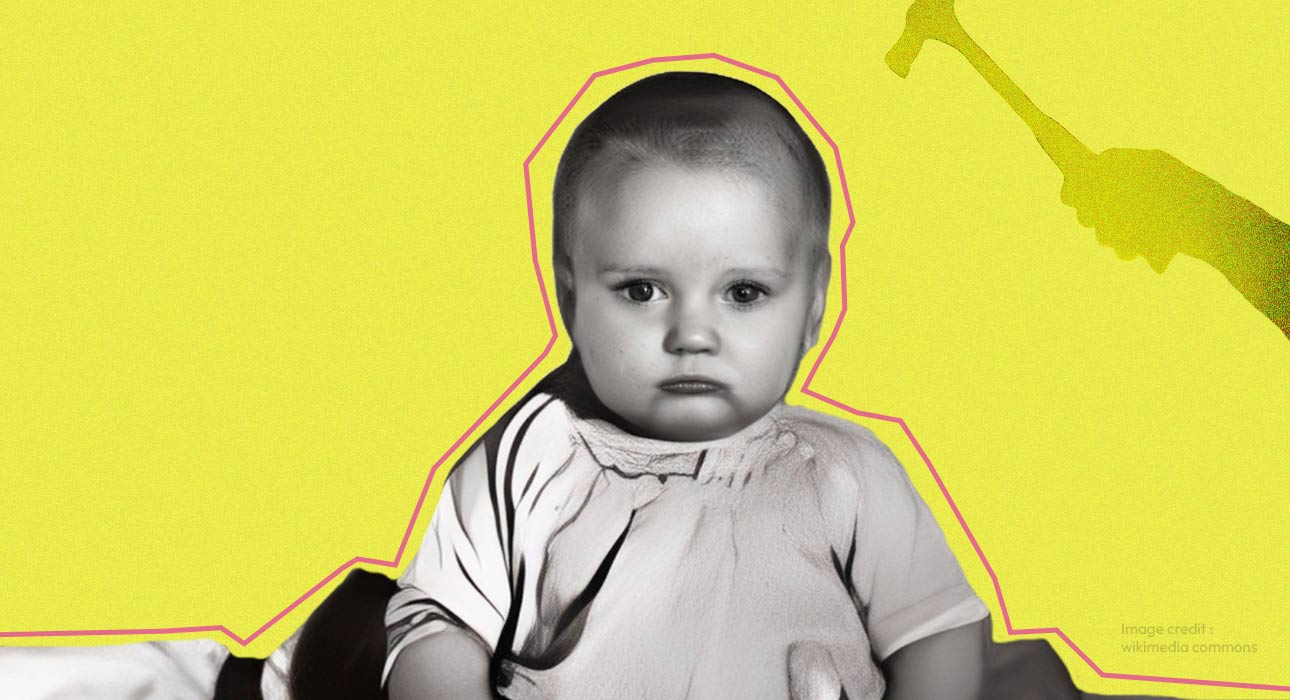
One of psychology’s most famous experiments is the Little Albert Experiment. In 1920, psychologist John B. Watson and his graduate student Rosalie Rayner published their study titled “Conditioned Emotional Reactions.” Through this study, it was demonstrated that emotional responses can be learned through conditioning. The participant was an infant named “Albert B.,” who later became famously known as “Little Albert” (Watson & Rayner, 1920). This study gave a wider understanding of behaviourism. Although researchers widely recognised the findings, many criticised the approach they adopted for the study. The criticism further led to the establishment of stricter ethical constraints.
Read More: The Psychology Behind Celibacy Experiments: A Perspective on Desire and Discipline
From a Neutral Rat to a Learned Fear
The work of Watson and Rayner (1920) was influenced by the principles of classical conditioning developed by Ivan Pavlov. Classical conditioning states that a neutral stimulus can get associated with something that produces a response. Such that the neutral stimulus can produce a similar response in the absence of what was triggering it initially (Pavlov, 1927). The Little Albert study investigated whether, in an infant, fear can be conditioned. The experiment was conducted by introducing Little Albert to a white rat and followed a basic sequence:
- Before conditioning: Albert showed little fear towards the white rat.
- Unconditioned Stimulus: A loud noise.
- Pairing: Researchers repeatedly presented the white rat with the loud noise to Albert.
- After conditioning: After multiple repetitions, Albert started showing fear even when the rat appeared without the loud noise.
- Generalisation: Later, Albert was exposed to other white furry objects such as rabbits and cotton. It was observed that Albert was showing fear towards them as well.
This experiment demonstrated that emotional responses such as fear can be shaped by environmental experiences as well.
Read More: The Dark Side of Psychological Research: 5 Experiments That Changed Research Ethics
A Landmark, But Not a Perfect Experiment
Earlier, the Little Albert experiment was often presented as conclusive proof that fears get created by classical conditioning. However, modern psychology has painted a different picture.
- The study had an extremely small sample. There was only a single participant. Thus, concluding that the response shown by Albert will be the same for other children exposed to this setup is not justifiable.
- The critics questioned how consistently Albert had displayed the fear. Further, researchers questioned how strongly the responses were interpreted. Thereby, stating that the methodology and conclusions of the study required greater scrutiny.
- Research suggested that fear can also develop by observing others and indirectly experiencing threatening events (Rachman, 1977). Modern psychology has moved beyond the simple idea of fear developing through conditioning (Field, 2006). Thus, the Little Albert experiment did not prove that “fear is learned.” Instead, it demonstrated that association can contribute to emotional learning.
Read More: Lost in Time: Michel Siffre’s Cave Experiments and the Psychology of Isolation
The Ethical Problem: A Baby Was the Participant
The participant of the study, Little Albert, was an infant. At the time of the study, he was incapable of comprehending what was happening. Even if the parents’ consent was taken, the unignorable fact is that the experiment involved deliberately creating distress in a highly vulnerable participant. In contrast to that, modern research ethics strictly states that parental permission is not the sole necessity. It must be ensured that the child’s welfare is taken care of (Miller & Kenny, 2002). The Little Albert experiment received a lot of criticism due to its low focus on ethics. Several ethical concerns stood out; some of them are as follows:
- Lack of informed consent: During the time of the study, Albert was incapable of comprehending what was happening. Modern research ethics strongly prioritises informed consent involving human participants.
- Psychological Harm: The research involved deliberate trials of producing fear in an infant. The question was no longer whether it was possible. Instead, the question was whether researchers should be allowed to create distress in an infant just to test whether it was possible or not.
- Failure to reverse the conditioning: The published study by Watson and Rayner (1920) did not mention whether Albert was successfully deconditioned before leaving the experiment setup. Thereby raising a serious ethical concern that the researchers deliberately conditioned fear in an infant and ended the experiment without successfully deconditioning it.
- Vulnerability of the participant: An infant is not developed enough to understand research and protect their own interests. Thus, it is the researcher’s utmost responsibility to ensure their welfare is taken care of.
Read More: Project Gua: The Bizarre Experiment of Raising a Chimpanzee and a Human Baby Together
The Mystery Behind “Little Albert”
The story becomes more uncertain because the identity of Little Albert remains unknown and debated for decades. In 2009, a group of scholars attempted to identify the child by examining the historical documents and public records. They proposed that the child might have been Douglas Merritte (Beck et al., 2009). However, the identification remained debatable. Later, Powell, Digdon, Harris, and Smithson (2014) stated that Albert Barger is most likely the actual Little Albert.
However, in the end, the identity remains unknown, alongside the question of whether the parents of Little Albert had given consent for the experiment, since there was no mention of their consent in the published study either. The debate over the identification makes the story of Little Albert more than just a historical curiosity. It showcases how incomplete documentation can actually make it difficult to reconstruct psychological research once conducted.
Read More: The Monster Study: The Cruel 1939 Experiment That Terrified Children into Silence
The Experiment That Helped Change Experiments
The greatest legacy of the Little Albert study is what it had forced the next generation of researchers to think about before conducting research (Baumrind, 1964; Miller et al., 2002). Modern psychological research strictly prioritises the well-being of the participant. The American Psychological Association’s ethical framework strongly emphasises responsible professional conduct. Today, researchers must carefully consider the following:
- The research’s scientific importance.
- Researchers must consider the potential risks that participants might experience.
- Possible ways to minimise the associated risks.
- Participants must give their own consent to participate.
- Participants’ right to withdraw from the experiment.
- Researchers must take appropriate measures to protect participants’ welfare and minimise potential harm.
- Whether the potential knowledge justifies the potential harm associated with the study.
These questions would fundamentally change how researchers conduct studies similar to the Little Albert study today.
Read More: The Peter Experiment and the Psychology of Fear
Conclusion
The Little Albert experiment narrates two different stories at once. The first is the scientific perspective, which demonstrates that other associated factors may influence emotional responses. Although modern research has further redefined these ideas, researchers have found that several other factors, such as observation, can influence emotional responses (Rachman, 1977; Field, 2006; Öhman & Mineka, 2001). The second story is an ethical story demonstrating the necessity of maintaining ethics while performing research. Little Albert was not just a participant; the infant became a reminder that people in psychological research are not merely sources of data. The participant’s well-being matters.
References +
- Watson, J. B., & Rayner, R. (1920). Conditioned emotional reactions. Journal of Experimental Psychology, 3(1), 1–14. https://psychclassics.yorku.ca/Watson/emotion.htm
- Beck, H. P., Levinson, S., & Irons, G. (2009). Finding Little Albert: A journey to John B. Watson’s infant laboratory. American Psychologist, 64(7), 605–614. https://scispace.com/pdf/finding-little-albert-a-journey-to-john-b-watson-s-infant 5605lu0jg7.pdf
- Powell, R. A., Digdon, N., Harris, B., & Smithson, C. (2014). Correcting the record on Watson, Rayner, and Little Albert: Albert Barger as “psychology’s lost boy.” American Psychologist, 69(6), 600–611. https://psycnet.apa.org/doiLanding?doi=10.1037%2Fa0036854
- Rachman, S. (1977). The conditioning theory of fear acquisition: A critical examination. Behaviour Research and Therapy, 15(5), 375–387. https://www.sciencedirect.com/science/article/abs/pii/0005796777900419?via%3Di hub
- Field, A. P. (2006). Is conditioning a useful framework for understanding the development and treatment of phobias? Clinical Psychology Review, 26(7), 857–875. https://www.sciencedirect.com/science/article/abs/pii/S0272735805001637
- Öhman, A., & Mineka, S. (2001). Fears, phobias, and preparedness: Toward an evolved module of fear and fear learning. Psychological Review, 108(3), 483–522. https://psycnet.apa.org/record/2001-07628-001
- Miller, P. B., & Kenny, N. P. (2002). Walking the moral tightrope: Respecting and protecting children in health-related research. Cambridge Quarterly of Healthcare Ethics, 11(3), 217–229. https://www.researchgate.net/publication/11292178_Walking_the_Moral_Tightrop e_Respecting_and_Protecting_Children_in_Health-Related_Research
- Matutina, R. E. (2009). Ethical issues in research with children and young people. Pediatric Nursing, 21(8), 38 44. https://www.researchgate.net/publication/305253344_Ethical_issues_in_research_ with_children_and_young_people_Robin_Matutina_reviews_the_literature_on_the _ethical_dilemmas_involved_in_conducting_childspecific_research_and_suggests_strategies_to_safegu
- Baumrind, D. (1964). Some thoughts on ethics of research: After reading Milgram’s “Behavioural Study of Obedience,” American Psychologist, 19(6), 421–423. https://www.researchgate.net/publication/232487300_Some_thoughts_on_ethics_ of_research_After_reading_Milgram’s_Behavioral_Study_of_Obedience
- Pavlov, I. P. (1927). Conditioned reflexes: An investigation of the physiological activity of the cerebral cortex (G. V. Anrep, Trans.). Oxford University Press. https://pmc.ncbi.nlm.nih.gov/articles/PMC4116985/