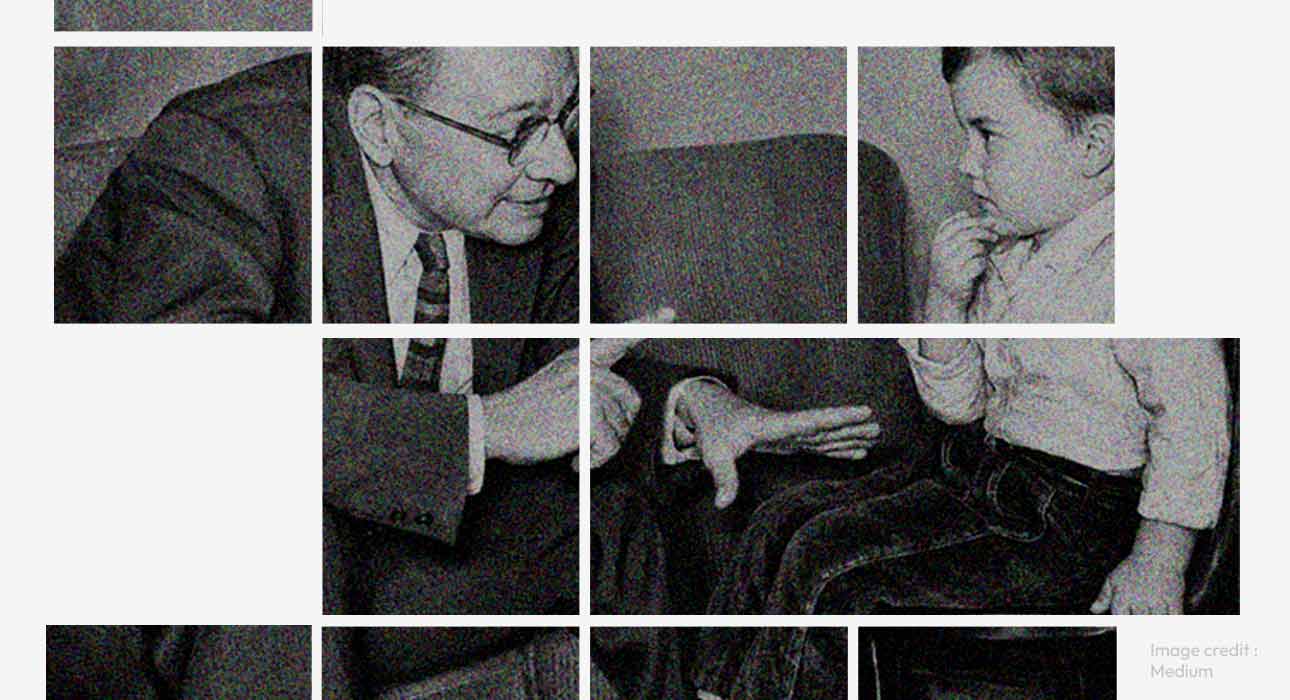
In 1939, A University of Iowa graduate student deliberately made children who were orphaned and had normal hearing and language believe that they were stutterers by challenging their speech, interrupting their sentences and making them aware of each word they uttered for months, all in the name of science. Some of those children never got over it. It was later coined as the “Monster Study” by the students’ colleagues, and the experiment itself was so ethically repugnant that the lead researcher, Wendell Johnson, for many years concealed it from the world (Silverman, 1988).
The public wasn’t widely aware of it until it was picked up on a 2001 investigative article in the San Jose Mercury News. This article explores the concept of the Monster Study, the procedure, the effects on the children involved, and why this study is one of the most important and troubling in the history of research ethics and safeguards for vulnerable people.
Read More: Project Gua: The Bizarre Experiment of Raising a Chimpanzee and a Human Baby Together
The Experiment: What Was Done and to Whom
1. Johnson’s Theory and the Study Design
Designed by speech pathologist Wendell Johnson, the author of the Monster Study himself stuttered as a child. Johnson had a theory to test that stuttering wasn’t a neurological or physical disorder into which a child was born, but one imposed on normal speech patterns by parents and adults. He felt that after a child has been labelled a “stutterer,” the label itself creates anxiety and self-consciousness, which then leads to the onset and progression of the stutter. This theory is called the diagnosogenic theory of stuttering (Johnson, 1959).
To check this, Johnson gave the experiment to his graduate student, Mary Tudor. Tudor went to the Iowa Soldiers Orphan’s Home in Davenport, Iowa, and children ages 5 to 15 were chosen. Children were split into four groups. The first group were children with stutter who were offered positive and supportive speech therapy (PSST), which consisted of saying their speech was fine and they should not be concerned. Children in the second group were children who stuttered and received negative feedback (Tudor, 1939, as cited in Silverman, 1988).
2. The Four Groups and the Procedure
The third and fourth groups were the most destructive. The third group were children who spoke normally and fluently. They were given positive feedback and told that their speech was fine, and were little affected, being a control group. The fourth group, who also had completely normal speech, were informed that they were starting to experience the symptoms associated with stuttering.
Tudor explained that their speech was as garbled as a stutterer’s, and they should stop speaking if they couldn’t remember a word, and then they should correct their mistake if they got stymied. There was nothing wrong with these kids. Over the course of this treatment, a few exhibited signs of stuttering; that is, they became more withdrawn, were less inclined to speak in class, began using shorter sentences, and displayed obvious feelings of anxiety when called upon to talk (as reported by Tudor in 1939 in Silverman, 1988).
Read More: Biohacking and Health Anxiety: When Health Tracking Becomes an Obsession
3. Tudor’s Growing Unease and Johnson’s Silence
During the study, Tudor began to feel uneasy. After the experiment ended, she returned to the orphanage many times to reduce the harm by reassuring the children that they could speak normally and calming them, but in many cases, the damage had already been done. Johnson realised that an ethical review would not approve the methods used in the study and decided never to release the findings. For more than 60 years it was a “private” research project (Goldfarb, 2006).
Read More: How Stroke Affects Speech Processing in the Brain
Long-Term Consequences
1. The 2001 Investigation
In 2001, the San Jose Mercury News published its investigation, which led journalist Jim Dyer to be able to reach out to several of the former participants, now senior elders. Many participants from the negative feedback groups, particularly the children who received incorrect diagnoses, described how those experiences affected them for decades. They mentioned being afraid of speaking in public, not speaking when they should, and always being conscious of what they say while talking (Reynolds et al., 2003).
2. Labelling, Identity, and the Looking-Glass Self
This is a very profound psychological approach. The Monster Study vividly illustrated how labelling shapes identity, a connection that researchers recognised both at the time and continue to understand today. A child, especially a young and helpless child placed in an institutional environment without a parent to advocate for them, begins to believe that something is wrong with them when others repeatedly tell them so. Psychologists closely relate this idea to Cooley’s (1902) “looking-glass self” concept, which explains how others’ views shape an individual’s sense of self.
3. Vulnerability and Power Imbalance
The children were orphans, and for that and other reasons, they were extremely vulnerable. They didn’t have any parents to return to and tell what was going on. They were without a voice to oppose the authority of the researchers that came to visit them. Also, they had no choice but to rely on the institution, and thus the adults inside had no means of challenging, resisting, or escaping what was happening to them. The power imbalance between an adult researcher in institutional authority and a parentless child lacking institutional authority is at the core of the significance of the Monster Study as a landmark study in research ethics with a vulnerable population (Baumrind, 1985).
4. The 2007 Settlement
In 2007, the State of Iowa settled a lawsuit filed by six of the eight remaining participants and the estates of the other participants who had passed away. The authorities issued a settlement of roughly six million dollars and made a belated admission that something was indeed wrong (Reynolds et al., 2003). The study burdened Mary Tudor, who lived until 2014, for the rest of her life.
Read More: The Dark Side of Psychological Research: 5 Experiments That Changed Research Ethics
An Ethical Scandal of Epic Proportions
1. A Pattern of Research Scandals
The Monster Study was not a stand-alone project. During the middle part of the twentieth century, a series of research scandals emerged that prompted a prickly question: Just how far is too far when it comes to knowing? Researchers conducted the Tuskegee Syphilis Study on African American men who had been diagnosed with syphilis and withheld information about their diagnosis and treatment from them for four decades (1932–1972).
In the 1960s, America’s obedience experiments by Stanley Milgram involved deceiving the subjects into believing that they were shocking a stranger. In 1971, Philip Zimbardo conducted his Stanford Prison Experiment, and it spiralled into psychological abuse in a matter of weeks. These studies, considered together, showed that researchers, even those with good intentions, can inflict significant damage on the subjects of their research (Beauchamp & Childress, 2013).
2. The Regulatory Response
The formal answer was in slices. The “Nuremberg Code” of 1947, which the Nuremberg Trials established after exposing Nazi medical experiments, states that researchers must obtain informed and voluntary consent before conducting any human research, without exception. The Declaration of Helsinki further emphasised this principle in 1964 within the context of medical research by requiring independent ethical review of all studies involving human beings. The U.S. Congress passed the National Research Act of 1974 directly in response to the Tuskegee scandal. It resulted in the Belmont Report of 1979, one of the key documents of research ethics today (National Commission, 1979).
3. The Belmont Report’s Three Principles
The Belmont Report outlines three principles that form the basis of all ethical research on human subjects. The first is respect for persons. All persons have the right to make informed choices about their participation. Researchers and institutions should provide greater protection, not less, to those who are unable to make these choices. This includes children, persons with cognitive disabilities, and prisoners. The second is beneficence: research should be beneficial and do as little harm as possible. The third is justice. This means that researchers must distribute the benefits and burdens of research fairly. Researchers should not exploit vulnerable people for their own convenience (National Commission, 1979).
4. Institutional Review Today
In the present day, researchers must submit any study involving human subjects to an Institutional Review Board (IRB) for review. This is especially important for research involving children. People also call it an Ethics Committee. These independent bodies provide pre-study approval for research proposals. They assess whether the anticipated benefits outweigh the risks, if there are any risks.
They also evaluate whether the consent arrangements are appropriate and whether researchers adequately protect the most vulnerable participants. Research ethics courses teach the Monster Study for an important reason. It shows the consequences of not having all of this. These include orphaned children, no consent, no supervision, and lifelong harm (Kimmel, 2007).
Read More: How the Demand-Withdraw Pattern Hijacks Relationships
Conclusion
The Monster Study is not an easy topic to sit with. Wendell Johnson was not a sadist. He was a researcher with a real theory, partly because he himself stuttered. However, he was utterly unable to ask the simple ethical question: what right did he have to put the kids through this? He made the study disappear for the remainder of his career, and this implies he had an idea of the answer.
What the study ultimately offered psychology, other than the original question, was a mirror. It was a version that had placed scientific curiosity over human dignity. The most vulnerable members of society were its subjects. The ethics protocols established in the decades since are not red tape that hinders good science. The experiences of people who suffered harm before receiving protections have shaped these safeguards.
References +
- Baumrind, D. (1985). Research using intentional deception: Ethical issues revisited. American Psychologist, 40(2), 165–174. https://doi.org/10.1037/0003- 066X.40.2.165
- Beauchamp, T. L., & Childress, J. F. (2013). Principles of biomedical ethics (7th ed.). Oxford University Press.
- Cooley, C. H. (1902). Human nature and the social order. Scribner’s. Goldfarb, R. (Ed.). (2006). Ethics: A case study from fluency. Plural Publishing.
- Johnson, W. (1959). The onset of stuttering: Research findings and implications. University of Minnesota Press.
- Kimmel, A. J. (2007). Ethical issues in behavioural research: Basic and applied perspectives (2nd ed.). Blackwell Publishing.National Commission for the Protection of Human Subjects of Biomedical and Behavioural Research. (1979).
- The Belmont Report: Ethical principles and guidelines for the protection of human subjects of research. U.S. Department of Health, Education, and Welfare. https://www.hhs.gov/ohrp/regulations-and policy/belmont-report/index.html
- Reynolds, M., Sherard, P., & Early, E. (2003). Long-term effects of the 1939 Tudor study on speech and psychological health of participants. Journal of Speech, Language, and Hearing Research. [Cited in documentation of Iowa settlement proceedings.]
- Silverman, F. H. (1988). The Monster Study. Journal of Fluency Disorders, 13(3), 225–231. https://doi.org/10.1016/0094-730X(88)90049-6
- World Medical Association. (2013). Declaration of Helsinki: Ethical principles for medical research involving human subjects. JAMA, 310(20), 2191–2194. https://doi.org/10.1001/jama.2013.281053