For centuries, the study of the human mind was the province of the philosopher alone. The soul, the origin of knowledge, the seat of consciousness, was argued both in the halls of Greek academies and in the silence of Indian ashrams. But the latter half of the 19th century saw an earthquake, the “great divorce” from armchair philosophy to the rigour and intensity of the laboratory.
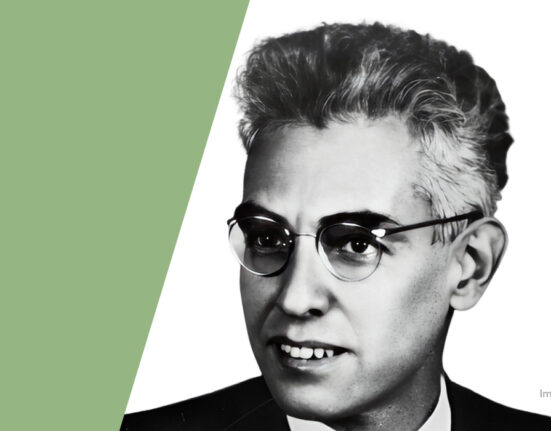
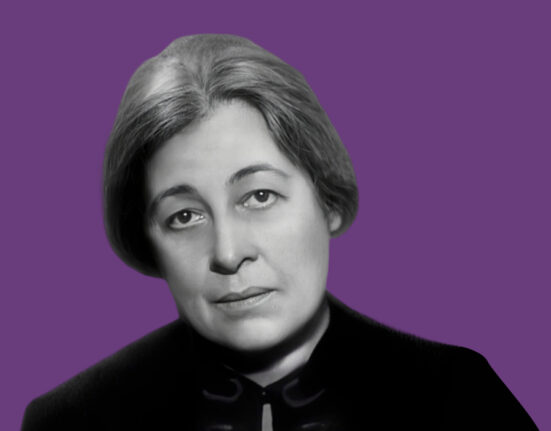
The shift in perspective from philosophy to psychology was not just a name change from classical philosophy and applied psychology to a new way of thinking, which was led by Wilhelm Wundt in the West and which saw its first introduction in India in the laboratory of Narendra Nath Sen Gupta (N.N. Sen Gupta) at the University of Calcutta in 1916.
Read More: Is Psychology a Science, an Art, or a Philosophy?
The Wundtian Revolution: The Laboratory as Temple
The earliest formal birth of psychology is attributed to 1879 when Wilhelm Wundt founded the world’s first experimental psychology laboratory at the University of Leipzig. Before this, the mind had been studied through rationalism, which is the way of deducing the truth through logic. However, Wundt had been trained in physiology. If the physical body could be measured, he thought, so could the “atoms” of the mind.
Wundt’s method was closely linked to structuralism, which depends on experimental introspection. It was a meticulously controlled scientific procedure. Subjects were presented with standardised stimuli, such as a metronome click or a specific colour, and asked to describe the immediate sensations, images, and feelings they experienced (Fancher & Rutherford, 2017).
The degree of the Western influence on Wundt can’t be emphasised. He laid the foundation for psychology as a standalone academy. He asserted that psychology must remain the study of “conscious experience”, and psychology must find a laboratory environment to separate variables as chemistry or physics does (Schultz & Schultz, 2015). This “New Psychology” went from the Atlantic to America and, in time, the Indian subcontinent.
Read More: Evolution of Psychology as a Profession- A Timeline
The Indian Context: More than the Ancient Texts
India’s philosophy of psychology transition was a unique cultural journey in India. Indian thoughts had explored the mind for centuries through the Vedas, Upanishads, and Buddhist philosophy. The ancient traditions had devised maps of consciousness, but were mostly linked to spirituality and metaphysics (Misra & Paranjpe, 2012).
The push towards a scientific, academic psychology in India was a result of colonial education and the ambition among Indian intellectuals to modernise the country’s scientific infrastructure, which was then the backbone of their intellectual heartland. At this university, the turning point, the University of Calcutta, the intellectual heart of British India, was where this change was sparked. The difficulty was to connect the deep, often mystical, philosophy of Indian philosophy with the empirical and objective rigour of Western experimental psychology, while giving them a distance from the Western paradigm.
Narendra Nath Sen Gupta: The Bridge Builder
If Wundt was the father of experimental psychology in the West, Narendra Nath Sen Gupta (N.N. Sen Gupta) was the architect of it in India. Sen Gupta was a brilliant scholar who went to Harvard University, where he studied with a leading student of Wilhelm Wundt, Hugo Munsterberg. The intellectual legacy of the Leipzig and Harvard labs directly shaped the first psychology department in India.
Back in India, Sen Gupta had the challenge of finding a science that many saw as merely a part of philosophy or a superfluous Western import. Under his leadership, the first Psychology Laboratory at the University of Calcutta was established in 1916 (Dalal, 2014). It marked the turning point of the formal institutionalisation of psychology as an independent field of intellectual activity in India on the world stage.
1916: Calcutta Psychology Emerges
The work of setting up the laboratory was more than just an administrative undertaking; it was a philosophical declaration. By carving out a separate space for psychology, Sen Gupta was claiming that the mind could be the subject of study, separate and apart from what was known previously as the “Atman” or “Brahman” of traditional Indian thought. So the early work in the Calcutta lab was strongly influenced by Wundtian and Munsterbergian traditions.
Its focus was on experimental psychology, more specifically, psychophysics, sensation, and perception. They employed instruments such as the tachistoscope (a specialised device that displays visual stimuli such as images, text, or objects for very brief, precisely controlled intervals) and the ergograph (tools to investigate muscular work and fatigue).
“Sen Gupta had this notion of replacing speculations with empirical documentation. He thought the Indian mind, deeply entrenched in inward reflection, could be trained to handle the accuracy of empirical observation.” (Jain, 2005). The lab’s first experiments, for example, did not simply ask “What is memory?” but rather “how many repetitions is it needed for memorising a string of nonsense syllables?” That shift from the what to the how has been the new discipline.
The Struggle for Autonomy
Despite the success of the laboratory, moving from philosophy to psychology was not instantaneous. Psychology was a department that we kept as a subject of the Department of Philosophy for many years. Critics dismissed psychology as just “applied philosophy” and argued that it didn’t deserve its own chair.
But Sen Gupta and his successors, like G.S. Bose (who later created the Indian Psychoanalytical Society), advocated more differentiation. They claimed that philosophy’s question is “Why do we perceive?”, psychology inquires “What are the mechanisms of perception?” (Paranjpe, 1984). Finally, this distinction ultimately resulted in the recognition of psychology as a bona fide science, which was distinguished from the humanities as a separate field at the University of Calcutta.
Western Influence and the “Experimental” Identity
The influence of Wilhelm Wundt reached India through a narrow channel, via adaptations at Harvard and Sen Gupta’s adaptations in India. Researchers treated Wundt’s insistence on the common lab as the gold standard. This Western influence was necessary for the discipline’s credibility on an international scale. It permitted Indian psychologists to publish in international journals and engage in a global scientific dialogue (Danziger, 1990).
However, this influence also brought a strain. Many felt that by adopting Western experimental methods, Indian psychology was ignoring its rich heritage. That then resulted in a “crisis of identity” in the subsequent decades in which Indian psychologists pursued attempts to “indigenize” the discipline. But by 1916, the priority was crystal clear to establish a rigorous, scientific footing that would stand up to academic scrutiny.
The Legacy of the Shift
The transition from philosophy to psychology changed the way we see ourselves. Philosophers probed the brain as a mystery. In our new academic profession, the mind is something you measure. With the establishment of the Calcutta lab in 1916, psychology was allowed to move into schools, hospitals and industries. This enabled the invention of tests for mental illnesses, vocational counselling and ultimately clinical use in the mental field. Without the “historical shift” brought upon by figures like Wundt and Sen Gupta, our approach to mental health and human behaviour would still be based upon unproven hypotheses instead of evidence-based practice.
Conclusion
The transition from the philosopher’s study to the psychologist’s laboratory was a worldwide effort that expanded the parameters of science. From Wundt’s Leipzig experiments to Sen Gupta’s pioneering work at Calcutta, the beginning of psychology as an academic discipline necessitated daring re-emergence. By doing so, these pioneers established the experimental method and paved the way for the study of human experience to finally be recognised as one of the sciences and changed our understanding of the ‘atoms of the mind’.
References +
Dalal, A. S. (2014). A journey back to the roots: Psychology in India. Foundations of Indian Psychology (Vol. 1). Pearson Education India.
Danziger, K. (1990). Constructing the subject: Historical origins of psychological research. Cambridge University Press.
Fancher, R. E., & Rutherford, A. (2017). Pioneers of Psychology: A History (5th ed.). W. W. Norton & Company.
Jain, A. K. (2005). Psychology in India: Development and many faces. Psychology and Developing Societies, 17(1), 1–10.
Misra, G., & Paranjpe, A. C. (2012). Psychology in India: Issues and prospects. In Psychology in India Volume 4: Theoretical and Methodological Developments. Pearson Education India.
Paranjpe, A. C. (1984). Theoretical psychology: The meeting of East and West. Plenum Press.
Pickren, W. E., & Rutherford, A. (2010). A history of modern psychology in context. John Wiley & Sons.
Schultz, D. P., & Schultz, S. E. (2015). A history of modern psychology. Cengage Learning.
Sinha, D. (1986). Psychology in a developing country: The Indian experience. Sage Publications.
Varma, V. K. (1971). Cultural aspects of psychotherapy in India. American Journal of Psychotherapy, 25(1), 89–104.
Wundt, W. (1904). Principles of physiological psychology. (E. B. Titchener, Trans.). Sonnenschein. (Original work published 1874).