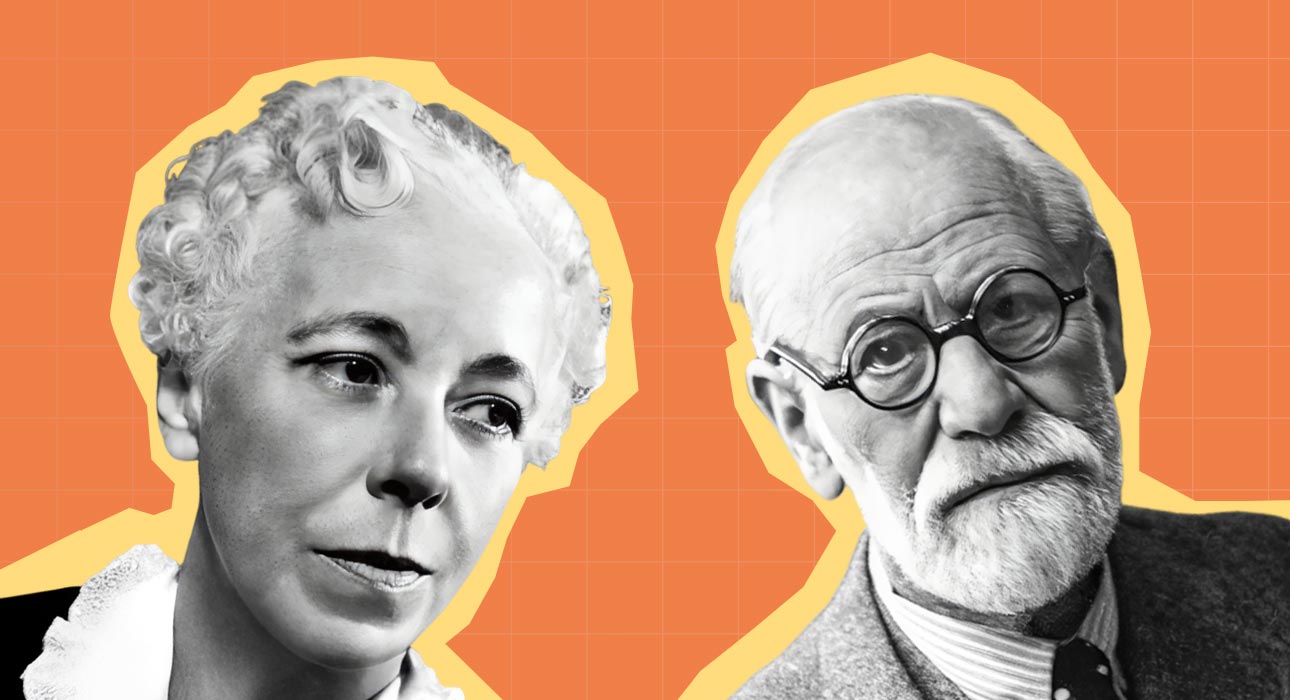
In the early 1900s, Sigmund Freud‘s psychoanalysis ruled psychological thought on the human mind. Most of the field believed its central tenets: behaviour is largely a function of unconscious instincts, personality is largely formed in early childhood, and women’s psychology is largely a function of biological envy of the male body. Karen Horney, the German-American psychoanalyst trained in the Freudian tradition, challenged some of the most basic assumptions of orthodoxy.
Karen Horney was born in 1885 near Hamburg and emigrated to America, where she claimed that culture and social environment, not biology and instinct, were the main determinants of personality; that Freud’s theories of female psychology were not scientific, but the projection of male assumptions; and that neurosis (as the term was then used to describe psychological distress and anxiety) was caused by disturbances in relationships rather than by repressed sexual drives. This article explores her main concepts and their legacy.
Read More: Karen Horney’s Legacy: Womb Envy, Neurosis, and the Feminist Perspective
Culture Over Biology: Horney’s Fundamental Challenge to Freud
Freud’s psychoanalysis was based on a biological premise: the human psyche is motivated more by biological instincts and drives, including the libido (sexual drive) and the death drive, than by the social world and that fundamental conflicts are universal and lie at the heart of the psyche, in the body, and not in the social world. According to Freud, the Oedipus complex (latent erotic feelings towards the opposite sex parent and rivalry towards the same sex parent) was a universal passage through which all human beings pass, and the resolution of this conflict would decide adult personality (Freud, 1923).
Karen Horney’s main criticism was that Freud was confusing the products of culture for products of biology. In her groundbreaking study, The Disturbed Personality of Our Time (1937), she challenged the notion that neurosis, a constellation of anxiety-inducing, self-destructive patterns, was universal and unchanging. Neurosis must be based on universal biological instinct; otherwise it would not look alike in every place. But it did not. Unstable patients in the early 20th century were different from confusing patients of other eras and cultures in their particular fears, conflicts and defences: not because their biological makeup was in any way different, but because the culture in which they lived was competitive, individualistic and emotionally repressive (Horney, 1937).
In its context, this was a truly revolutionary statement. The roots of psychological distress were not in biological factors but in culture, and Horney suggested that neurosis was not a stable artefact of human nature but a reaction to social conditions which, in principle, could be altered. Her approach established a middle-ground between the determinism of Freudian biology and the later twentieth-century social sciences psychologies. It also firmly put her in the tradition that was to be recognised in the future as ‘social psychology and cultural psychiatry ‘, the study of the influence of social and cultural factors on mental health (Quinn, 1987).
Horney also challenged Freud’s central theme, that of the importance of sexuality for psychological life. Freud took anxiety, aggression, creativity, ambition and moral feeling to be all manifestations of the sexual drive. This was reductive and unconvincing to Horney. She said that humans are primarily relational creatures, rather than sex-driven, and they need safety, love and belonging above all else. If the relationship needs are not consistently satisfied, anxiety and neurosis take over (Horney, 1945).
Read More: Breaking Barriers: Women Who Rewrote the Psychological Script
The Ten Neurotic Needs and Basic Anxiety
Horney’s most original contribution to psychoanalysis was the idea of basic anxiety. She described it as a sense of being alone and disempowered in a potentially dangerous environment; a profound, unrelieved feeling of insecurity that develops early in childhood when a child suffers a lack of consistent warmth, respect and real care from parents or caregivers.
More importantly, said Horney, this insecurity needn’t be provoked by a dramatic event or by intentional abuse. It may arise from less obvious deficiencies like emotional inaccessibility, disinterest, uncertainty, over-criticism or projecting the parent’s fears and aspirations onto the child (Horney, 1945). If basic anxiety is set up in childhood, the child and later adult will develop some strategies for dealing with that anxiety.
Horney believed that certain patterns of behaviour in response to a threatening world were common and manifest themselves in ten distinct neurotic needs. The needs are termed neurotic, but not because they are unusual or extreme, but because they are rigid, compulsive, and they are pursued beyond the demands of any actual situation. These are the neurotic needs for affection and approval (a hunger for reassurance from others), the need for a dominant partner (a need to give up one’s life to another person), the need for power (ambitious needs to control rather than achieve), and the need for perfection (an intolerance of the individual’s own inferiorities, beyond healthy standards) (Horney, 1942).
Later, Karen Horney classified these ten needs into three broad coping orientations that she felt were the coping mechanisms of neurotic people dealing with basic anxiety. Moving towards people is a strategy that entails seeking safety by being compliant, appeasing, and seeking love and approval at all times, which Horney referred to as the “self-effacing solution”. Also, moving against people involves running away through domination, competition and exercising power over others, the expansive solution. Moving away from people is about withdrawing, emotionally distancing and being self-sufficient, the giving up solution.
Horney stated that healthy people switch back and forth from one of the three orientations as needs dictate, while neurotic people get locked into one orientation and apply it in all appropriate contexts (Horney, 1945). These orientations have striking parallels with subsequent psychological theories. The need for connection and approval is similar to insecure anxious attachment. The dominating and expansive orientation translates into narcissistic patterns.
The withdrawn, self-sufficient orientation is related to avoidant attachment and schizoid personality dynamics. These patterns were described with clinical clarity decades before attachment theory, and research on personality disorders formalised these patterns (Paris, 1994).
Read More: The Role of Women in the Early History of Psychology
The Idealised Self and the Need for Should
Karen Horney’s adulthood theoretical writings consist of Neurosis and Human Growth (1950), in which she expounds what some have labelled her most psychologically penetrating idea, the idealised self. When someone’s core anxiety is intense, and their true self- the person’s authentic capacities, feelings and identity are too fragile or insufficient to live with, they form an idealised self-image.
This idealised self is not a healthy goal or aspiration, but is instead a protective creation based on a fantasy of the person’s own perfection in strength, goodness, love, or genius, which the person starts to take for granted as his or her real “self” (Horney, 1950). The idealised self creates the “tyranny of the should”, in which individuals internalise ruthless and often unconscious demands about how they “should” be, think, and feel, such as always remaining relaxed, never asking anyone for help, and always knowing what to say.
Those internal urgencies aren’t the rules of a person attempting to become bigger and better; they’re the demands of a fantasy self that can never be. Whenever the real self falls, the person always feels shame, self-contempt or despair (Horney, 1950). The fantasy of the perfect self and the shoulds are very relevant today. This concept closely resembles what later cognitive psychology termed maladaptive perfectionism, in which individuals impose unattainable internal standards on themselves and use them as a form of self-punishment.
It also anticipated the Rational Emotive Behaviour Therapy (REBT) of Albert Ellis, in which he described the “musturbatory thinking” (words such as “must,” “should,” and “ought”) that imposes rigid, inflexible demands on oneself and others as one of the major causes of psychological distress (Ellis, 1962). More than a decade before Ellis formalised them in a cognitive framework, Karen Horney came to these insights through clinical observation and psychoanalytic reasoning.
Horney was very conscious of “the real self”, the authentic essence of a person which, in the right environment, would naturally seek growth, authenticity and positive interaction with the world. In this, she foretold Carl Rogers’ notion of the actualising tendency and that of the fully functioning person. For Horney, neurosis essentially involved a conflict between an individual’s idealised self-image and reality, preventing them from experiencing and accepting their own life authentically. In the therapeutic process, then, contact with the real self and the breakdown of the defensive walls that blocked it (Horney, 1950; Paris, 1994) were the aim.
Read More: The Evolution of Psychoanalysis Through Anna Freud
Gender and Female Psychology: Unmasking Freud’s Worst Lies
It is possible Horney’s greatest historical achievement was her systematic dismantling of Freud’s theories of female psychology. Freud proposed that the female psyche was characterised by penis envy, which he described as an early realisation that girls lack the male sex organ, leading to feelings of inferiority, resentment, and incompleteness that he believed could manifest throughout a woman’s life.
Freud’s theory of femininity was characterised by a sense of lack; he argued that “a girl becomes a woman when she learns to deal with the anatomical lack” (Freud, 1925). Horney’s response was both analytical and direct. She published a series of papers between 1922 and 1937, later collected in Feminine Psychology (1967), arguing that the entire framework rested on assumptions about women rather than on careful observation of women. When women sometimes envied the social power and freedom of men, it wasn’t because of the physical difference. It was because of the social reality that men held positions of greater privilege, autonomy, and cultural value.
According to Karen Horney, Freud’s claim that this was a universal psychological fact rooted in biology actually reflected a culturally shaped response to social inequality. This was in keeping with her more general position that culture rather than biology is impacting psychology (Horney, 1967). Horney also refocused the argument on Freud. She suggested that the envy of women for men’s reproductive capacity was just as likely as men’s envy of women’s anatomy. This reproductive capacity refers to their capacity to bear and nurse offspring.
This womb envy is an intriguing and somewhat paradoxical term. It is also an irrefutable critique showing how his male-centred model made male experience the norm. It viewed female experience as a variant of that normal experience (Horney, 1967). Karen Horney’s criticism of Freudian gender theory was a building block for feminist psychology. Feminist psychology focuses on the role of gender, power, and social structures in psychological experience. It also examines the role of psychological theory in reflecting and reinforcing male dominance.
Later feminist psychologists, such as Jean Baker Miller, followed Horney’s lead in this regard. Based on Horney’s emphasis on the need to examine women’s psychology in its own terms, Miller rejected the male perspective. She also rejected the dominance of theories of selfhood and autonomy (Miller, 1976; Paris, 1994).
Read More: Penis envy vs Womb envy
Conclusion
Psychoanalyst Karen Horney was serious enough about Freud to question him carefully. In many ways, her questioning was more enduring than Freud’s orthodoxy. She insisted that culture is a more powerful influence in psychology than biology. Also, she argued that neurosis is not a product of instinctual struggle but of relational deprivation. She also believed that an idealised self is a tyranny of impossible standards. Finally, she argued that psychologists should not construct a psychology of female experience based on male experience.
Later studies and clinical practice have provided substantial support for each of these statements. Her impact on contemporary psychodynamic therapy is all-encompassing, even if not directly referenced. This therapy draws on the concepts of relational patterns, early attachment, and the gap between the defended self and the authentic self. Her influence on feminist psychology is also significant.
Her ideas of basic anxiety, neurotic needs, and the tyranny of the should continue to be clinically useful concepts. They help to understand the patterns of self-defeat and self-alienation that bring people into therapy. Horney requested that psychology examine the world, as well as the mind. She wanted psychology to study the world with the same attention and care it took to study the mind. This is still one of the most significant and incomplete areas in the field.
References +
- Ellis, A. (1962). Reason and emotion in psychotherapy. Lyle Stuart.
- Freud, S. (1923). The ego and the id (J. Riviere, Trans.). Hogarth Press.
- Freud, S. (1925). Some psychical consequences of the anatomical distinction between the sexes. International Journal of Psycho-Analysis, 8, 133–142.
- Horney, K. (1937). The neurotic personality of our time. W. W. Norton & Company.
- Horney, K. (1942). Self-analysis. W. W. Norton & Company.
- Horney, K. (1945). Our inner conflicts: A constructive theory of neurosis. W. W. Norton & Company.
- Horney, K. (1950). Neurosis and human growth: The struggle toward self-realisation. W. W. Norton & Company.
- Horney, K. (1967). Feminine psychology. W. W. Norton & Company.
- Miller, J. B. (1976). Toward a new psychology of women. Beacon Press.
- Paris, B. J. (1994). Karen Horney: A psychoanalyst’s search for self-understanding. Yale University Press.
- Quinn, S. (1987). A mind of her own: The life of Karen Horney. Summit Books.
- Westkott, M. (1986). The feminist legacy of Karen Horney. Yale University Press.