







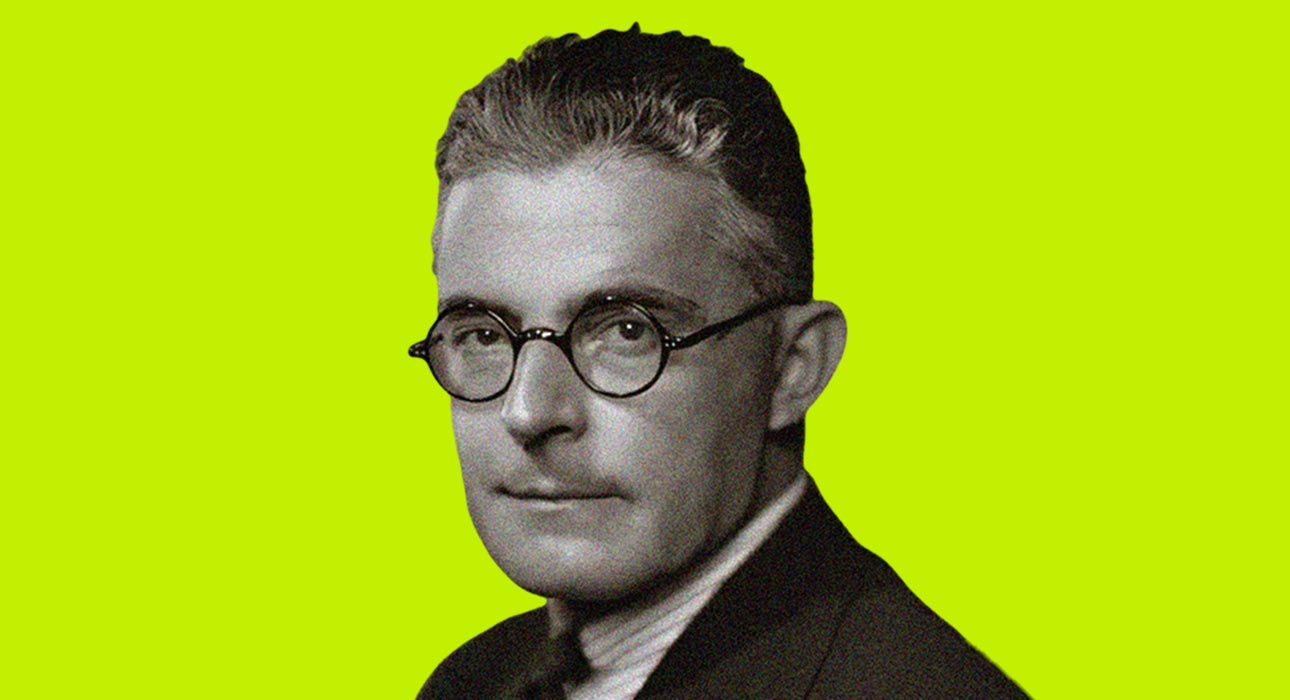
Psychology encountered many challenges throughout the 20th century as it was trying to become accepted as a scientific discipline, and one of those challenges was that of John B. Watson, who had great confidence as a psychologist and wanted to develop a unified theory of human behaviour (Schultz & Schultz, 2016). Watson argued that psychology should not study the mind, but should only observe behaviour because behaviour can be observed (Watson, 1913).
His movement, behaviourism, offered certainty. Human beings, Watson claimed, were shaped primarily by environment and learning (Watson, 1913). Personality, emotion, and habit were not mysteries of the soul but products of conditioning (Skinner, 1974). For a short time Watson was the lebron (public figure) of psychology however due to several circumstances (his dramatic departure from the academic world, his controversial views on a variety of topics, and his family legacy), Watson’s dismissal from academia would not only change his career but the views of the public on the concept of behaviourism (Benjamin, 2007).
The Birth of Behaviourism
In 1913, Watson published a manifesto entitled “Psychology as the Behaviourist Views It”; in it, Watson was very vocal about the need for psychology to abandon introspective/subjective-based psychology and function more closely to objective professional discipline (similar to that of biology/physics) (Watson, 1913). Only observable behaviour deserved scientific attention.
His experiments focused on emotional conditioning, most famously through the Little Albert study, which provides evidence that emotional responses (including fear) can be developed rather than inherited from one generation to the next (Watson & Rayner, 1920). Watson was very bold in these claims, and stated that if he could control a child’s environment, he could develop that child into any adult, regardless of the child’s…nature (Watson, 1930).
The public was fascinated. Newspapers praised him as a scientist who was figuring out how people work. Behaviourism seemed modern, effective, and useful, which fit with a society that was becoming more interested in scientific progress (Coon, 1994). But visibility also meant scrutiny.
The Affair That Ended an Academic Career
In 1920, Watson’s relationship with his graduate student and research assistant, Rosalie Rayner, became public during divorce proceedings with his first wife (Benjamin, 2007). Personal letters revealed an intimate relationship that quickly turned into national news. Before formal codes of ethics, university professors were held to a high standard of moral behaviour because of their public image as role models (Furumoto, 1989).
The large power imbalance between professors and students increased the dissatisfaction with this situation. Johns Hopkins University asked Watson to resign (Benjamin, 2007). At forty-two, and at the height of his academic influence, Watson’s university career ended almost overnight. Behaviourism lost its most well-known supporter, and the public’s interest moved from scientific progress to personal drama (Schultz & Schultz, 2016). Watson transitioned to advertising, where behaviourist principles demonstrated commercial viability; however, his academic credibility never fully regained its former stature (Coon, 1994).
Behaviourism and The Psychology of Sex
The behaviourist perspective was the basis for Watson’s analysis of sexual behaviour and the challenges he posed to traditional Freudian perspectives on psychological explanations of unconscious motivations (Watson, 1930). Watson contended that the behaviours of sexual attraction and romantic love are due to the conditioning we experience as a function of learned behaviour from our environment rather than biological instinctual preferences (Watson, 1930). He believed sexual conditioning, like most other emotions, had been developed through conditioning processes over time.
Watson also supported the teaching of comprehensive and factual sex education. It was considered an important form of helping children develop healthy emotional conditioning. This is because the secrecy and moral anxiety associated with sexual behaviours create unhealthy emotional responses for children (Watson, 1930). Yet Watson’s reputation became entangled with a persistent academic myth.
For decades, psychology textbooks claimed he had conducted controversial physiological experiments on sexual activity and that these studies contributed to his dismissal from Johns Hopkins. Historical investigations later found no evidence that such research ever occurred (Beck, 2012). As discussed in the APA Monitor on Psychology, the claim originated from an unverified anecdote that was repeated until it became accepted as fact (Beck, 2012). Ironically, the psychologist who insisted that psychology rely on observable evidence became associated with research unsupported by any observable proof.
Read More: Freud’s Stages of Psychosexual Development
Parenting Without Affection
After leaving academia, Watson continued promoting behaviourism through popular writing and more controversial though-provoking concepts, particularly advice on child-rearing (Watson, 1928). John B. Watson’s 1928 book Psychological Care of Infant and Child (co-authored with Rosalie Rayner) applied behaviourist principles to parenting and how to best care for children through an objective, scientific approach (Watson, 1928).
It advised treating children like young adults without providing them with excessive affection, establishing a strict routine, and activities that would help to develop independence, as well as to discourage the development of “problem-solving” skills. The author’s suggestions disturb many readers; however, the way he presents them creates a powerful scientific impact. Parents seeking modern, rational methods adopted aspects of his guidance, trusting psychological authority over traditional emotional instincts (Hothersall, 2004). Watson did not merely theorise these ideas; he practised them at home.
The Human Cost: His Sons’Lives
With Rosalie Rayner, Watson raised two sons according to behaviourist principles, emphasising discipline and emotional control over affection (Benjamin, 2007). Historical accounts indicate that they intentionally limited emotional warmth. Watson believed independence would emerge through controlled reinforcement rather than emotional closeness (Watson, 1928).
The outcomes were deeply troubling. Both sons reportedly struggled with severe depression, and one later died by suicide (Benjamin, 2007). While mental health outcomes cannot be reduced to a single cause, critics viewed the tragedy as evidence of behaviourism’s emotional limitations. The contrast between Watson’s confidence in environmental control and the suffering within his own family became a powerful critique of his ideas. Human relationships, it seemed, resisted mechanical explanation.
Behaviourism’s Public Image Declines
Watson’s scandal, controversial parenting advice, and personal tragedies collectively reshaped behaviourism’s cultural reputation (Schultz & Schultz, 2016). Critics increasingly described the movement as cold and mechanistic, reducing human beings to stimulus-response systems (Skinner, 1974). Although later psychologists refined behaviourism and integrated it with cognitive approaches, Watson’s departure removed its most charismatic public defender during a critical period (Hothersall, 2004). Public trust, once shaken, proved difficult to restore. The episode revealed that people often judge scientific theories through the character of their proponents.
Ethics and Professional Boundaries
Watson’s story foreshadowed modern ethical standards in psychology. A student’s connection to a name was an example of an imbalance of power, which is a basis for the strict policies regarding professional boundaries we currently have in place today (American Psychological Association, 2017). A similar example of this is the philosophy he had about parenting, which illustrates how dangerous it can be to apply science-based principles without understanding the emotional state of individuals.
As time has passed, psychology has moved away from only focusing on behaviourism and included attachment theory, emotional growth and relational views to provide a greater understanding of the complexity of being human (Bowlby, 1969). The career of the name provides proof of the fact that ethical responsibility accompanies psychological authority. Ideas about behaviour influence real lives, not just experiments.
The Ultimate Enigma: The Destruction of Documents
Near the end of Watson’s lifetime, he destroyed a significant number of private documents and letters prior to dying in 1958 (Benjamin, 2007). This act has resulted in historians being unable to answer questions related to his personal thoughts/opinions, as well as whether or not he would have reviewed the types of things that he had previously done. The destruction created a lasting mystery. A scientist devoted to observable evidence chose to erase parts of his own historical record, shaping how future generations would interpret him.
Conclusion: When Theory and Humanity Coincide
John B. Watson created a framework for the science of psychology based on measurable factors, to use as a tool to observe and measure human behaviour, thus making psychology a true science (Watson, 1913). However, Watson’s personal life and latter days demonstrate the limitations of measuring a human being by their behaviour alone (Schultz & Schultz, 2016).
His scandal altered behaviourism’s public image. His parenting philosophy raised ethical concerns. Misunderstood claims about sex research distorted his legacy. Watson’s story raises an important point that theory must conform to reality; psychology cannot separate itself from human beings. Ethics, humility, and understanding of emotion are essential components of scientific endeavour.
In behaviourism, John B. Watson sought to develop a complete theory of human behaviour. This would allow for total control over people’s behaviour by means of conditioning (Watson, 1930). However, we remember the founder of behaviourism. He is remembered as an example of how much more complex human life is than our theories suggest. It can also be more complex than the experiments we conduct in the laboratory. That is, we cannot completely predict, manage, or simplify the entirety of human experience.
References +
- Benjamin, L. T. (2007). APA PsycNet. Apa.org. https://psycnet.apa.org/record/2006-11811-000 Benjamin, L. T., Whitaker, J. L., Ramsey, R. M., & Zeve, D. R. (2007). John B. Watson’s Alleged Sex Research: An Appraisal of the Evidence. American Psychologist, 62(2), 131–139. https://doi.org/10.1037/0003-066x.62.2.131
- Malone, J. C., & García-Penagos, A. (2014a). When a clear, strong voice was needed: A retrospective review of Watson’s (1924/1930) behaviourism. Journal of the Experimental Analysis of Behaviour, 102(2), 267–287.https://doi.org/10.1002/jeab.98
- Malone, J. C., & García-Penagos, A. (2014b). When a clear, strong voice was needed: A retrospective review of Watson’s (1924/1930) behaviourism. Journal of the Experimental Analysis of Behaviour, 102(2), 267–287. https://doi.org/10.1002/jeab.98
- McGarvie, S. (2024, November 28). Attachment theory, Bowlby’s stages & attachment styles.
- Positive Psychology. https://positivepsychology.com/attachment-theory/
- Rakos, R. F. (2013). APA PsycNet. Psycnet.apa.org. https://psycnet.apa.org/record/2014-06550- 006
- Schultz, D. P. (1992). APA PsycNet. Apa.org. https://psycnet.apa.org/record/1992-97234-000
- Watson John.b (1928). Psychological Care of the Infant and Child. In the Internet Archive. George Allen and Unwin Ltd., London. https://archive.org/details/dli.ernet.7917
- Watson, J. B., & Rayner, R. (1920). APA PsycNet. Psycnet.apa.org. https://psycnet.apa.org/record/2006-01667-001




Leave feedback about this