







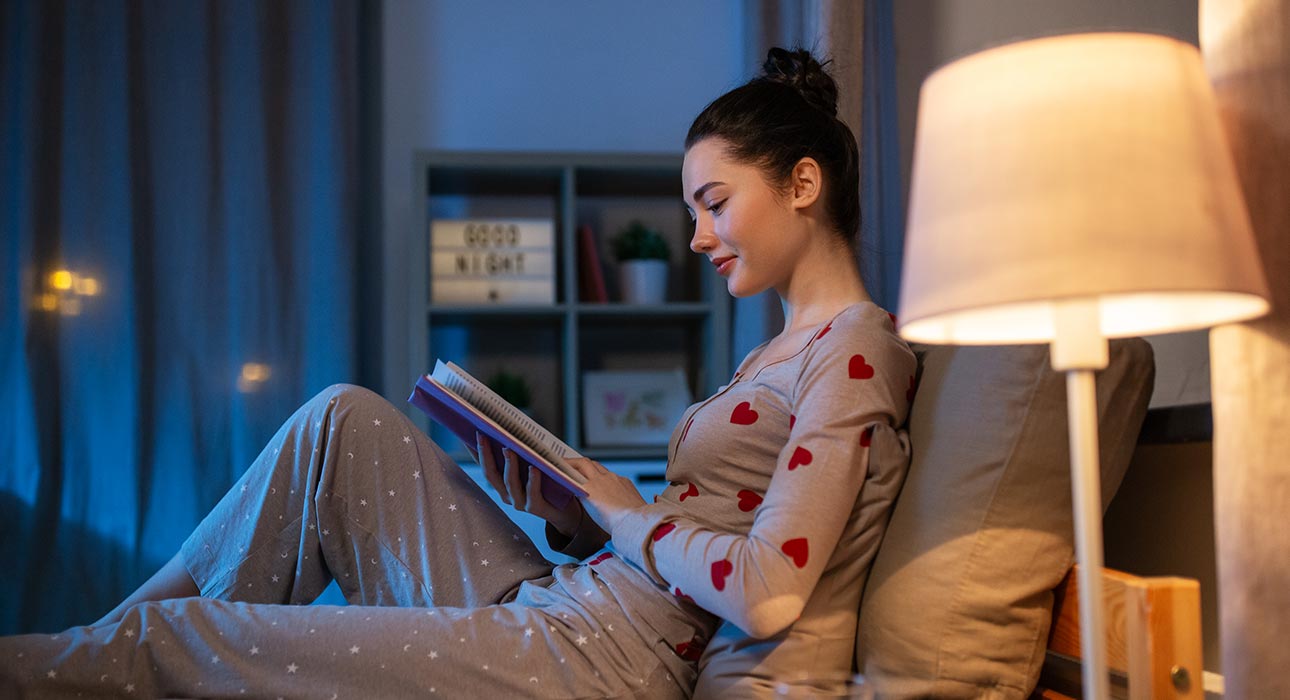
I put my mobile phone in the drawer one hour before bedtime and selected a book for two weeks. Initially, I thought that I would feel bored because of this habit but instead, I got used to falling asleep faster than recently. However, the most surprising thing in this study is that there is another person having similar experience. In an extensive experiment on the Internet, people reading books in bed were compared to those who do not perform this action.
After one week, 42% of readers stated that their sleep had become better while only 28% of non-readers reported the same effect. It is a gap of 14%. Researchers believe that the real gap is between 8 and 22 points. In other words, approximately 8 to 22 more people in 100 noticed improved sleep if they were reading than not reading (Finucane et al., 2021). It was the self-reported information. Nevertheless, it does not mean that all people will have better sleep. So, what happens with people when we change screens to paper?
Read More: Can Reading Reduce Loneliness? The Parasocial Bonds We Form with Books
The Habit I Didn’t Realize I Had
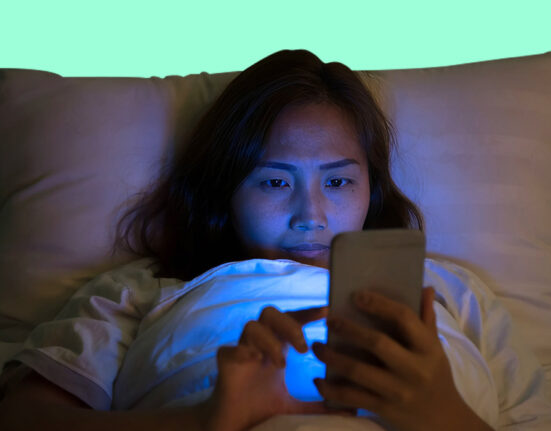
Before, my nights were just like any other person’s. I would go to bed, turn on my phone to check Instagram and tell myself that I’ll only stay awake for five more minutes, but in another 40 minutes or so, I would feel much more refreshed than tired. It is not only a matter of discipline. It is a matter of design, habits, and personality.
Notifications in social media apps and endless scrolling represent two ways that help keep you focused. During the night, however, there is an expense that you have to pay for this. Scholars refer to this as the arousal theory. Arrousal means being mentally and physically alert. The use of mobile devices before going to bed increases your levels of cognitive and emotional arousal right when you need to relax (Joshi et al., 2022).
During the research that was performed on more than 500 college students, mobile phone use for browsing has been associated with increased levels of sleep latency, meaning time it takes to fall asleep. Content that can make you feel emotional, for example, some kind of dispute in a group chat or news, has been associated with poor sleep results (Joshi et al., 2022). Thus, it was not only the time you spent using your mobile device but what exactly you did.
The habit loop also plays a crucial part here. There is a repetition of the cue, the routine, and the reward until some certain behavior becomes automatic. The act of checking one’s cell phone right before sleeping is no longer a deliberate act. Instead, it has turned into an automatic behavior. In one of the experiments conducted on more than 800 Belgians, it was found that six of every ten participants slept in their cells, whereas the use of the cell phone after sleeping was connected to sleep inefficiency and tiredness felt during the daytime (Exelmans & Van den Bulck, 2016).
Read More: Self-Regulation Through Reading: Can Books Calm the Anxious Mind?
What Screens Do to a Tired Brain
The light itself matters too, not just the content.
The blue light produced by your smartphone and tablet is perceived as daytime light by your body. According to Chang et al. (2015), the participants of the experiment would read from a light-emitting electronic device for several hours before bed on some nights, while reading from a printed book on other nights. It is an experimental study which involved 12 participants in the lab for a couple of hours before bedtime. The results of the study were that those people who read from the light-emitting device slept late, had reduced REM sleep, and felt more sleepy the next day even after sleeping for eight hours.
Researchers later compared reading on an iPad with reading printed books. The participants reported being less sleepy while using the iPad before going to bed, although it was opposite to how they should feel before going to sleep. Also, the start of the slow-wave sleep phase was delayed by half an hour, which is a deep sleep phase (Grønli et al., 2016).
However, this does not mean that all screens ruin all nights. First, both studies were very small scale and done under specific circumstances in the laboratory setting. Second, there are individual characteristics of any bedroom. The impacts vary from the intensity of light emitted by the device to the timing of its use close to the sleep time, as well as the length of time spent using it and actions carried out with its help.
Additionally, the amount of sleep that someone gets is another crucial component here. In CDC (2022), it is noted that people need at least seven hours of sleep. Therefore, the more time it takes for falling asleep, the less sleep is gained.
Read More: How to Improve Sleep Quality with Better Sleep Hygiene
What Actually Changed When I Switched to a Book
However, for me personally, the biggest distinction between the two activities was not obvious but subtle. When I was reading, there was something to concentrate on without doing anything in return. In other words, there was nothing to distract me from what I was reading.
The findings on the impact of mobile phones also point in the same direction. According to a pilot study conducted on a few people, where the participants stopped using their mobile phones 30 minutes before sleeping for a period of four weeks, the findings indicated lower arousal levels before sleeping, better moods upon waking, and improved working memory (He et al., 2020).
Evidence for reading does exist too. As it was mentioned in the research that was analyzed above, individuals who spent a week reading before sleeping reported having a better sleep compared to those who didn’t read anything (Finucane et al., 2021). However, most readers reported no improvement, and researchers assessed their sleep through self-reported measures. Furthermore, there was no control group, which engaged in different types of relaxation activities without reading. The study did not compare a book to other activities such as yoga, journaling or listening to calm music. Thus, reading can be useful to some, but not to all.
The practicability of the switch became evident to me as well. There is no buzz on the page; there is no automatic refresh, nor will it show you anything more after closing it. It helped me. It may vary in your case.
Read More: Why Rereading Familiar Books Reduces Stress and Restores the Mind
What I’d Actually Tell Someone Trying This
Of course, there were no effects right away, which was shown in the literature. The research papers discussed showed some effects, but they were modest rather than miraculous (Finucane et al., 2021). Below are some recommendations that were helpful to me, and perhaps, can be useful to you as well. First, put your phone away instead of leaving it face down on your nightstand. Just by its presence, people feel compelled to turn it on (Exelmans & Van den Bulck, 2016).
Second, set a limit for the time to do the task. In the study, the participants read from 15 to 30 minutes prior to sleeping (Finucane et al., 2021). There is no need to spend one whole hour on it. Third, select a book that will not excite you because the suspense in the book will make you think too much, just like the phone does. Finally, be patient since although the first night was unusual, everything became normal in the first week.
The Small Swap That Adds Up
However, deciding to set down your smartphone for the sake of reading a book is by no means an excessive measure. Yet, this seemingly insignificant and quite affordable measure allows you to get rid of two elements simultaneously that prevent you from falling asleep, the light preventing the production of melatonin and the content that engages your mind (Chang et al., 2015; Joshi et al., 2022). It is not what we seek in reading to find a remedy to help us overcome insomnia. What we need is some time to relax.
This test is very easy to do, and it will allow you to see if this theory works. Do not keep your cell phone within your reach tonight. Select any book you wish to read and read it for 15 to 30 minutes under low illumination. Perform this exercise for seven consecutive days, and then pay attention to the following two factors: how long it takes you to fall asleep and how you feel in the morning?
Read More: How Smartphones and Social Media Rewire Our Brains: A Neuroscience Perspective
References +
- Centers for Disease Control and Prevention. (2022). How much sleep do I need? https://www.cdc.gov/sleep/about_sleep/how_much_sleep.html
- Chang, A.-M., Aeschbach, D., Duffy, J. F., & Czeisler, C. A. (2015). Evening use of light emitting eReaders negatively affects sleep, circadian timing, and next-morning alertness. Proceedings of the National Academy of Sciences, 112(4), 1232–1237. https://doi.org/10.1073/pnas.1418490112
- Exelmans, L., & Van den Bulck, J. (2016). Bedtime mobile phone use and sleep in adults. Social Science & Medicine, 148, 93–101. https://doi.org/10.1016/j.socscimed.2015.11.037
- Finucane, E., O’Brien, A., Treweek, S., Newell, J., Das, K., Chapman, S., Wicks, P., Galvin, S., Healy, P., Biesty, L., Gillies, K., Noel-Storr, A. H., Gardner, H., O’Reilly, M. F., & Devane, D. (2021). Does reading a book in bed make a difference to sleep in comparison to not reading a book in bed? The People’s Trial—an online, pragmatic, randomised trial. Trials, 22, Article 873. https://doi.org/10.1186/s13063-021-05831-3
- Grønli, J., Byrkjedal, I. K., Bjorvatn, B., Nødtvedt, Ø., Hamre, B., & Pallesen, S. (2016). Reading from an iPad or from a book in bed: The impact on human sleep. A randomized controlled crossover trial. Sleep Medicine, 21, 86–92. https://doi.org/10.1016/j.sleep.2016.02.006
- He, J.-W., Tu, Z.-H., Xiao, L., Su, T., & Tang, Y.-X. (2020). Effect of restricting bedtime mobile phone use on sleep, arousal, mood, and working memory: A randomized pilot trial. PLOS ONE, 15(2), e0228756. https://doi.org/10.1371/journal.pone.0228756
- Joshi, S. C., Woodward, J., & Woltering, S. (2022). Nighttime cell phone use and sleep quality in young adults. Sleep and Biological Rhythms, 20(1), 97–106. https://doi.org/10.1007/s41105-021- 00345-6
- Kroese, F. M., De Ridder, D. T. D., Evers, C., & Adriaanse, M. A. (2014). Bedtime procrastination: Introducing a new area of procrastination. Frontiers in Psychology, 5, Article 611. https://doi.org/10.3389/fpsyg.2014.00611

Leave feedback about this