In 1995, a 19-year-old undergraduate with a fear of heights, particularly of elevators, completed five sessions of graded virtual-reality exposure, with marked reductions in anxiety and avoidance (Rothbaum et al., 1995). A year later, a 42-year-old woman with a debilitating fear of flying completed six sessions in a virtual aeroplane and went on to complete a real flight (Rothbaum et al., 1996). This case report showed that phobic fear could be treated entirely within a simulated environment, establishing virtual reality exposure therapy (VRET) as a viable approach to phobia treatment.
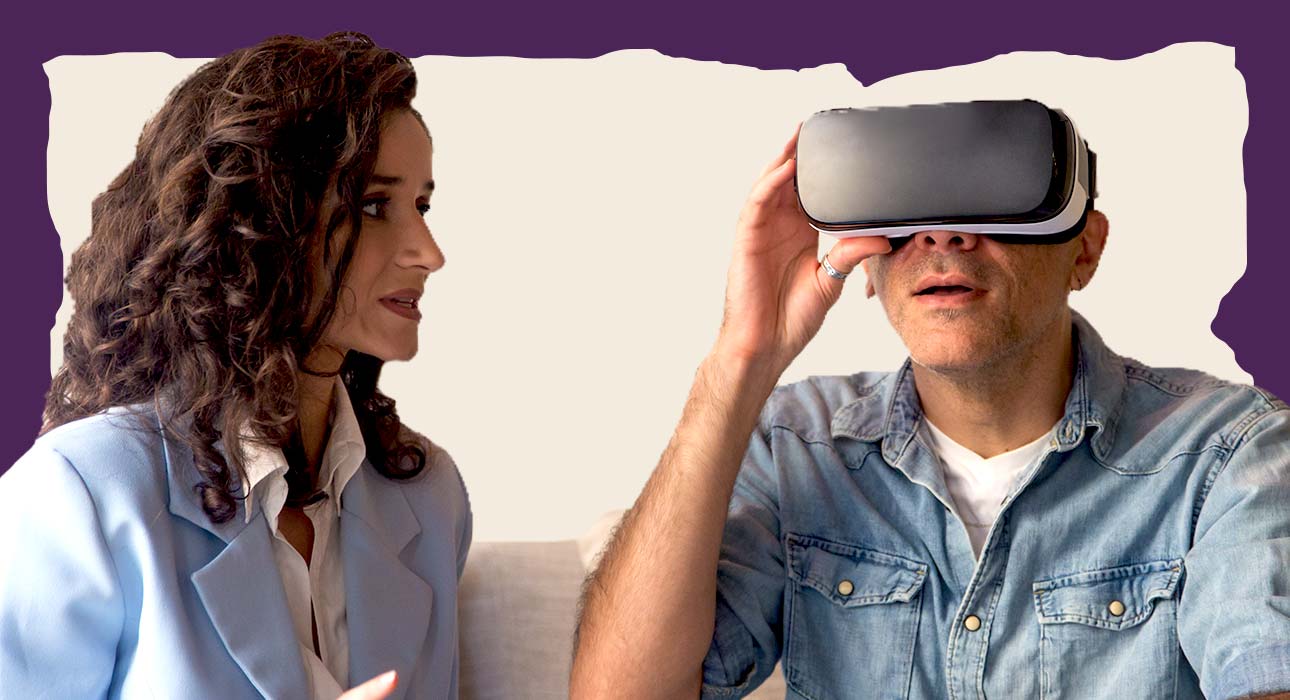
Virtual reality exposure therapy (VRET) is an advanced psychological treatment using computer-generated 3D simulations via a headset to help patients safely confront and overcome phobias, anxiety and post-traumatic stress disorder under a licensed therapist’s direct control (Sreenivas, 2026).
Specific phobias like persistent disproportionate fears of objects or situations such as heights, spiders, flying, or enclosed spaces, affect roughly one in ten people across the lifespan and, when left untreated, impose substantial functional impairment. Cognitive behavioural therapy with exposure is the treatment of choice, and over the past two decades, virtual reality exposure therapy has emerged as an Innovative modality that translates these theoretical principles into an immersive computer-generated environment. The article discusses the impact of VRET on phobia treatment.
Read More: Virtual Reality Exposure Therapy for Phobias
Theoretical Grounding of Classical Conditioning and Cognitive Behavioural Therapy
Virtual reality exposure therapy works on two psychological theories that support each other. The first is classical conditioning, which explains how phobias are acquired. A person may first experience a frightening event with something that was previously harmless. For example, if someone is bitten by a spider or has a very scary experience with spiders, they may start to fear all spiders.
The brain learns to connect spiders with danger. Even when spiders are not harmful over time, the fear can spread to similar situations, leading the person to avoid spiders altogether. This avoidance prevents them from learning that spiders are usually harmless, thereby perpetuating the fear (Maples Keller et al., 2017). The second theory is cognitive behavioural theory. This explains how phobias can be treated. CBT uses exposure therapy, where people gradually and repeatedly face the thing they fear in a safe environment.
In VRET, this happens through realistic virtual reality simulations. As people repeatedly experience the feared situation without anything bad happening, they begin to realise that, though fear is exaggerated, this process is called Extinction learning. The brain forms a new memory that the feared object or situation is actually safe (Maples Keller et al., 2017). Researchers have proposed three main explanations for why exposure therapy works.
1. Emotional processing theory
It says that fear decreases because people become less anxious each time they are exposed to the feared situation. As anxiety reduces during repeated exposure, the brain learns that the situation is not dangerous (Scheveneels et al., 2024).
2. Inhibitory learning theory
It suggests that the original fear is not erased; the brain instead creates a new memory that competes with the old fear memory when people repeatedly discover that their fear expectation does not come true. This new safe memory becomes stronger and gradually suppresses the fear (Scheveneels et al., 2024).
3. Self-efficacy theory
It focuses on confidence. Every successful exposure gives people proof that they can handle the feared situation, and as their confidence grows, their catastrophic thoughts, such as “I won’t be able to cope” or “something terrible will happen,” become weaker (Scheveneels et al., 2024).
Comparing Different VRET Approaches
A 2020 study compared different VRET approaches for treating fear of heights. One approach focused on reducing fear during exposure, while the other emphasised proving that the person’s frightening expectations were wrong. Both methods were equally effective in reducing fear. This suggests that VRET can work well across different learning processes rather than relying on a single mechanism (Gromer, 2020).
VRET as an Evidence-Based Exposure Therapy
Overall, VRET should not be seen as simply a high-tech gadget; rather, it is another way to deliver the same evidence-based exposure therapy used in traditional CBT. The virtual environment makes exposure safer, more flexible, and easier to control, while the psychological processes that reduce fear remain the same.
Read More: What is Virtual Reality Therapy (VRT)?
Behavioural Ramifications of VRET
Research over the past two decades has shown that VRET is an effective treatment for many specific phobias. Several large reviews that combine the findings of multiple studies provide strong evidence that VRET reduces fear and avoidance while producing long-lasting improvements.
A big review of 23 studies over 600 people found that exposure therapy works much better than doing nothing, and the improvements last over time, just like traditional treatments (Opris et al., 2011). When researchers ensured VR and real-life exposure received the same dose, both worked equally well. The only area where real-life exposure had a slight edge was social phobia, probably because researchers hadn’t yet nailed the tricky interpersonal stuff, like reading someone’s actual facial reactions (Wechsler et al., 2019).
For more serious anxiety disorders, not just simple phobias, VR-based therapy still beats waitlist, but only by a moderate amount and works about the same as standard therapy with similar dropout rates (Van Loene et al., 2022). A review of students who tested people in real-life situations, not just asking how they felt, found VR therapy produces real, measurable behaviour change (Morina et al., 2015).
Read More: What Is Fear of Failure? Understanding Atychiphobia and Its Psychological Roots
Examples of VRET Effectiveness
Some standout examples of an automated VR coaching app for fear of heights led to significant improvements (Freeman et al., 2018). A single VR session for spider phobia was as effective as a single real-life session, even at long-term follow-up (Miloff et al., 2019). A self-guided VR phone app helped with fears of flying, heights, spiders, and needles (Lacey et al., 2022).
Overall, reviews agree that therapy works and the results last, though how well it works depends on the specific fear, the quality of the VR software, and whether it’s combined with cognitive techniques rather than just exposure alone. A study shows we are exposed to triggers that activate the same physical fear signals as in real life: increased heart rates and sweaty palms. This is exactly what is needed for unlearning fear to occur (Diemer et al., 2014).
Neural Correlates
Brain scans are starting to show how VR therapy changes the brain, not just that it works. In one study, people with a fear of heights underwent brain scans before and after VR therapy. Researchers observed changes in activity across several specific brain regions involved in vision and self-focused thinking. One of these changes in a region called the middle temporal gyrus was directly linked to the extent to which a person’s fear-of-heights symptoms improved. In simple terms, the more this brain region changed, the more the person’s fear went down (Guo et al., 2025).
Another study used brain imaging to monitor the prefrontal cortex (the brain’s rational thinking and control region) while people underwent VR therapy for fear of heights. At first, activity in this region decreased during the very first exposure session, but over subsequent sessions, it gradually returned to a more normal pattern. This aligns with the idea that the brain’s fear-control system is being retrained bit by bit (Landowska et al., 2018).
One well-designed study found that something important, a specific type of brain activity related to prediction error (basically the brain going “wait, that wasn’t as bad as I expected!”) happening early in treatment, could predict how well a person would respond to exposure therapy later on. This is strong evidence that VR therapy works through genuine relearning, not just a placebo effect (Lange et al., 2019).
Another brain Imaging study on VR therapy for small animal phobias found that people reported anxiety dropped a lot, but some fear-related brain activity was still present. This aligns with earlier EEG findings: people can feel much better even while the brain still shows residual alarm activity (Alvarez-Pérez et al., 2021).
Read More: The Therapeutic Power of Play Media
Role of the Prefrontal Cortex and Future Research
Overall, current research suggests that the prefrontal cortex, especially the medial and dorsolateral prefrontal regions, plays a key role in helping people regulate fear during VRET. However, researchers also note that this field is still developing. Most neuroimaging studies have involved relatively small numbers of participants. They have also used different research methods, making it difficult to draw firm conclusions. Further studies using brain imaging during therapy sessions are expected to provide a better understanding of how VRET changes the brain. They may also help explain how VRET supports long-term recovery from phobias (Landowska et al., 2017).
Read More: The Rise of Digital Therapy– Boon or Burnout?
Innovative Treatment Modalities and Future Directions
VR exposure therapy is not just a stand-in for real-life exposure; it’s opening doors that traditional therapy can’t. Because VR lets therapists precisely control every detail of a feared situation, it’s useful in ways real life simply can’t be:
- By testing exactly what makes exposure therapy work, researchers can carefully adjust one variable at a time, like slowly increasing the height or changing what happens when someone faces the fear, in ways that would be impossible, dangerous, or unethical to set up in real life (Freeman et al., 2018; Scheveneels et al., 2024).
- Making treatment consistent. Every patient at every clinic can have the exact same VR experience, unlike real-world exposure, which varies widely depending on location and circumstances (Freeman et al., 2018; Scheveneels et al., 2024).
- Reaching more people. Because having VR sessions can be fully automated, no therapist is needed to guide each step. This treatment can be scaled up to reach people in underserved areas who might not otherwise have access to therapy (Freeman et al., 2018; Scheveneels et al., 2024).
- Phones are pushing this even further. Augmented reality on smartphones and self-guided mobile apps make exposure therapy even more accessible. Recent studies show that even very low-cost, minimal-air setups can work about as well as real-life exposure, changing actual behaviour (Jurcik et al., 2024; Lacey et al., 2022).
- But VR therapy is not magic; it has limits. How well it works still depends on things like how good and realistic the VR software is, how present or immersed the person feels in the virtual environment, individual differences in how susceptible someone is to feeling that emotion, and whether cognitive techniques(not just exposure) are included alongside (Alvarez-Pérez et al., 2021; Roesmann et al., 2023; Scheveneels et al., 2024).
Conclusion
Exposure therapy has become a well-established treatment for phobias. It is based on the principles of classical conditioning and delivered within a cognitive behavioural therapy framework. Also, it produces real, lasting reductions in fear. It works about as well as traditional real-life exposure. It also improves how people actually behave in real-world situations. Brain scans show VR therapy engages and gradually calms down the same brain network involved in fear. (the prefrontal cortex, amygdala, and insula) that is responsible for phobic reactions.
One especially promising finding is that early brain activity related to prediction error may help determine who will respond well to treatment. This refers to the brain realising that something was not as scary as expected. But VR therapists’ biggest strength is not just that they work. They combine precise, controlled treatment with the ability to automate and scale the treatment process. This means evidence-based therapy can finally reach patients who would otherwise never make it to a specialist’s office.
References +
- Rothbaum, B. O., Hodges, L. F., Kooper, R., Opdyke, D., Williford, J. S., & North, M. (1995). Virtual reality graded exposure in the treatment of acrophobia: A case report. Behaviour Therapy, 26(3), 547–554. https://doi.org/10.1016/s0005-7894(05)80100-5
- Rothbaum, B. O., Hodges, L., Watson, B. A., Kessler, G. D., & Opdyke, D. (1996). Virtual reality exposure therapy in the treatment of fear of flying: a case report. Behaviour Research and Therapy, 34(5–6), 477–481. https://doi.org/10.1016/0005-7967(96)00007-1
- Sreenivas, S. (2026, May 4). What is virtual reality exposure therapy? WebMD. https://www.webmd.com/anxiety-panic/virtual-reality-exposure-therapy-overview
- Maples-Keller, J. L., Yasinski, C., Manjin, N., & Rothbaum, B. O. (2017). Virtual reality-enhanced extinction of phobias and post-traumatic stress. Neurotherapeutics, 14(3), 554–563. https://doi.org/10.1007/s13311-017-0534-y
- Scheveneels, S., Engelhard, I., & Meyerbröker, K. (2024). Opening the black box: The underlying working mechanisms in virtual-reality exposure therapy for anxiety disorders. Clinical Psychological Science, 13(2), 207–221. https://doi.org/10.1177/21677026241267945
- Gromer, D. (2020). Mechanisms Underlying Virtual Reality Exposure Therapy for Specific Phobias. Online Publication Service of Würzburg University (Würzburg University). https://doi.org/10.25972/opus-20733
- Opriş, D., Pintea, S., García-Palacios, A., Botella, C., Szamosközi, Ş., & David, D. (2011). Virtual reality exposure therapy in anxiety disorders: a quantitative meta-analysis. Depression and Anxiety, 29(2), 85–93. https://doi.org/10.1002/da.20910
- Wechsler, T. F., Kümpers, F., & Mühlberger, A. (2019). Inferiority or even superiority of virtual reality exposure therapy in phobias?—A systematic review and quantitative meta-analysis on randomised controlled trials specifically comparing the efficacy of virtual reality exposure to gold standard in vivo exposure in agoraphobia, specific phobia, and social phobia. Frontiers in Psychology, 10. https://doi.org/10.3389/fpsyg.2019.01758
- van Loenen, I., Scholten, W., Muntingh, A., Smit, J., & Batelaan, N. (2022). The effectiveness of virtual reality exposure–based cognitive behavioural therapy for severe anxiety disorders, obsessive-compulsive disorder, and posttraumatic stress disorder: Meta-analysis. Journal of Medical Internet Research, 24(2), e26736. https://doi.org/10.2196/26736
- Morina, N., Ijntema, H., Meyerbröker, K., & Emmelkamp, P. M. G. (2015). Can virtual reality exposure therapy gains be generalised to real-life? A meta-analysis of studies applying behavioural assessments. Behaviour Research and Therapy, 74, 18–24. https://doi.org/10.1016/j.brat.2015.08.010
- Freeman, D., Haselton, P., Freeman, J., Spanlang, B., Kishore, S., Albery, E., Denne, M., Brown, P., Slater, M., & Nickless, A. (2018). Automated psychological therapy using immersive virtual reality for treatment of fear of heights: a single-blind, parallel-group, randomised controlled trial. The Lancet Psychiatry, 5(8), 625–632. https://doi.org/10.1016/s2215-0366(18)30226-8
- Miloff, A., Lindner, P., Dafgård, P., Deak, S., Garke, M., Hamilton, W., Heinsoo, J., Kristoffersson, G., Rafi, J., Sindemark, K., Sjölund, J., Zenger, M., Reuterskiöld, L., Andersson, G., & Carlbring, P. (2019). Automated virtual reality exposure therapy for spider phobia vs. in-vivo one-session treatment: A randomised non-inferiority trial. Behaviour Research and Therapy, 118, 130–140. https://doi.org/10.1016/j.brat.2019.04.004
- Lacey, C., Frampton, C., & Beaglehole, B. (2022). oVRcome – self-guided virtual reality for specific phobias: A randomised controlled trial. Australian & New Zealand Journal of Psychiatry, 57(5), 736–744. https://doi.org/10.1177/00048674221110779
- Diemer, J., Mühlberger, A., Pauli, P., & Zwanzger, P. (2014). Virtual reality exposure in anxiety disorders: Impact on psychophysiological reactivity. The World Journal of Biological Psychiatry, 15(6), 427–442. https://doi.org/10.3109/15622975.2014.892632
- Guo, M., Chen, Y., Xie, Y., Zhang, Y., Xu, A., Zhang, G., Kong, J., Zhong, Y., & Wang, C. (2025). How does virtual reality exposure treatment change the brain function of acrophobia patients? A randomised controlled trial. Depression and Anxiety, 2025(1). https://doi.org/10.1155/da/7823251
- Landowska, A., Roberts, D., Eachus, P., & Barrett, A. (2018). Within- and between-session prefrontal cortex response to virtual reality exposure therapy for acrophobia. Frontiers in Human Neuroscience, 12. https://doi.org/10.3389/fnhum.2018.00362
- Lange, I., Goossens, L., Michielse, S., Bakker, J., Vervliet, B., Marcelis, M., Wichers, M., van Os, J., van Amelsvoort, T., & Schruers, K. (2019). Neural responses during extinction learning predict exposure therapy outcome in phobia: results from a randomised-controlled trial. Neuropsychopharmacology, 45(3), 534–541. https://doi.org/10.1038/s41386-019-0467-8
- Álvarez-Pérez, Y., Rivero, F., Herrero, M., Viña, C., Fumero, A., Betancort, M., & Peñate, W. (2021). Changes in brain activation through cognitive-behavioural therapy with exposure to virtual reality: A neuroimaging study of specific phobia. Journal of Clinical Medicine, 10(16), 3505. https://doi.org/10.3390/jcm10163505
- Jurcik, T., Zaremba-Pike, S., Kosonogov, V., Mohammed, A.-R., Krasavtseva, Y., Sawada, T., Samarina, I., Buranova, N., Adu, P., Sergeev, N., Skuratov, A., Demchenko, A., & Kochetkov, Y. (2024). The efficacy of augmented reality exposure therapy in the treatment of spider phobia—a randomised controlled trial. Frontiers in Psychology, 15. https://doi.org/10.3389/fpsyg.2024.1214125
- Roesmann, K., Leehr, E. J., Böhnlein, J., Gathmann, B., Herrmann, M. J., Junghöfer, M., Schwarzmeier, H., Seeger, F. R., Siminski, N., Straube, T., Dannlowski, U., & Lueken, U. (2023). Mechanisms of action underlying virtual reality exposure treatment in spider phobia: Pivotal role of within-session fear reduction. Journal of Anxiety Disorders, 100, 102790. https://doi.org/10.1016/j.janxdis.2023.102790