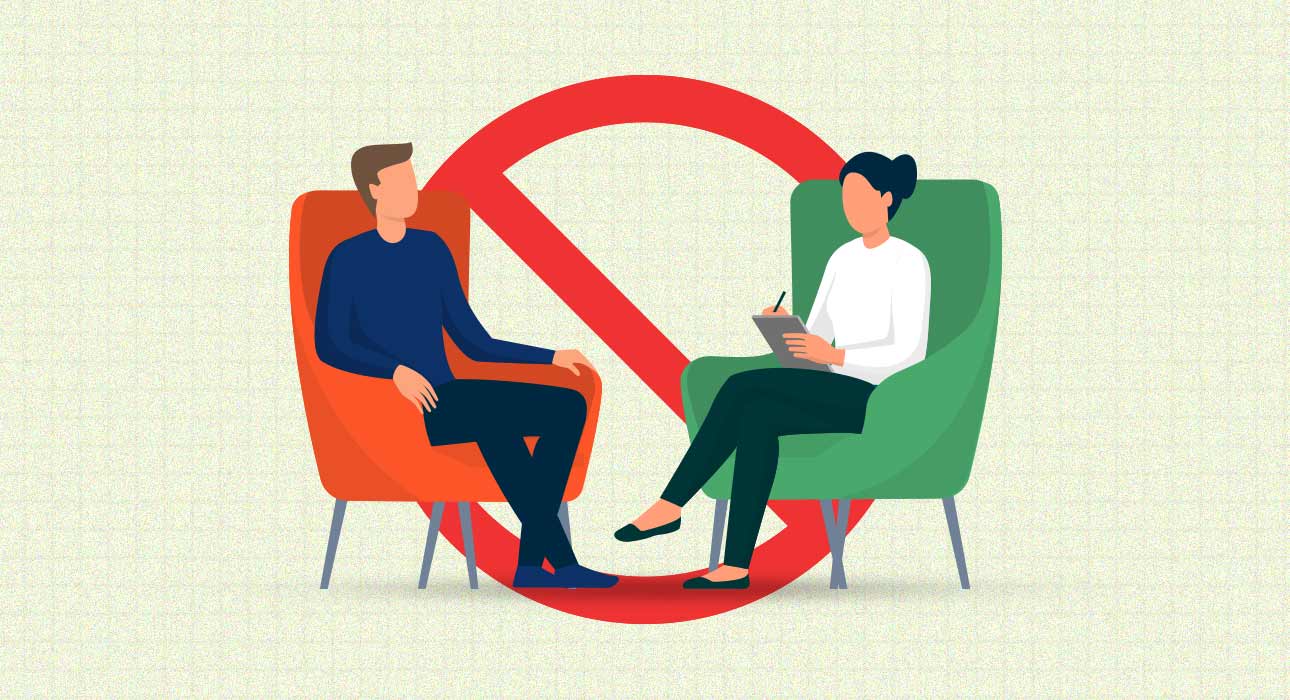
A lot of clients have difficulty communicating with their therapist during the beginning stages of therapy. Some clients spend weeks or months mustering the courage to disclose their feelings of fear, insecurity, relationship difficulties or trauma. When someone discloses something personal and private to their therapist and hears the response, “You’re blowing things out of proportion,” or even worse, to find that subsequent to their disclosure, the therapist tells someone else about their disclosure, makes a person question why they ever confided in their therapist. Therefore, looking for red flags in therapy is crucial. Understanding red flags/warning signs enables clients to protect their mental health and verify the level of professionalism and support they are receiving from the therapist.
The therapy process is commonly known to be a safe and non-judgmental place where you can express yourself, work through challenging situations, and ultimately achieve personal growth. Although many people may assume that this safety is inherent in the therapy process, it actually must be created based on a sense of mutual trust, compassion and appropriate behaviour from the therapist. A breach of the therapist/client therapeutic alliance can occur when a therapist minimises what the client has shared (e.g., “you are overanalysing this” or interrupts before the client finishes their thought). When these breaches occur, they not only represent failures of effective communication but also failures in the ability to maintain a complete therapeutic alliance with the client (Horvath et al., 2011).
Read More: What Makes a Good Therapist: Beyond Qualifications
Lack of Boundaries and Professionalism
A significant indicator that you are in a harmful therapeutic environment is an unethical breach of professional boundaries. Therapists must maintain professional boundaries in order to provide emotional safety for the client, as well as maintain the trust between both parties (Barnett, 2011). For Example, if your therapist were to regularly share too many private details of their life that are unrelated to the focus of your treatment, attempts to establish a friendship with you outside your therapy appointments by texting casually or trying to establish social relationships with you outside of the therapy office or not adhering to the scheduled time of your therapy appointments without an explanation it reflects an unprofessional relationship between the two therapeutic partners.
Also, the mentioned behaviours create an atmosphere that can be conducive to Clients developing dependence on their therapist and confusion concerning the boundaries of the relationship, as well as the violation of boundaries; all of these behaviours will not be allowed as stated in the ethical literature (Zur, 2017).
Judgment, Dismissal, or Lack of Empathy
The therapist aims to create a setting where the client has a voice and is able to be heard; therefore, if a therapist is critical, invalidates them, or demonstrates impatience in their treatment of the client, they are exhibiting significant warning signs that therapeutic change is not possible. Carl Rogers (1957) states that the therapist must offer empathy and non-judgmental respect (that is, unconditional positive regard) for any therapeutic change to occur.
An example of this would be when a therapist makes statements such as “is that really so significant?” or “other people have much worse issues than you do,” and expresses nonverbal communication behaviors such as rolling their eyes or interrupting a client when he/she/they are speaking. There is research that supports the fact that empathy is one of the primary components of effective therapy and that, if there is no empathy demonstrated by a therapist, the trust established between the therapist and client will likely be diminished, and clients’ engagement will also likely be diminished (Norcross & Lambert, 2019).
Psychological research has shown that this type of bond between therapist and client is vital. For example, Rogers (1957) suggested that empathy, unconditional positive regard and genuineness are three essential conditions for creating a therapeutic change to take place. Clients are more likely to be engaged in, and experience positive outcomes from, therapy when they view their therapist as having empathy and validating their experiences (Elliott et al., 2018; Norcross & Lambert, 2019).
Imposing Values or Giving Direct Advice
Another major warning sign of problematic behaviour is when therapists impose their own personal beliefs, morals or decisions onto clients’ lives. The purpose of therapy is not to dictate a client’s life choices but to help them gain enough information about their own beliefs and values so that they can independently make choices (Corey, 2017).
Conversely, if the therapist imposes their advice onto the client without any form of dialogue, this will lead to the client believing they are powerless over the decisions made in therapy (Corey, 2017; Beauchamp & Childress, 2013). Having this awareness will help clients locate a therapeutic environment that is ethically sound, respectful, and provides support to them as they continue their healing process (American Psychological Association, 2017).
Imposing one’s own personal beliefs and values onto a person takes away from that person’s autonomy and can ultimately inhibit a person’s further growth, which is in direct violation of ethical principles regarding respect for persons and self-determination (Beauchamp & Childress, 2013).
Lack of Structure, Goals, or Progress
If a therapist has no way of knowing whether they’re being successful or not, or whether the client is. Then it could mean that the therapist is not doing an effective job. It will be unsuccessful in helping clients create change in their lives. Warning signs for less ideal therapy services would include an abundance of sessions that consist of casual talk with very little in-depth discussion. The therapist fails to check back on goals or to bring them up, or there is frequently a lot of confusion or lack of clarity after the session takes place. Typical elements of effective therapy include setting goals, evaluating regularly, and using various types of interventions appropriate to each client’s needs (Kazdin, 2007).
Ethical Violations and Breach of Confidentiality
The confidentiality of the client-therapist relationship is of utmost importance. A breach of confidentiality is a serious and unethical violation of trust; therefore, unless there is a specific contractual/official/legal basis for doing so, clients must know that their private information is safe from unauthorised access/release. Clients should raise red flags anytime they learn that their therapist has shared any identifiable information about them without authorization (e.g., sharing identifiable information about clients with other therapists), discussing identifiable client information in ways that easily identify the client (e.g., discussing identifiable information about certain clients with other clients), or establishing dual relationships with their clients (e.g., being both a therapist and a supervisor).
Green Flags: What Healthy Therapy Looks Like
Recognising red flags during therapy is equally as essential as recognising green flags. Identifying green flags helps define an effective therapeutic relationship through trust, respect, compassion and cooperation between the therapist and the person receiving therapy. Below are several green flag examples:
- The therapist should attentively or actively listen to the client and put great effort into understanding how the client is feeling. This helps the client feel they have been heard and understood.
- The therapist should provide acknowledgement of the client’s thoughts, feelings, and experiences, without any judgment or criticism, which allows the client to feel safe to express his/her feelings.
- The therapist helps the client set goals for the course of therapy by collaboratively setting goals with the client.
- The therapist gives an explanation of the techniques and methods they use. Discusses how well the client has been doing and tells the client how they will benefit from going to therapy.
- Therapists help clients with making their own choices, rather than dictating their opinions or decisions.
- All therapist/client interactions are professional; all interactions are done with a clear definition of both you and me (the professional).
- The therapist encourages clients to share their thoughts, concerns and recommendations for changes to the therapy process (e.g., how is the therapist doing; do you want to change anything about the therapist/client relationship).
Conclusion
Therapy can have various consequences for the mental/emotional state of any person who undergoes it. Whenever you take therapy, you should ensure that you have a sufficient level of safety and respect when you think about whether or not to participate. We feel that you are fully understood throughout the process of the therapy.
By understanding the characteristics that comprise an effective therapeutic relationship. We will better understand how you can identify whether or not you are developing a positive therapeutic relationship. Ultimately, when you begin to develop a therapeutic relationship with a therapist, the goal is to create empowerment for the individual receiving therapy, to facilitate personal development of the individual receiving therapy. Create a space where a person feels heard and valued.
References +
American Psychological Association. (2017). Ethical principles of psychologists and code of conduct. American Psychological Association.
Barnett, J. E. (2011). Boundary issues and multiple relationships in psychotherapy. Ethics & Behaviour, 21(6), 445–456.
Beauchamp, T. L., & Childress, J. F. (2013). Principles of biomedical ethics (7th ed.). Oxford University Press.
Corey, G. (2017). Theory and practice of counselling and psychotherapy (10th ed.). Cengage Learning.
Elliott, R., Bohart, A. C., Watson, J. C., & Greenberg, L. S. (2018). Empathy. Psychotherapy, 55(4), 399–410.
Gelso, C. J., & Hayes, J. A. (2007). Countertransference and the therapist’s inner experience: Perils and possibilities. Lawrence Erlbaum Associates.
Hill, C. E. (2020). Helping skills: Facilitating exploration, insight, and action (5th ed.). American Psychological Association.
Horvath, A. O., Del Re, A. C., Flückiger, C., & Symonds, D. (2011). Alliance in individual psychotherapy. Psychotherapy, 48(1), 9–16.
Kazdin, A. E. (2007). Mediators and mechanisms of change in psychotherapy research. Annual Review of Clinical Psychology, 3, 1–27.
Knox, S., & Cooper, M. (2015). Relationship in counselling and psychotherapy. SAGE Publications.
Lambert, M. J. (2013). Bergin and Garfield’s handbook of psychotherapy and behaviour change (6th ed.). Wiley.
Norcross, J. C., & Lambert, M. J. (2019). Psychotherapy relationships that work (3rd ed.). Oxford University Press.
Pope, K. S., & Vasquez, M. J. T. (2016). Ethics in psychotherapy and counselling: A practical guide (5th ed.). Wiley.
Rogers, C. R. (1957). The necessary and sufficient conditions of therapeutic personality change. Journal of Consulting Psychology, 21(2), 95–103.
Wampold, B. E., & Imel, Z. E. (2015). The great psychotherapy debate: The evidence for what makes psychotherapy work (2nd ed.). Routledge.Zur, O. (2017). Boundaries in psychotherapy: Ethical and clinical explorations. American Psychological Association.