







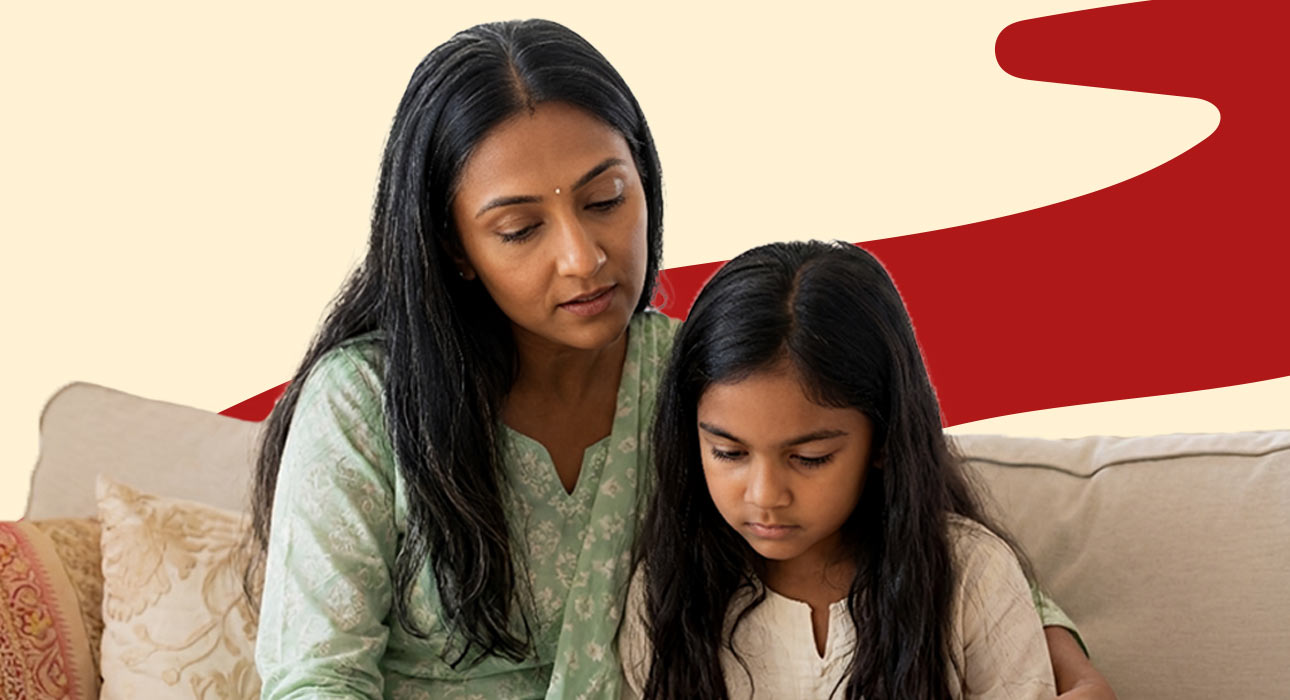
The world feels like it is vibrating all the time with crisis. There are a lot of problems like geopolitical alliances, border conflicts and money issues. All these are white noises that never stop. This is very tiring for grown-ups. For kids, it is even worse because they do not know what happened in the past to understand what is going on now. It can make them feel like the world is not a safe place for them. As parents and teachers, our job is not just to take care of kids. We are raising the next generation of global citizens. To do that without breaking their spirit, it requires a delicate psychological dance.
The Architecture of the Developing Mind
Children are not mini-adults. Their brain development is still happening. They are still learning. This means they think and act differently from grown-ups. While an adult processes a news report through a lens of distance, a child’s brain often interprets remote threats as immediate dangers. This is rooted in General Adaptation Syndrome (GAS). When a child sees a distressing image, their sympathetic nervous system triggers an acute stress response. Without a fully developed prefrontal cortex to “top-down” regulate these emotions, they remain trapped in a high-arousal loop (Selye, 1950).
Feel of vibration before the chord
Gerbner’s Cultivation Theory says that if we watch a lot of television or look at the media all the time, it can change the way we see the world. This is because high-frequency exposure to media, like watching lots of television, can shape a person’s perception of reality. This often leads to “Mean World Syndrome”—a cognitive bias where the world is viewed as more dangerous than it statistically is (Gerbner et al., 1980). For a child, the “Mean World” isn’t a theory; it’s the reality displayed on an iPad during breakfast.
Developmental Gatekeeping: Age-Appropriate Truths
Psychological research suggests that information should be “masticated” by an adult before being presented to a child. Information must be tailored to the child’s specific developmental stage to avoid unnecessary trauma.
Read More: Understanding Gatekeeping: A Crucial Strategy in Suicide Prevention
1. The Early Years (Ages 3–6): The Shielding Phase
At this stage, the world is an extension of the self.
- The Strategy: Keep it minimal.
- The Logic: Piaget’s theory of Preoperational Thought notes that children this age are egocentric and struggle with the concept of “elsewhere” (Piaget, 1952). A fire on the news in a different country can feel like their own curtains are about to ignite.
- The Action: Turn off the radio. If they overhear something, focus on the “helpers.”
2. The Middle Years (Ages 7–12): The Concrete Phase
This is the era of “Why?” and “Is that fair?”
- The Strategy: Facts and emotional labelling.
- The Logic: Children are in the Industry vs Inferiority stage. (Erikson’s Stages of Psychosocial Development)
- The Action: Use maps to provide physical distance.
Read More: The Psychology of Emotional Granularity: Why Naming Your Feelings Changes Everything
3. Adolescence (Ages 13+): The Analytical Phase
Most adolescents are already aware of global events through social media platforms.
- The Strategy: Media literacy.
- The Logic: Teens are moving into Formal Operational Thought, which allows them to process abstractions and hypothetical scenarios (Inhelder & Piaget, 1958).
- The Action: Ask, don’t lecture. “What are you hearing in your feed?” This shifts them from passive victims of information to active analysts.
The Psychological Framework: Containment
When the news is bad, adults must become Emotional Containers. This concept, pioneered by Wilfred Bion, suggests that the caregiver’s role is to receive the child’s “unbearable” anxiety, process it, and return it to them in a more “digestible” form (Bion, 1962).
If the Adult Panics, the Child feels Submerged
Co-regulation is the secret sauce. A child’s nervous system mirrors that of their primary caregiver. If parents are doomscrolling with a furrowed brow and a racing heart, the child’s amygdala will catch that fire like dry kindling. The child’s ability to control their emotions is dependent on how the caregivers can stay in control of their own emotions (Bowlby, 1988).
The Role of Educators: The Classroom as a Microcosm
Teachers face the challenge of managing thirty students with their own emotions in one room. The Social-Emotional Learning framework is really important here. According to CASEL, helping students develop Social Awareness is about understanding people from different backgrounds and cultures. In a classroom, the goal is not to push any views; it’s about teaching empathy. In the classroom, the objective is “Empathy Engineering” rather than political instruction. Teachers are encouraged to establish the school as a “Safety First” zone, provide historical context instead of personal opinion, and facilitate moderated peer discussions to prevent the “contagion effect” of mass anxiety (Hatfield et al., 1993).
Read More: How to Develop Empathy Among Adolescents: Psychological Importance
Navigating the Geopolitical Storm: A Practical Guide
| Age Group | Primary Goal | Psychological Tool | Key Action |
| 0-5 Years | Preservation of Safety | Attachment Theory | Shut off the screen. |
| 6-11 Years | Cognitive Scaffolding | Concrete Operations | Map the distance; name the “helpers.” |
| 12+ Years | Media Literacy | Critical Analysis | Debate the source; encourage agency. |
Practical Steps for Navigation
- Check your own pulse: Calm down before you speak.
- Invite the conversation: “What have you heard at school today?”
- Validate without escalating: “It is scary to hear about people losing their homes. I feel sad about that, too.”
- Correct misinformation: In the age of AI-generated propaganda, children often have distorted facts. Realign their reality.
- Agency as an antidote: Give them something to do. Donate clothes. Write a letter. Action reduces the feeling of helplessness.
The Danger of Silence
Silence on the part of trusted adults is rarely neutral; it often creates a vacuum. If parents do not talk to their children about the news, the internet will fill that space. According to Vygotsky’s Zone of Proximal Development (ZPD), children learn best when guided through concepts they cannot yet master alone (Vygotsky, 1978). If we leave them outside the ZPD to figure out global conflict on their own, we leave them to fall into a pit of nihilism. The goal isn’t to raise a child who is oblivious to the world’s pain. The goal is to raise a child who isn’t paralysed by it. We must teach Resilience. As Masten (2001) noted, resilience is “ordinary magic”—it comes from the everyday support of the family unit.
Conclusion
Raising a child in a permanent crisis cycle is less about explaining the world and more about acting as their emotional filter. By providing context and containment, caregivers transform global instability into a lesson on resilience. The goal isn’t to foster a child who is oblivious to the world’s pain, but one who is not paralysed by it. Through age-appropriate honesty and a calm presence, adults provide the “ordinary magic” needed to weather the storm. The world outside may be shaking, but through empathy and structure, the home can remain the one place that stands still.
References +
Bion, W. R. (1962). Learning from Experience. Tavistock.
Bowlby, J. (1988). A Secure Base: Parent-Child Attachment and Healthy Human Development. Basic Books.
CASEL. (2020). CASEL’s SEL Framework. Collaborative for Academic, Social, and Emotional Learning.
Erikson, E. H. (1963). Childhood and Society. W. W. Norton & Company.
Gerbner, G., Gross, L., Morgan, M., & Signorielli, N. (1980). The “Mainstreaming” of America: Violence Profile No. 11. Journal of Communication, 30(3), 10-29.
Hatfield, E., Cacioppo, J. T., & Rapson, R. L. (1993). Emotional Contagion. Current Directions in Psychological Science, 2(3), 96-100.
Inhelder, B., & Piaget, J. (1958). The Growth of Logical Thinking from Childhood to Adolescence. Basic Books.
Masten, A. S. (2001). Ordinary Magic: Resilience Processes in Development. American Psychologist, 56(3), 227–238.
Piaget, J. (1952). The Origins of Intelligence in Children. International Universities Press.
Selye, H. (1950). The Physiology and Pathology of Exposure to Stress. Acta Inc.
Vygotsky, L. S. (1978). Mind in Society: The Development of Higher Psychological Processes. Harvard University Press.




Leave feedback about this