







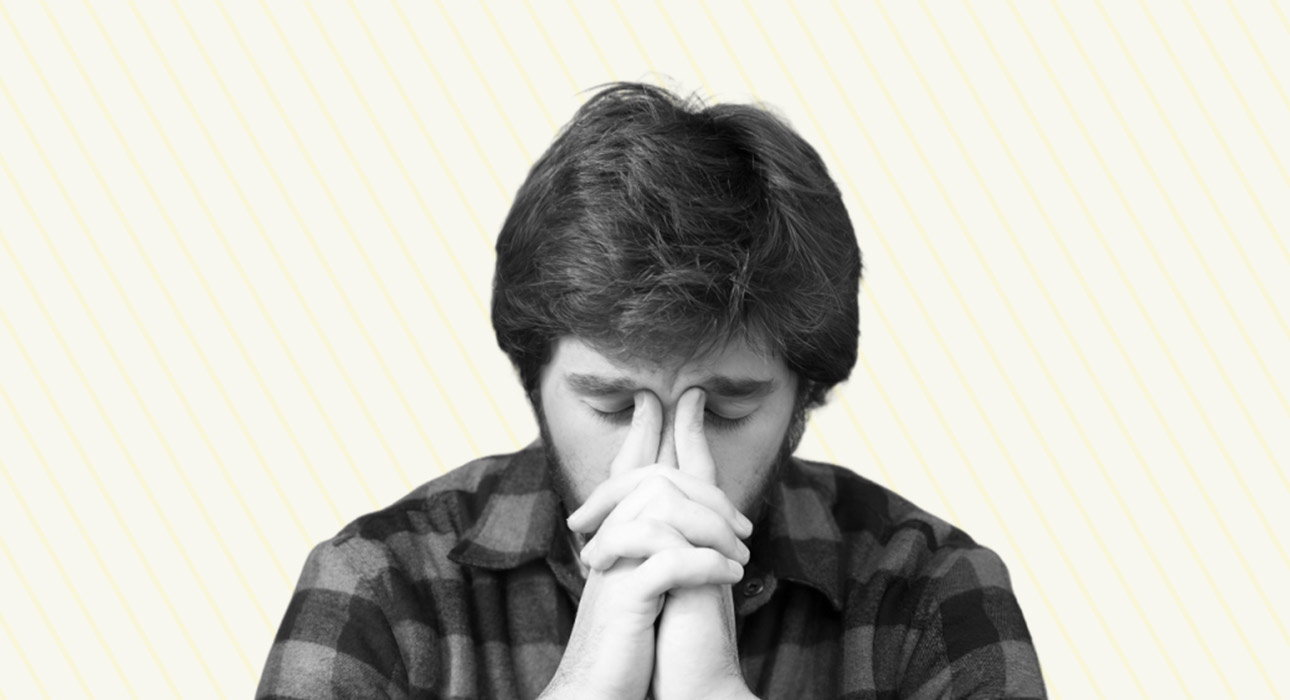
Imagine two people who lose their jobs in the same month. One feels low for a few weeks, then starts applying again. The other struggles for a year. Why do people respond so differently to the same setback? Research demonstrates that most people are more resilient than they think, and many people go through a painful experience such as bereavement better than anyone can expect (Bonanno, 2004).
However, that may not be the case for everyone, and psychologists have wondered why. Resilience refers to the capacity to adapt when a situation in life calls for a response, such as when dealing with stress, disaster, illness, bereavement or another big change. This article discusses what resilience is, how it is different from being “tough”, and the factors involved in resilience and its development.
What Resilience Actually Means
People say that resilience is a trait you are born with and some people are just resilient while others aren’t. Modern-day psychologists debate that this is not true, but resilience is actually a learned trait. The process begins as people interact, particularly with challenging events and situations, and the social environment (Southwick et al., 2014). Psychological resilience has two vital parts: adversity and positive adaptation. A challenge or threat is anything that has the potential to cause harm, stress, loss or damage and would be considered a threat or a challenge.
On the other hand, positive adaptation means the ability to maintain control over day-to-day functions in the wake of the aforementioned challenging experiences (Luthar et al., 2000). For example, if a person loses their job, resilience would be demonstrated in their ability to handle the distress of finding a new job as well as their capacity to continue with other activities in life.
Masten (2001) referred to it as ‘ordinary magic’. Her review of the concept reveals that it is not an inherent quality but a combination of characteristics that are usually found among ordinary people. According to the author, it entails ‘familial and individual resources and protective processes’. Resources and processes are each significant in the development of resilience. The findings are important because they imply that ordinary people can build resilience, and therefore deal with adversity, better than previously thought.
The article goes on to note that researchers have classified various adaptive responses to adversity. Bonnano (2004) identified four categories of response to loss and other adverse situations. These are:
- Resilience: this is the case of short-term distress with minimal disturbance to overall levels of functioning.
- Recovery: longer-term disturbance with gradual return to baseline functioning.
- Chronic difficulty: prolonged distress soon after the event and a slow return to normal levels of functioning.
- Delayed reactions: the response is delayed but lasts a relatively short time
Using the grief model, for instance, one expects that when faced with the bereavement of a parent, some people might remain sad for a short time, then start returning to normal levels of functioning. However, others might experience prolonged sadness, depression, and distress. Such inter-individual differences and variations in response to loss are entirely normal. The view that resilience is a process has profound implications for understanding the phenomenon.
Rather than asking the question ‘who is resilient’, psychologists are now asking the questions ‘what is happening to this person?’ and ‘how will this person respond to the adversity?’. The author of the article thinks that an individual’s ability to cope, family support, and environment all play an important role in determining a person’s level of resilience. It’s imperative to realise that every person tends to react to crises in different ways, and there are a number of influencing factors that contribute to this.
Resilience Is Not About Being ‘Tough’
The popular perception of resilience is that it is only for the ‘tough’ people. This might explain why some people are reluctant to embrace it as a process because, to them, it is an inherent quality. Resilience is not a binary measure; that is, people do not possess it to a greater or lesser degree. As discussed earlier, it is a process, one that requires the active contribution of the individual. Southwick et al. (2014) observe that the most psychologically resilient people are not those who have been brought up to suppress their emotions, fears, and vulnerabilities (233).
In short, being stoic does not mean that one is resilient. While it is true that more emotionally stable people are likely to cope better with most situations, their distress levels are lower, and the symptoms are less severe and short-lived. The view that ‘tough people’ are more likely to be resilient is also problematic because it places an undue burden on the individual. According to Bonanno (2004), if someone is not as psychologically resilient as others, there is nothing wrong with them as a person. Everything is normal and within the expected range.
This perspective can be incredibly liberating to many people who might find themselves in the ‘unfortunate’ group of less psychologically resilient individuals. Luthar et al. (2000) go on to argue that psychological resilience is not necessarily consistent across domains or predictable over time. The authors give an example of a student who is consistently high-achieving but faces terrible family circumstances. While the student may be tough enough to hold on to his/her grade average, they may arrive with some form of psychological disturbance from the ugliness and torment at home.
Also, a nurse who is normally emotionally stable may have a car accident and be more psychologically fragile following the trauma. In other words, we don’t know how we will react to a given stimulus until we encounter it. Psychological resilience is not in itself situational. In other words, people are likely to be resilient in all situations (Southwick et al., 2014). This viewpoint does not hold as one would expect because there are varying degrees of difficulty associated with different problems.
Some people may be highly adaptive in the face of a relationship problem or job-related issue but be less so in the face of a debilitating illness or a tragic death. In addition, people’s resilience will also be different depending on the resources and strengths that they possess at the moment. Furthermore, it is vital to note that people are never alone, and social support availability is critical and can affect an individual either way.
Read More: Neglected and Unaddressed: Post-Stroke Psychological Disturbances
Why ‘Strong’ People Are Not Always Resilient
Although being rough or hard does not instantly give us Resilience. A person who looks calm and collected from the outside at the time of the crisis may not display Resilience. Resilience is in the reaction to the stressor; the person may be screwing up, but they don’t have to be resilient. Individuals may have little, if any, control over the situation or environment, but they have Resilient behaviour, thoughts and attitudes at their disposal.
Biological factors may be another factor that influences how much an individual may be impacted by a traumatic or stressful experience (Southwick et al. 2014). Scientific research shows that factors such as coping skills, emotion regulation and optimism could be very influential factors.
1. Coping skills
According to Lazarus and Folkman (1984), the most influential factor in response to a stressor is the cognitive appraisal of the stressor itself. People who appraise a situation as an uncontrollable threat will respond in a negative manner- thus, high stress levels. When it is seen as a challenge, the chance of coping well improves. They identify two types of coping.
Problem-focused coping involves trying to deal with the problem by doing something about it. Emotion-focused coping involves trying to reduce the emotional distress that goes with a stressful or potentially stressful situation. Both kinds of coping can be helpful, and psychologically hardy people tend to adopt a flexible style, shifting back and forth between problem- and emotion-focused coping as the circumstances require (Southwick et al., 2014).
2. Emotion regulation
How we modify our experience of emotion by altering our emotion-reactive responses- what they are, when we experience them, and how we respond to them (Gross, 1998). Cognitive reappraisal: consciously reinterpreting the outcome or the situation that caused an unpleasant emotion so that the emotion changes; this may involve thinking “I wasn’t good enough” after being rejected following a job interview, but then thinking “it wasn’t a good fit for me, but it was good practice” (Gross, 1998). This is holding back or not expressing emotion while the emotion is present. It can be useful in the short term but can be exhausting if used too frequently (Gross, 1998).
3. Optimism
Optimism is the general expectation that good things will happen. According to a review by Carver et al. (2010), there have been a number of measured coping strategies that were correlated with optimism. People with high levels of optimism are more likely to take an active approach to a problem and less likely to feel hopeless after not succeeding in one. Additionally, they tend to take an active coping approach, including seeking help and planning.
Self-Efficacy and Problem-Solving
Bandura (1997) defines self-efficacy as ‘people’s beliefs about their capabilities to produce designated outcomes by their actions’. It is a form of self-mastery – an understanding of the controls and influences that we have over a given situation. Self-efficacy beliefs are not necessarily the same as self-esteem. While the latter entails how people feel about themselves, self-efficacy is more focused on expectations about one’s performance.
For example, one can be low in self-esteem, but have firm self-efficacy beliefs about cooking or driving. Bandura posited that self-efficacy is a vital concept in human functioning because it plays a role in cognitive, motivational, and affective domains and therefore is an essential part of human functioning (Bandura, 1997). Individuals with a high sense of self-efficacy are more likely to undertake challenges and invest more effort in actualising their potential while sustaining their effort in the face of these challenges to achieve their intended goals.
On the other hand, people with low expectations will be more likely to give up once they do not perceive that their actions have any efficacy. This may lead to a form of a self-fulfilling prophecy where people develop negative beliefs about their capabilities that influence their actions and outcomes. Bandura identifies four sources of self-efficacy expectations. These are mastery experiences, vicarious experiences, verbal persuasion, and physiological and affective arousal. Mastery or successful experiences have the most powerful impact on efficacy expectations.
People are more likely to believe in their capabilities if they have had some form of success, even if the experience is minor. When people observe others, particularly individuals who they perceive to have some similarity to them, achieving a desired outcome, personal efficacy expectations increase. Verbal persuasion refers to encouraging statements made by trusted individuals.
Lastly, physiological and affective arousal refers to the impact of any physical changes, like increased adrenaline or lack of hunger, on efficacy beliefs. When encountering a difficult event, such as a bad grade in school, one should handle the situation using efficient problem-solving skills such as breaking down the problem into manageable steps, stepping back and considering other solutions, discovering potential solutions, and assessing the situation.
Problem-solving also entails an understanding of when a situation is beyond one’s control. If so, it might be necessary to seek assistance or change the approach to reduce stress (Lazarus & Folkman, 1984). Like other factors previously identified, it is possible to become more skilled at problem-solving.
Support, Surroundings, and How Resilience Grows
The three aspects of self-talk, coping strategies, and self-efficacy are internal processes that add to one’s level of psychological resilience. However, as the article shows, social support and environmental resources are also essential factors. The following section will discuss these in detail.
1. Social Support
According to Ozbay et al. (2007), when conducting their review of the literature on the topic, researchers have come to the conclusion that social support is one of the key determinants that influence the manner in which stress affects an individual. The key types of social support include emotional, tangible and informational support, with emotional support being a type of care provided within a relationship.
This might be, for instance, listening without judgment. Second, physical aid is offering something to a person in need, such as childcare or financial assistance. Next, providing information to a person by, for example, offering information that a person can use to give someone else directions to a certain destination or about how to resolve a specific dilemma. In particular, it becomes crucial during trauma and adjustment disorders.
2. Environmental Resources
Ungar (2011) has argued that the primary reason why some people are resilient while others are not is mainly due to the environment. The author argues that environmental risk and protective factors are responsible for the observed variance. This means that an effort should be made to ensure that people have access to things like housing, education, healthcare, and so on. In this way, they can have a reasonable chance of being resilient. Besides this aspect, the article also reveals the role of culture in psychological resilience.
As social support, culture also provides the context in which the members of society live. It provides the basis for a set of values and rules of conduct, which are required for all individuals to follow. Culturally, different societies also value different things. As a result, this helps explain cross-cultural differences in various approaches to health care, social relations, and even coping strategies.
The author’s view has several practical implications, as demonstrated in the article. Resources at their disposal. For instance, when attempting to determine why a person is distressed or unwell, the emphasis needs to be on what they have. Additionally, it should focus on the resources at their disposal. By understanding the role played by resources, it becomes possible to invest in developing systems and structures to support psychological resilience. For example, these may include better education and healthcare systems.
Can We Learn To Be More Resilient?
According to Masten (2001), individuals can learn to acquire resilience from the following sources: close relationships, productive life skills, and motivation. Each of these factors has been discussed in detail in the previous sections. For adults, it is never too late to start with the following:
- Strengthening relationships: We ought to put more into our relationships with other people. As far as possible, we should keep them open and let people be themselves.
- Using alternative approaches to achieve goals: We should come up with new, flexible techniques to achieve our life goals. We should celebrate our small successes and keep a record of all mistakes as a way of learning.
- Asking for help: We should do away with the stigma around seeking help by asking for assistance whenever we are unable to deal with something by ourselves.
- Developing healthful habits: Getting enough hours of sleep, eating healthy, exercising, and participating in various activities can help with our mental and physical strength and endurance.
Resiliency is definitely something that can be learned throughout one’s life. As previously mentioned in the article, experience is a key element in developing our self-talk and emotion regulation. Moreover, it plays a role in developing any other processes that augment our resilience. The more exposure we have to relatively manageable problems, the more likely we are to confront a bigger crisis. It is important to realise that for most of us, it will not be something that happens quickly and effortlessly. Nevertheless, these lessons are essential to prepare us for the challenges that life throws our way.
Conclusion
In conclusion, this article discussed the concept of resilience, including one’s resources for it. However, as the article discovered, resilience is not something that one is born with; it can be learned throughout one’s life. Thus, everyone has it in them to become more resilient with the right tools and the determination to use them. For some, it may come easier due to their social networks or support systems, among other things, that they have at their disposal.
This is a vital detail because it means that everyone can take personal responsibility to be more resilient. This article offers several practical steps that we can all implement in our lives. The next time something bad happens, we should remember to ask three key questions. First, ‘What can I do about it?’ Second, ‘What can help me do it?’ Finally, ‘What is one small thing I can do about this?’
References +
- Bandura, A. (1997). Self-efficacy: The exercise of control. W. H. Freeman.
- Bonanno, G. A. (2004). Loss, trauma, and human resilience: Have we underestimated the human capacity to thrive after extremely aversive events? American Psychologist, 59(1), 20–28. https://doi.org/10.1037/0003-066X.59.1.20
- Carver, C. S., Scheier, M. F., & Segerstrom, S. C. (2010). Optimism. Clinical Psychology Review, 30(7), 879–889. https://doi.org/10.1016/j.cpr.2010.01.006
- Gross, J. J. (1998). The emerging field of emotion regulation: An integrative review. Review of General Psychology, 2(3), 271–299. https://doi.org/10.1037/1089-2680.2.3.271
- Lazarus, R. S., & Folkman, S. (1984). Stress, appraisal, and coping. Springer.
- Luthar, S. S., Cicchetti, D., & Becker, B. (2000). The construct of resilience: A critical evaluation and guidelines for future work. Child Development, 71(3), 543–562. https://doi.org/10.1111/1467-8624.00164
- Masten, A. S. (2001). Ordinary magic: Resilience processes in development. American Psychologist, 56(3), 227–238. https://doi.org/10.1037/0003-066X.56.3.227
- Ozbay, F., Johnson, D. C., Dimoulas, E., Morgan, C. A., Charney, D., & Southwick, S. (2007). Social support and resilience to stress: From neurobiology to clinical practice. Psychiatry (Edgmont), 4(5), 35–40.
- Southwick, S. M., Bonanno, G. A., Masten, A. S., Panter-Brick, C., & Yehuda, R. (2014). Resilience definitions, theory, and challenges: Interdisciplinary perspectives. European Journal of Psychotraumatology, 5, Article 25338. https://doi.org/10.3402/ejpt.v5.25338
- Ungar, M. (2011). The social ecology of resilience: Addressing contextual and cultural ambiguity of a nascent construct. American Journal of Orthopsychiatry, 81(1), 1–17. https://doi.org/10.1111/j.1939-0025.2010.01067.x



Leave feedback about this