







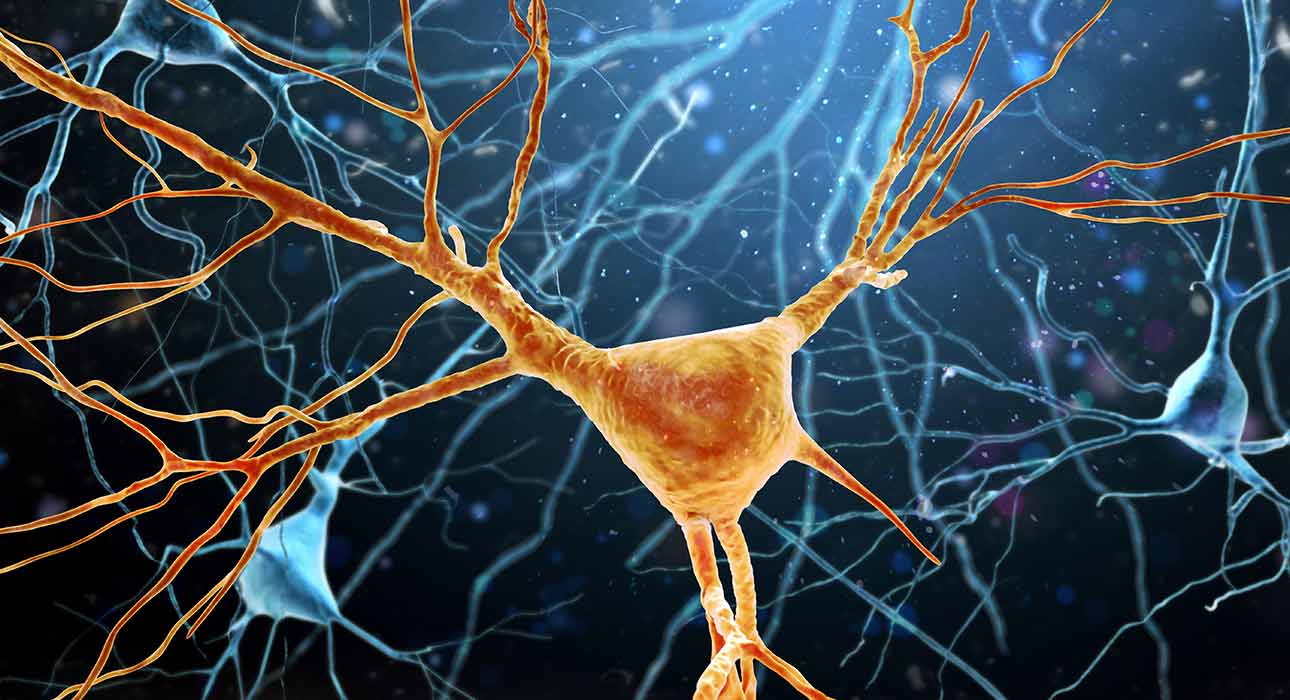
The study, the topic of the research paper featured in the above research snapshot, delves into the question of how a young neuron goes about choosing which one of the dozens of tiny branches emanating from its core will grow out to become the single long cable (called the axon) responsible for transmitting the neuron’s signals. Because a single neuron can transmit messages in only one direction, and it really matters that it has only one long axon, if it were to form several long branches, it could cause considerable confusion in our brain’s wiring. Scientists have traditionally assumed that the choice is guided mostly from outside the neuron, with chemical and growth stimuli guiding its development.
The research paper outlined above suggests, however, that internal ‘tick-tock’ oscillations within the developing neuron help make this critical choice, turning on their heads many years’ worth of research highlighting solely outside influence. What problem do the researchers try to solve? From where do axon identities get their fate? Do external stimuli impose it, or are there intrinsic instructions encoded by internal molecular skeletal-like structures within the neuron itself? The researchers centre on the protein Arp2/3 complex, known to reorganise the actin filaments (a principal cytoskeletal component) in various cell types, showing that it works as a molecular zipper that cyclically slackens the cell “corset” so that one of its appendages slowly overpowers the rest and becomes the axon.
Read More: Microexon Misregulation in Neurons Triggers Hyperarousal and Sleep Loss, Study Finds
Neuronal polarity and its direction of transmission
The essential concept of this study is neuronal polarity, which means a neuron becomes asymmetric; that is, it differentiates a single output extension, the axon, and several input extensions, the dendrites. This is an essential requirement for directed transmission of information in a single direction, from dendritic inputs to a central soma, which receives the information, processes it, and sends it out via a single axon output. If a neuron were to sprout a second axon, its output signals would be routed through several distinct networks, throwing into disarray carefully constructed brain circuits.
Consider a young neuron as being round in shape and having several short “buds,” which have been named neurites, around it. Initially, all of these neurites appear to be the same and have a slow ‘breathing’ type of action of slightly extending out and then retreating in to a regular beat. Inside the neuron, the network of tension between actin and myosin is like a corset that keeps the neuron’s shape taut. But at intervals, with the Arp2/3 protein that usually acts to make a network of branches of actin that branches out from other branches of actin, parts of this corset become slack from the inside, at which point a neurite becomes a little more plump. This continues over time, such that this process of “loosening and tightening” eventually results in the longest and sturdiest neurite becoming the axon and the other neurites developing into dendrites.
Read More: Do Neurons Lose Flexibility With Age? New Research Explains Cognitive Decline
Research background
The research work, led by Dr Tien-chen Lin and Professor Frank Bradke, German Centre for Neurodegenerative Diseases (DZNE), used multiple experimental methods. These methods included live-cell microscopy to follow the dynamics of neuron extensions (neurites) in real time during the course of hours to days, gene knockdown of Arp2/3 activity, and optogenetic control of cytoskeletal components in particular cellular domains by light.
Using cell cultures of neurons and experiments in vivo, they were able to investigate whether axon specification is mainly controlled by the growth cone, at the end of the neurite, or by signals emanating from the cell body, called the soma. In their Nature paper, titled “An intrinsic cytoskeletal oscillator establishes neuronal polarity,” they presented a “soma-driven oscillatory program” for regulating actin dynamics. The group asked if an “intrinsic oscillator based on actin remodelling that depends on the Arp2/3 complex” would be enough to bias one neurite to grow as an axon in the absence of guiding signals.
Process of axon generation
Our most important observation is that axon outgrowth appears to be internal and autonomous, rather than principally driven by extrinsic growth factors or signals that attract axons. The soma generates waves of branching via Arp2/3, reorganising the global network of actomyosin and propelling an “actin wave” that moves into one neurite after another. Once an actin wave enters a neurite, it relieves local tension, letting it extend, although this elongation tends to be brief and is usually followed by retraction.
Second, they also characterised the dynamic as having a “two steps forward, one step back” characteristic. Each neurite undergoes a cycle of outgrowth and retractions as the Arp2/3-driven wave oscillates randomly from one branch to another. In the meantime, more robust cytoskeletal structural proteins like microtubules grew in from the inside into those outgrowing neurites. At one point, one of those neurites would happen to grow long enough for the microtubules to get into it and build a “locked-in” and stable structure that wouldn’t be pulled back. Once that occurs, it can continue to grow independently of Arp2/3 and become an axon. The whole oscillating, driven growth pattern across the cell stopped.
Author’s insight
According to the authors, this means that the hitherto prevailing notion of external, target-directed cues controlling the formation of growing structures at neurite tips, the growth cones, is being refuted in favour of the soma as the ultimate polarity organiser, which uses an intracellular genetic program controlling a sustained, periodically activated oscillatory process. In this internal program, Arp2/3-dependent actin branching remodels the entire cytoskeleton repeatedly, and as a result, only one of the neurites can prevail over an intracellular background of inhibition and grow as the axon, thereby implementing the “one-axon rule” for organised brain wiring.
These findings also underscore how basic this mechanism seems to be for nervous system development, because output of individual axons occurs in species throughout the animal world, researchers say. “We expect that such an internal cytoskeletal oscillator could exist in virtually any developing brain,” they write. Many questions still loom, of course, including what kicks off the cycle, why it targets just one neurite at a time, and which genes house the plan to perform it. However, addressing them “will enhance our understanding of normal brain development and could inspire strategies to promote nerve repair or to treat conditions involving misregulation of neuronal polarity.”
Read More: New Study Discovers 74 Genetic Locations Linked to Anxiety
Conclusion
But in general, it demonstrates that axon growth isn’t just dictated by an external signal but orchestrated by an intrinsic, pulsing cytoskeletal program initiated at the neuron’s cell body, in part thanks to the protein complex Arp2/3. This “molecular zipper” allows the cell’s inner corset to slacken and tighten, producing a pulsing pattern that sends waves of actin through the neurites. Eventually, one becomes stable enough, through reinforcements with another cell filament, microtubules, to become the axon; the rest develop into dendrites. “A fundamentally intrinsic mechanism that explains why most neurons reliably make just one axon, and it suggests an entirely new approach to thinking about how brain connections are made and fixed.”
References +
- Neuroscience News. (2013, January 29). A Better Way to Culture Central Nervous Cells. Neuroscience News. https://neurosciencenews.com/a
- Różyk-Myrta, A., Brodziak, A., & Muc-Wierzgoń, M. (2021). Neural Circuits, Microtubule Processing, Brain’s Electromagnetic Field—Components of Self-Awareness. Brain Sciences, 11(8), 984. https://doi.org/10.3390/brainsci11080984




Leave feedback about this