





Skin is the largest organ of our body. It is directly impacted by our food and dietary habits, temperature, water intake and sleeping patterns. Flawless skin is the universal demand of every individual, and hence, there is an increase in demand for skin improvement products as well as treatments. In order to get glowing and radiant skin, we put extreme focus on not only eating habits but also cosmetic products, including serums, moisturizers and cleansers.
But have you noticed that on a relaxing vacation, your skin glows from within, without any beauty products? Why do people appear to be more glowing and radiant after a restful weekend? Does the state of mind have any impact on our skin health and glow? This article reflects upon the impact of relaxation on our skin health.
What is Glow?
Despite being the most commonly used term in our daily life and self-care, skin glow means different things to different people. Skin glow is identified as a sub-component of skin quality. Skin glow is a visual attribute of skin. It is the ability of skin to reflect light, also termed as radiance ( Humphrey et al., 2021). It is believed to be affected by hydration levels as well as the amount of dead skin accumulated that blocks light reflection (Myrovitz et al., 2017). However, skin glow is not merely a physiological attribute; it is a combination of physiological and psychological factors.
Flawless and glowing skin is highly correlated with emotional well-being. It influences our confidence and impacts our interpersonal interactions (Sakano et al., 2021). Not only this, studies show that skin condition and reflection impact others’ perception of ian ndividual’s health and vitality. It is perceived to represent health, attractiveness and youth (Flament et al., 2021). Hence, our emotions and psychological state also play an important role in determining our skin health. A balanced and happy psyche is reflected by radiant skin.
Read More: Simple Self-Care Habits That Boost Your Mental Health
Stress, Cortisol And Skin
Stress is defined as a state of worry or mental tension caused by a difficult situation (WHO). It is a psychological response to real or perceived danger or challenges. It is a natural human response and varies in degree among all individuals. The stress response may lead to conscious as well as unconscious changes. Its signs and symptoms may include headaches, irritability, poor concentration, and negative cognitive and emotional states.
Our skin is either a primary detector of stress or acts as a secondary receiver of the central stress response. Stress response triggers the release of certain hormones. These include cortisol, catecholamines and neuropeptides (Graubard et al., 2021). Elevated cortisol can trigger acne and eczema. These impact skin inflammation as well as skin barrier function (Hunter et al. 2015). Skin barrier function is responsible for protecting from environmental pollutants and bacteria.
A damaged skin barrier can cause sensitivity and dryness. Stress can cause skin sweating and flushing as well ( Dhabar, 2000). Stress may cause decreased blood flow, which can cause changes in skin colour (Hira et al., 2021). Not only this, but stress can also lead to dehydration, causing skin to appear dull and flaky. Hence, chronic stress can disrupt skin balance and lead to dull skin. Moreover, cortisol slows the healing as well. Thus, skin radiance is both physically and psychologically determined.
Read More: Too Tired to Care: Why Stress Makes You Neglect Your Skin
Relaxation as a Cosmetic For Glowing Skin
Psychodermatology is a field that combines psychology and dermatology and suggests that skin health is a function of both physical and psychological factors. Hence, mind-body therapies are prevalent for resolving skin issues and enhancing glow. They focus on the interaction between the mind and body in order to influence physical function and impact health. These therapies can limit and reverse the harmful effects attributed to stress. A number of studies prove that relaxation is an effective technique for skin enhancement (David J et al., 1999). Studies show that relaxation brings a response that counters the hormones released by stress and restores balance. Various methods of relaxation include:
Read More: Psychodermatology: Understanding Itch, Acne, and Skin Picking Through Psychology
1. Deep Breathing
It requires individuals to contract their diaphragm and slowly inhale, then exhale. Studies show that deep breathing amplifies blood oxygen levels, relaxes inner organs and stimulates the vagus nerve ( responsible for all involuntary functions, including heart rate, immune response) ( Gerritson, 2018). When combined with aromatherapy, it has shown to reduce anxiety ( Parede et al., 2022). Findings also show a decrease in negative affect and cortisol levels. All these are mediators in determining skin health and glow.
Read More: Breathing Techniques for Stress Relief and Emotional Balance
2. Progressive Muscle Relaxation
It involves individuals actively contracting muscles to create tension and then progressively releasing them. It is repeated until participants acquire complete relaxation. The process of tensing and relaxing a muscle group aims to achieve physiological and psychological relaxation. There is good evidence that this technique is highly effective for blood pressure control. Studies also show its effectiveness in motivation, mood, happiness, improved sleep, life satisfaction, and emotional resilience (Verma R.et al., 2025). This helps in restoring physiological and psychological balance, which enhances natural glow.
3. Guided Imagery
Guided imagery is used to replace disturbing memories with more positive psychological energy. It uses imagination to create positive, relaxing scenarios and induce feelings of calmness and relaxation and works by shifting focus from a negative emotional state to relaxing sensory details. It has shown to reduce not only anxiety but also relieve headaches, strengthening immune system and even improve sleep quality. Improved sleep is associated with the promotion of collagen production(maintains skin elasticity), hydration and reduced under-eye puffiness(West Dermatology, 2024).
Read More: How Emotional Stress Affects Sleep: Insights from Neuroscience Research
4. Mindfulness
Mindfulness involves purposively paying attention in the present moment, nonjudgmentally. It involves observing internal and external sensations, the ability to take non evaluative stance towards our own thoughts and the tendency to allow thoughts to come and go. It involves being fully present in the present moment. Studies report not only reduced anxiety but also improved dermatological quality of life (Fordham B et al., 2015). It promotes skin clearance and radiance(K Montgomery, 2106). Mindfulness involves mindful eating, hydration, and sleep, all of which are linked to skin health. A study showed that individuals who engaged in mindfulness experienced fewer flare-ups and acne as well as increased collagen production.
Read More: Mindfulness Meditation has a Positive Effect on Mental Health
5. Exercise
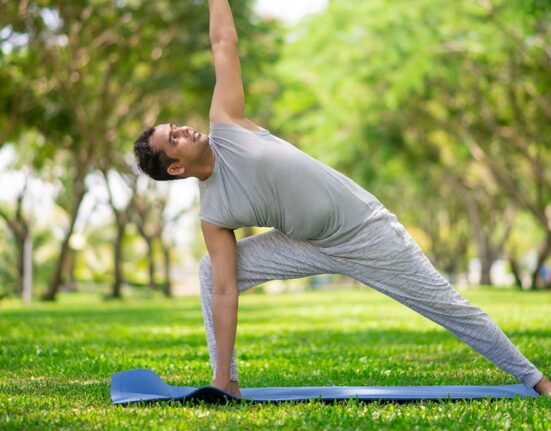
Regular physical activity in our daily routine works wonders for not only physical health but also our skin. It increases blood circulation throughout our body and skin. It provides the skin with nutrients and removes toxins. Sweating allows impurities to be flushed out from the skin, which makes the skin clearer. It reduces cortisol levels and also produces endorphins, which are natural mood boosters. Hence, exercise balances hormones and promotes radiant skin.
Conclusion
Hence, mind-body techniques not only improve mental wellness but are also skin-supportive strategies to improve skin health and appearance. Having the most expensive products only brings short-term benefits, but relaxation techniques lead to a more relaxed, balanced psyche and body. A healthy mind and a healthy body are the only two products you need for glowing skin. Hence, not only a biological need, relaxation is an important tool of skincare.
References +
Mayrovitz, H. N., Corbitt, K., Grammenos, A., Abello, A., & Mammino, J. (2017). Skin indentation firmness and tissue dielectric constant assessed in face, neck, and arm skin of young healthy women. Skin Research and Technology, 23(1), 112-120.
Humphrey, S., Brown, S. M., Cross, S. J., & Mehta, R. (2021). Defining skin quality: clinical relevance, terminology, and assessment. Dermatologic Surgery, 47(7), 974-981.
Sakano, Y., Wada, A., Ikeda, H., Saheki, Y., Tagai, K., & Ando, H. (2021). Human brain activity reflecting facial attractiveness from skin reflection. Scientific Reports, 11(1), 3412.
Ikeda, H., Saheki, Y., Sakano, Y., Wada, A., Ando, H., & Tagai, K. (2021). Facial radiance influences facial attractiveness and affective impressions of faces. International Journal of Cosmetic Science, 43(2), 144-157.
Flament, F., Ye, C., Mercurio, D. G., Abric, A., Sewraj, P., Velleman, D., … & Colomb, L. (2021). Evaluating the respective weights of some facial signs on the perceived radiance/glow in women of six countries. Skin Research and Technology, 27(6), 1116-1127.
Graubard, R., Perez-Sanchez, A., & Katta, R. (2021). Stress and Skin: An Overview of Mind-Body Therapies as a Treatment Strategy in Dermatology. Dermatology practical & conceptual, 11(4), e2021091. https://doi.org/10.5826/dpc.1104a91
Hunter, H. J. A., Momen, S. E., & Kleyn, C. E. (2015). The impact of psychosocial stress on healthy skin. Clinical and experimental dermatology, 40(5), 540-546.
Hirao, N., Koizumi, K., Ikeda, H., and Ohira, H. (2021). Reliability of online surveys in investigating perceptions and impressions of faces. Front. Psychol. 12:733405. doi: 10.3389/fpsyg.2021.733405
Dhabhar, F. S. (2000). Acute stress enhances while chronic stress suppresses skin immunity: the role of stress hormones and leukocyte trafficking. Annals of the New York Academy of Sciences, 917(1), 876-893.
Gerritsen, R. J., & Band, G. P. (2018). Breath of life: The respiratory vagal stimulation model of contemplative activity. Frontiers in human neuroscience, 12, 397.
Pardede J., Simanjuntak G. V., and Manalu N., Effectiveness of deep breath relaxation and lavender aromatherapy against preoperative patient anxiety, Diversity & Equality in Health and Care. (2020) 17, no. 4.
Toussaint, L., Nguyen, Q. A., Roettger, C., Dixon, K., Offenbächer, M., Kohls, N., Hirsch, J., & Sirois, F. (2021). Effectiveness of progressive muscle relaxation, deep breathing, and guided imagery in promoting psychological and physiological states of relaxation. Evidence-based Complementary and Alternative Medicine, 2021, 1–8. https://doi.org/10.1155/2021/5924040
Verma, R., & Kumar, V. (2025). Jacobsons Progressive Muscle Relaxation and its Therapeutic Efficacy: A Systematic Review. International Journal of Interdisciplinary Approaches in Psychology, 3(10), 166-177.
Fordham, B., Griffiths, C. E. M., & Bundy, C. (2015). A pilot study examining mindfulness-based cognitive therapy in psoriasis. Psychology, health & medicine, 20(1), 121-127.



Leave feedback about this