







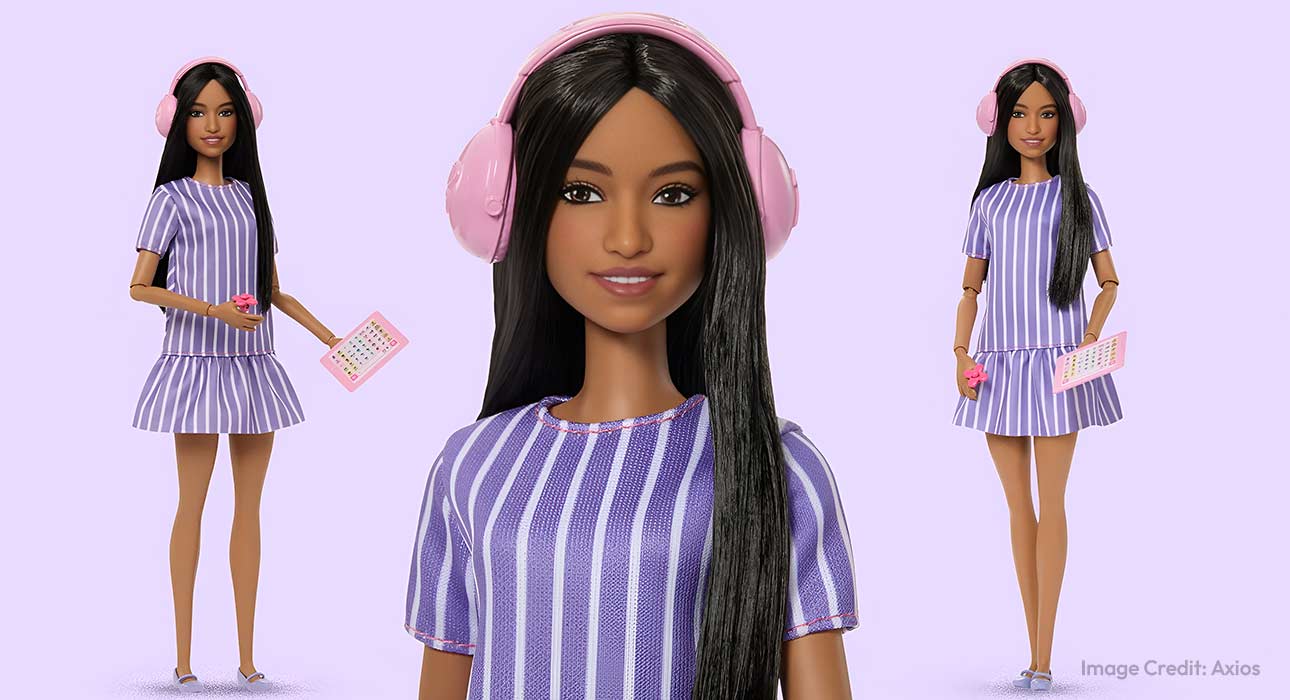
Mattel introduced the first-ever Autism doll in January 2026. It’s a part of Barbie fashionistas’ collection, which includes dolls with various skin tones, body types, hair textures, disabilities, and medical conditions. Fashionista dolls have also represented individuals with visual impairment, type 1 diabetes, etc. This is another step for them to promote inclusion. The highlight feature is that the doll was created with the Autism Self-Advocacy Network. The doll was created with guidance on common ways in which People with Autism Communicate, experience, and process the world around.
The doll encourages children to appreciate differences among them, and certain children can relate to the doll as well. Jamie Cygielman, Global Head of Dolls at Mattel, shared that they are proud to introduce the first Autism barbie which helps to expand what inclusion looks like in toys and beyond. Children deserve to see themselves in Barbie.
Read More: Navigating through Autism: Alternative forms of communication
Doll’s Features and Accessories
Barbie has been launched in collaboration with ASAN, which is a non-profit organisation for people with disabilities:
- Body – It has elbow and wrist articulation that enables hand flapping, stimming and other hand gestures that people with Autism use to process sensory information and sometimes to express excitement
- Eye Gaze – The eye Gaze is shifted to the side slightly, reflecting that certain people with Autism avoid direct eye contact
- Fidget spinner – the doll holds the spinner, which offers a sensory outlet to reduce stress and improve focus
- Noise-cancelling headphones – pink-coloured headphones are helpful to reduce sensory overload by blocking background noise
- Tablet – this symbolically represents Augmentative and Alternative Communication apps (AAC), which become a tool for everyday communication. Useful for people with Autism who are non-verbal.
- Outfit – the doll wears loose fitting purple pinstripe A-line dress with short sleeves. This is in consideration of a sensory sensitive fashion.




Leave feedback about this