








Memory is always regarded as a perfect account of the experience. In practice and even in a legal context, it is thought that when a person remembers some detail vividly, that detail is true. However, having researched psychology for many years, it has been discovered that human memory is not a faithful recording device of reality.
It rather reconstructs itself every time it is retrieved and may be influenced by suggestion, emotions, expectations, and other factors. One such renowned psychologist who made a significant contribution to this field is Elizabeth Loftus, whose research helped us learn that even a very strong memory is not necessarily true (Loftus, 2005). In this article, we will explore how memory can become distorted, how Loftus demonstrated this through her research, and why these findings are particularly important for eyewitness testimony and legal psychology.
Read More: Law Meets Neuroscience: The Psychology Behind Age-Based Rights and Legal Responsibility
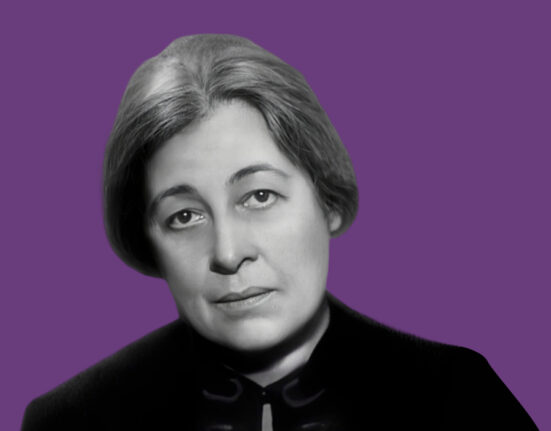
Who Is Elizabeth Loftus?
Elizabeth F. Loftus is a renowned American cognitive psychologist whose research in the field of human memory, testimony, and false memory creation has made her popular. Loftus conducted various experiments beginning in the 1970s to demonstrate that human memory involved the process of reconstructing information about events that have already taken place rather than storing information about those events (Loftus, 2005).
Loftus’s research proved that memories are not reliable and immutable, which was the prevailing view before. Instead, memories can be easily manipulated and influenced. This suggests that people may be induced to believe in something that actually has never occurred. Alternatively, memory is highly manipulable and susceptible to influence. Consequently, people may be induced to believe in something that has never happened. Such breakthrough results changed the way how psychology and law treat testimonies (Loftus, 2005).
The Reconstructive Nature of Memory
The functioning of human memory includes three processes: encoding, storage, and retrieval. The encoding process involves the initial processing and storage of memories, whereas the process of storage involves maintenance of memories, which can fade away or get combined with other information. The retrieval process involves reconstruction of memories rather than recalling them as they were.
It means that every recall is able to transform the memory because various factors such as expectations, emotions, interactions with other people, exposure to mass media, and leading questions can affect the recall of an event. Thus, memories can be transformed to be less accurate over time but vivid and convincing (Schacter et al., 2011).
Read More: Misinformation in Your Feed: When Social Media Becomes a Mental Health Risk
The Misinformation Effect
One of the most important discoveries of Elizabeth Loftus is the so-called “misinformation effect” phenomenon, which means that human memory about an event becomes distorted due to false information that follows this event (Loftus, 2005). Loftus & Palmer (1974) showed their test subjects films about car accidents and then questioned them using words such as “hit,” “collided,” “bumped,” “contacted,” or “smashed.”
Compared to participants who were asked about other terms, those who were asked about the “smashed” accident tended to evaluate the vehicles’ speed as significantly higher. One week later, they were also more likely to misremember seeing broken glass, although there was none in the film (Loftus & Palmer, 1974). This experiment showed that it is possible to change a memory by means of wording. It emphasised how questioning strategies employed by investigators, attorneys, or media may inadvertently influence eyewitness accounts (Loftus & Palmer, 1974).
Read More: Can Psychologists Really Read People’s Minds?
False Memory Formation
To develop her studies, Loftus illustrated the ability to create false memories by means of suggestions. The most widely recognised example of such experiments was the “Lost in the Mall” experiment designed by Loftus and Pickrell in 1995 (Loftus & Pickrell, 1995). In this experiment, participants received a few stories about their childhood that were supposedly told by their families.
In these stories, three of them described the true events from participants’ lives, whereas one story was completely invented, claiming that participants had lost in a shopping mall. As a result of multiple interviews, many participants started recalling some details about this false memory and believed in its authenticity (Loftus & Pickrell, 1995). It should be noted that these participants did not lie; rather, they genuinely believed in this fabricated story due to the influence of multiple suggestions and imagination (Loftus & Pickrell, 1995).
Read More: False Memory Syndrome: Between Truth and Belief
Why Memory Becomes Distorted
Several factors lead to memory distortion. The first one is insufficient attention at the encoding stage. In cases of stress and a fast-paced environment, individuals do not manage to pay equal attention to all details. The second factor is that memory is subject to change during the storing period due to fading of information and its vulnerability to interference caused by new events. And the third factor is that the recalling process distorts memories. Every time people remember something, they rebuild their memories with the help of the information available to them rather than remembering the exact record of what happened (Schacter et al., 2011).
Factors leading to memory distortion include
- Leading questions
- Repeat interviews
- Conversations with other eyewitnesses
- Media coverage
- Individuals’ expectations and beliefs
- Imagination tasks
- Authority suggestions
Those factors distort memories gradually without people being aware of it (Loftus, 2005; Schacter et al., 2011).
Read More: The Power of Vulnerability
Stress, Emotion, and Eyewitness Memory
Most individuals tend to think that highly emotional experiences generate highly accurate memories since the memories appear vivid and unforgettable. But according to research, vividness does not necessarily mean accuracy. Stressful situations lead to a focus on what is being feared while ignoring the surrounding things. In this case, witnesses can be very good at remembering threatening parts of an event but have difficulty recalling specific details such as the physical appearance of the criminal (Deffenbacher et al., 2004). Emotional memories may appear more vivid than other memories, but they do not always mean accuracy even when a person is certain about his/her memories.
Read More: Emotional Attachment with School Memories at Adult Age
The Weapon Focus Effect
One major implication of the findings made by Loftus is the effect of the weapon focus. When a crime is committed using a weapon, it is natural for the eyewitnesses to concentrate mostly on the weapon because of its threatening nature. The concentration that is paid on the weapon means that there will be less cognitive processing on other parts, especially the face of the offender. This leads to inaccurate identifications when conducting police line-ups (Steblay, 1992).
Read More: The Role of Psychology in Legal Forms
Implications for Eyewitness Testimony and Legal Psychology
Loftus’s experiments have brought enormous significance to legal psychology. In general, eyewitness accounts were always regarded as strong evidence in criminal cases. Nevertheless, DNA testing has exonerated several wrongfully convicted individuals, demonstrating that errors in eyewitness identification contributed significantly to their convictions (Wells et al., 2020).
Loftus’s experiments demonstrated that witnesses’ confidence in their recollections does not necessarily indicate that their memories are accurate. A person may feel certain about an event, but questioning techniques, repeated interviews, discussions with third parties, and post-event misinformation can alter their memory (Loftus, 2005).
Thus, researchers have introduced several changes to improve the validity of eyewitness accounts. Among such are:
- Use of neutral and non-leading questions during interviews.
- Cognitive interviews with an emphasis on free recalling without any suggestions.
- Double-blind lineups in which an officer conducting a lineup does not know the identity of a suspect.
- Expert psychological testimony that will inform judges and jurors of the limitations of memory.
- Recording of witness statements as soon as possible to prevent their contamination (Wells et al., 2020).
Read More: Law Meets Neuroscience: The Psychology Behind Age-Based Rights and Legal Responsibility
Criticisms and Ethical Considerations
Although many experts have given Loftus’s findings strong endorsement, several scientists expressed ethical concerns. According to some experts, highlighting memory flaws may inadvertently deter victims from filing complaints or undermine their testimony in court. Other researchers claim that it is impossible to completely recreate in a lab the emotions one experiences during real-life events. Nonetheless, scientific evidence continues to support the core conclusion that memory is reconstructive and susceptible to distortion (Schacter et al., 2011). Instead of ignoring eyewitness accounts, psychologists advise using them in addition to various other sources of evidence.
Conclusion
Elizabeth Loftus revolutionised psychology by demonstrating that memory does not provide an infallible record of past events; instead, people reconstruct memories, which suggestions, misinformation, and cognitive biases can easily influence. Through her studies on the misinformation effect and false memory, she found that people can be certain about remembering something that did not happen at all (Loftus, 2005; Loftus & Pickrell, 1995).
This has changed how we understand cognitive psychology and legal psychology, as professionals can improve investigative interviews by understanding the limitations of human memory. Despite the importance of eyewitness testimonies in any trial, it is always necessary to remember the findings of Loftus. Certainty does not equal truth (Wells et al., 2020).
References +
- Deffenbacher, K. A., Bornstein, B. H., Penrod, S. D., & McGorty, E. K. (2004). A meta‐analytic review of the effects of high stress on eyewitness memory. Law and Human Behaviour, 28(6), 687–706. https://doi.org/10.1007/s10979-004-0565-x
- Loftus, E. F. (2005). Planting misinformation in the human mind: A 30-year investigation of the malleability of memory. Learning & Memory, 12(4), 361–366. https://doi.org/10.1101/lm.94705
- Loftus, E. F., & Palmer, J. C. (1974). Reconstruction of automobile destruction: An example of the interaction between language and memory. Journal of Verbal Learning and Verbal Behaviour, 13(5), 585–589. https://doi.org/10.1016/S0022-5371(74)80011-3
- Loftus, E. F., & Pickrell, J. E. (1995). The formation of false memories. Psychiatric Annals, 25(12), 720–725. https://doi.org/10.3928/0048-5713-19951201-07
- Schacter, D. L., Guerin, S. A., & St. Jacques, P. L. (2011). Memory distortion: An adaptive perspective. Trends in Cognitive Sciences, 15(10), 467–474. https://doi.org/10.1016/j.tics.2011.08.004
- Steblay, N. M. (1992). A meta-analytic review of the weapon focus effect. Law and Human Behaviour, 16(4), 413–424. https://doi.org/10.1007/BF02352267
- Wells, G. L., Kovera, M. B., Douglass, A. B., Brewer, N., Meissner, C. A., & Wixted, J. T. (2020). Policy and procedure recommendations for the collection and preservation of eyewitness identification evidence. Law and Human Behaviour, 44(1), 3–36. https://doi.org/10.1037/lhb0000359




Leave feedback about this