







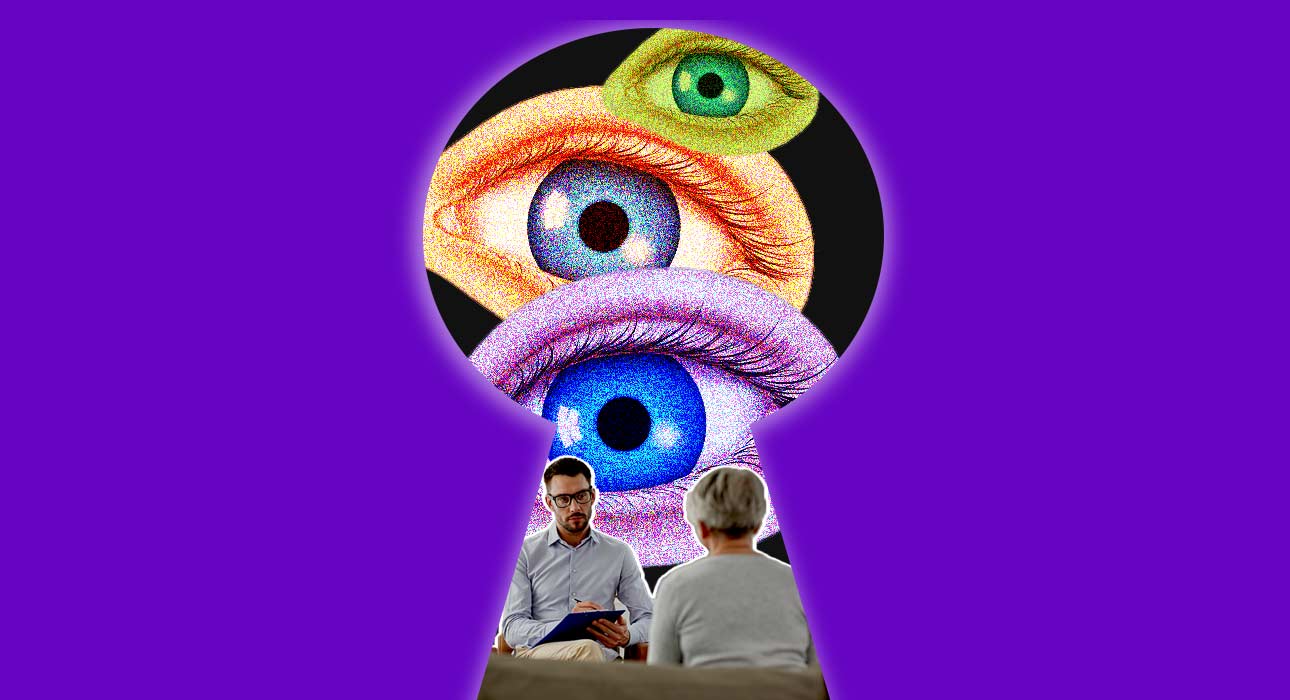
Imagine a colleague arrives at work unusually quiet. They seem distracted, speak less than usual, and avoid eye contact. Someone might immediately think, “Are you worried about something?” or “You seem anxious. Would you like to talk about it?” But how did that person arrive at that conclusion? Are they actually understanding what is happening in the other person’s mind, or are they interpreting visible clues?
Psychologists are trained to observe behaviour, listen to language, recognise emotional cues, and consider the context in which behaviour occurs. Psychologists cannot directly access another person’s thoughts, but they can make informed, evidence-based inferences about thoughts, emotions, intentions, and behaviour. Body language, emotional intelligence, and Theory of Mind can provide useful clues, but none gives psychologists direct access to another person’s mind. Let’s explore the point at which knowing the mind stops and mind-reading starts.
Read More: Seven Ways to How You Can Be a Nicer Person as per Psychologists
What Does “Reading Someone’s Mind” Actually Mean?
The idea that someone can look at another person and directly know what they are thinking is a common myth. Psychologists cannot literally read another person’s mind, nor can they directly access their private thoughts. Instead, they make informed inferences based on what individuals say, do, and communicate within a particular context.
People make these sorts of inferences on a regular basis. If a friend keeps looking at their watch while having a conversation, an observer might assume that they are in a rush, according to what you might think. However, there is no way to be sure because he could be just looking at the time because it is his habit. This distinction matters because understanding another person’s mental state involves interpretation rather than direct access to their thoughts (Rakoczy, 2022).
When psychologists are described as “reading” an individual, they are using psychological knowledge, observations, and available information to develop interpretations about that person’s thoughts, emotions, or intentions.
Read More: Can One Be Friends with their Therapist?: Psychologist Speaks
Body Language: Can the Body Reveal the Mind?
A person does not necessarily have to say, ‘I’m nervous,’ for others to notice that something seems different. This can be indicated through a trembling voice, body language, facial expressions, eye contact, and other forms of behavioural manifestations. This is the reason why psychologists are concerned about studying non-verbal behaviour since it is part of social communication.
However, body language is not a sort of secret codebook where every gesture has one fixed meaning. Crossed arms do not automatically mean someone is defensive, just like avoiding eye contact doesn’t necessarily suggest someone is lying. Research points to these as frequent misconceptions about nonverbal communication, and it also emphasises that behaviour needs to be read inside its broader social context (Patterson et al., 2023).
Imagine someone sitting quietly in a meeting with their arms crossed. They might feel uneasy, or bored, or cold, or tired, or they could just be sitting in a neutral way. Body language gives hints, but hints are not conclusions.
Read More: Psychologists Suggest 9 Things for Parents to Raise Empathetic Children
Emotional Intelligence: Understanding Feelings Without Reading Minds
Having high interpersonal intelligence does not automatically imply that one has a definite idea about what goes on inside someone’s mind. Emotional intelligence entails the recognition, comprehension, and management of emotions within oneself and while interacting with other individuals. There has been emphasis placed by research on emotional perception and comprehension (Robinson et al., 2023).
Imagine a friend arriving in an unusual mood after receiving some news. A person who is emotionally intelligent will observe the change in the person’s mood and will understand that there might be something bothering him/her and not jump to any conclusion. Instead, the emotionally intelligent person will try to find out what is wrong by asking, “Are you alright?”
It is in this aspect that emotional intelligence is distinct from mind reading. While emotional intelligence makes one emotionally aware to notice emotional signs and be sensitive to them, it cannot explain the mind behind these emotions. Someone could be disappointed but feel embarrassed, tired, afraid, or relieved. Emotional intelligence thus improves understanding without making one a mind reader.
Read More: How do I know I need Therapy?: Psychologist Speaks
Theory of Mind: The Psychology Behind Understanding Others
Consider a person telling a friend, ‘I am considering quitting my job,’ and notice how the friend’s expression changes. The friend might speculate about whether the person is upset, stressed, or seeking an alternative. The friend is not reading the person’s mind but instead trying to infer what thoughts or feelings may have led to those words.
The Theory of Mind refers to the capacity to comprehend and deduce other people’s mental states, which includes their thoughts, beliefs, intentions, and feelings. Theory of Mind plays a significant role in social cognition because it enables people to interpret others’ actions (D’Iorio et al., 2024).
For instance, if a workmate suddenly refuses an invitation, there may be a number of explanations for that; for example, they might be tired, have some personal issues or just want some privacy. Theory of Mind helps people consider various explanations instead of jumping to conclusions. This might seem like reading someone’s mind, but there is one critical difference: Theory of Mind allows people to make assumptions; it does not give them direct access to someone else’s thoughts.
Read More: Psychologist’s Insights on Hypervigilance: Causes, Symptoms, and Solutions
Why People Think They’re Better at “Reading” Others Than They Are
People may sometimes form quick impressions about others based on their behaviour, appearance, or mannerisms. Perhaps they were shy, did not make eye contact, were confident, or kept arms crossed. People may quickly assume the reason behind another person’s behaviour. The issue, to some extent, is because of the fact that people tend to think about others using their personal experiences. From studies on egocentric mentalization, it has been learned that one’s personal experiences and thoughts may affect his/her interpretation of another individual’s mental state (Todd & Tamir, 2024).
In addition, the way one views an individual is also affected by first impressions. The initial impression can be used to make a lasting perception about a person. After creating an impression, the information that one will perceive and retain might affect their judgments (Bellucci, 2023). Consider that Ayesha comes across a new colleague who hardly says anything in their first encounter. She makes the impression that the person is not friendly. In subsequent encounters, she might perceive his brief responses but fail to note that he is assisting another colleague.
This is why it takes curiosity to understand people, not confidence. The quiet individual could be nervous, tired, shy, distracted, or just not interested. Mind reading is really just the brain guessing based on limited knowledge, and the brain could very well be wrong.
Read More: How Psychologists Turn Therapy Resistance into Progress
Can Psychologists Actually Predict What You’re Thinking?
If not actually reading the mind, what can psychologists do? Quite a bit, but again within some boundaries. Instead of focusing on a single gesture or facial expression, psychologists focus on finding patterns across various sources. In the course of an evaluation, psychologists may examine a person’s verbalisations, actions, emotions, background, and other variables to formulate hypotheses regarding how that person is feeling or thinking and test these hypotheses by asking questions.
The above practice bears similarity to mentalizing, which is understanding people’s behaviour in the context of inner experiences such as feelings, desires, goals, and intentions (Kivity et al., 2024). Empathic accuracy studies confirm the same point regarding inferring someone else’s thoughts and feelings (Hodges et al., 2024). In the course of working with a client who says “It does not matter,” when speaking about their difficult experiences, a psychologist can take into account their emotional responses rather than interpreting that phrase in any way. Interpretation in psychology is informed by psychological knowledge, but not foolproof.
Conclusion
Even though psychologists know how to analyse behaviour and social signals and emotions, mind reading is not their superpower. Even though body language, emotional intelligence and theory of mind offer valuable hints, none of them allows psychologists to directly access another person’s thoughts. Some people may interpret things based on their knowledge and assumptions about a situation, but ultimately, getting to know people involves being curious, observant and communicating with them.
Read More: Most Controversial Debates in Modern Psychology
Frequently Asked Questions
1. Do psychologists know how to read minds?
No. There is no way for psychologists to know how the other individual thinks. They can guess how someone thinks based on behaviour, emotion, communication, and context.
2. Are psychologists able to catch someone in a lie?
Psychologists cannot determine with certainty whether someone is lying based on a single gesture or expression. They understand that people may have reasons for lying and are not CBI investigators trying to uncover the truth. Instead, they aim to understand the individual’s experiences, perspective, and behaviour (Convertino et al., 2025).
3. Can body language indicate someone’s thoughts?
Body language may give hints about how someone thinks, yet it is not able to prove the thoughts themselves. One and the same gesture may have various meanings depending on who and where someone is.
4. What is Theory of Mind?
Theory of Mind is the ability to understand that other people have thoughts, feelings, beliefs, and intentions that may differ from one’s own.
5. Does emotional intelligence allow understanding others better?
Yes. Emotional intelligence allows people to read emotional signals, but not to know how the other individual thinks.
References +
- Bellucci, G. (2023). The organisational principles of impression formation. Cognition, 239, 105550. https://doi.org/10.1016/j.cognition.2023.105550
- D’Iorio, A., Baiano, C., Roldan-Tapia, M. D., & Santangelo, G. (2024). Editorial: Theory of mind. Frontiers in Psychology, 15, 1370048. https://doi.org/10.3389/fpsyg.2024.1370048
- Hodges, S. D., Kezer, M., Hall, J. A., & Vorauer, J. D. (2024). Exploring Actual and Presumed Links between Accurately Inferring Contents of Other People’s Minds and Prosocial Outcomes.Journal of Intelligence, 12(2), 13. https://doi.org/10.3390/jintelligence12020013
- Kivity, Y., Levy, K. N., Johnson, B. N., Rosenstein, L. K., & LeBreton, J. M. (2024). Mentalizing in and out of awareness: A meta-analytic review of implicit and explicit mentalizing. Clinical Psychology Review, 108, 102395. https://doi.org/10.1016/j.cpr.2024.102395
- Patterson, M. L., Fridlund, A. J., & Crivelli, C. (2023). Four Misconceptions About Nonverbal Communication. Perspectives on Psychological Science, 18(6), 1388-1411. https://doi.org/10.1177/17456916221148142
- Rakoczy, H. Foundations of theory of mind and its development in early childhood. Nat Rev Psychol 1, 223–235 (2022). https://doi.org/10.1038/s44159-022-00037-z
- Robinson, M. D., Asad, M. R., & Irvin, R. L. (2023). Emotional Intelligence as Evaluative Activity: Theory, Findings, and Future Directions. Journal of Intelligence, 11(6), 125. https://doi.org/10.3390/jintelligence11060125
- Todd, A.R., Tamir, D.I. Factors that amplify and attenuate egocentric mentalizing. Nat Rev Psychol 3, 164–180 (2024). https://doi.org/10.1038/s44159-024-00277-1



Leave feedback about this