


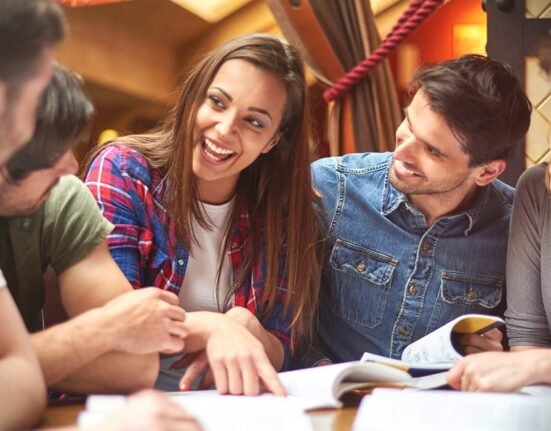




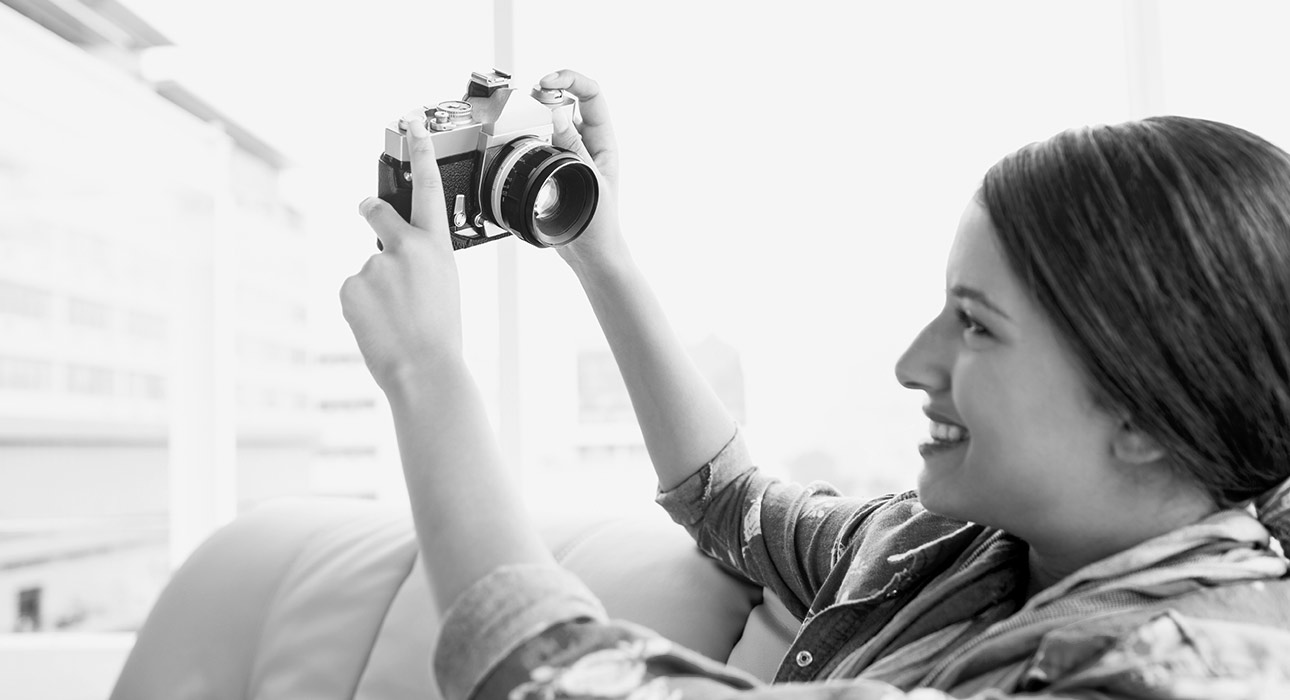
Picture yourself in a highly-rated café, amongst your mates, appreciating an amazing view of the sunset, rejoicing your birthday, and before you know it, you have taken multiple snapshots, videos, angles, and images, and of course you are already planning what should be the caption for that photo or video. The highlight here is that despite everyone talking and enjoying themselves, a part of your mind is already focused on social media.
Even before you finally post it online, the moment may already have passed. Carrying out something like this is nothing special in this day and age when almost everyone finds it normal to post about his or her everyday endeavours on the Internet. It may be fun to take pictures and make recordings. But documenting what you are doing constantly changes the way people are involved in this activity. Hence, instead of just living this life, people start thinking about how to present it to others (Christoforakos & Diefenbach, 2017; Fox & Vendemia, 2016).
Thanks to social media, it is much simpler to exchange personal stories and witness immediate feedback from the audience. Consequently, the pleasure derived from the experience will become intertwined with the likes and feedback online. According to the studies, selective self-presentation is characteristic of social media, as others` reactions influence people`s own perception (Meier & Schäfer, 2018; Sherman et al., 2016). Understanding this connection will make it clear why it might be difficult for people to participate in events that they had been looking forward to.
Read More: Why We Feel the Need to Document Every Moment: The Psychology Behind Constant Sharing
When Experiences Become Performances
In addition, social networking sites serve as ways of sharing select images of life. Individuals tend to share photos that reflect the good side of their lives while hiding the ordinary or even negative parts of their lives. This phenomenon is called self-presentation, which means that people attempt to control the image they produce about themselves. Goffman (1959) argued that people modify their behavior depending on the context of the relationship they form with the audience. Analyzing the behavioral patterns on social media allows us to conclude that people continue to be aware of the image of themselves created for others.
Being preoccupied with how someone experiences their perceptions and views can lead to individuals being mere spectators rather than actors in their own lives. The focus would be more on the impression left on others through photographs and videos than on what was happening in real life. For instance, a concert-goer recording the concert on his phone to be posted on social networks is more likely to miss the music than someone listening to it.
This idea was confirmed by the findings of King et al. (2024), according to which people tend to remember events as observed from the standpoint of a spectator. That is, people may recall something as if they were looking at the event from the outside instead of watching it through their own eyes. So it could be concluded that photographs affect not only the way people present their experiences but also how they remember them.
The Need for Likes and Social Validation
Social media causes individuals to desire acceptance from others. This can impact the manner in which individuals share experiences and assess their enjoyment. The need for likes has the following meanings:
- Wanting to please: People might want to post images, videos, or accomplishments to get likes, comments, and other good reactions. These reactions may make them feel that they are adequate and accepted. (Sherman et al., 2016).
- Dependence on digital aftermath: A high number of likes received on a post can boost people’s moods. At the same time, fewer than expected reactions can mean disappointment or lack of self-confidence.
- Social comparison: People might compare their experiences to curated moments posted by others. Other people receiving more likes and showing more happiness than oneself can also contribute to negative feelings (Meier & Schäfer, 2018).
- Changing personal preferences: People can choose tourist destinations, activities, or experiences only to be liked later on social media, regardless of their real liking of these experiences.
- Pressure to make perfect posts: The need for social approval makes individuals focus on choosing photos, editing videos, and writing captions rather than enjoying their activities.
In the end, the issue may not be related to liking or sharing experiences. But the fact that people allow social media approval to determine their self-worth. Learning to appreciate events regardless of public perception may be helpful for the development of a more productive connection with social media.
Read More: Digital Identity vs Real Identity: How Social Media Shapes Who We Are
What Happens to Presence and Memory?
Constant documentation can have an impact on people’s awareness of the environment around them. While people are constantly checking their phones, editing their pictures, and planning posts. They are allocating their attention to the current action along with the action of documenting it. This might lead to less engagement in discussions, interpersonal relations, and sensory perceptions. Ward et al. (2017) showed that the mere presence of a smartphone can lead to a decrease in the amount of available cognitive resources under certain conditions.
Even though the authors have not studied the influence of social media documentations, their study suggests that mobile phones can impact attention. Nevertheless, photography might not be always distracting. Performing a well-structured mobile photography task leads to the increase of positive emotions in people taking part in this activity (Chen et al., 2016). This means that photography can improve well-being if it leads to thinking and positively interacting with others.
The process of recording experiences can also affect the way in which a person pays attention to them and stores them in their memory. Henkel (2014) found that people who took pictures of objects at a museum remembered less than those who just looked at them. However, people remembered the objects just as well when they took close-up pictures. This indicates that the impact of photography varies, depending on the method of its application. Similarly, Brown-Schmidt and Zimmerman (2020) concluded that leaving comments on images on Instagram helps people to recognise these images in the future. In summary, these studies imply that technology influences memory in different ways. It distracts people sometimes due to photography, and it helps them to remember things due to image commenting.
Read Moe: How Smartphones and Social Media Rewire Our Brains: A Neuroscience Perspective
conclusion
Social networks have opened up avenues to remember memories, show who we are and remain in touch with friends. However, the way people utilize social networks has an impact on how they encounter daily events. There are photographs that help us remember special events, but the constant consciousness of how an occurrence will look in the eyes of other people diminishes the value of that occurrence.
Having a moment to ourselves and not converting that moment into content shouldn’t be misunderstood to imply that we abandon social media altogether. This would be incorrect because what it really means is that we take complete pleasure in the present moment and allow ourselves to feel things without considering how to share these moments with others. In some instances, a photograph fixes a great experience in our memory while at other times. The experience of living through it may be quite enough. It must always be remembered that the importance of an experience lies not in how many people have seen it or liked it. But in how meaningful it is to the person going through it.
References +
- Chen, Y., Mark, G., & Ali, S. (2016). Promoting positive affect through smartphone photography. Psychology of Well-Being, 6, Article 8. https://doi.org/10.1186/s13612-016-0044-4
- Diefenbach, S., & Christoforakos, L. (2017). The selfie paradox: Nobody seems to like them yet everyone has reasons to take them. An exploration of psychological functions of selfies in self-presentation. Frontiers in Psychology, 8, Article 7. https://doi.org/10.3389/fpsyg.2017.00007
- Fox, J., & Vendemia, M. A. (2016). Selective self-presentation and social comparison through photographs on social networking sites. Cyberpsychology, Behavior, and Social Networking, 19(10), 593–600. https://doi.org/10.1089/cyber.2016.0248
- Goffman, E. (1959). The presentation of self in everyday life. Doubleday.
- Henkel, L. A. (2014). Point-and-shoot memories: The influence of taking photos on memory for a museum tour. Psychological Science, 25(2), 396–402. https://doi.org/10.1177/0956797613504438
- King, C. I., Panjwani, A. A., & St. Jacques, P. L. (2024). When having photographs of events influences the visual perspective of autobiographical memories. Applied Cognitive Psychology, 38(1), Article e4150. https://doi.org/10.1002/acp.4150
- Meier, A., & Schäfer, S. (2018). The positive side of social comparison on social network sites: How envy can drive inspiration on Instagram. Cyberpsychology, Behavior, and Social Networking, 21(7), 411–417. https://doi.org/10.1089/cyber.2017.0708
- Sherman, L. E., Payton, A. A., Hernandez, L. M., Greenfield, P. M., & Dapretto, M. (2016). The power of the like in adolescence: Effects of peer influence on neural and behavioral responses to social media. Psychological Science, 27(7), 1027–1035. https://doi.org/10.1177/0956797616645673
- Ward, A. F., Duke, K., Gneezy, A., & Bos, M. W. (2017). Brain drain: The mere presence of one’s own smartphone reduces available cognitive capacity. Journal of the Association for Consumer Research, 2(2), 140–154. https://doi.org/10.1086/691462
- Zimmerman, J., & Brown-Schmidt, S. (2020). #foodie: Implications of interacting with social media for memory. Cognitive Research: Principles and Implications, 5, Article 16. https://doi.org/10.1186/s41235-020-00216-7





Leave feedback about this