







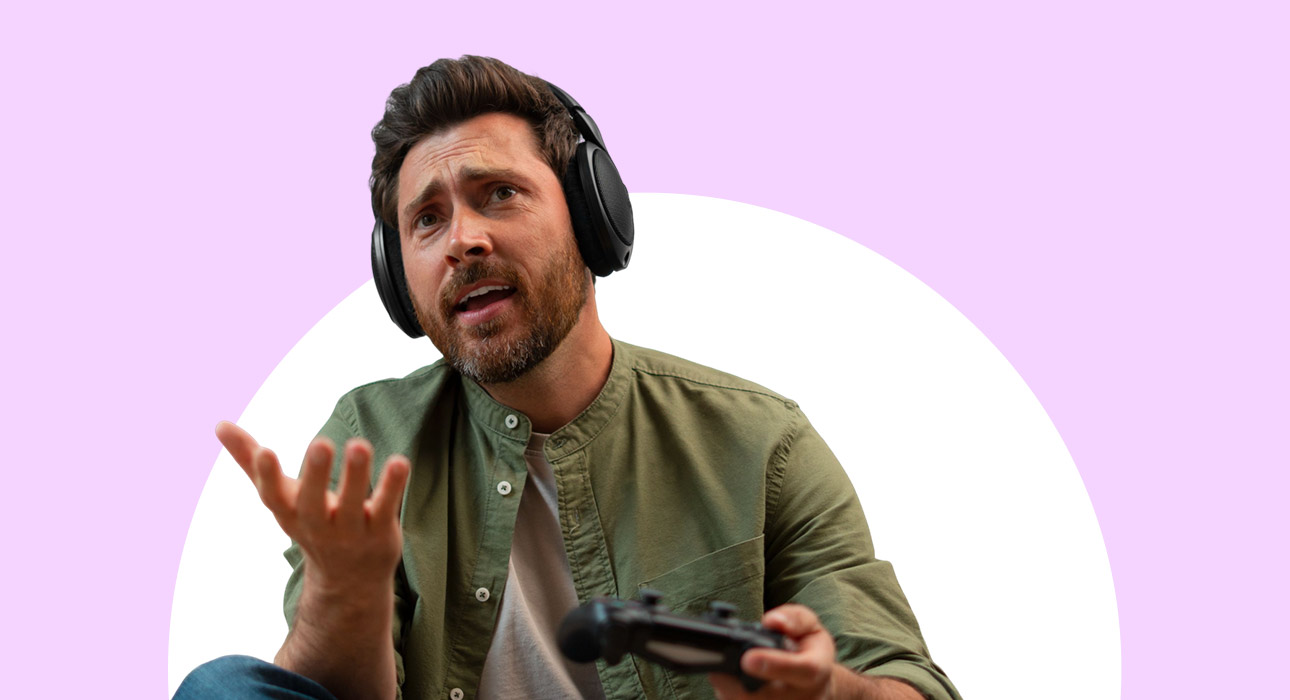
Have you ever thought about how you come home after a tiring day and get lost in a video game, wondering if this is actually relaxation or just wasting your time? Nowadays, video games are no longer considered just a hobby. They have become a major part of our lives, especially among young people. According to a February 2024 report of the Pew Research Center, around 85% of American teens aged between 13 and 17 play video games, with around 41% of them playing every day.
But as screens capture more of our daily lives, an important question remains: are video games a harmless escape that sharpens the mind, or can they become a distraction that affects our focus and well-being? In this article, we explore what science actually says about gaming, why the debate over whether games are “good or bad” misses the point, and how the specific game, the player, and the motivation behind playing can change everything.
The Attention Upgrade Is Real
Let us begin with the first strongest and most replicable result in this area. As early as 2003, researchers discovered that those who routinely played action video games had far superior visual attention compared to non-gamers, which was shown in several experiments that measured attention (Green & Bavelier, 2003). This one study became a starting point for two decades of subsequent research work, with a huge meta-analysis showing that the effect persists, and gamers really do perform much better in tasks measuring top-down attention and spatial cognition, with gains in visual perception that are just as strong (Bediou et al., 2018). This isn’t a vague “games make you smarter” claim. It’s a specific, well-documented process of how efficiently the visual system filters and tracks information, the kind of skill that matters far beyond the game itself.
Read More: How Playing Video Games Changes Your Brain: know the Psychology behind
Why Games Are So Hard to Put Down, in a Good Way
Part of what makes games effective at building these skills is how naturally people stick with them. Researchers applying self-determination theory to gaming found that games are structured almost perfectly to satisfy three core psychological needs: a sense of control over your own choices, a sense of getting genuinely better at something, and, in many games, a sense of connection to other players (Ryan et al., 2006).
For puzzle games, the most important is the ability to gain satisfaction from solving tasks. For story-based games, the main focus is on the need for control. As for multiplayer games, they can also contribute to the fulfillment of the third need. Different genres aren’t just different flavors of fun. They’re satisfying different psychological needs, which is part of why one person’s favorite game can leave another person cold.
A Modest, Measurable Boost to Wellbeing
For years, most research on games and mood relied on people self-reporting how much they played, which is a notoriously unreliable way to measure anything. A recent 2021 Oxford study addressed that problem by partnering with two game companies to use recorded play time instead of self-reports, then comparing that with players’ own reports of how they felt and whether their needs were met. The research revealed a correlation that was small but positive between playtime and well-being, which was coupled with the fact that study participants who experienced more autonomy and relatedness while playing were also satisfied with their well-being (Johannes et al., 2021). Therefore, it was concluded that the time spent playing games is not the most significant element when it comes to gaming activities. How the time is experienced is.
The Social Side Cuts Both Ways
Multiplayer gaming is often the first thing people point to when they call games isolating. Often the first thing defenders point to when they call games social. It can be said that both angles of the argument are correct. In the case of friends playing games together, this reinforces their relationship and creates a feeling of being part of a team. On the other hand, playing games with unknown people on the Internet can lead to aggressive behavior, eroded social ties, and feeling isolated from others (Ballou et al., 2025). Even though the process of playing games is similar for both groups. Whether one plays with friends or a random person can affect the experience.
Read More: Are You Feeling Lonely Most of the Time: Know The Reason Behind It!
Stress Relief and Its Limits
The same research team that conducted the 2025 investigation also identified thirteen pathways through which gaming influences mental health, as a result of which the effects could be positive or negative (Ballou et al., 2025). In the past, there was a study that focused on casual games such as Bejeweled. The study proved that gaming can significantly decrease stress and elevate the mood of the players according to the self-reports and physiological data (Russoniello et al., 2009).
But a later systematic review pulling together the evidence has since found the picture is less consistent than that first study suggested: several follow-up attempts failed to replicate the same stress-reducing effect, even using the same games (Pine et al., 2020). One likely explanation is that it isn’t the “casual” label doing the work at all. It’s whether a specific game manages to fully absorb a specific player’s attention, the psychological state researchers call flow.
A puzzle game that fully captures your focus can lower stress. The very characteristics that make games entertaining, clear objectives, continual rewards, and quick responses. Also mean that it is easy to play a game until it becomes an out-of-control habit. It is essential to understand that researchers are not claiming that games are good or bad in themselves. Rather, the point is that different mechanisms work at different times and in different contexts in respect of different individuals.
Read More: Breathing Techniques for Stress Relief and Emotional Balance
Individual Differences and Game Genres Matter
Individual differences play a central role in this research. They comprise almost the entire story. An individual who experiences loneliness may be more inclined to resort to playing video games as a coping mechanism, consequently causing a greater distance from society, while a person who is confident in his/her social interactions is likely to use the same games as a means of consolidating the friendship they already have.
The genres of the games are of importance too. In fact, the improvement in cognitive functioning suggested by Green, Bavelier, and their associates appears to occur specifically in action games, rather than casual mobile games and slow-paced simulations that may give other benefits, including relaxation and the feeling of success.
Can Gaming Be Good for Your Mind?
The fact is that video games cannot be classified as one item but rather as a broader category, similar to the term “exercise,” which encompasses both jogging and playing football. Action games can measurably sharpen attention. Games satisfy real psychological needs, which explains why they engage players so effectively. Time spent playing shows a small, genuine link to wellbeing. But only once you account for how autonomous and connected a person feels while playing. And multiplayer gaming can either build real social bonds or erode them, depending entirely on who’s on the other side of the screen. None of that fits into a single verdict. What the research actually supports is something more useful than a verdict: pay attention to which game, played with whom, and why. Because that combination is doing far more work than the console or the clock ever could.
References +
- Ballou, N., Hakman, T., Vuorre, M., Magnusson, K., & Przybylski, A. K. (2025). How do video games affect mental health? A narrative review of 13 proposed mechanisms. Technology, Mind, and Behavior, 6(2), 123-143. https://doi.org/10.1037/tmb0000152
- Bediou, B., Adams, D. M., Mayer, R. E., Tipton, E., Green, C. S., & Bavelier, D. (2018). Meta-analysis of action video game impact on perceptual, attentional, and cognitive skills. Psychological Bulletin, 144(1), 77-110. https://doi.org/10.1037/bul0000130
- Green, C. S., & Bavelier, D. (2003). Action video game modifies visual selective attention. Nature, 423(6939), 534-537. https://doi.org/10.1038/nature01647
- Gottfried, J., & Sidoti, O. (2024, May 9). Teens and video games today. Pew Research Center. https://www.pewresearch.org/internet/2024/05/09/teens-and-video-games-today/
- Johannes, N., Vuorre, M., & Przybylski, A. K. (2021). Video game play is positively correlated with well-being. Royal Society Open Science, 8(2), 202049. https://doi.org/10.1098/rsos.202049
- Pine, R., Fleming, T., McCallum, S., & Sutcliffe, K. (2020). The effects of casual videogames on anxiety, depression, stress, and low mood: A systematic review. Games for Health Journal, 9(4), 255-264. https://doi.org/10.1089/g4h.2019.0132
- Russoniello, C. V., O’Brien, K., & Parks, J. M. (2009). The effectiveness of casual video games in improving mood and decreasing stress. Journal of Cyber Therapy and Rehabilitation, 2(1), 53-66.
- Ryan, R. M., Rigby, C. S., & Przybylski, A. (2006). The motivational pull of video games: A self-determination theory approach. Motivation and Emotion, 30(4), 344-360. https://doi.org/10.1007/s11031-006-9051-8





Leave feedback about this