







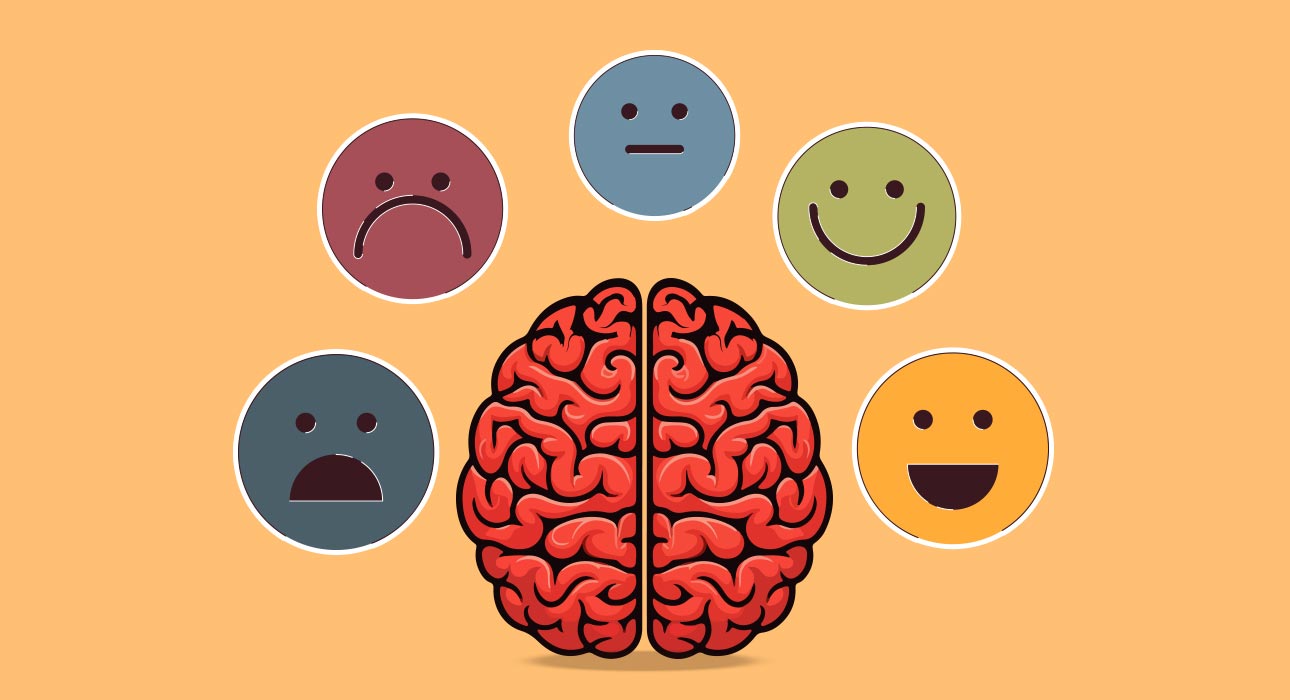
Human history is experiencing a paradigm shift. Over decades, the key success indicator was the intellectual ability, the so-called IQ, which quantifies rational thinking and memorisation. But as we pass to 2026, we are seeing the creation of a generation in which the base rests not only on what they know but on how they feel and how they control what they feel. Emotional awareness (EA) has come out of the shadow of a soft skill, becoming a major form of growth requirement, essentially reorganising the way the next generation learns, works, and interacts with an increasingly automated world.
Read More: Is Mental Health a Trend or a Reality? Understanding the Rise in Awareness
The Architecture of Feeling: From Sensation to Complexity
Emotional awareness is not a dichotomous characteristic but a cognitive-developmental scale. The Levels of Emotional Awareness (LEA) theory suggests that there are five levels of person sophistication (Lane and Smith, 2021). It commences with the simplest level of bodily sensations and action inclinations. Modern education and parenting are aimed at bringing the next generation to the next stage: they should be able to identify complex mixtures of feelings and distinguish their inner states and those of others (Lane and Smith, 2021). This emotional granularity is an effective mechanism; a child who is able to differentiate between angry, disappointed, and overpowered will be more prepared to use particular regulation strategies instead of responding to the vaguely perceived distress in an automatic and unregulated manner.
The Paradox of High Awareness and High Anxiety
The Paradox of High Awareness and High Anxiety awareness paradox in Generation Z; comparative reviews reveal Generation Z as having the highest level of social and self-awareness in any generation so far, yet with the highest degree of anxiety and constant sadness (Banu and Rani, 2025). According to data provided by the JED Foundation (2025), the next generation is at a very high level in detecting emotions, but the control over them has not yet been developed to the level of their recognition. They are less conservative and diversity-oriented compared to their parents, but they only have a problem with the so-called mental weakness of older generations, who support their emotions instead of letting them express themselves (Huang & Frost, 2025). This divide is the main issue of the mid-2020s: to go beyond labelling to active, strong regulation.
Read More: 5 Hacks to Increase Self-Awareness
Emotional Awareness as a Reflective Habit
One of the key insights that influenced the development of modern psychology is that emotional awareness is a domain-general reflective tendency (Smith et al., 2022). This is because it is not so much a specialised emotional gift as it is a cognitive habit. The high EA is closely related to the disposition to think in an effortful, reflective way, that is, to pause to think instead of relying on their immediate intuition (Smith et al., 2022). Through these reflective practices, we are, in effect, training the future generation to shift the burden of thinking to the rational prefrontal cortex, rather than the reactive amygdala. It renders EA a skill that can be developed through psychoeducation and mindful reflection instead of an inborn personality trait.
Cultural Hurdles and the “Fragile” Label
The change of the world towards emotional sensitivity is met with steep cultural resistance. In most societies, especially those that are somewhat guided by traditional hierarchical principles, emphasis on youth mental health is easily subject to criticism. The emotional openness of the younger generation can make the parents believe that they are spoiled or weak (Huang and Frost, 2025). This establishes a state of helplessness among children, as they perceive themselves to be misunderstood, and parents who raise them feel unprepared to support them. To fill this gap, it is important to transition to a supportive/collaborative parental model instead of leading/guiding, as emotional distress is a valid communication, but not a character trait (Huang and Frost, 2025).
Clinical and Educational Implications
The move towards emotional awareness is radically reshaping clinical and educational interventions. Educationalists are shifting away from the conventional academic practice to the integration of social and emotional learning (SEL) into a core competency (Pollak et al., 2019). Higher baseline emotional awareness is now considered clinically to predict improved psychotherapy outcomes since it offers the required data to patients to work through cognitive behavioural changes (Lane & Smith, 2021). To the new generation, schools are turning into the main location of emotional scaffolding, the place where teachers assist students in making the transition between crude bodily response and elaborate emotional labelling.
The Future Edge: Empathy in an AI World
Emotional awareness will be the main competitive advantage of the next generation as they enter a workforce that is dominated by artificial intelligence. On the one hand, AI is capable of empathy and data processing at light speed. On the other hand, it does not have the true human advantage of connection (Banu & Rani, 2025). This is because the future leaders will not be the people able to out-calculate an algorithm. Rather, they will be the people able to cope with the human cost of technological change. This, however, also requires a novel form of emotional literacy in the digital realm, a new form of digital emotional literacy that can help prevent epistemic over-trust in digital reflections, a digital emotional literacy that is capable of differentiating between the programmed reaction of a machine and the true feeling of a human.
Read More: Overcoming Aversion to Artificial Intelligence in the Workplace
References +
Banu, P., & Rani, S. (2025). Emotional intelligence across generational cohorts: A comparative review. European Economic Letters, 15(3), 3248-3256. http://eelet.org.uk
Huang, Z., & Frost, D. M. (2025). The ‘fragile’ generation: Understanding parents’ attitudes towards young people’s mental health within the Chinese sociocultural context. PLOS Mental Health, 2(7), e0000340. https://doi.org/10.1371/journal.pmen.0000340
Lane, R. D., & Smith, R. (2021). Levels of emotional awareness: Theory and measurement of a socio-emotional skill. Journal of Intelligence, 9(3), Article 42. https://doi.org/10.3390/jintelligence9030042
MacPhee, J. (2025, January 10). What we expect in 2025: New year’s trends in youth mental health. The Jed Foundation. https://jedfoundation.org/what-to-expect-in-2025-new-years-trends-in-youth-mental-health/
Pollak, S., Camras, L., & Cole, P. (Eds.). (2019). New directions in the study of human emotional development [Special issue]. Developmental Psychology, 55(9). American Psychological Association. https://www.apa.org/pubs/highlights/spotlight/issue-149
Smith, R., Persich, M., Lane, R. D., & Killgore, W. D. S. (2022). Higher emotional awareness is associated with greater domain-general reflective tendencies. Scientific Reports, 12, Article 3123. https://doi.org/10.1038/s41598-022-07141-3



Leave feedback about this