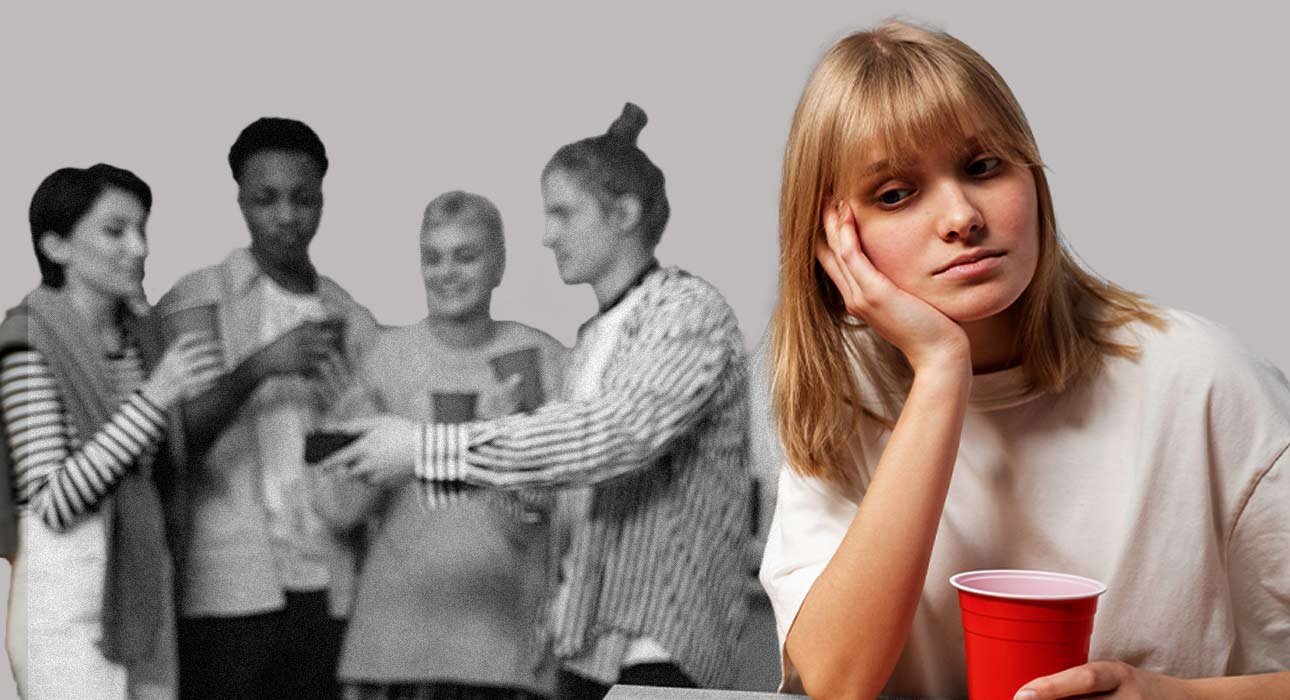
Even though large celebrations can be joyous, they may also be stressful, lonely, or emotionally overwhelming for some individuals. For an introverted person, socialising can quickly deplete emotional energy (Aron & Aron, 1996). Others may feel weighed down by grief, financial strain, or social comparison (Festinger, 1954). Emotional distress can also arise from cultural or family expectations that feel disconnected from one’s personal values or lived experiences, leading to feelings of isolation or non-belonging.
When celebrations no longer resonate with a person’s internal emotional state, feelings of loneliness or detachment are natural. Those experiencing anxiety or depression may find it especially difficult to meet the expectation of being joyful (APA, 2022). Recognising these emotions as valid allows individuals to set boundaries, decline participation, or engage in quieter forms of observance that align better with their emotional needs.
Read More: Feeling Lonely in a Friend Group? Here’s What It Means and What to Do
The Psychology of Social Overload
Large gatherings can cause significant levels of anxiety and sensory overload, especially for introverts and highly sensitive people (HSIs) (Aron & Aron, 1996; Cain, 2012). These experiences are due to neurobiological differences in their brains’ processing of stimulation, focusing more deeply while engaging cognitive processes to meet their deep engagement with their surroundings. This increased awareness of their surroundings can contribute to overstimulation in busy environments with noise, lights, lots of people, and ongoing social interaction.
The thalamus in the brain, a sensory filter, may become flooded with irrelevant input in the cortical areas (Eysenck, 2012). We learn that the less the thalamus works in overload conditions can sometimes cause sensory overload in the amygdala, causing other types of anxious postures, such as irritability or anxious posturing. The prefrontal cortex, which is primarily related to attention and decision-making, becomes impaired with the extreme level of input and emotional energy, leading to less focus and cognitive control (APA, 2022).
If introverts pay too much attention to sensory stimuli is exhausting; the HSI must process the emotional and sensory components. And they become tired even faster with engaging in longer events with emotional intensity. Introversion is defined as a general preference for less engagement and stimulation, while social anxiety is a pervasive fear of judgment. The combination of the two, however, is not a contradiction. In fact, accounting for all the factors and understanding their specific impacts on the individual will help normalise the experience and aid the introvert in constructing more effective coping mechanisms. This relational coping will allow the introvert to cope better by retreating to a quieter, less stimulating environment and setting flexible spatial boundaries.
Read More: Social Psychology: The Landscape of Human Interaction
The Role of Social Comparison
Engaging in festivities can arouse feelings of upward social comparison, where an individual evaluates their own experiences based on someone else’s actions, accomplishments, or attention (Festinger, 1954). The benefits of socialisation are inherent in Social Comparison Theory and will likely heighten when contextually facilitated by social media curation. The experience of perceiving peers as more socially privileged—losing the social comparison, receiving a gift of more value, or more parental care and attention—can produce a damaging ‘less than’ feeling, emotional disrepair in the form of invisibility, or a sense of non-belonging (Festinger, 1954; Valkenburg et al., 2006).
When such circumstances trigger feelings of low self-esteem, depression, or emotional overshadowing, the experience is undoubtedly more profound and distressing. In these cases, particularly, a mismatch of social connections, circumstances, or unachieved milestones creates a sense of missed experiences in comparison to their peers. The perceived gap between someone else’s presentation of happiness or luck or joy and one’s own contributes to isolation, even if surrounded by others at a crowded event (Festinger, 1954).
Additionally, culturally ubiquitous displays that dominate cultural expressions—like Christmas decorations—may displace people without similar traditions, possibly heightening outsider feelings (Valkenburg et al., 2006). Disengaging from commonplace cultural symbols may lessen one’s sense of belonging and connection, and therefore well-being within a diverse gathering of people, and socio-cultural mechanisms can provoke individuals to feel it’s inappropriate to completely disengage at gatherings, without feeling associated with or disconnected from a majority of the event participants.
Past Experiences and Personal Expectations
Past emotionally charged events, such as the aforementioned social rejection or clashes in the family, and the more specific form of public embarrassment during previous holiday events, negatively colour a person’s emotional response to more recent comparable situations (Rosenbaum et al., 1989). The ‘field’ of people, emotional stimuli, or even traditions of a similar kind, can trigger the emotionally charged recollections and leave the person with a damaging emotional response.
High personal expectations also play a crucial role in holiday reactions. When we expect a celebration to go a certain way—filled with connections, laughter, joy, or some form of validation—any discrepancy between what is anticipated and the reality of the day can create a reward prediction error (Schultz, 2016). This refers to the feeling after time spent together, where reality is just out of sync with an expectation—a “meh” feeling, or just feeling disappointed or sad. In this case, we are getting a reward prediction error where the experience has failed to meet our expectations, resulting in feelings of disappointment along with emotional withdrawal. This prediction error activates brain regions associated with distress, which can reinforce subsequent feelings of the absence of something or isolation (Schultz, 2016).
Read More: 10 Tips for Dealing with Embarrassment
Coping Strategies and Finding Your Space
Managing feelings of being overwhelmed in social situations entails appropriate planning while being mindful of your limits as well (Cain, 2012). Identify how long you want to stay and which events you want to attend to establish your limits. Set your limits as you leave no room for negotiation and communicate, “I’ll come late” or “I’ll leave early”, which, while still being polite, advocates for your energy limits. If circumstances allow and you are at a function or gathering, please take opportunities to excuse yourself to a quieter place or a room.
Grounding tools you can utilise to help self-soothe and calm your nervous system are noise-cancelling headphones, a smell you enjoy, or a fidget item. Self-advocating is stating, “This space is loud and pretty overwhelming, so I’m going to go take a break”. Having one-on-one conversations can be less exhausting than being in a room with many people (Cain, 2012; Aron & Aron, 1996). While it may be difficult to prevent large group gatherings, being stimulated and then attending for long periods tends to be depleting.
Stating your needs, especially in social contexts, is significant in moving energy. For instance, you might want to simply set and express boundaries by saying, “I don’t want to discuss that,” or “I need space for now.” Lastly, but most importantly, you will want to plan to rest, rehydrate, and solo time after attending social events or gatherings. To effectively not feel overwhelmed and/or be able to return to a regulated state, all three takeaways are important to have in your toolkit as a practice for balancing your nervous system in between social engagements.
Conclusion
Although large celebrations evoke feelings of connection and joy, for many, they can simultaneously elicit feelings of exhaustion, isolation, and self-doubt. Sensory overload, social comparison, and emotional residue from previous experiences can make the festivities feel like a mental grind. Introverts and highly sensitive people may find continuing in sustained interaction exhausting, while others can shut down halfway through festivities with the internalised expectation to be joyful. Being aware that these heightened feelings are valid and not indicative of a personal flaw empowers individuals to put up boundaries, rest, and find meaning in smaller, authentic ways. There are many forms of celebration that do not include noise or crowds, and sometimes the most honest celebration is quiet reflection, emotional safety, and honouring what feels right for you.
FAQs
1. Why do some people feel left out at celebrations?
Large gatherings can overwhelm introverts, highly sensitive individuals, or those experiencing anxiety, creating feelings of social or emotional exclusion.
2. Can social comparison make celebrations harder?
Yes. Comparing oneself to peers’ attention, gifts, or perceived happiness can heighten feelings of inadequacy and isolation.
3. How can past experiences affect current celebrations?
Previous embarrassment, rejection, or unmet expectations can trigger emotional distress during new celebrations.
4. What strategies help manage overwhelm at large events?
Set time limits, take breaks, find quiet spaces, practice grounding techniques, and engage in one-on-one interactions rather than large group settings.
References +
APA. (2022). Publication manual of the American Psychological Association (7th ed.). American Psychological Association.
Aron, A., & Aron, E. N. (1996). Self-expansion motivation and including others in the self. In W. Ickes & S. Duck (Eds.), Handbook of personal relationships (pp. 251–270). John Wiley & Sons.
Cain, S. (2012). Quiet: The power of introverts in a world that can’t stop talking. Crown Publishing Group.
Festinger, L. (1954). A theory of social comparison processes. Human Relations, 7(2), 117–140. https://doi.org/10.1177/001872675400700202
Eysenck, M. W. (2012). Fundamentals of cognition (2nd ed.). Psychology Press.
Rosenbaum, M., et al. (1989). Effects of social rejection on affective responses. Journal of Personality and Social Psychology, 57(5), 1036–1043.
Schultz, W. (2016). Reward prediction error. Current Biology, 26(11), R369–R371. https://doi.org/10.1016/j.cub.2016.03.054
Valkenburg, P. M., Peter, J., & Schouten, A. P. (2006). Friend networking sites and their relationship to adolescents’ well-being and social self-esteem. CyberPsychology & Behaviour, 9(5), 584–590. https://doi.org/10.1089/cpb.2006.9.584