







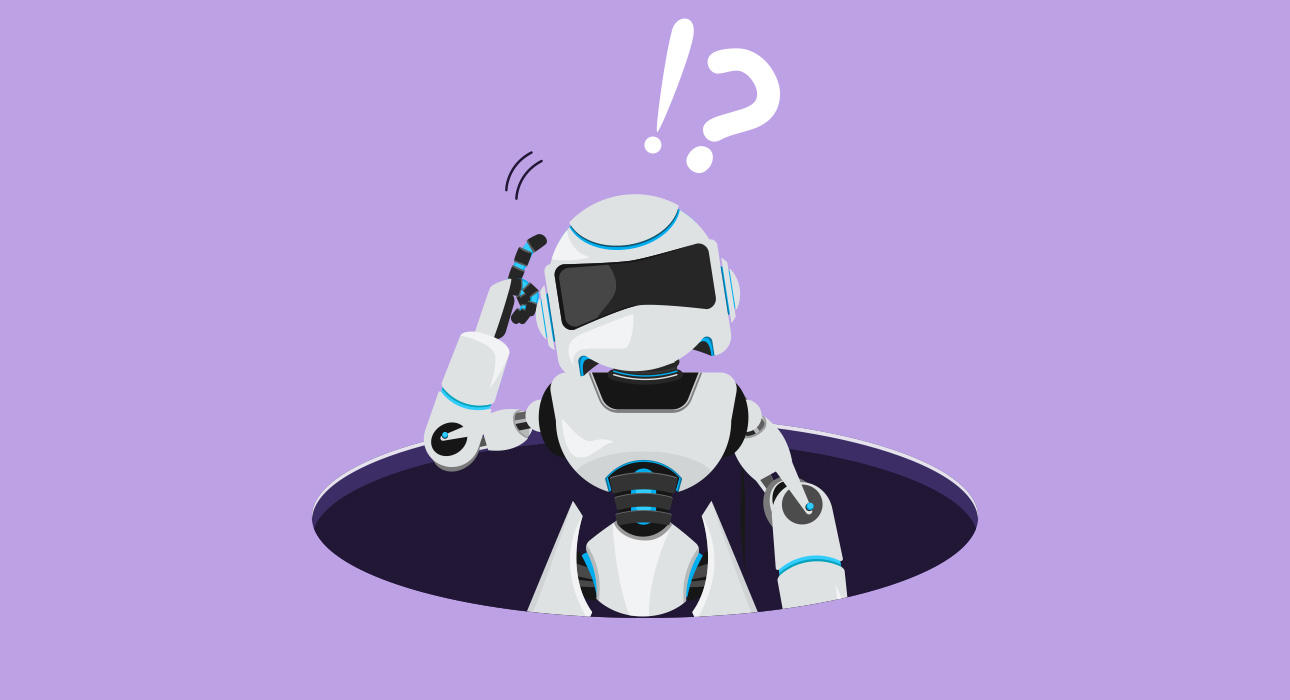
The message being pushed everywhere is pretty clear: if people want a spot in the future economy, they’d better be “smart” enough to keep up with AI. This constant fear of being replaced has triggered a desperate rush to automate everything. But there is a massive hidden cost to this evolution that almost nobody is talking about.
By letting software do all the mental heavy lifting, we are basically trading away the ability to think for ourselves. It’s not just about saving time. It’s about the fact that we’re losing the “friction” that makes deep thinking possible. When a computer can summarise a difficult book or solve a problem in seconds, the actual struggle to understand something just evaporates. That struggle isn’t a bug in the system. It’s the whole point of learning. If the brain works like a muscle, using AI for every task is a lot like using a permanent crutch. Eventually, the skill required to build a real, logical argument from scratch starts to rot.
From Tools to Intuition
AI didn’t just appear out of nowhere, but the “deal” we have with machines has totally flipped. In the beginning, AI was basically just a giant calculator. It followed strict rules and stayed in its lane, helping with math or data organisation. There was a clear line between the human creator and the digital tool.
That line has basically blurred out of existence. We’ve moved from machines that follow logic to systems that try to act like they have intuition. Modern AI doesn’t just crunch numbers; it predicts what a human wants to hear. It has “soaked up” so many human conversations that it can fake a personality, which is where things get messy. As AI gets more “human,” people stop doing the hard work of thinking.
Research shows this happening in real time. One study found that doctors accept wrong suggestions from computers 20% more often than they would make mistakes on their own (Goddard et al., 2012). It’s even changing how we remember things; people now tend to remember where to find information instead of the facts (Sparrow et al., 2011).
The Efficiency Trap
Efficiency is usually the lure, but it’s a dangerous trade-off. In high-stakes environments like hospitals and classrooms, AI has moved past simple data entry and into the core of professional judgment. Naseer, Ahmad, and Chishti (2025) note that these systems are now ingrained in the heavy lifting of healthcare and teaching. Doctors are using them for diagnostic records, and teachers are leaning on them for grading just to keep their heads above water.
But there is a big catch. This reliance creates a counterproductive emotional loop. The catch is the psychological toll. When work gets obsessed, people start using AI like a life raft. It feels like a quick fix, but it actually makes you hit a wall faster. Constantly checking your own brain against an algorithm is just plain exhausting. The tool promised a fix for stress, but in reality, it just fries the brain. It ruins any chance of staying focused (Naseer et al., 2025). It is a complete backfire. Instead of helping, it creates a mental burnout that’s hard to shake.
The Neurological Rewiring
The brain is undergoing an actual physical restructuring; this goes far beyond just picking up a new habit. Most people completely overlook how deep this change actually runs. Research suggests that reliance on AI chatbots mirrors the neural signatures found in addiction. It functions as a low-effort, high-reward trap: the user receives an instant answer, dopamine levels spike, and the brain bypasses the labour of critical thought. No struggle occurs; no cognitive “cost” is paid (Head, 2025).
The result is what experts call a “neuro-slump.” Specifically, we are seeing a measurable rise in attentional lapses and a shrinking capacity for working memory (Gerlich, 2025). But the most alarming part is the social fallout. There is a fundamental mismatch between the “clean” predictability of a machine and the messy reality of human emotion. When a brain spends the majority of its day in a digital echo chamber, it stops practising the difficult work of reading social cues. This goes beyond just losing interest in people. The brain is literally losing its ability to empathise with others.
Those internal connections we need to feel for others are just starting to rust away from neglect. It’s a physical decline in the brain’s ability to handle the messy, complex emotions of the real world. Effectively, the brain is trading away its social intelligence for the sake of convenience. By removing the social “friction” that comes with real-world interaction, the brain begins to lose the very edge that makes it human.
The Psychology of Cognitive Offloading
The real danger isn’t just that AI is fast; it’s that it is seductive. This convenience creates a psychological dependency that completely changes how people handle mental tasks. Experts call this cognitive offloading, the habit of delegating things like memory, decision-making, and basic problem-solving to an external system. While it feels like you’re “freeing up” your brain, you’re actually just letting your essential mental faculties atrophy. A muscle withers when it no longer has to bear weight. In the same way, our neural pathways for critical analysis weaken when they are constantly bypassed by an algorithm. We are essentially training our brains to choose the path of least resistance over the effort required for deep thought (Gerlich, 2025).
We are seeing a “natural drift toward Cognitive Surrender” (Kim et al., 2025). This happens when people stop just using AI as a tool and start using it as a psychological “secure base.” The numbers back this up: nearly 75% of adolescents now turn to AI for life advice, and almost 40% see it as their most dependable resource (Yang & Oshio, 2025). By offloading the “metacognitive” work, the part of our brain that monitors and regulates our own thinking, loses the very oversight needed to know when the AI is wrong.
Read More: Forgetting in the Digital Age: Are Smartphones Weakening Our Memory?
A Steep Price for Speed
The convenience of AI carries a heavy, often invisible, price tag. Data indicates a sharp negative correlation between constant AI reliance and the actual capacity for critical thought. This creates a self-reinforcing loop: as cognitive offloading increases, the desire to exert mental effort drops. It is a state researchers describe as “cognitive miserliness.” By constantly chasing that dopamine hit from an automated reply, the brain starts to favour the shortcut over the struggle (Head, 2025). This shift isn’t some far-off threat; it is currently tearing through professional fields.
Look at healthcare and education. For the 500 professionals studied by Naseer et al. (2025), AI wasn’t really “assisting” at all. Frequent AI use for them isn’t “helpful,” it’s linked to massive cognitive overload and a total collapse in attention spans. These tools are flooding the mental workspace, not clearing it. That constant “toggling” between human logic and the AI’s suggestions, they end up with “decision fatigue. It erodes confidence. Eventually, professionals stop trusting their own clinical or teaching instincts altogether.
Breaking the Cycle
The solution lies in creating intentional “friction points.” It sounds counterintuitive, but a skilled user has to go out of their way to make things difficult. This looks like drafting an idea by hand first or forcing a debate on a concept before letting an AI touch it. Without this friction, neural pathways for critical analysis just shut down; they atrophy from a lack of use (De Freitas et al., 2023). It is about forcing the brain to stay in the game.
The aim is “Skilled Augmentation” instead of surrender. We can use AI to handle routine data, but we have to fiercely protect the deep thinking that requires moral reasoning and original insight (Kim et al., 2025). The human must have enough foundational knowledge to judge whether the AI’s output is actually correct. This prevents “automation bias,” where a person blindly follows a machine’s error. In this setup, the AI is just a tool, but the human is still the one in charge of the work, the real craftsman.
Read More: Will AI Change the World for Everybody? An Inclusive Perspective
Conclusion
The real goal isn’t just to be “AI-ready.” The true test of capability is what remains the second the screen goes dark, whether the mental capacity exists to solve a problem independently. We can let the machines handle the routine, but the actual thinking has to stay ours. If we stop the struggle, we lose the skill. It’s that simple. Cognitive offloading is a massive gamble because it tricks us into thinking we’re being efficient when we’re actually just becoming fragile. We can let the machines handle the boring, routine tasks, but we have to keep a tight grip on the actual thinking. If society doesn’t find a way to balance the convenience of these tools with real mental effort, it risks losing the “deep thinking” muscles.


Leave feedback about this