







Imagine you are standing in a courtroom, pretty certain that you saw a red sedan speeding through the road. Weeks prior, during interrogation, the officer, however, asked if you saw the number plate of the red sedan. In reality, you only saw a minor collision involving a blue sedan. Yet, under the weight of leading questions and subtle suggestions, your brain completely overwrote the incident and fabricated a red vehicle into your memory.
In forensic psychology, this came to be known as the misinformation effect. Decades of research have shown that human memory is more malleable and vulnerable to external suggestions than it was previously considered (Loftus & Palmer, 1974). If a simple, leading question from an officer can forge a false memory in an investigation, imagine what would happen when a vulnerable person is exposed to intense, suggestive psychotherapy?
Defining the Sybil Effect
When dynamics like these are introduced into clinical settings, the stakes are higher. During the late 20th century, the psychiatric community witnessed a bizarre case: a sudden rise in individuals diagnosed with what then was known as Multiple Personality Disorder (now classified as Dissociative Identity Disorder).
Here, instead of dealing with simple details like car colours, patients were recollecting incredibly detailed notes of their history, like childhood trauma and generating various alternate personalities (“alters”) within their minds. Although one would like to believe these alterations to be the symptoms of a psychological condition, many of the cases were constructed using similar suggestibility mechanisms that make eyewitnesses falter in their recalling of events–a phenomenon which later was termed the Sybil Effect.
The sybil effect refers to a psychological phenomenon where specific diagnoses are shaped and spread by popular culture, media coverage, and sometimes, therapeutic malpractices. It occurs when a dramatic, media-popularised narrative becomes a “standard script”. (Acocella, 1999).
The First Collateral Damage
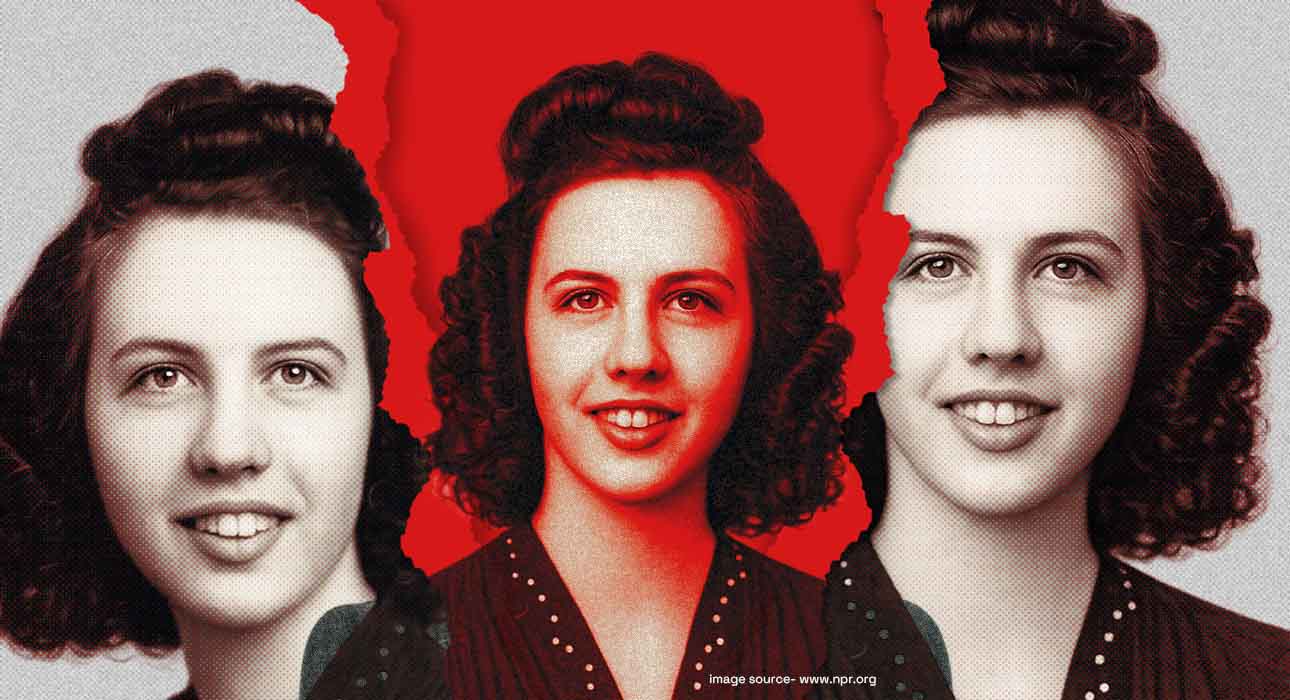
The blueprint for this effect was a real woman named Shirley Mason, known to the world by her pseudonym Sybil Dorsett. In 1973, Flora Schreiber, a journalist, published Sybil, a book detailing Mason’s treatment under the psychoanalyst Dr Cornelia Wilbur. The book claimed that as a result of horrific physical and sexual abuse by her schizophrenic mother, Mason’s psyche had fragmented itself into 16 distinct alternate personalities (Schreiber, 1973).
The cultural impact was instantaneous. The book sold millions of copies, and the 1976 television movie adaptation held the public’s attention. Almost overnight, a diagnosis that had been confined within the psychiatric wards leapt onto talk shows. Following this media blitz, diagnoses of Multiple Personality Disorder in the US skyrocketed from less than 80 cases to approximately 40,000 cases by the late 1990s (Acocella, 1999).
Read More: Child Sexual Abuse and Its Deep Impact on Mental Health
Uncovering the Truth
However, it was later discovered that the foundation of this work was an intentional fiction. Decades later, investigative journalist Debbie Nathan recovered Dr Wilbur’s original case files, audio tapes, and Mason’s letters. This investigation revealed a startling reality: Shirley Mason did not naturally possess any distinct personalities. In a letter to Dr Wilbur, Mason confessed that she had built these alters as a desperate attempt to secure Wilbur’s attention, affection, and financial support, stating plainly that she did not actually have any personalities (Nathan, 2011; Rieber, 1999).
If the alters began as a lonely patient’s want for attention, it was Dr Wilbur’s unethical clinical practices that secured them into a psychological reality. Dr Wilbur was deeply committed to the fringe theory that splits were a common, unconscious response to repressed childhood memories. To uncover these identities, she had Mason go through hours of intense hypnosis combined with regular doses of sodium pentothal – a “truth serum”. Under the influence of these substances, Mason was placed in a state of extreme vulnerability and heightened suggestibility; Dr Wilbur did not just observe the symptoms, but actively commanded them into existence with her suggestive statements. Wilbur assigned names to Mason’s shifting moods, treated them as independent people, and explicitly refused to interact with Mason unless she assumed these roles (Nathan, 2011; Rieber, 1999).
Read More: Childhood Memories of Abuse Retrieved in Adulthood: A Deeper
Damage Control
The Sybil case was far from the only case to involve unethical and falsified practices; similar moral panic cases, like the Paul Ingram Case, involved suggestive interviewing, guided imagery and wrongly accused innocent individuals of disturbing crimes (Olio & Cornell, 1998).
To contain the massive professional fallout and distance the field from this media-sensationalised legacy, the American Psychiatric Association officially renamed the disorder as Dissociative Identity Disorder (DID) in the DSM-IV (Lilienfeld et al., 1999).
Furthermore, research in cognitive science has dismantled the traditional idea that barriers in memories necessarily divide the alters or identities. Laboratory experiments reveal that implicit memory, learned skills, and emotional data leak across these identities (Huntjens et al., 2012).
Conclusion
The unmasking of Shirley Mason serves as a warning for both mental health professionals and laypeople alike that the human mind is malleable and vulnerable to external cues. When the media popularises any one concept to the point that it becomes a standard script for us to follow. It becomes important to distance ourselves from it. The media has made puppets of us who follow a given narrative, taking away the authority of our own choices from us.
References +
- Acocella, J. (1999). Creating hysteria: Women and multiple personality disorder. Jossey-Bass.
- Borch-Jacobsen, M. (2007). Suggestion, Hypnosis, and the Critique of Psychoanalysis. In T. Dufresne (Ed.), Against Freud: Critics Talk Back (pp. 112-134). Stanford University Press.
- Huntjens, R. J., Verschuere, B., & McNally, R. J. (2012). Inter-identity autobiographical amnesia in patients with dissociative identity disorder. PloS one, 7(7), e40580. https://doi.org/10.1371/journal.pone.0040580
- Lilienfeld, S. O., Lynn, S. J., Kirsch, I., Chaves, J. F., Sarbin, T. R., Ganaway, G. K., & Powell, R. A. (1999). Dissociative identity disorder and the sociocognitive model: recalling the lessons of the past. Psychological Bulletin, 125(5), 507–523. https://doi.org/10.1037/0033-2909.125.5.507
- Loftus, E. F., & Palmer, J. C. (1974). Reconstruction of automobile destruction: An example of the interaction between language and memory. Journal of Verbal Learning and Verbal Behaviour, 13(5), 585–589. https://doi.org/10.1016/s0022-5371(74)80011-3
- Nathan, D. (2011). Sybil Exposed: The Extraordinary Story Behind the Famous Multiple Personality Case. New York: Free Press.
- Olio, K. A., & Cornell, W. F. (1998). The facade of scientific documentation: A case study of Richard Ofshe’s analysis of the Paul Ingram case. Psychology, Public Policy, and Law, 4(4), 1182–1197. https://doi.org/10.1037/1076-8971.4.4.1182
- Rieber R. W. (1999). Hypnosis, false memory and multiple personality: a trinity of affinity. History of psychiatry, 10(37), 3–11. https://doi.org/10.1177/0957154X9901003701
- Schreiber, F. R. (1973). Sybil. Chicago: Regnery.





Leave feedback about this