







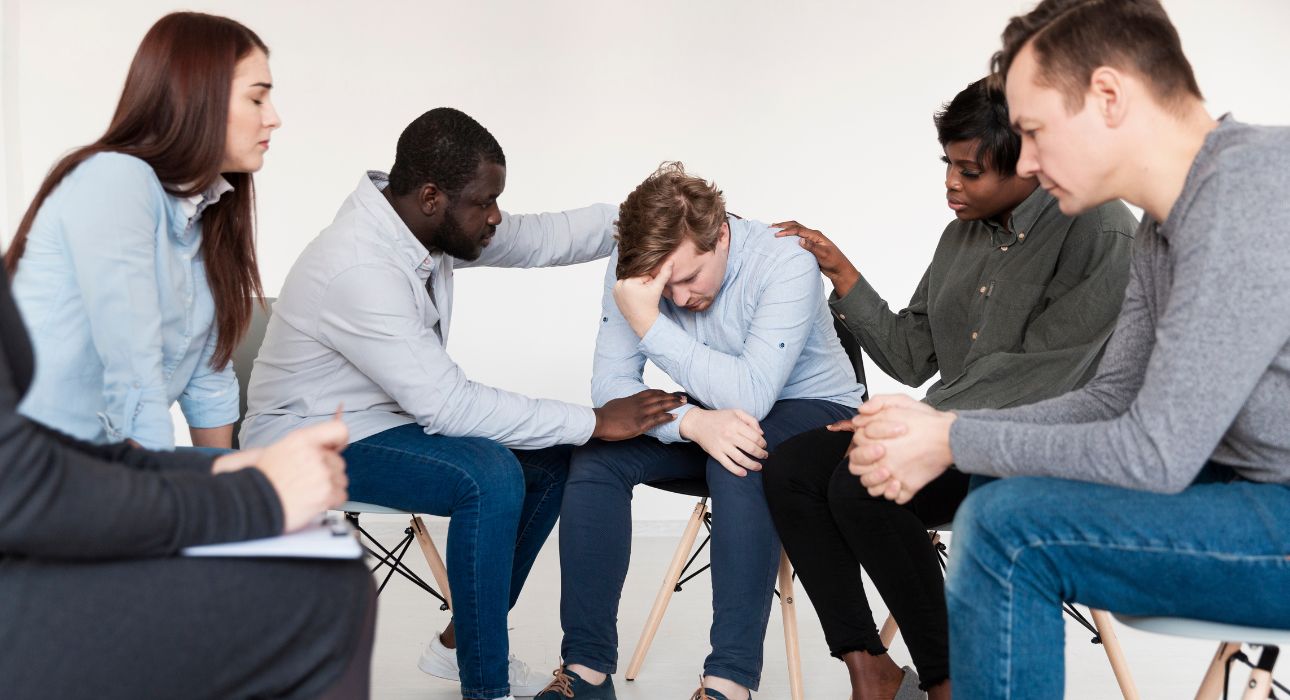
Addiction is put forth as a personal failure at an individual level. But recovery doesn’t take place in a vacuum. It does in a relationship. For many men, sustainable recovery is not only about insight or abstinence. It is about connection. In structured environments such as a men’s inpatient rehab, something psychologically distinctive often develops: brotherhood. Not competition. Not performance. Brotherhood is grounded in shared vulnerability. To see why that is important, you should look at social psychology.
Social Identity And The Power Of Belonging
Social identity theories put forth that what we include in our personal identity is, in part, based on the groups we are a part of. They define themselves by more than just their personality traits, they also by the groups they belong to. “I am a member of this.” Addiction breaks identity. Roles like that of partner, father, or professional dissolve. Shame plays a role in this transformation. A person may begin to see him or herself mainly as “the addict” or “the failure.” Recovery is a process beyond just stopping the use of a substance; it is about redefining identity.
Men are in the process of reintegration into society. That shared identity also serves to reduce social threat. It creates an environment of psychological safety. The narrative changes from “I am broken” to “They are in the process of rebuilding.” That change does matter. Identity becomes stable when it is collectively reinforced.
Group Cohesion As A Therapeutic Force
Group cohesiveness is more than a feel-good idea. In group psychotherapy research, we see that which groups are more cohesive predicts which members will be more engaged and which will stay longer. Men in male-only spaces tend to open up. The emotional guard goes down. There is a softening of what may be considered masculine behaviour. Topics which may have gone untalked about come to the fore, including:
- Shame about not meeting cultural expectations
- Fear of vulnerability
- Anger masking grief
- Pressure tied to provider roles
When a man puts these out there, others do too. The illusion of isolation breaks. Cohesion grows out of shared risk. When they put out vulnerability on the table instead of judging, honesty flourishes.
Vulnerability And Masculine Conditioning
Many boys grow up with the idea that strength is the same as emotional restraint. They ask for help, which they may see as a sign of failure. What they are sad about may turn into anger. What they are scared of may be pushed down by silence. Substances serve as emotional outlets. Alcohol or drugs provide a quick fix that doesn’t go against masculine norms. When they remove certain elements that usually keep these emotions in check, what is left are the core feelings. If they don’t have that structure in place, then that may be too great a burden to bear.
In single sex therapy settings, vulnerability is redefined. Strength is instead what they bring to the table when they are in the midst of discomfort. It is about accountability, which in turn is not the same as dominance. This change doesn’t come from lectures. It comes from action. When a man puts forth shame or grief and is still received, we see a new model for masculinity take shape. Vulnerability they see as a connection instead of a threat.
Collective Regulation And Shared Healing
Addiction is also a disorder that is characterised by unstable stress responses. Emotions’ thresholds also narrow. Humans do for each other. Via touch, presence, and consistency, they co-regulate nervous systems. In which male support groups do we see the start of collective regulation? When one member has an emotional outburst, the others keep it together. When someone is overcome by their emotions, the group as a whole makes that normal.
Over the years, these changes have built resilience. They see that which they put out there together shapes behaviour. They break down shame through emotion. They establish a routine, which in turn brings back predictability. Healing becomes collective rather than solitary.
Brotherhood Versus Competition
Male bonding often includes competition. In therapy, that dynamic changes. Status is given for honesty and consistency. In the group, there is respect for the member who is the most accountable, not the loudest. The one who shows up. The one who admits to mistakes. This shift changes what they consider to be true belonging. Validation is no longer a function of performance. It is a matter of participation. For men who have lived with great pressure to prove themselves, this is a stabilising factor. It also reduces the stress, which in turn fuels relapse.
Identity Reconstruction
Addiction breaks down identity. Brotherhood in repair. Coach, accountability partner, community member. These roles they live out every day through action. Supporting a peer. Facilitating a discussion. Resolving conflict. Identity forms through action in a social setting. Brotherhood gives and takes. An individual is not to be seen just in terms of what they did in the past, but in what they are putting into the present.
Why Context Matters
Not all people require gender specific treatment. Many do well in mixed settings. But for some men, past relationships and social conditioning, which we see today, make male-only spaces a better option. As emotional outpouring increases, relationship distractions wane, and accountability practices reflect real-life issues they deal with, that’s when engagement grows. In alignment, they are. What we see in the treatment setting is what meets the individual’s psychological needs, and in that, they see recovery take place.
Final Reflection
Brotherhood in recovery from addiction is a fact. It is a psychological process. Through shared identity, cohesion, vulnerability, and group regulation, men often have access to layers of healing that are off-limits elsewhere. Recovery is a relational process. Identity transforms in relation to others. Behaviour becomes stable in a relationship. For many men, brotherhood is a core component of transformation. It is the setting in which change is possible.





Leave feedback about this