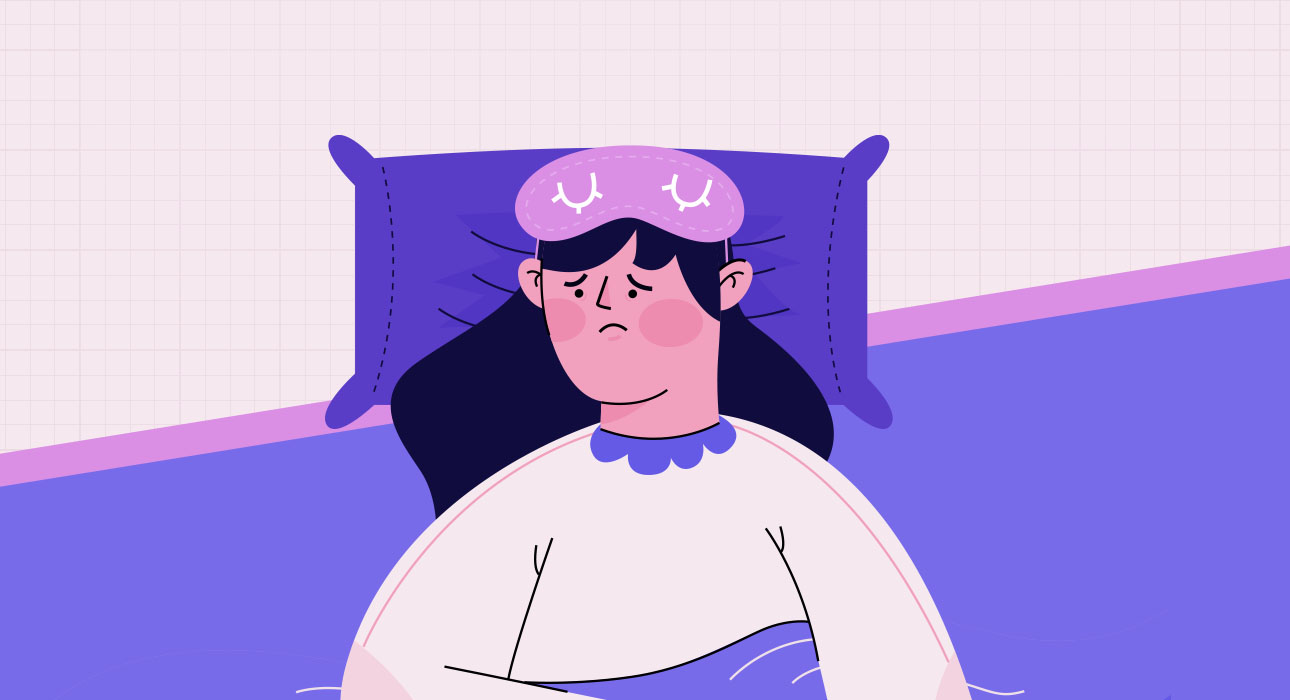
Sonia is a college student who is fond of video games. She spends long hours playing games with her online friends and often ends up staying late at night. She has to attend college and also has to go to the hospital for her internship. The busy schedule often takes away most of the time of the day, but the thought of surrendering the free time to sleep feels like a loss. So, she scrolled and played a game. In modern life, sleep feels like a defeat; it is considered as the batch of honour. However, from a Biopsychological point of view, Sleep Deprived Society is not just physically and emotionally impaired but also cognitively unproductive.
The Physiological Effects of Sleep Deprivation
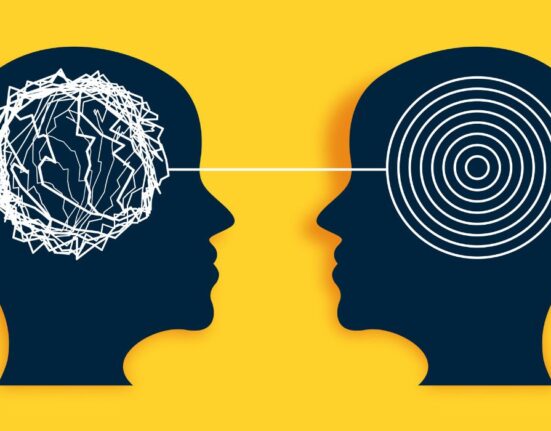
The amygdala is the reaction centre of the brain that generates the fight or flight response. In a rested brain prefrontal cortex, which is responsible for logical and rational reasoning, is in strong contact with the amygdala and the limbic system. The prefrontal cortex analyses the stimulus from the surroundings and makes decisions whether or not a reaction is necessary, hence indirectly controlling the amygdala.
When a brain is sleep deprived, the connection between the amygdala and the prefrontal cortex weakens, making the amygdala more reactive. The seminal fMRI study discovered that sleep deprivation leads to a 60% increase in amygdala reactivity and a functional “disconnect” from the medial prefrontal cortex. (Yoo, Gujar, Jolesz & WalkerSleep; 2007) Deprived individuals show heightened activity in the amygdala even before the stressful event occurs.
Research from UC Berkeley’s Sleep and Neuroimaging Lab also states that sleep deprivation makes the amygdala inaccurate. It often begins by seeing a threat where it is actually not present, making an individual irritable and aggressive. It also loses the ability to distinguish between a neutral face and a threatening face. Similarly, in sleep deprivated state, the amygdala also becomes hyper-sensitive to positive stimuli or reward. It often manifests itself in the form of ‘revenge bedtime procrastination’ or ‘binge watching’ etc., as the brain craves dopamine.
Read More: How Sleep Shapes Mental Health: A Psychological Perspective
Impact of sleep deprivation on emotional understanding
Psychologists have claimed in the past that sleep plays an important role in the emotional functioning of the brain (Walker & Van Der Helm, 2009). Without getting enough sleep, a person may experience difficulty managing emotions and a decreased ability to notice important emotional signals from both the outside world and within themselves (Goldstein-Piekarski et al., 2015). Another study found that sleep deprivation affects an individual’s ability to read social cues. Sleep deprivation affects the direct and indirect emotional empathy of individuals, affecting their social behaviour (Tempesta et al, 2014, 2025).
Impact of sleep deprivation on memory
Youth in Indian society are often taught that if they want to be successful, they must sacrifice, and what do they actually sacrifice? ‘their sleep’. Many students often sacrifice their sleep while they are preparing for their exams, and many do it while they are trying to make their hustle work. Young YouTubers often do not have enough money to hire editors or writers; they often end up doing all the work on their own.
Similarly, young entrepreneurs often handle a lot of work on their own. They end up damaging more than they actually gain. Sleep plays an important role in the consolidation of memory and in preparing the brain for new memories. The hippocampus area, responsible for the organisation, consolidation and storage of memory, becomes active during sleep. It converts short-term memory to long-term memory and hence facilitates storage in the neocortex. (Guttesen, Harrington, Fleming, Gaskell, & Cairney). Researches have shown that sleep deprivation before learning reduces the brain’s ability to encode new facts by up to 40%.
Read More: Sleep breathing affects memory processing: Research
Sleep Spindles and their role in memory
Sleep spindles are bursts of brain wave activity, primarily occurring during non-REM Sleep. Their activity has also been found to contribute to brain plasticity and consolidation of declarative and procedural memories( Arnaud & Julien, 2020). Recent findings in Neuroscience state that higher “spindle density” is directly linked to better cognitive flexibility and the consolidation of weak memories (things individuals barely learned during the day). (Tamminen, Payne, Stickgold, Wamsley, & Gaskell, 2010)
How to improve sleep cycle?
- Avoiding screen time 60 min before sleep time: Individuals should avoid screens for about 60 min before sleep. If it is important, then use night mode as it reduces blue light that stimulates the melatonin level in the pineal gland.
- Following routine: Individuals should try to fix their time of sleep and waking times. It would help the body set its biological clock (circadian rhythm) and hence deepen its sleep over time.
- High-Intensity Interval Training (HIIT): Exercise, particularly in the morning or early afternoon, dramatically increases the demand for physical repair, which the brain fulfils by increasing deep sleep duration.
- Avoiding Late-Night Heavy Meals: Digesting a heavy meal requires significant metabolic energy and increases core temperature, which could disrupt deep sleep.
Various other disciplines may help individuals get deep sleep, such as having kiwi before sleep, meditation or binaural beats
Conclusion
Sleep deprivation causes physiological distress to the human body, including fatigue, chronic pain, cardiac stress, muscle tension, digestive disorders, etc. It also affects the immune response of the body. However, the major side effects of avoiding sleep are observed in the mental health of an individual. It affects memory, cognition, language, motor control, reasoning, perception and emotional control, etc., of an individual.
It affects the relationship between the amygdala and the frontal cortex. The only way to restore the connection between the prefrontal cortex and the amygdala is through NREM (Deep) sleep. However, individual can improve the quality of their sleep with practice and natural supplements. Improving the sleep cycle would improve health, productivity and social life of the individual.
Read More: Impact of Sleep Deprivation on Cognitive Thinking
FAQs
1. Does coffee affect sleep?
Coffee contains a molecule known as caffeine; the molecular structure of caffeine is identical to that of adenosine, which is responsible for sending signals for sleep. Caffeine enters the brain and attaches itself to adenosine receptors, blocking the real signals for sleep. When caffeine wears off, the adenosine rushes to attach itself to receptors, causing a ‘caffeine crash’, leading to a sleepy feeling.
2. Does caffeine affect sleep spindles?
Consuming caffeine late in the day can decrease the density of sleep spindles and hence shorten non – REM, meaning even if an individual falls asleep after consuming caffeine, their memory consolidation would not be effective.
References +
Guttesen AÁV, Harrington MO, Fleming MK, Gaskell MG, Cairney SA. Memory consolidation during sleep: a facilitator of new learning? Neuropsychologia. 2026 Jan 30;221:109320. doi: 10.1016/j.neuropsychologia.2025.109320. Epub 2025 Nov 17. PMID: 41260295.
As we sleep, speedy brain waves boost our ability to learn – Berkeley News https://share.google/ZLS9ciArS1NeyLioy
Tamminen J, Payne JD, Stickgold R, Wamsley EJ, Gaskell MG. Sleep spindle activity is associated with the integration of new memories and existing knowledge. J Neurosci. 2010 Oct 27;30(43):14356- 60. doi: 10.1523/JNEUROSCI.3028-10.2010. PMID: 20980591; PMCID: PMC2989532.
Arnaud Boutin, Julien Doyon; A sleep spindle framework for motor memory consolidation. Philos Trans R Soc Lond B Biol Sci 25 May 2020; 375 (1799): 20190232. https://doi.org/10.1098/rstb.2019.0232
Killgore WDS, Balkin TJ, Yarnell AM, Capaldi VF 2nd. Sleep deprivation impairs recognition of specific emotions. Neurobiol Sleep Circadian Rhythms. 2017 Jan 21;3:10-16. doi: 10.1016/j.nbscr.2017.01.001. PMID: 31236499; PMCID: PMC6575584.
Goldstein-Piekarski AN, Greer SM, Saletin JM, Walker MP. Sleep Deprivation Impairs the Human Central and Peripheral Nervous System Discrimination of Social Threat. J Neurosci. 2015 Jul 15;35(28):10135-45. doi: 10.1523/JNEUROSCI.5254-14.2015. PMID: 26180190; PMCID: PMC4502254.
Yoo SS, Gujar N, Hu P, Jolesz FA, Walker MP. The human emotional brain without sleep–a prefrontal amygdala disconnect. Curr Biol. 2007 Oct 23;17(20):R877-8. doi: 10.1016/j.cub.2007.08.007. PMID: 17956744.
Stenson AR, Kurinec CA, Hinson JM, Whitney P, Van Dongen HPA. Total sleep deprivation reduces top-down regulation of emotion without altering bottom-up affective processing. PLoS One. 2021 Sep 2;16(9):e0256983. doi: 10.1371/journal.pone.0256983. PMID: 34473768; PMCID: PMC8412406.