This research explores how memories of personal life events are affected by ageing and how people remember important experiences differently as they grow older. Rather than treating memory as something fixed or unchanging, the study shows that memories, especially of meaningful events, can change over time. It highlights how emotional impact, personal significance, and the passage of time influence what people remember and how clearly they remember it.
Understanding Memory for Life Events
People tend to remember personal experiences such as graduations, weddings or difficult moments more vividly than neutral facts or everyday details. These memories are called autobiographical memories, and they play an important role in shaping one’s identity and sense of self. As people age, the way they recall these memories often changes. Some memories stay strong and vivid while others may fade or shift in detail. The research focuses on how ageing affects the recall of life events and what factors influence memory strength and accuracy over time
Read More: Inside the Brain’s Memory Filter: How can we remember what matters the most to us?
Research Details
The study examined how memory for personal life events changes across different age groups. Participants from younger to older adulthood were asked to recall significant life events and describe them in detail. Researchers analysed the content, emotional tone and clarity of these memories. The goal was to understand how ageing and life experience affect memory recall, including whether certain types of memories remain stable or become less detailed with age. The analysis also looked at how emotions and personal significance influenced memory retention.
Authors’ Perspective
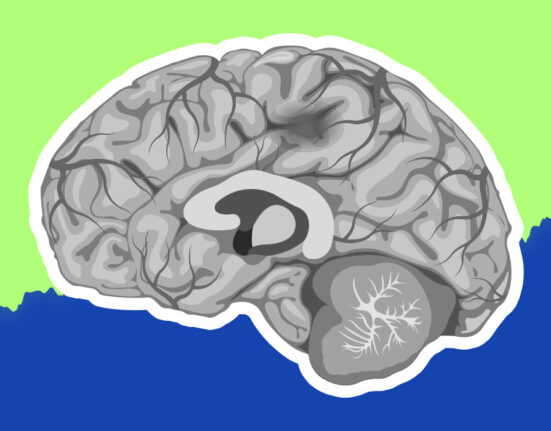
The memory research highlights that the brain does not treat life experiences as one continuous stream but breaks them into meaningful, memorable parts. Researchers such as Dr David Clewett at UCLA and colleagues have shown that a small brainstem region called the locus coeruleus signals the brain when one event ends and another begins, helping the hippocampus form distinct memories around life experiences. They explain that this mechanism is fundamental for organising life events into lasting memories instead of a blur of experience. The research relied on advanced brain scanning techniques funded in part by grants from the U.S. National Institutes of Health (NIH), which paid for imaging facilities and experiments that make this work possible.
Read More: Flashbulb Memories: Capturing the Vivid Recollection of Significant Life Events
Conclusion
This research contributes to understanding how memory works across the lifespan by showing that the brain naturally segments continuous experience into meaningful events. The way memories are organized influenced by regions like the locus coeruleus and the hippocampus, helps explain why certain life events remain vivid while others fade with time. Memory formation is shaped by emotional impact, personal significance, and the brain’s ability to mark boundaries between experiences. These findings not only improve scientific knowledge of memory processes but could also guide future approaches to memory-related challenges in ageing, stress resilience and clinical conditions that involve memory disruption.