







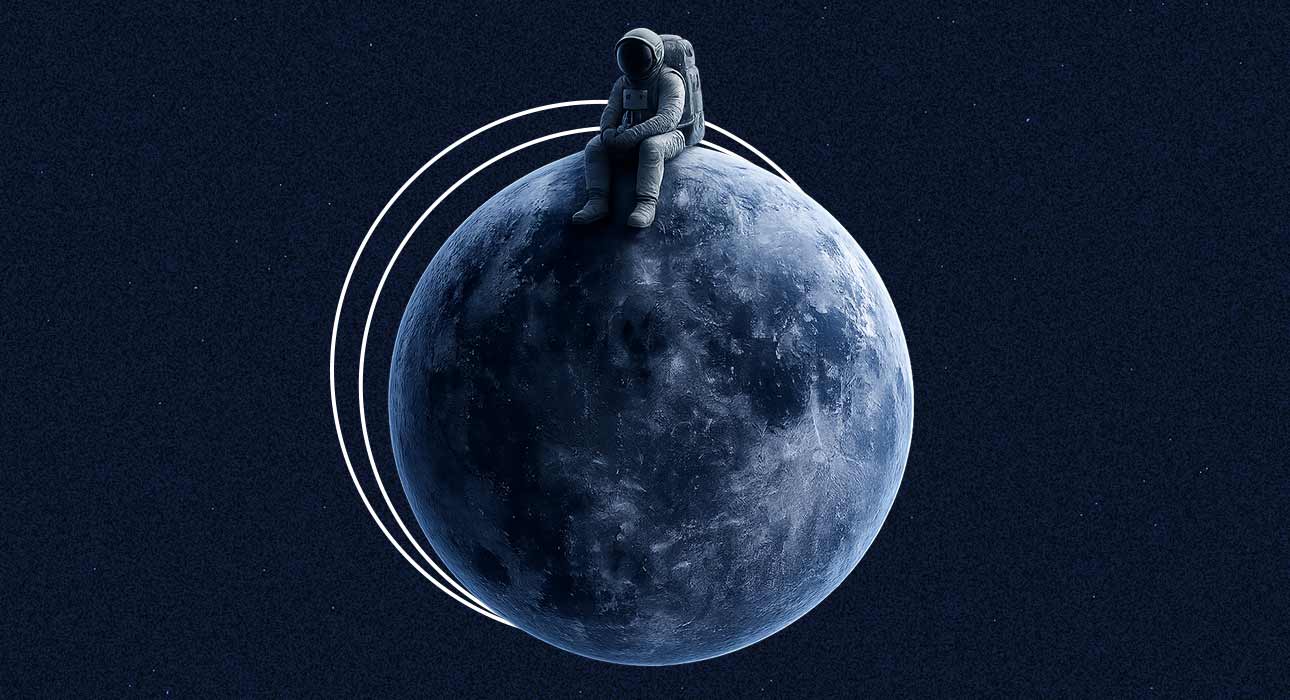
The return of astronauts to Earth is often celebrated as another triumph of science over human limitations. Cameras follow them as they land; the recovery teams rush to assist them while the entire world celebrates. However, the neglected portion remains their psychological well-being. Returning to Earth after weeks of expenditure in the never-ending, quiet space can feel emotionally overwhelming. Most of them have reportedly faced trouble in returning to their ordinary routines, relationships and even their own sense of identity. Psychologists describe this phase as ‘re-entry adaptation’, the psychological and social process of settling into one’s own culture and norms after spending a prolonged time in outer space (Suedfeld, 2005).
Unlike the assumption that returning home would bring “immediate comfort”, astronauts have described it as a challenging process for them to reconnect with their surroundings and get readapted to them. Some have described feeling emotionally distant, while others often experience a sense of alienation. Although the official mission ends, the psychological journey for the astronauts begins.
The World Seems Trivial
Astronauts often have an emotional change after seeing Earth from space, termed ‘the overview effect’. From the ultimate space, every division, difference, religion and conflict disappears. The planet looks calm, silent and fragile. The space travellers often return with a deep understanding of the vulnerable nature of society, human interconnectedness and the trivialness in everyday conflicts.
Life in space and life on Earth do not align. While the perspective might be interesting, it also leads to emotional conflicts within a person. After witnessing something so extraordinary that it changes the individual’s perspective on life, returning to the world of deadlines, arguments, and fixed routines makes the individual feel alienated. Studies have shown that this emotional shift creates a psychological distance between the individual who returned and the society they returned to (Kanas & Manzey, 2008). Although the world has been the same, the change in their perspective makes them unable to readjust to the environment in which they once grew up.
Read More: The Psychological Impact of Space Exploration
Home Feels Unknown: A Strange Emptiness
Space missions are conducted within structured, well-defined and specified environments where every task has a purpose and every movement counts. For weeks, astronauts live closely working with their crew members as a team (NASA Behavioural Health and Performance, 2022). This lifestyle continues for weeks, creating a strong bond.
However, they are supposed to leave that environment almost overnight and return to Earth. Suddenly, the astronauts are expected to resume their ordinary social life, attend public events, give lectures and interviews, meet their relatives, and fulfil their daily responsibilities. Although the astronauts eventually succumb again to their ordinary earthly life, internally, many have remarked on feeling an emptiness. They often miss working with their crew members and miss the simplicity of life in space.
This emotional vagueness isolates them. During their course of journey, astronauts adjust to a confined environment, where everyone around them shares the same experience and mental state. However, back on earth, even though their return is celebrated by their family and friends, the ambiguous feeling within them often remains unaddressed.
Previously, psychologists had compared the aspects of astronaut re-entry to the experiences of researchers returning from polar expeditions and military personnel after deployment (Palinkas, 2003). As observed, in both cases, individuals struggle to emotionally reconnect with their own known environment after returning from highly structured environments.
Beyond emotional readjustments, astronauts also need to physically relearn life on Earth. After spending weeks in microgravity, walking on Earth needs conscious effort. For months, astronauts have reported experiencing dizziness, muscle weakness and fatigue (Clément & Bukley, 2007). These physical sensations are deeply intertwined with psychological responses. To space returnees, every basic sensation feels intense; the same earth they grew up in feels noisier and more overwhelming (Young & Sutton, 2021).
Researchers have concluded that returnees from space may temporarily experience fatigue, dizziness and emotional disturbance during the phase of re-adaptation (Kanas et al., 2009). However, these responses are natural with respect to extreme environmental switches and not due to weakness.
Change of Perspective: The Core of Emotional Detachment
Individuals returning from illness, war, grief and the like might experience a similar emotional aspect to what the astronauts do; the world remains unchanged; however, internally something feels changed. Perspectives that are difficult to express. Some become sensitive, while many develop stronger moral values (White, 2014). However, despite the change, they ought to live their ordinary life and attend to every social responsibility. The difference between perspective and lifestyle leads to emotional exhaustion, yet many have reportedly described this process as more beautiful than tragic. Reconnecting with nature, close ones and living under the open sky gives rise to a newer and more gracious emotional bond with life.
Conclusion
In the end, re-entry adaptation illustrates how the human mind adjusts itself after experiencing something extraordinary. The view of Earth from ultimate space makes the individual realise the fragile nature of human conflicts. The journey reflects on the undeniable human experience, i.e., returning home after a prolonged expenditure of extraordinary encounters is about rediscovering the world around them.
References +
Palinkas, L. A. (2003). The psychology of isolated and confined environments. American Psychologist, 58(5), 353–363.
Suedfeld, P. (2005). Invulnerability, coping, salutogenesis, integration: Four phases of space psychology. Aviation, Space, and Environmental Medicine, 76(6), B61–B66.
Clément, G., & Bukley, A. (2007). Artificial gravity. Springer.
Kanas, N., & Manzey, D. (2008). Space psychology and psychiatry (2nd ed.). Springer.
Kanas, N., Salnitskiy, V., Grund, E. M., Weiss, D. S., Gushin, V., Kozerenko, O., Sled, A., & Marmar, C. R. (2009). Social and cultural issues during space missions. Acta Astronautica, 64(7–8), 659–677.
White, F. (2014). The overview effect: Space exploration and human evolution (3rd ed.). Houghton Mifflin Harcourt.
Young, L. R., & Sutton, J. P. (2021). Adaptation to long-duration spaceflight. New England Journal of Medicine, 385(1), 1–9.
NASA Behavioural Health and Performance. (2022). Behavioral health support for astronauts.




Leave feedback about this