







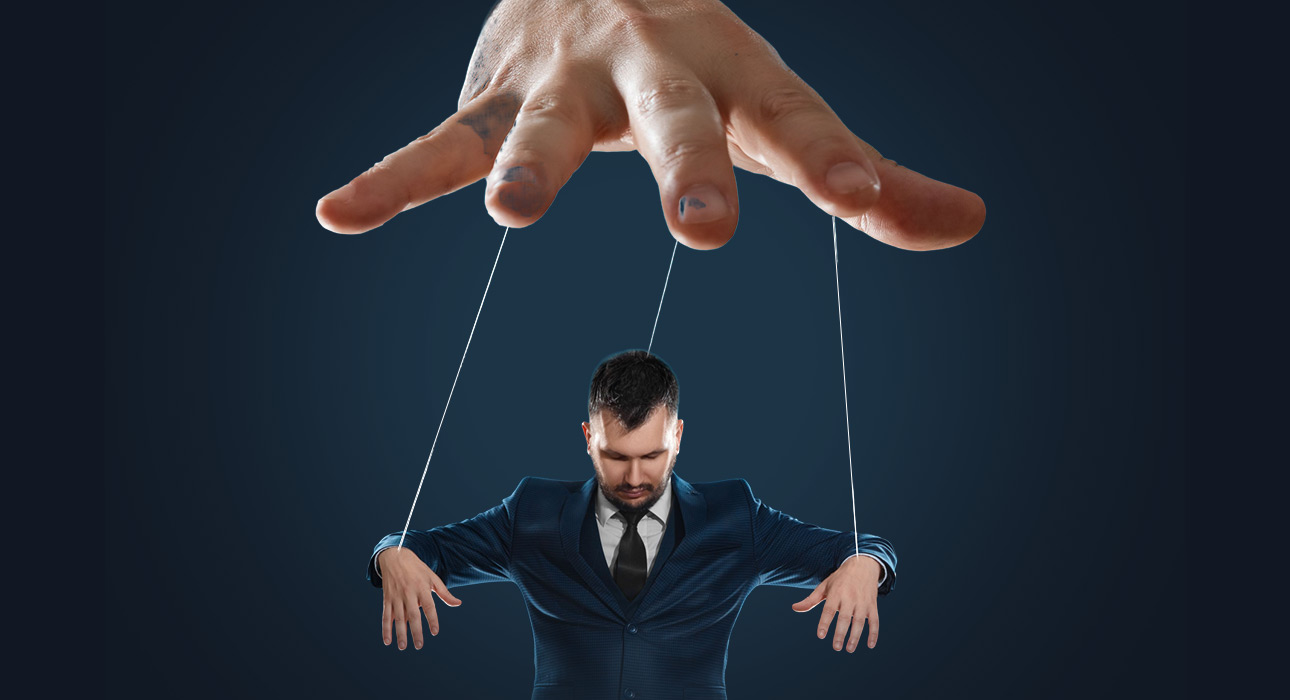
Have you ever found yourself agreeing to something you didn’t want to do, wondering how you were persuaded? Maybe a family member makes you feel terrible until you apologise for something that wasn’t entirely your fault. Maybe a friend gives you the silent treatment until you succumb to their desires. It may not seem manipulative at the time.
It may just feel as if you were at fault, that you changed your mind, or that you were attempting to maintain peace. After some time has passed, you may come to realise what transpired. It is important to understand the difference between manipulation and persuasion, as we confuse the two. Persuasion is an appeal to a person’s true reasoning, beliefs, and interests. You are aware that you are being influenced to like or purchase something, yet you are truly interested.
Manipulation occurs when you are coerced into doing something, misled, or emotionally mistreated. At times, you are unaware that you are being controlled or exploited by someone. Recognising manipulation is important because it can take different forms. It can appear in personal relationships in the form of gaslighting. It can occur behind political agendas and marketing tactics, and can influence your emotional well-being.
Read More: Think or Feel? Understanding the Two Routes of Persuasion
How People Manipulate Each Other in Relationships
One of the most disturbing things is that manipulation occurs in close relationships. You get manipulated by your spouse, family member, friends, and sometimes your children. Long before the word “manipulation” was created, psychologists were trying to understand it systematically. In 1987, Buss et al. used factor analysis across multiple studies.
The goal was to identify how people manipulate someone to do something or stop a behaviour from occurring. They identified six distinct manipulation tactics that show in close relationships: charm, silent treatment, coercion, reason, regression, and debasement. These tactics were used consistently across different relationships, in different situations. Charm was frequently employed when someone wanted someone else to do anything for them, such as comply with their plans or do a favour. On the other hand, compulsion and silent treatment were most frequently employed when someone desired someone else to cease engaging in a specific behaviour.
This could involve ending an argument, giving up a certain behaviour, or simply falling back in line. The remaining three tactics work in different ways. Reason involves giving explanations, pointing out benefits, or explaining why another person should do or stop doing something. Regression involves behaviours such as pouting or sulking until the other person gives in. Debasement involves lowering or humbling oneself to influence the other person. Although these tactics may appear less aggressive than coercion, they can still be used to alter another person’s behaviour according to the manipulator’s wishes (Buss et al., 1987).
Later research by Buss (1992) found that these six tactics continued to appear in close relationships, including relationships between romantic partners, friends, and parents. The study also identified additional tactics, showing that manipulation is not limited to one fixed set of behaviours. More recent research has similarly found that manipulation is associated with poorer relationship quality, suggesting that its effects can extend beyond the immediate situation in which the manipulation occurs (Turner, 2026). Manipulation, therefore, is all about using different tactics to change another person’s behaviour according to a certain person’s will. Recognising these tactics and understanding when and where they are being used is important.
Read More: How to Recognise and Respond to Manipulation
Gaslighting
Gaslighting is something that we are all familiar with. It is used in everyday conversations. But psychologists and sociologists have found a troubling understanding of this concept. According to a sociologist, Paige Sweet’s 2019 analysis, gaslighting is a form of manipulation closely connected to the existing differences in power and credibility. She argued that gaslighting is more effective when it is used by a person with great social status, authority, or credibility than the person being targeted.
This can happen between an earning spouse and a financially dependent partner, between a manager and an employee, or between a socially dominant person and someone from a marginalised social group. Research has also examined gaslighting within intimate relationships. A study by March et al. (2025) found that gaslighting can involve tactics such as misdirection, denial, lying, and contradiction, all of which can destabilise the targeted person’s understanding of what is happening.
A recent study was conducted to determine the mechanism behind gaslighting in detail. It suggests that gaslighting does not necessarily involve creating a completely new form of psychological attack. Rather, it takes advantage of something that is normally a healthy part of relationships. When there is uncertainty in a relationship, couples automatically support one another. They discuss their emotions and interpret the world around them.
This is a beneficial cognitive and social process that can deepen their relationship. However, gaslighting affects the same mechanism by twisting and exploiting the trust and closeness between partners. They begin to blame each other and question their own understanding of what is going on, rather than assisting one another in understanding tough situations (Klein et al., 2026).
Understanding how all of this works is vital because we are often blind to the fact that we are being manipulated psychologically. Gaslighting does not necessarily manifest in an unusual or clearly detrimental manner. It simply starts to exist in close relationships, eating away at the healthy part of relationships and making partners uncertain about each other. Recognising this mechanism early on is crucial to protect oneself and others from its effects.
Read More: Understanding Toxic Relationship Patterns in Men and Women
The Role of Politics and Marketing
Manipulation does not stop at close relationships. The same basic desire to influence another person’s behaviour can also appear on a much larger scale, where the target is not a single individual but an audience of consumers or voters. Moving from interpersonal relationships to politics and marketing therefore allows us to see how similar psychological mechanisms can operate in very different settings.
When we look beyond individual relationships, we suddenly realise that manipulation is almost everywhere, in advertising campaigns, political messages, and sales marketing. In 2004, Cialdini and Goldstein carried out research on compliance and conformity. They found three motivational factors that make humans vulnerable to influence. These factors are the desire to form accurate perceptions of reality, the desire to build and preserve relationships, and the desire to maintain a favourable self-image. These motivations effectively influence people, whether used ethically or through manipulation.
In their research, several mechanisms were discussed that are still constantly used in today’s marketing and political communication. These are social proof, authority cues, and reciprocity.
Read More: Does Politics Influence Your Sense of Self?
Social Proof
The term “social proof” describes the ability of individuals to consider what others are doing or recommending before making their own choices. For instance, we always check the product’s ratings and review area before making an online purchase. We need social approval before we buy a product. This is why marketing advertisements mostly use testimonials, reviews, and influencers. They use different phrases designed to show that many other people are using or approving of a product. Political campaigns can use a similar strategy by boosting their crowd size, public support, or showing that a large audience is already supporting a particular cause.
Another strategy that can impact political perceptions is the repeated presentation of information. According to research on political misinformation, continuous exposure can make inaccurate information appear more familiar and credible, even if the material itself lacks evidence. This is similar to the illusory truth effect, which occurs when repeated claims are considered to be true (Pantazi et al., 2021). This indicates that in political communication, making a claim frequently may affect the public’s perception of its familiarity or credibility.
Authority Cues
Authority cues work similarly. People are more likely to follow or accept a message from an authority figure who appears confident, educated, or qualified, particularly when compared to someone unfamiliar to the audience.
Reciprocity
Reciprocity is another key process that we are all aware of. It happens when we feel compelled to repay a favour that someone else has done for us. When we travel to supermarkets or shopping centres, we frequently see salespeople offering free samples. We check that freebie and later end up buying it ourselves. This tactic is used as a marketing tool worldwide. Not only here, but this exchange of favours also happens in close relationships or the neighbourhood, where someone grants us a favour, and we end up returning it in some way. This is why free samples, trial periods, and small favours are so effective today.
None of these mechanisms is inherently manipulative. The important distinction is whether the underlying claim being used to influence someone is actually true. Nowadays, influencers are becoming a popular choice to advertise a product. We can see them recommending thousands of products with the same formula but different packaging and branding. Daily, they make countless claims that a certain product is highly effective, and most people decide to buy it. But later, we get disappointed when it doesn’t give us the same result it was claiming.
The same distinction can be seen with genuine scarcity and false urgency. Genuine scarcity occurs when a product is actually available in limited quantities. On the other hand, false urgency creates the impression that you must act immediately when there is no genuine reason to do so. Both of them are used by sellers. They put things on sale on their website and present a countdown timer that indicates when the sale will expire. But later on, you find that the timer simply restarts when it reaches zero, giving you the same feeling of urgency.
When these tactics are employed to create a false sense of urgency or scarcity, they become particularly relevant to manipulation because they influence consumers to make choices they otherwise would not. Research backs this up: one study found older consumers are especially vulnerable to these tactics, often leading to purchases they didn’t intend to make (Koh & Seah, 2023), while another found that scarcity cues, even when consumers fall for them, tend to lower how trustworthy they find the seller and leave them more frustrated with the shopping experience overall (Tuncer et al., 2024).
In both cases, the psychological mechanism is similar. The real question is whether the person using that mechanism is being honest about the reason they should be influenced by it. Therefore, the difference between ethical influence and manipulation does not necessarily depend on the mechanism being used, but on whether it is being used honestly or deceptively.
Read More: How to deal with Frustration
Conclusion
When we go beyond interpersonal relationships, politics, marketing, and gaslighting, we can see that the tactics utilised to manipulate others are consistent regardless of the situation. The setting and scale may change, but the fundamental methods can remain remarkably identical. In some cases, manipulation may occur on a small personal scale, affecting only an individual relationship. On a larger scale, it can influence people’s feelings, emotions, decisions, and perceptions of credibility.
The purpose of this article is not to make people suspicious of everything and everyone. It is to make them understand that manipulation can occur using different methods and under different circumstances. So recognising its underlying pattern is very important for people to protect themselves and their decisions from manipulation.
References +
- Buss, D. M. (1992). Manipulation in close relationships: Five personality factors in interactional context. Journal of Personality, 60(2), 477–499. https://doi.org/10.1111/j.1467-6494.1992.tb00981.x
- Buss, D. M., Gomes, M., Higgins, D. S., & Lauterbach, K. (1987). Tactics of manipulation. Journal of Personality and Social Psychology, 52(6), 1219–1229. https://doi.org/10.1037/0022-3514.52.6.1219
- Cialdini, R. B., & Goldstein, N. J. (2004). Social influence: Compliance and conformity. Annual Review of Psychology, 55, 591–621. https://doi.org/10.1146/annurev.psych.55.090902.142015
- Klein, W., Wood, S., & Bartz, J. A. (2026). A theoretical framework for studying the phenomenon of gaslighting. Personality and Social Psychology Review, 30(2), 195–215. https://doi.org/10.1177/10888683251342291
- Koh, J., & Seah, H. S. (2023). Unintended consumption: The effects of four e-commerce dark patterns. Cleaner and Responsible Consumption, 11, 100145. https://doi.org/10.1016/j.clrc.2023.100145
- March, E., Kay, C. S., Dinić, B. M., Wagstaff, D., Grabovac, B., & Jonason, P. K. (2025). “It’s all in your head”: Personality traits and gaslighting tactics in intimate relationships. Journal of Family Violence, 40(2), 259–268. https://doi.org/10.1007/s10896-023-00582-y
- Sweet, P. L. (2019). The sociology of gaslighting. American Sociological Review, 84(5), 851–875. https://doi.org/10.1177/0003122419874843
- Tuncer, R., Sergeeva, A., Bongard-Blanchy, K., Distler, V., Doublet, S., & Koenig, V. (2024). Running out of time(rs): effects of scarcity cues on perceived task load, perceived benevolence and user experience on e-commerce sites. Behaviour & Information Technology, 43(11), 2281–2299. https://doi.org/10.1080/0144929X.2023.2242966
- Turner, M. M. (2026). Manipulation in close relationships: A meta-analytic review. Personality and Individual Differences, 248, Article 113485. https://doi.org/10.1016/j.paid.2025.113485
- Pantazi, M., Hale, S., & Klein, O. (2021). Social and cognitive aspects of the vulnerability to political misinformation. Political Psychology, 42(S1), 267–304. https://doi.org/10.1111/pops.12797




Leave feedback about this