






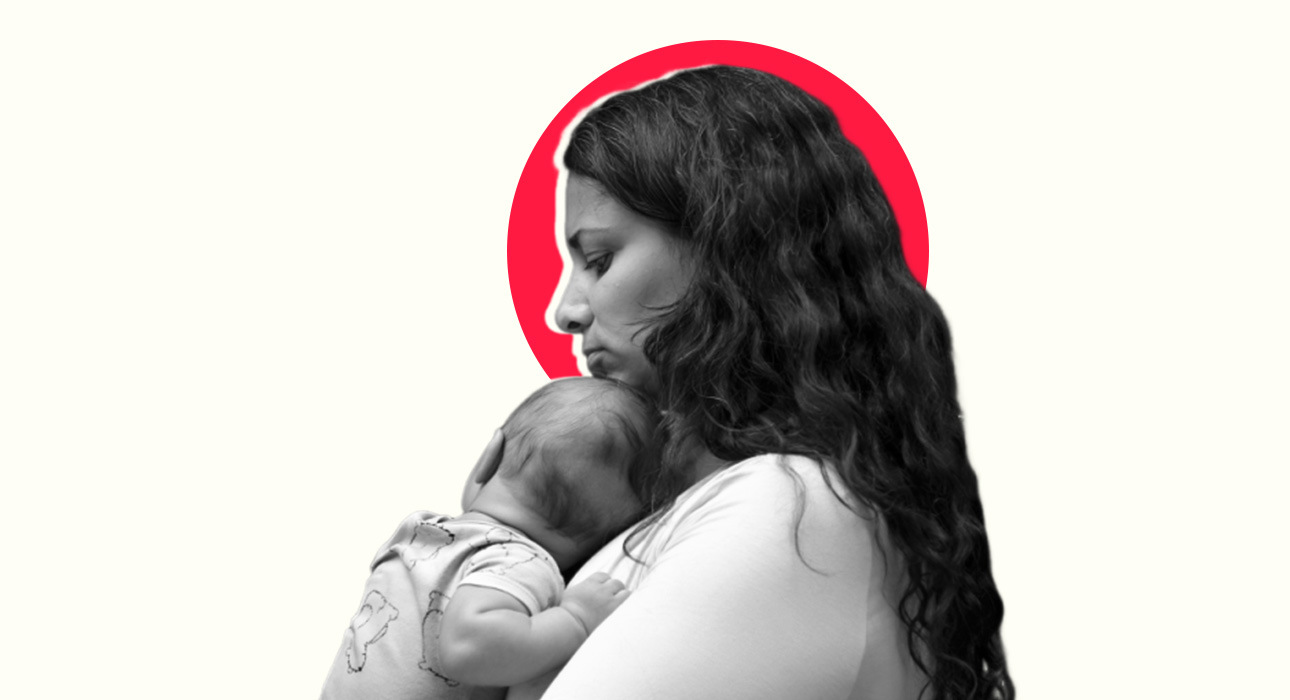
When a baby arrives, a flurry of relatives and friends are concerned with providing necessary care such as feeding schedules, vaccination charts, milestones, and school admissions; however, no one seems to ask the mother herself if she is emotionally surviving this new motherhood.
It has often been portrayed that an emotionally fulfilled mother will enjoy this role naturally; however, for some mothers, there may be a struggle to find that same level of fulfilment. A lot of mothers go through a rough period after they give birth to their children. They usually feel tired, anxious, depressed, isolated and sometimes have a sense of confusion regarding their identity. It’s a real struggle for many.
The World Health Organisation, or WHO, has some pretty clear numbers on this. They say about 13% of mothers who give birth will deal with some kind of mental health issue either during their pregnancy or right after. And looking at pregnant women specifically, the WHO also noted in 2024 that around 10% will experience some form of mental illness (WHO, 2024). Yet, in many family units, workplaces, and health care systems, the issue of maternal mental health has gone unrecognised until recently.
The Identity Shift After Motherhood
Motherhood’s most emotionally difficult change is rapid in one’s identity. Prior to becoming mothers, women have a career, routine, friendships, goals, or independence. However, after having children, life can completely change overnight. Body, sleep schedule, relationships and responsibilities will be completely different.
Consequently, many mothers mourn for their ‘old self’ in silence. Mourning doesn’t mean that mothers regret their role as a mother, but rather, they mourn the loss of their freedom, spontaneity, and uniqueness of self from pre-mother days. Research indicates that stress related to motherhood can occur as a result of what happens with one’s personal freedom, relationship dynamics and emotional adjustment (Kuipers et al., 2021). Plenty of times, people fail to fully understand all the feelings that arise in you when you become a mom.
Read More: Why Mothers need to build a Strong Relationship with their Children?
Emotional Fatigue and the Need to Be Perfect
It’s particularly stressful for mothers today, constantly feeling like they have to be absolutely perfect. That sort of stress can really exhaust you mentally and emotionally. A lot of that comes from social media, which often shows this ideal “perfect mom.” She’s supposed to be always calm and patient, super healthy, successful in her career, and somehow have endless energy for her children.
It’s no wonder many end up feeling completely worn out. The unrealistic expectations that come from being a mother, particularly the excessive amount of emotional energy that is spent, lead to emotional fatigue, burnout, sleep deprivation, caregiving responsibilities, and a lack of personal space, which ultimately combine to create chronic stress. Studies show that parenting stress has a significant negative impact on the mental health and emotional well-being of mothers (Rollè et al., 2017).
Why Self-Care Is Essential
A Mother’s Self-Care Is Often Misconstrued as Self-Indulgence/Luxury. Mothers’ Self-Care Is More Than Just That. A Mother Requires Adequate Sleep, Emotional Support, Access to Health Care, A Healthy Boundary, Proper Nutrition, And Time to Have an Identity Outside of Caregiving. Studies Show That Social Support and self-care behaviours correlate with the mental well-being and physical well-being of Mothers (Bord Et Al., 2025). A Mother Requires a Safe Place to Express Frustration, Sadness, Or Exhaustion Without the Fear of Being Considered A “Bad Mother” Or An “Ungrateful” Mother.
The Role of Families, Partners, and Workplaces
Maternal mental health goes beyond just being a problem for the mother; it is everybody’s responsibility to address. Mothers express experiencing stronger mental support and reduced loneliness when their spouses assist in both parenting and household duties. The stress associated with being a mom diminishes because of shared responsibilities (Rollè et al., 2017).
In addition, the organisation can lessen some of the stress that working women have to bear through flexitime, paid maternity leave, child care and psychological support. These minor adjustments, although not substantial, may be able to assist working women in achieving equilibrium between their professional and personal lives. The small changes, while not significant, can help working moms balance the demands of their job and home life (Bord et al., 2025).
Motherhood and Growth
Motherhood presents both emotional difficulty and opportunity for an individual to grow personally. Many mothers believe that becoming a parent has developed their ability to empathise, become emotionally aware, have greater patience, and become more resilient people (Nelson et al., 2014). However, for you to continue to grow as a person, growth mustn’t take place in silence through the process of suffering.
Additionally to developing your ability as a parent, self-care is a key component of maternal wellness (Bord et al., 2025). By doing things like going to counselling, playing in a group or doing something like yoga, meditation or doing an art/craft or hobby type activity, mothers reconnect with themselves outside of their role as parent in the family. Setting up boundaries with family as well as sharing the parenting duties with the other parent will help relieve some of the emotional and physical stress a mother feels when she becomes a parent (Rollè et al., 2017).
It takes time to adjust to becoming a parent, and no mother should feel like she needs to be the perfect mother at all times. When mothers make mistakes, are overwhelmed, or need to take time to rest, they are not bad mothers; they are simply human.
Read More: Mindfulness Meditation has a Positive Effect on Mental Health
Conclusion
The mental state of mothers is also equally important and should be given the same amount of importance as the physical well-being of the child. Instead of putting all the attention on the child, which society generally does, the emotional exhaustion, stress, feelings of isolation, and changes in identity faced by mothers are left unattended.
Support from Partner, family, work, community and counselling can help mothers receive the emotional backing they require and prevent feelings of isolation. Easy strategies like distributing chores, creating healthy boundaries, engaging in self-care, and having an emotional support system can make the process of parenthood simpler.
References +
Bord, S. (2024). Checking your browser – reCAPTCHA. Nih.gov.
https://pmc.ncbi.nlm.nih.gov/articles/PMC12345738/?utm_source=chatgpt.com Bord, S., Inchi, L., Paldi, Y., Baruch, R., Schwartz Shpiro, M., Ronen, S., Eizenberg, L., Gens, I., & Yaari, M. (2025). The Pivotal Role of Social Support, Self-Compassion and Self-Care in Predicting Physical and Mental Health Among Mothers of Young Children. Healthcare, 13(15), 1889. https://doi.org/10.3390/healthcare13151889
Chauhan, A., & Potdar, J. (2022). Maternal Mental Health During Pregnancy: A Critical Review. Cureus, 14(10). https://doi.org/10.7759/cureus.30656
Kuipers, Y. J., Beeck, E. van, Cijsouw, A., & van Gils, Y. (2021). The Impact of Motherhood on the Course of Women’s Psychological Well-being. Journal of Affective Disorders Reports, 6(6), 100216. https://doi.org/10.1016/j.jadr.2021.100216
Nelson, S. K. (2014). APA PsycNet. Psycnet.apa.org. https://psycnet.apa.org/record/2014-03896- 001
Nelson, S. K., Kushlev, K., & Lyubomirsky, S. (2014). The pains and pleasures of parenting: When, why, and how is parenthood associated with more or less well-being? Psychological Bulletin, 140(3), 846–895. https://doi.org/10.1037/a0035444
Rollè, L., Prino, L. E., Sechi, C., Vismara, L., Neri, E., Polizzi, C., Trovato, A., Volpi, B., Molgora, S., Fenaroli, V., Ierardi, E., Ferro, V., Lucarelli, L., Agostini, F., Tambelli, R., Saita, E., Riva Crugnola, C., & Brustia, P. (2017). Parenting Stress, Mental Health, Dyadic Adjustment: A Structural Equation Model. Frontiers in Psychology, 8. https://doi.org/10.3389/fpsyg.2017.00839
WHO. (2019). Perinatal mental health. Who.int. https://www.who.int/teams/mental-health-and-substance-use/promotion-prevention/perinatal-mental-health




Leave feedback about this