







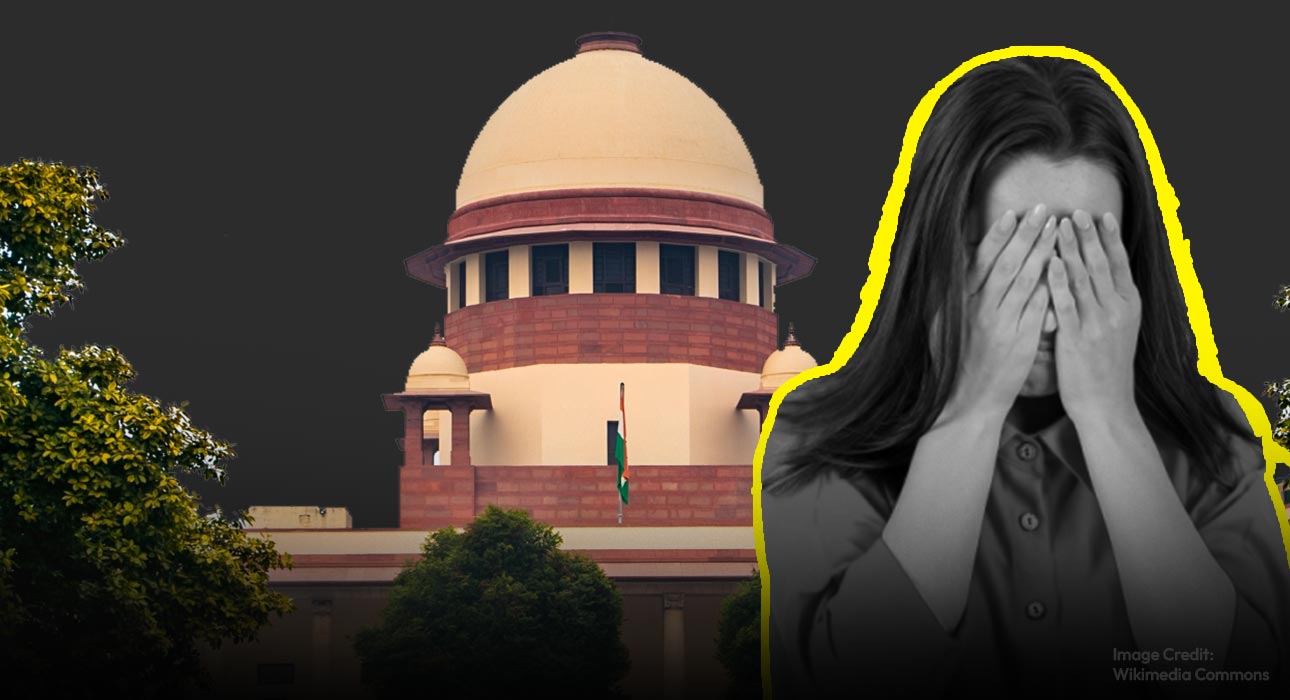
The Supreme Court of India has rejected a petition seeking a mandate for menstrual leave for female workers and students across the country. The court has stated that such a policy could inadvertently lead to discrimination against women in the hiring process. In the Indian scenario, now, at least, it is not ready for such a drastic step, while the attempt is to increase the female workforce in the field. While the economy needs maximum support from the citizens, such a step could hinder the growth of society.
The filing of a PIL
The Public Interest Litigation (PIL) was filed by Shailendra Mani Tripathi, an advocate and social activist whose central argument was that menstruation-related challenges, such as pain, nausea, dysmenorrhea and endometriosis, often create a biological disadvantage for females that needs to be addressed through a uniform national policy.
In his petition, advocate Shailendra argued that menstruation is a biological process that can cause significant physical and mental distress, making it difficult for many women to perform their duties effectively. Various studies have backed the same. The plea sought to bring India in line with several other countries and a few Indian states that have already implemented similar measures.
Read More: Menstrual Disorders and Their Impact on Mental Health
The Reasoning by the Court
The bench, led by Chief Justice of India D.Y. Chandrachud, emphasised that even though the issue of menstrual health is undeniably important, a judicial mandate might be counter productive that forcing employers to provide paid menstrual leave could make them hesitant to recruit women, leading to discrimination. It might have an impact on productivity or the additional administrative burden.
The court further noted that this is a matter of policy rather than pure law, highlighting the fact that the responsibility lies with the government to frame a model policy, rather than issuing a blank statement.
What is the current status of Menstrual Leave in India?
The concept of the menstrual cycle might be a stigma in Indian society, but the concept of menstrual leave is not entirely new to India. Despite the lack of a national mandate, various activists and social workers have been talking about the necessity of the rule, while various sectors have successfully implemented strategies to tackle it.
- Private Sector: Companies like Zomato, Swiggy, and Byju’s have already introduced voluntary menstrual leave policies, citing a commitment to employee well-being and a modern work culture.
- Government Sector: The government of Bihar has provided two days of paid menstrual leave per month to female employees since 1992.
The southern Indian state of Karnataka became the first in the country in 2025 to offer paid menstrual leave to all working women in formal jobs.
Kerala has recently announced menstrual leave for students in all the universities in the state.
Read More: Menopause and Mental Health: Understanding Hormone-Driven Mood Changes
Conclusion
As of today, the responsibility has been passed to the Ministry of Women and Child Development and indirectly specified that the decision needs to be delayed. The court suggested that the petitioners need to approach the central government to discuss the formulation of a national policy that balances the health needs of women along with the need for their contribution to the workforce. The court specified that though the health needs of females could not be ignored, the formation of law might create a gap between the demands of a job and the contribution of the workforce, indirectly leading to discrimination.
References +
Proposed Bill on menstrual leave in Karnataka put on the back burner – The Hindu https://share.google/aVczyPHDeAA8lKPdV
Kerala announces menstrual leave: Time to talk period | The Indian Express https://share.google/kMj7yfEdN3RIjX2oG
Karnataka becomes the first Indian state to offer menstrual leave to all working women https://share.google/tSRPQWhSUuUx8eo4V
https://thewire.in/law/supreme-court-manipur-hc-meitei-scheduled-tribes-list




Leave feedback about this