







When people learn that you hold degrees in psychology, their first question is often, “So … can you read minds?” This inquiry is sometimes made in jest, yet also stems from a sense of curiosity surrounding the field of psychology due to the enigma it presents to individuals who have no background knowledge of what is studied in the discipline. Individuals tend to have many misconceptions about psychotherapists being able to interpret spoken language and about psychology students being covertly evaluating everyone in the room at any given moment.
While psychologists can’t literally read minds, what does psychology tell us about what can help us ‘read’ the mind of another? The answer may be surprising, but as far as psychologists are concerned, human beings have a natural capability for reading minds that comes fairly close, without even knowing it, to what might be considered mind-reading.
Each of us, every day of our lives, and without even realising it, predicts what the other person is thinking, feels their emotions before they’ve spoken a word, and interprets their intentions through their body language. The name for the mental skills described above is the Theory of Mind (Premack & Woodruff, 1978). The Theory of Mind provides the basis for the invisible, shared social world of human beings.
Research indicates that our ability to discover how someone else is thinking or what another person is feeling occurs within two systems; one being rapid and instinctual, while the other operates slowly and rationally (Kahneman, 2011). Understanding these systems not only explains how we connect with others but also why misunderstandings, empathy, and social intuition exist at all.
The Everyday Art of “Mind Reading”
Picture seeing your buddy looking for their keys at the same spot they placed them earlier and knowing full well that someone picked them up. You immediately know why they are searching in that spot, as they are convinced the keys are still there. You didn’t consciously calculate this conclusion. Also, you simply understood their perspective.
The term “Theory of Mind” refers to the capacity of each individual to realise that other people’s beliefs, desires, emotions, and intentions are different from their own (Wellman, 1992). Having the “Theory of Mind” allows individuals to be able to guess the behaviours of others, the meaning of conversations with others, and to be able to interact with others in a relational manner. Sarcasm would not exist, jokes would not be successful, and all possibility of empathy would be lost in a lack of theory of mind; therefore, social interactions would feel strange and robotic if we did not have the theory of mind.
Ultimately, the theory of mind is what creates an authentic human connection versus just an act of communicating with another person. Psychologists have long believed that we develop this ability as one process during childhood. Now, studies reveal that there are two processes at work in our brain; these processes work together in tandem to comprehend other people.
Read More: The Role of Theory of Mind in Autism Spectrum Development
The Fast System: Implicit Theory of Mind
The first system works quietly and automatically. Psychologists call this the implicit Theory of Mind. Your social intuition the ability to pick up on the mood of a certain area before anyone else has spoken, and to notice when someone has an uneasy smile due to their reaction to something of yours. You do not consciously process this information; your brain has already processed the signals by the time you become aware of them. Research shows that even infants display early signs of this ability (Onishi & Baillargeon, 2005). Babies who cannot yet speak still anticipate actions based on another person’s perspective. Long before language develops, humans appear sensitive to others’ mental states.
Implicit Theory of Mind helps us
- follow conversational rhythm,
- interpret facial expressions,
- anticipate reactions,
- adjust behaviour automatically (Apperly & Butterfill, 2009).
Think about lowering your voice when someone looks tired or pausing when a listener seems confused. These responses happen effortlessly. Not every person can logically evaluate every single social interaction; otherwise, it would make life too tiring for them to want to continue living. This is why fast thinking uses mental shortcuts, because these allow us to think quickly. Unfortunately, fast thinking can be the cause of quick assumptions and misunderstandings. Our intuitive impressions are not always accurate — they are simply quick.
The Slow System: Explicit Theory of Mind
Let’s take another example. Your friend cancels at the last minute, so the first thing that comes into your mind is “I can’t believe you did that” (disappointment/irritation). After taking a minute, you think “Perhaps they’re just having a bad day” (compassion). Maybe something happened. That reflective reconsideration represents explicit Theory of Mind. Unlike the automatic system, explicit Theory of Mind involves conscious reasoning about mental states.
It allows us to explain behaviour, evaluate intentions, and reconsider first impressions. Children typically develop this ability around four to five years of age, when they can verbally understand that someone may act according to a false belief (Wellman, Cross, & Watson, 2001). At this stage, they are not just sensing perspectives — they are reasoning about them.
Explicit Theory of Mind enables complex social skills such as:
- understanding sarcasm and irony,
- resolving conflicts,
- moral reasoning,
- empathy through perspective-taking,
- interpreting hidden intentions.
Because it requires attention and cognitive effort, this system is especially useful during complicated or emotionally ambiguous situations.
Two Systems, One Social Brain
Psychologists describe the relationship between implicit and explicit Theory of Mind using a dual-process perspective, a broader theory suggesting that human thinking operates through two modes: a fast, intuitive system, and a slow, analytical system. In day-to-day interactions, we base our swift decisions about others upon our thoughts; sometimes we make assumptions based on our perception of other people and later decide that we were wrong. For instance, when meeting someone, you might feel they are open and friendly, or they may seem to you to be unfriendly and distant.
That reaction comes from implicit processing. Later, after conversation and reflection, your opinion might change. Explicit reasoning has stepped in. The vast majority of occasions on which they collaborate successfully. However, when exposed to stressors such as extreme fatigue, feelings of hopelessness, or high levels of emotional distress, the “fast” system tends to overwhelm the “slow” system; this leads to mistaking a person’s intention or perspective (even if one is very knowledgeable about emotion).
Growing Into Understanding Minds
For decades, psychologists believed children suddenly acquired Theory of Mind around age four because younger children failed certain reasoning tests(Wellman, Cross, & Watson, 2001). More recent studies conducted using eye-tracking technology and observational methods have found evidence to support this view: younger children (and even babies) have been found to exhibit implicit understanding of perspective-taking behaviour (e.g., by demonstrating the ability to comprehend another’s mental state intuitively) (Onishi & Baillargeon, 2005).
The primary distinction between children’s understanding of other people’s mental states can be found in the way in which they acquire that understanding. Implicit understanding occurs much sooner in development and serves as the foundation for automatic social responses, while explicit understanding develops much later in time and permits children to articulate and justify their prior intuitive social responses. Consequently, social understanding grows incrementally with time through an ongoing collaboration between intuition and thought. Social comprehension does not function like a light switch (e.g., turning on/off).
Read More: How the Cerebellum Shapes Children’s Empathy and Social Understanding
What Happens Inside the Brain
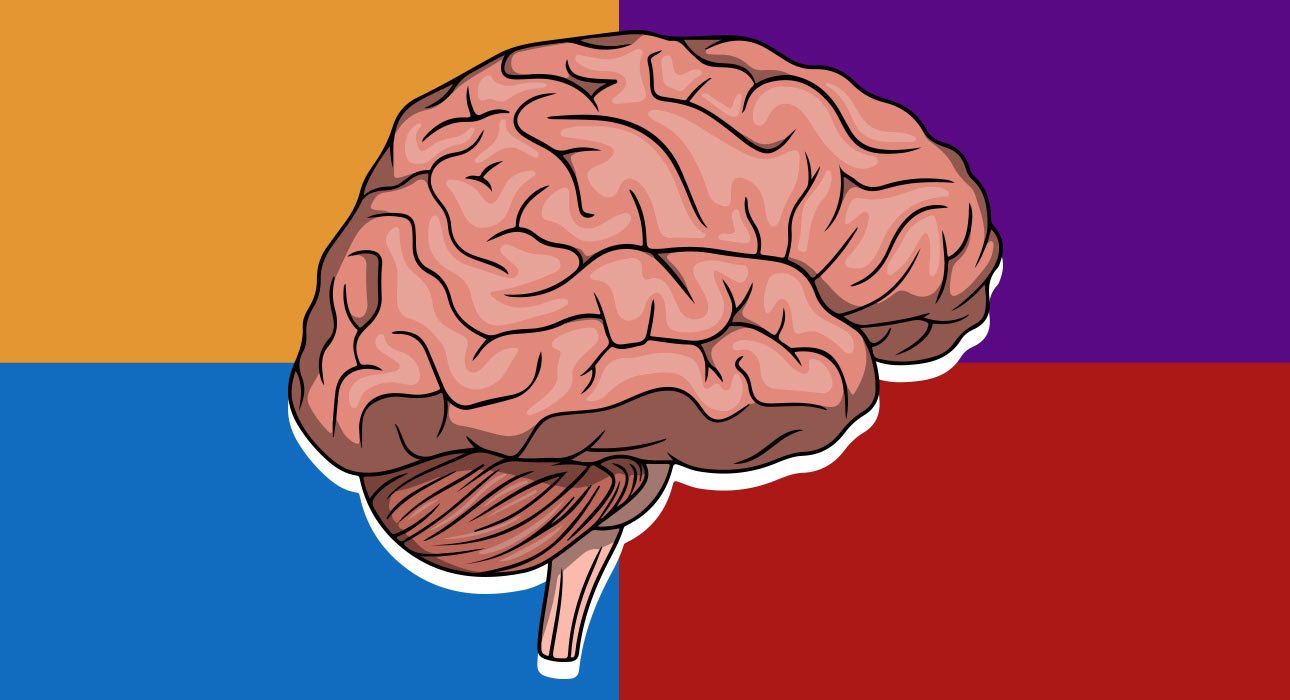
Neuroscience backs this two-system model. Automatic social understanding relies on brain areas related to emotions and social perceptions, allowing quick, automatic evaluation of gaze, facial expressions, and movements. Evaluation using reflective reason involves activating areas in the prefrontal cortex related to decision making and taking another person’s perspective (Frith & Frith, 2006). This separation explains a familiar experience: sometimes we feel something about a situation before we can logically explain why. Different brain systems are contributing different layers of understanding.
Why Misunderstandings Happen
Many everyday conflicts occur when implicit assumptions are not checked by explicit reasoning. We assume someone ignored us intentionally when they were distracted. We interpret silence as rejection instead of exhaustion. Our fast system fills gaps instantly, while our reflective system may arrive later, sometimes too late (Epley, 2014). Learning to pause and ask, “What else could this mean?” is essentially activating explicit Theory of Mind. Social maturity often involves balancing intuition with thoughtful reconsideration.
Theory of Mind in a Digital World
Modern communication adds new challenges. Text messages and online interactions remove tone, facial expressions, and immediate feedback, cues that implicit understanding depends on (Walther, 1996). Without these signals, misunderstandings increase. We must rely more on explicit reasoning to imagine perspectives we cannot directly perceive (Keysar, 2007). At the same time, overthinking every interaction can make communication feel artificial. Healthy social understanding requires balance, trusting intuition while remaining open to reflection.
Read More: Communication in the Digital World: Why Understanding Matters More Than Speed
The Quiet Superpower We All Share
Theory of Mind reveals something deeply human: connection depends on imagination. Every act of empathy involves stepping beyond our own perspective into someone else’s mental world. We are constantly interpreting thoughts, predicting feelings, and adjusting behaviour not perfectly, but remarkably well. Mind reading, it turns out, is not magic. It is psychology in action.
Conclusion
Maybe one day a laugh about mind-reading will come with a pause. For now, though, the reply stays mostly no – just less certain than before. Out of thin air, guesses about thoughts emerge – not magic, just people tuning into feelings and unspoken signals. A quiet look here, a pause there – these feed quick judgments about what someone might do next. Behind the scenes, minds blend gut feelings with split-second thinking. This silent dance runs most conversations without anyone noticing. Little by little, it stitches together how we connect.
Still, that skill has boundaries. First guesses might miss details or point the wrong way, so stepping back and seeing through another’s eyes matters just as much. What helps most is blending fast gut feelings with slower thinking – this mix leads to clearer, kinder insights. Yet even then, it does not always get things right. Now picture a world buzzing with screens, where nods and smiles fade into pixels here, staying balanced matters more than ever. To truly get someone else? It hinges not on having answers but on asking, feeling, noticing what lies outside your view. Mind reading isn’t sorcery – just an unspoken rhythm woven into how people link. It hums beneath words, shaping understanding without sound.
References +
- Apperly, I. A., & Butterfill, S. A. (2009). Do humans have two systems to track beliefs and belief-like states? Psychological Review, 116(4), 953–970. https://doi.org/10.1037/a0016923
- Epley, N. (2026). Welcome To Zscaler Directory Authentication. Stanford.edu. https://casbs.stanford.edu/mindwise-how-we-understand-what-others-think-believe-feel and-want
- Frith, C. D., & Frith, U. (2006). The Neural Basis of Mentalizing. Neuron, 50(4), 531–534. https://doi.org/10.1016/j.neuron.2006.05.001
- Keysar, B. (2007). Communication and miscommunication: The role of egocentric processes. Intercultural Pragmatics, 4(1). https://doi.org/10.1515/ip.2007.004
- Krämer, W. (2014). Kahneman, D. (2011): Thinking, Fast and Slow. ResearchGate; Springer Nature. https://www.researchgate.net/publication/257406325_Kahneman_D_2011_Thinking_Fas t_and_Slow
- Onishi, K. H., & Baillargeon, R. (2005). Do 15-Month-Old Infants Understand False Beliefs? Science, 308(5719), 255–258. https://doi.org/10.1126/science.1107621
- Premack, D., & Woodruff, G. (1978). Does the chimpanzee have a theory of mind? Behavioural and Brain Sciences, 1(4), 515–526. https://doi.org/10.1017/S0140525X00076512
- Walther, J. B. (1996). Computer-mediated communication: Impersonal, interpersonal, and hyperpersonal. Communication Research, 23(1), 1–43. https://www.researchgate.net/publication/284193126_Computer mediated_communication_Impersonal_interpersonal_and_hyperpersonal
- Wellman, H. M., Cross, D., & Watson, J. (2001). Meta-analysis of theory-of-mind development: The truth about false belief. Child Development, 72(3), 655–684. https://doi.org/10.1111/1467-8624.00304
- Wellman, H. M., Wellman, H. W. S. P. of P. H. M., & Wellman, H. J. (1990). The Child’s Theory of Mind. In PhilPapers. Bradford Books. https://philpapers.org/rec/WELTCT-2



Leave feedback about this