







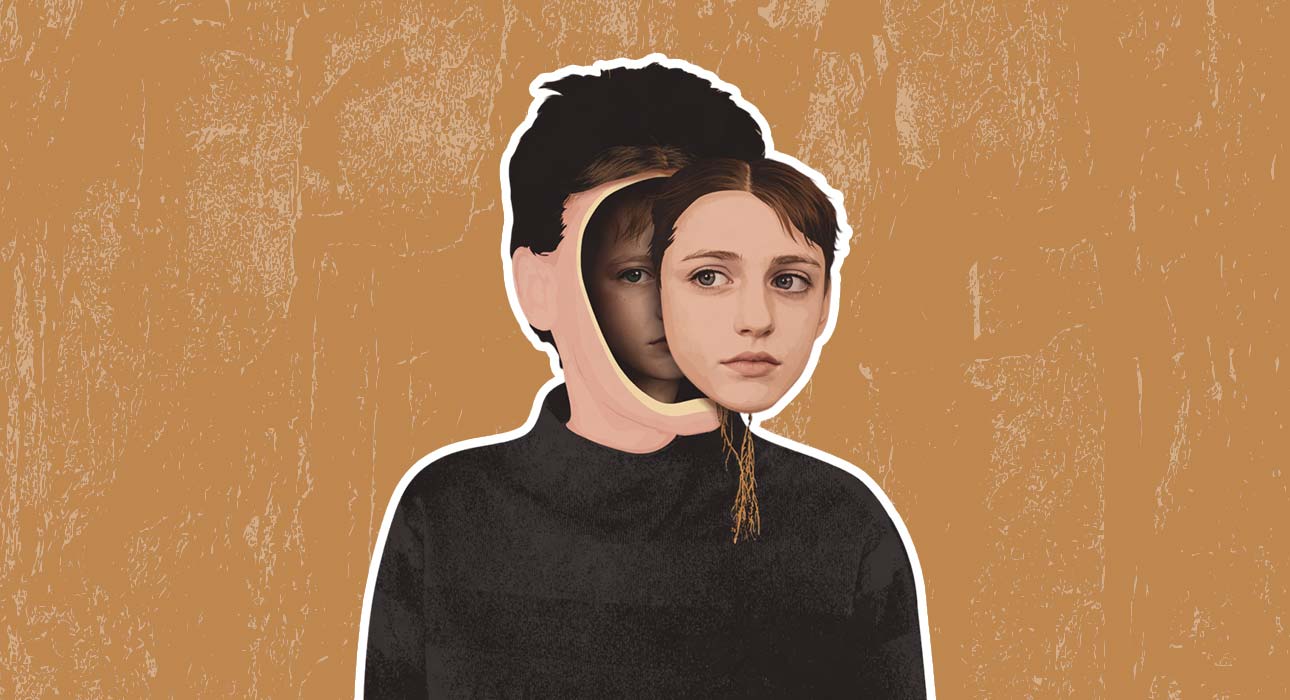
Not all wounds are visible. Some just sit there quietly. They affect the way a child thinks about themselves and how they love and protect themselves. When a child goes through something like being neglected or abused, it does not just go away with time. It can actually change who they are as a person. Narcissism is not about loving yourself too much. Often, it is like a wall that people build around themselves because they are really hurt and do not feel safe. This article is about how things that happen to children can make them grow up to be narcissistic. Let’s get to know more about narcissism.
Understanding Narcissism
Narcissism is something that people can have in amounts. When it is healthy, narcissism can help people feel good about themselves and want to achieve things. When it is not healthy, it can be a problem. This is known as Narcissistic Personality Disorder or NPD in short. (5th ed., text rev.; DSM-5-TR)People with NPD often think that they are better than others; they need people to admire them all the time. They do not care about other people’s feelings. (American Psychiatric Association book,2022).
When people seem full of themselves, they are actually really hurting inside. Researchers say that narcissism is like a shield that people use to protect themselves from feeling low about themselves. They feel ashamed, like they are not good enough. The narcissism helps them cover that up. (Pincus and Lukowitsky,2010).
The Roots: How Trauma Shapes the Self
1. Emotional Neglect: The Invisible Child
Imagine a child who runs with excitement to show their drawing only to be told, “Not now”. This kind of thing happens a lot to this child. Over time, the child starts to feel like what is going on inside of them does not matter to anyone. The child needs people to pay attention to them and say things like “wow !!! great drawing” or “I am so proud of you”. This is what Heinz Kohut calls “mirroring”. It is when people are kind and understanding toward the child. The child needs this to feel like they are a person. If the people taking care of the child do not do this, the child might start to think they are better than everyone. (Kohut, 1971)
For example, there is a boy who never gets hugs or praise from his family. When he grows up, he is always trying to get people at work to say things about him. He makes a deal about the things he does and gets very upset when people criticise him. It seems like he is full of himself. He is just trying to feel seen. (Kohut, 1971) Some studies have looked at this. They found that when parents are not warm and loving, their kids are more likely to grow up and think they are better than everyone else. (Brummelman et al., 2015).
Read More: 8 Signs of Emotional Neglect in Family
2. Overvaluation: The Golden Child
Brummelman and colleagues (2015) argue that overvaluation is distinct from warmth. Surprisingly, narcissism can also grow in environments where people get a lot of praise. When parents say, “You are better than others ” without teaching kids to care about others or set goals, kids may start to think they deserve special treatment. This can happen when kids are constantly told they are superior to others. (Brummelman et al., 2015).
For example, a girl who is always told she is “better than everyone” may find it hard to deal with failure. Any setback can threaten her sense of self, making her defensive or shift the blame to someone. When parents over-praise their kids but are inconsistent with their emotions, it can create self-esteem that looks strong on the outside but is unstable on the other side. Kids with this kind of self-esteem struggle with failures and setbacks. They become defensive. Blame others when things don’t go as expected. This can make it hard for them to build healthy relationships with others.
3. Abuse and Humiliation: Shame as a Core Wound
Kids who go through emotional or verbal abuse often feel bad about themselves. This feeling of negativity tells them that they are not good enough. Sometimes people who feel this way try to make themselves feel better by thinking they are actually great. Studies show that kids who are emotionally abused when they are young grow up to have a type of narcissism that makes them very sensitive and want to be alone.
For example, a kid who is often made fun of by a parent grows up to be an adult who cannot handle it when people criticise them. Even if someone is just trying to help them by giving them some feedback, they get really angry. This is because they are trying to protect themselves from feeling the kind of humiliation that they felt when they were a kid. Otto Kernberg (1975)
Read More: Why Some Parents Fear Their Children: The Psychology of Child-to-Parent Abuse
Attachment and the Development of Narcissistic Patterns
John Bowlby came up with something called attachment theory. This theory says that the way our caregivers treat us when we are young affects how we think about ourselves and other people. (John Bowlby,1969).
- If someone has an attachment, they have a hard time getting close to people, and they think they do not need anyone else. This is something we see in people with narcissism.
- If someone has an attachment, they will always be looking for validation from other people. This is often seen in people with narcissism.
When the people taking care of us are not consistent. Sometimes they are nice to us. Sometimes they are not. We learn that love is not always reliable. Some people use behaviours to make themselves feel safer and more in control, like narcissism is a way to protect themselves.
The Two Faces of Narcissism
Research by Pincus and Lukowitsky (2010) highlights two distinct phenotypic expressions:
Grandiose Narcissism
- They think they are in charge
- They have a lot of charm
- They feel like they deserve treatment
- They seem confident
Vulnerable Narcissism
- They get hurt easily
- They keep to themselves
- They feel insecure on the inside
- They often feel depressed
Pincus and Lukowitsky say that both types of narcissism have a deep, down vulnerability, but they deal with it in different ways. (Pincus and Lukowitsky, 2010)
The Role of Shame and Self-Fragmentation
Trauma really messes with how we see ourselves. When growing up with a sense of who we are, a kid who has been through trauma might go back and forth between thinking they are amazing and thinking they are completely useless.
- They might think, “I am the superior”
- Then they might think, “I am not good at all”
This “back and forth” serves as a defensive manoeuvre to manage overwhelming feelings of toxic shame. Otto Kernberg (1975) identifies this as “Splitting,” where the individual is unable to synthesise the “good” and “bad” aspects of themselves or others into a whole. This fragmentation makes it nearly impossible to maintain stable relationships.
Healing and Therapeutic Implications
Understanding narcissism in a way helps. When we look at narcissism through the lens of trauma, we start to feel curious about not just judging. We still need to deal with behaviours, but knowing where they come from can help us find better solutions. Some therapy methods that can help include:
- Psychodynamic therapy, which looks at relationships that may have hurt
- Schema therapy, which helps change negative thoughts about oneself. (Young et al., 2003).
- Therapies that focus on trauma
- Building healthy relationships
When we show kindness and set clear limits, people can start to feel good about themselves without needing to be defensive.
Conclusion
Childhood trauma does not always mean someone will become a person with narcissistic traits. Other things like the person’s genetics, their temperament and the people around them also play a role in how they develop. Studies have shown that when kids are neglected, abused, humiliated or treated like they are perfect, it can be a big problem for them later on.
At its core, being a narcissist is not really about loving ourselves much; it is more about trying to protect ourselves from feeling really bad about ourselves. Sometimes people who seem confident may actually be hiding the fact that they felt ignored, scared or unimportant when they were kids. Understanding why someone might be a narcissist does not mean we should excuse their behaviour. It can help us see things from a different perspective and feel more sorry for them.
References +
American Psychiatric Association. (2022). Diagnostic and statistical manual of mental disorders (5th ed., text rev.). https://doi.org/10.1176/appi.books.9780890425787
Bowlby, J. (1969). Attachment and loss: Vol. 1. Attachment. Basic Books.
Brummelman, E., Thomaes, S., Nelemans, S. A., Orobio de Castro, B., Overbeek, G., & Bushman, B. J. (2015). Origins of narcissism in children. Proceedings of the National Academy of Sciences, 112(12), 3659–3662. https://doi.org/10.1073/pnas.1420870112
Kernberg, O. F. (1975). Borderline conditions and pathological narcissism. Jason Aronson.
Kohut, H. (1971). The analysis of the self: A systematic approach to the psychoanalytic treatment of narcissistic personality disorders. International Universities Press.
Pincus, A. L., & Lukowitsky, M. R. (2010). Pathological narcissism and narcissistic personality disorder. Annual Review of Clinical Psychology, 6, 421–446. https://doi.org/10.1146/annurev.clinpsy.121208.131215
Vygotsky, L. S. (1978). Mind in society: The development of higher psychological processes. Harvard University Press.
Winnicott, D. W. (1960). Ego distortion in terms of true and false self. In The maturational processes and the facilitating environment: Studies in the theory of emotional development (pp. 140–152). International Universities Press.
Young, J. E., Klosko, J. S., & Weishaar, M. E. (2003). Schema therapy: A practitioner’s guide. Guilford Press.




Leave feedback about this