







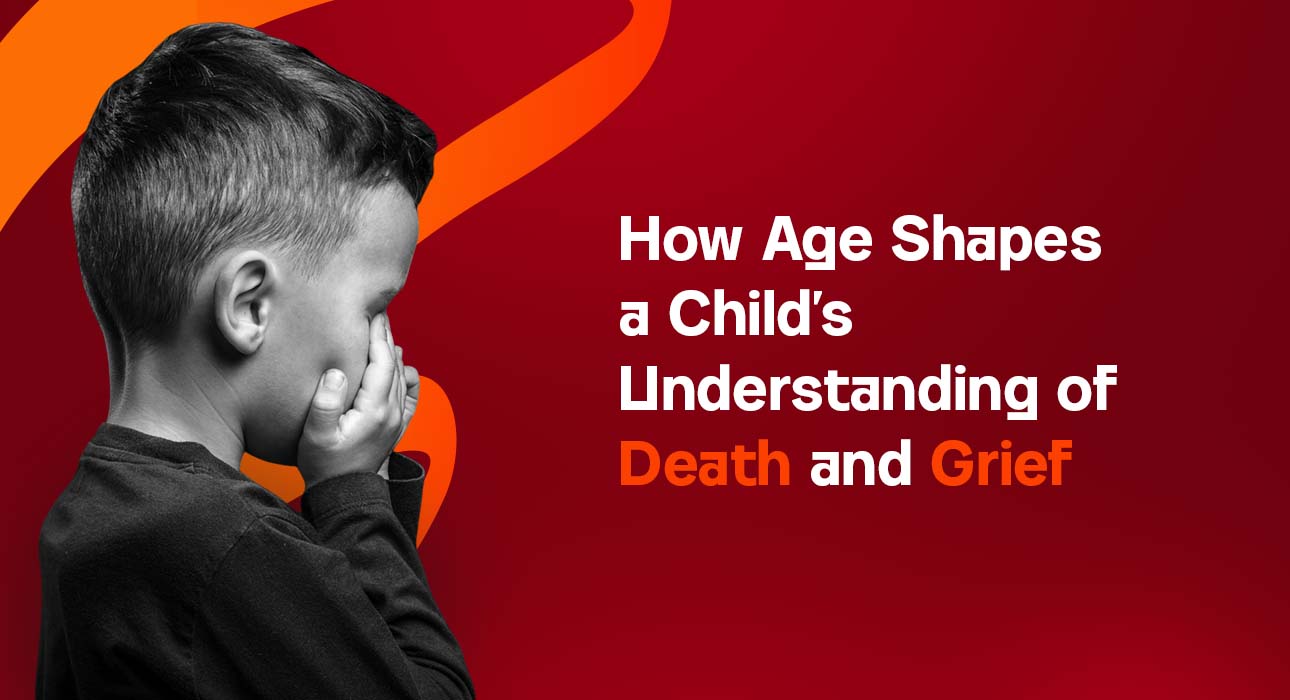
All of us have seen the deaths of our dear ones at some point in our lives (American Psychological Association, 2020). Some might have seen their family members dying, some may have seen their close friends, and others may have seen people not very close to them, yet the death of someone makes all of us gloomy (Centres for Disease Control and Prevention, 2022). The support from elders and parents in such moments of sadness and stress is of actual help to children while dealing with the deaths of their dear ones (National Institute of Mental Health, 2021).
Why Age Matters in Grief Understanding
Age is one of the important factors in understanding grief because our age and life experiences decide how we respond to death and moments of grief or sadness (Healthline, 2022). Children respond to death based on their level of comprehension and understanding (Verywell Mind, 2023). In early years, they may only feel the absence of someone, but as they grow with time, they may realise the real importance of them and miss them for not being there for them.
According to Jean Piaget’s idea, children’s perceptions of death evolve as their cognitive capacities do. While older children progressively come to comprehend death as final and irreversible, younger toddlers struggle with abstract concepts like permanence (Piaget, 1952).
Infancy and Toddlerhood: Sensing Absence, Not Death
Infants and toddlers may see death as the absence of their dear ones, not as a concept (Healthline, 2022). They only feel that someone who was once a part of their life is no longer there. They do not sense the real concept of death and expect that they will come back and see death as a temporary phenomenon.
Early Childhood (Ages 3–5): Death as Temporary
Early childhood may respond to death as a temporary absence and not as a concept (Healthline, 2022). Children between the ages of three and five may see death as a travel or sleep that is a temporary phase and will end soon (Verywell Mind, 2023). They see death as reversible (Silverman & Worden, 2017). The content they watch on TV or phones influences their view about death (American Psychological Association, 2020).
Children at this age are in the preoperational stage, which is characterised by magical thinking, according to Piaget. This clarifies why people could think that death is transient or reversible.
Middle Childhood (Ages 6–9): Learning Finality
In middle childhood, from six to nine years of age, children understand the reality of death (Healthline, 2022). They understand that those who die will not come back (Verywell Mind, 2023). They may ask questions about what will happen in the afterlife. Children of this age more openly ask questions and discuss with their elders about the reality of death. They also discuss it with friends to share the burden (HealthyChildren.org, 2023). Children start to intellectually comprehend that death is permanent as they go into Piaget’s concrete operational stage, but explanations should still be straightforward.
Late Childhood (Ages 10–12): Emotional Depth Increases
At the ages of 10 and 12, children realise that death is permanent and irreversible. Their emotional depth increases, and they begin to realise they will never see them again. They also develop a fear in them that they will lose other people as well. It traumatises them, and they feel it with intensity that their loved ones are not around them. Erikson pointed out that a child’s emotional stability and self-assurance may be impacted by loss at this point, therefore adult reassurance is particularly crucial.
Adolescence (Ages 13–18): Complex and Personal Grief
During adolescence, aged from 13 to 18, they understand death like adults (Healthline, 2022). They understand the grief of losing someone and become even more sad after seeing others losing dear ones or losing their own dear ones (Worden, 2018). Children of this age understand the pain of others and help them overcome this pain (American Psychological Association, 2020). Yet they also need someone behind them who can listen to them as well (National Institute of Mental Health, 2021). This helps in easing stress and anxiety (Verywell Mind, 2023). Adolescent grief can affect the development of one’s identity. Adolescents who get supportive listening are better able to manage their emotions while processing loss.
Read More: Outgrowing My Closest Friend: A Silent Grief
Cultural and Family Influences on Grief
Culture plays a crucial role in response to deaths (American Psychological Association, 2020). Some cultures may encourage open grief and mourning (Worden, 2018). People may cry aloud and show that they are sad because of the loss, while others may encourage silent endurance, as for them it shows strength (Worden, 2018). Therefore, everyone’s perception of death is influenced by their own culture and society.
Read More: Death Across Cultures and What We Can Learn from Them
How Adults Can Support Healthy Grieving
Adults play a crucial role in supporting the children who have lost a dear one (HealthyChildren.org, 2023). They can help them heal and overcome the trauma. They encourage open debate about it and help them ease their burden. By using the ideas of Piaget and Erikson, adults may discuss death in ways that are age appropriate and promote more positive grieving reactions.
When Extra Support Is Needed
Feeling grief after losing someone dear is normal (American Psychological Association, 2020). In some cases, children may suffer from extreme depression and trauma. In such a case, it is mandatory to consult a psychologist and share with them. Seeking professional advice will help them reduce stress and anxiety.
Read More: Cultural Mourning and Grief: How Rituals Help Us Heal and Adapt After Loss
Conclusion: Seeing Grief Through Growing Minds
Thus, death is a concept that children develop an understanding of over time. Life experiences and knowledge help them gain a deeper understanding of death. With time, children realise that it’s not only the absence of someone, but it’s all the life associated with that person that is getting disturbed. They need support and help from their close family members who can counsel them and ensure their support so that they will not feel their absence. It’s reassuring them repeatedly that they will be there for them in times of need. Although it can never replace them, it helps them ease the pain they are bearing and feel less depressed.
References +
American Psychological Association. (2020). Grief and loss. https://www.apa.org/topics/grief
Centres for Disease Control and Prevention. (2022).Coping with grief and loss. https://www.cdc.gov/mentalhealth/stress-coping/grief-loss
Healthline. (2022). How children understand death at different ages.
https://www.healthline.com/health/childrens-health/how-children-understand-death
HealthyChildren.org. (2023). Helping children cope with death. American Academy of Paediatrics. https://www.healthychildren.org
National Institute of Mental Health. (2021). Coping with grief.
https://www.nimh.nih.gov/health/topics/grief-and-loss
Silverman, P. R., & Worden, J. W. (2017). Children’s reactions to the death of a parent. Guilford Press.
Verywell Mind. (2023). How children understand death. https://www.verywellmind.com/how children-understand-death
Worden, J. W. (2018). Grief counselling and grief therapy: A handbook for the mental health practitioner (5th ed.). Springer Publishing Company.




Leave feedback about this