







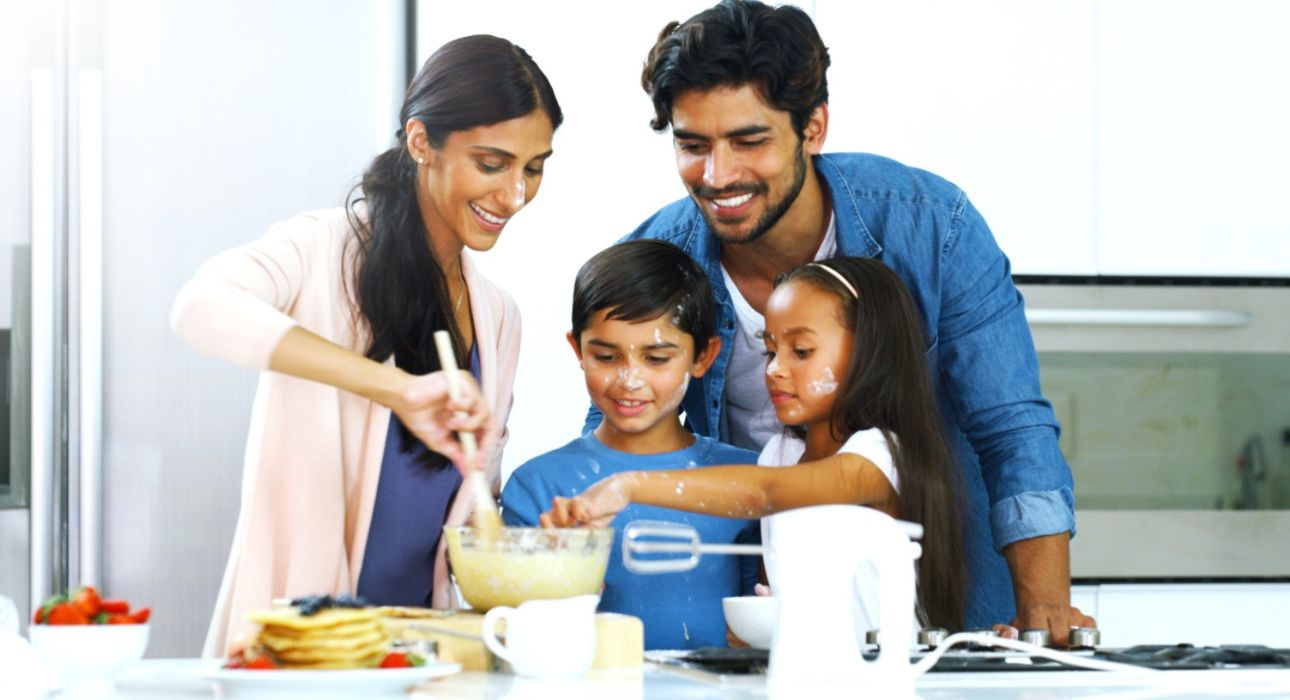
Adolescence is, famously, a season of separation: closed bedroom doors, texts with “k”s, and a world of emotions that is radically out of bounds to the grown-ups who once helped raise them. But beneath that popularised picture of disconnection, another, more subtle spectacle may well be occurring. Many teenagers, after a phase of pushing away to stake a claim to independence, will swing back toward their parents and re-establish a connection on some highly innovative, highly personalised terms. This is not a re-establishment of childhood connection, with things back to normal. This is something else.
This article will discuss how teenagers and their parents rebuild their closeness during their teens by using theories from Developmental Psychology, Family Therapy studies, and Emotional Socialisation studies. All mechanisms and processes are explained, and concrete instances are provided to show how new intimacy is formed.
Why “pull away” can so often become “pull together”
It’s helpful to begin with thoughts of developmental trajectory. There is a separation required in adolescence as part of developing independence. Simultaneously, there is a need to preserve a level of emotional involvement so as not to abandon youth (Laursen & Collins, 2009). There is thus an ongoing tension in adolescence resembling push-and-pull. It is logical for youth to “push away” as part of testing boundaries. It is also logical in “pulling back” as part of coming on new terms.
Developmental psychologists term this process as ‘negotiation of autonomy versus relatedness.’ Effective relationships maintain this equilibrium; adolescents feel both autonomous and loved (Laursen & Collins, 2009). More contemporary evidence now demonstrates the saliency of ‘timing’ and how maintaining intimacy between parents and their offspring, even with diminished intensity in early adolescence, positively affects adjustment difficulties in later adolescence (Hochgraf et al., 2021). Distance doesn’t have to mean disengagement if “micro” connections remain to indicate availability.
Autonomy-support: the strange glue of modern intimacy
Reestablishing intimacy among teens is achieved through autonomy negotiations, not through fear of parents, but through a shift in the parents’ identity. By allowing autonomy (listening, giving a choice, recognition of one’s point of view) with teens, teens are encouraged and feel respected, and eventually, the teen is encouraged to open up again emotionally (Chen, Waaiwalt, & Powers, 2014; Teuber, 2021). Autonomy support does not mean extreme, strict parenting; it is “I trust your judgment, and I’m here with you.”
Research has shown the impact of autonomy-supportive behaviours such as soliciting input, explaining the reasons behind the rules, and taking feelings into account. “Youth who feel higher levels of autonomy support experience enhanced levels of intrinsic motivation, overall affective well-being, and parental relationship quality,” according to Chen et al. (2014). Far from parental control pushing the teenager into secrecy, autonomy support makes way for cooperation, and cooperation is where the seeds for intimacy are planted.
Read More: Adolescent Bedrooms: A Psychological Tug-of-War Between Parents and Teenagers
Emotion Coaching: Teaching Teens How To Use Feelings To Communicate Them
Highly influential is emotion socialisation, or the role of emotion-focused parenting. Parents who engage in “emotion coaching” validate, label, and facilitate problem-solving; their children become better at emotion regulation and at providing emotional support (Gottman et al., 1996; Lobo et al., 2021). Most important is the finding that emotion coaching is a process in which children not only learn from their parents, but from adolescence onwards, they begin to model their own ways of handling emotion towards their parents, especially when their parents acknowledge their own vulnerability.
This also helps to explain why recent research clearly shows the effectiveness of the work: “Parent emotion coaching is shown to decrease adolescent symptoms of hyperarousal and increase affection” (Lobo et al., 2021). In addition to this kind of intervention study, clearly showing improved family atmosphere changes when the parent acquires this skill through some form of therapy or training (England-Mason et al., 2023). Which means the rebuilding of intimacy may not necessarily have to consist of some grand romantic gesture. It can instead involve understanding each other’s emotional language.
Read More: Parenting Through Adolescence: Understanding Parents’ Emotional Struggles
Rituals, Routines, and Micro-Moments
There’s no need for monumental conversation. Often, intimacy develops in small, repeatable rituals, or “micro-rituals,” that provide elements of safety. Sunday parathas, five minutes of ‘How was your day?’ on the way to school, having a playlist, or transmitting memes late at night can serve this purpose. These rituals take on particular significance because teens value independence; participation in rituals should be voluntary rather than obligatory, with adolescents who place great importance on freedom and autonomy.
The role of these daily routines in protecting against issues in relationships is also stressed by researchers. The interpersonal and social rhythm therapy, which was actually developed for people with mood disorders, is mentioned as a way in which the stabilisation of daily routines enhances relationships and the regulation of emotions as well (Frank et al., 2005). Every family’s daily routine of meal times, bedtime check-ins, or “no-device dinners” offers chances to re-establish relationships in a low-risk manner.
Technology as a bridge, not a barrier
It may be all too easy to lay the blame for the distance between the generations on the screen. But the truth is that digital communication may prove to be remarkable. Adolescents may feel more comfortable revealing something through text or social media communication before they are willing to do so in person; digital communication allows them to experiment with being vulnerable in a lower-stakes exchange (Coyne et al., 2022). Meme messages, voice messages, or video messages may now act as an ‘I was thinking about you’ communication rather than a lengthy conversation.
However, the degree of the technological effect is dependent upon the tone and context. For instance, if digital talk displaces face-to-face work of emotions, these effects could restrict their complexity. But technology may augment these emotions by adding them to the preexisting offline rituals and the availability of parents.
Repair, apology, and the new rules of accountability
A third means by which adolescents can rebuild intimacy is through modelling parental repair attempts. “When parents can say ‘I owe you an apology’ and make changes, it sends a message to adolescents of a trustworthy and fair relationship.” A targeted strategy would be crucial at this age, as adolescents are becoming increasingly attuned to a sense of justice.
In research studies dealing with family therapy, it has been found that using repair strategies such as learning how to issue apologies, learning how to diffuse conflicts, and learning how to reestablish trust can increase long-term levels of intimacy. What’s more, teens are frequently able to repair things by themselves. When a teen says, “I’m sorry I snapped, can we try again?” it is an indicator of maturity and letting the other person feel vulnerable too. Because of that, micro-repairs help construct an atmosphere in which both members feel free to fail and are free to forgive.
Role Models or Co-Creators? By Viewing Adolescents as Emotional Teachers
They reestablish relationship intimacy not only through receiving from their parents but also through instruction on new practices. Contemporary adolescents can now play the role of cultural interpreters like for example, of technology, social norms, and mental-health discourse. It is empowering and can sometimes humble parents when teenagers disseminate information on apps for meditating, articles about mental wellness, or strategies for discussing emotions because now parent-as-expert becomes parent-as-learner. Sometimes these adolescents can now help draw closer those same parents when the relationship becomes one of mutual enlightenment.
Autonomy-supportive parenting profiles have been found to have positive impacts on the levels of bidirectional influence between the parent and the teenager. This enhances positive outcomes for the family’s functionality and well-being (Teuber et al., 2021)
Read More: Why Parents Struggle with Children’s Autonomy: Understanding Empathy Gaps
The payoff: a new intimacy, durable and flexible
When adolescents and parents engage in these kinds of relational work, their intimacies tend to be stronger than their childhood relationships. Because this new intimacy is established on respect, autonomous negotiation, rituals of communication, and relationship-enhancing skills that can be used at various stages of life. An important thing about this new intimacy is that it is flexible. It can work with boundaries, with changing social contexts, and with attempts to fix rather than be perfect.
Conclusion
Adolescence is not a psychological clean slate that you can just read and understand. It’s a long, ongoing process that includes negotiation, in which both distance and closeness are interwoven. It is an involved and lengthy process that involves negotiation, in which both distance and closeness are interwoven. Rediscovering intimacy in new ways is an involving process. Families need to rely on daily rituals, master the language that expresses their feelings, and redefine roles so that both autonomy and intimacy are possible.
The take-home messages are clear: Support autonomy, regulate your feelings, go along with the rituals and monitor therapy. But it is up to parents and teens to change and also attempt to be only partially available. You may be a parent, or perhaps a teen, or maybe a little bit of both at this stage. Now, take a moment to think about perhaps the next small experiment, perhaps something that might help build this bridge. Maybe it is a shared playlist, one honest sentence, and one five-minute walk.
Reference +
Chen, B., Van Petegem, S., Soenens, B., Vansteenkiste, M., & Ryan, R. M. (2014). Does parental autonomy support relate to adolescents’ academic motivation? Journal of Research on Adolescence, 24(4), 716–729.
Gottman, J. M., Katz, L. F., & Hooven, C. (1996). Parental meta-emotion philosophy and the emotional life of families: Theoretical models and preliminary data. Journal of Family Psychology, 10(3), 243–268. (See summary at UNC repository:
Hochgraf AK, Fosco GM, Lanza ST, McHale SM. Developmental timing of parent-youth intimacy as a protective factor for adolescent adjustment problems. J Fam Psychol. 2021 Oct;35(7):916-926. doi: 10.1037/fam0000864. Epub 2021 May 6. PMID: 33956469; PMCID: PMC8478700.
Laursen, B., & Collins, W. A. (2009). Parent–child relationships during adolescence. In Handbook of Adolescent Psychology (pp. 3–42). Wiley.
Lobo FM, Lunkenheimer E, Lucas-Thompson RG, Seiter NS. Parental Emotion Coaching Moderates the Effects of Family Stress on Internalising Symptoms in Middle Childhood and Adolescence. Soc Dev. 2021 Nov;30(4):1023-1039. doi: 10.1111/sode.12519. Epub 2021 Jul 12. PMID: 36158116; PMCID: PMC9496639.
Teuber Z, Tang X, Sielemann L, Otterpohl N, Wild E. Autonomy-related Parenting Profiles and their Effects on Adolescents’ Academic and Psychological Development: A Longitudinal Person-oriented Analysis. J Youth Adolesc. 2022 Jul;51(7):1333-1353. doi: 10.1007/s10964-021-01538-5. Epub 2021 Nov 22. PMID: 34807340; PMCID: PMC9135772.





Leave feedback about this