“Everyone is a little ADHD these days.”
Everyone uses the term “ADHD” very casually when a person cannot focus in a lecture, forgets where they had put their phone, or becomes distracted while doing something. It has become part of everyday conversations and gets used widely in social media, because of which its meaning is often reduced to simple moments of inattentiveness or loss of focus. By doing so, we risk overlooking the real challenges faced by people who actually live with the condition. Many individuals with ADHD grow up hearing things like “why don’t you just focus”, “Pay attention”, “Try harder”, “Be more organised”; because of this repeated criticism, constantly they may lose self-esteem and develop feelings of inadequacy. For some, the question “why don’t you pay attention?” may gradually transform into the belief “Maybe I’m just reckless.”
Attention-Deficit/Hyperactivity Disorder
ADHD is one of the most common neurodevelopmental disorders; it affects approximately 7-9% children worldwide, and adults also face the symptoms (Polanczyk et al., 2007). But somehow it remains widely misunderstood. Children with ADHD are often called lazy, careless and made fun of for their constant movements. Adults also have to face the criticism, they are viewed as irresponsible, unmotivated or lacking discipline. The situation is worse for girls because they are more likely to show symptoms like inattentiveness than hyperactivity, thus making them easier to overlook, and the diagnosis gets delayed. According to the data, approximately 11.7% of boys and only 5.7% of girls have received an ADHD diagnosis, which means boys are nearly twice as likely to receive an ADHD diagnosis as girls (CDC, 2022)
According to the American Psychiatric Association (APA, 2013), Attention-Deficit/Hyperactivity Disorder (ADHD) is a neurodevelopmental disorder characterised by persistent patterns of inattention and/or hyperactivity-impulsivity that interfere with daily functioning. However, modern research suggests that ADHD is not simply an inability or deficit of attention but rather difficulty in self-regulation and executive functioning (Barkley, 1997). This article will try to explain executive functions and how they are affected because of ADHD across different stages, and hopefully grow empathy towards people with ADHD and develop interventions that can promote inclusion, which is essential for moving beyond misunderstanding and toward meaningful support.
Read More: Inside the ADHD Brain: A Neuroscientific Perspective
Executive Functioning: Why the Brain’s Manager Struggles?
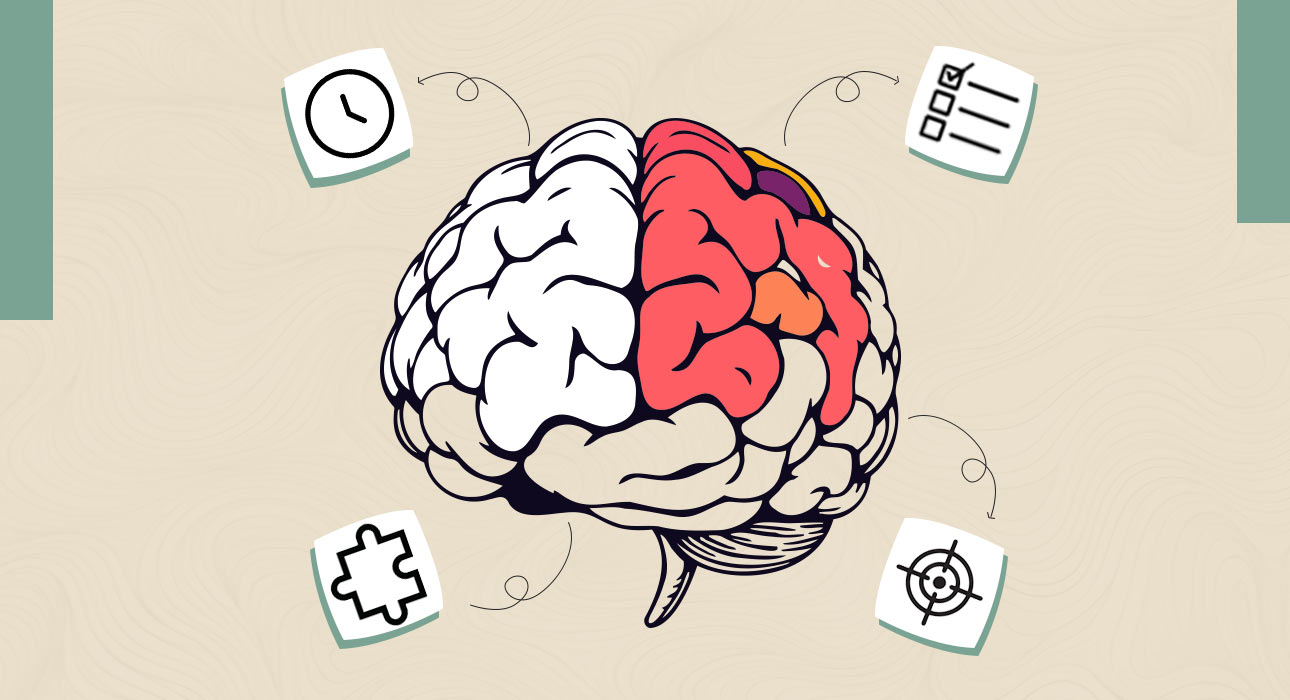
To understand what executive functioning is, think of it as the manager of the brain. Just like a manager in a company who plans things, sets priorities, keeps track of everything, and manages the emotions of a team similarly, the brain’s executive system handles all the mental skills we need to get things done. These skills include working memory that holds information in mind to use later, inhibitory control, which stops you from acting on the first thought, cognitive flexibility that helps in adjusting your thinking when there is change, planning and organisation, self-monitoring, and emotional regulation responsible for managing how you feel, so it does not affect your behaviour.
Psychologist Russell Barkley (1997), one of the most respected researchers in the field, argues that ADHD is fundamentally a disorder of behavioural inhibition; in simple terms, the brain cannot press the “pause button” before reacting. This failure to pause then disrupts all the downstream executive functions, working memory, self-regulation, planning, and organisation. People with ADHD do not choose to avoid trying; instead, their brain’s management system functions differently.
Psychologist Thomas Brown (2006) adds another useful way to look at this. He describes ADHD as a breakdown in six key executive clusters: activation (getting started on tasks), focus (paying attention where needed), effort (sustaining energy on non-stimulating work), emotion (managing frustration), memory (holding and using information), and action (controlling speed and output). Together, Barkley and Brown’s models show that ADHD affects the entire system of self-management, not just attention.
The Brain Behind ADHD
To understand why executive functioning is affected in ADHD, we first need to look at the brain’s management centre, the prefrontal cortex. It sits just behind your forehead, and this region is responsible for planning, staying focused, managing impulses, remembering information, and making decisions. Research suggests that in people with ADHD, the prefrontal cortex and the brain networks connected to it function differently than in other individuals (Arnsten, 2006). Because of this difference, even when the person knows exactly what he needs to do, they may struggle to do so.
Dopamine, which is a key chemical involved, is a neurotransmitter that helps regulate motivation, attention, and learning, and provides the feeling of reward. A person with a low level of dopamine struggles to feel motivated and sustain a constant level of effort, but in people with ADHD, rather than simply having low dopamine, they appear to have differences in how dopamine signals are processed within brain circuits responsible for attention and self-regulation (Spencer et al., 2015).
As a result, tasks that give immediate rewards or novelty, such as video games, can feel highly engaging, while activities with delayed rewards, such as studying or reading, may be much harder to sustain attention on. A landmark study by Shaw et al. (2007) at the National Institute of Mental Health found that in children with ADHD. The outer layer of the brain (particularly in the prefrontal regions) reaches full thickness several years later than in neurotypical children. This supports the idea that ADHD is partly a developmental delay, not simply a deficit of attention or motivation.
Researcher William Dodson also introduced the concept of the “interest-based nervous system” to explain this. While most people are motivated when something is of importance, has consequences, and there are rewards, for an ADHD brain, interest, novelty, challenge, or urgency matter more. That is, playing games feels good, they are interesting and give novelty all the time, and people with ADHD struggle with time unless it’s a deadline, which creates urgency. Understanding this difference helps explain why ADHD is not laziness, but rather it is fundamentally a different motivational system.
ADHD At Different Stages Of Life
Childhood
In children, executive dysfunction is very visible. A child may struggle to follow multi-step instructions, for example, when the teacher asks them to take out a notebook and turn to page 12, and answer questions 1 to 5, they may struggle to keep up with all this. This happens because their working memory cannot hold information for long enough. They may interrupt others repeatedly, not out of rudeness, but because they often experience challenges with impulse regulation. Showing emotional outbursts, losing belongings, and unorganised schoolwork are common for them at this stage.
Willcutt et al. (2005) conducted a large meta-analysis confirming that children with ADHD show significant impairments across multiple executive function domains, particularly working memory and inhibitory control. Because of constant criticism and feelings of inadequacy, their self-esteem can be severely impacted, as children begin to internalise repeated criticism and start to believe they are reckless or broken (Barkley, 1997)
Adolescence
The teenage years are particularly difficult for individuals with ADHD. School demands increase at this stage; there are longer assignments, more independent studying and complex social dynamics. The gap between executive demands and executive ability widens. Martinussen et al. (2005) found that working memory deficits are especially pronounced in adolescents with ADHD, affecting academic performance significantly. Teens may also engage in more risk-taking behaviour because the impulse control system of the prefrontal cortex is still developing in all adolescents, and in ADHD, that development is further delayed (Shaw et al., 2007). Poor time management, leaving exam revision until the last hour, and emotional instability are hallmarks of this stage.
Read More: Cognitive Fatigue and Academic Performance in University Students with ADHD
Adulthood
A common myth is that people “grow out” of ADHD. Faraone et al. (2021) reviewed decades of evidence and confirmed that a significant proportion of individuals continue experiencing executive dysfunction into adulthood. The physical hyperactivity they show as children often turns into internal restlessness as adults. But the cognitive difficulties remain the same (Faraone et al., 2021). Adults with ADHD frequently struggle with chronic procrastination, missing deadlines, managing finances, and maintaining relationships because of emotional dysregulation (Barkley, 1997). One of the most striking features is what Barkley calls time blindness, a genuine difficulty in perceiving the passage of time. People with ADHD often perceive time as either ‘now’ or ‘not now,’ making long-term planning extremely challenging. In workplaces and households, these difficulties can lead to serious consequences if the environment is not understanding enough.
Read More: Emotional Dysregulation in ADHD: Why Small Triggers Feel Overwhelming & How to Cope
Strategies for Inclusion at Schools and Workplaces
With just simple changes in the environment and how we the individual can make a huge difference. There is no need to change the standard. But to remove the unnecessary barrier they have to face, and create a well-designed environment.
In Schools
Adoption of Universal Design for Learning (UDL) benefits all learners, not just students with ADHD (CAST, 2018). It includes breaking large tasks into smaller, more manageable ones. There should be frequent follow-up and use of visual schedules and checklists to externalise information that working memory struggles to hold. Giving them extra time on tests and providing immediate, specific feedback rather than waiting until the end of the term. Cognitive Behavioural Therapy (CBT) adapted for ADHD also shows strong results in building organisational skills, managing time effectively and regulating emotions better (Safren et al., 2010). Parent training programmes that teach consistent routines and provide positive reinforcement at home also play a crucial role in making these strategies work.
In Workplaces
For adults, small adjustments can dramatically improve performance. Written instructions rather than verbal ones, digital reminders and task management apps, flexible deadlines where possible, and minimising sensory distractions (noise, open-plan chaos) all reduce the cognitive load, which is hardest in ADHD. A simple but effective technique is body doubling. That means working alongside another person, even if it is not interactive. It is to help individuals with ADHD stay on task (Barkley, 2015). These are low-cost, practical steps that require no special effort, only understanding and the will to adopt them.
ADHD: A Strength Or A Weakness
It would be incomplete to discuss ADHD only as a weakness or deficit. Research and clinical observation have consistently shown that many individuals with ADHD show exceptional creativity, divergent thinking, high energy, and the ability to hyperfocus when they enter a state of deep, intense concentration on tasks that genuinely engage them (White & Shah, 2011).
People with ADHD are well represented in various fields such as business, sports, entertainment and others (Wiklund et al., 2018). The same interest-based nervous system that makes routine tasks difficult can produce remarkable output when the right conditions are met. Recognising and building on these strengths is not just encouraging, it is sound psychology.
Conclusion
People who have ADHD do not have a problem with willpower, attitude, or intelligence. It is a neurological difference in the brain’s executive management system, which affects how they plan, regulate, remember, and manage time (Barkley, 1997; Faraone et al., 2021). This condition does not disappear with age, they shift and evolves from the child who could not finish his homework and pay attention to the adult who is unmotivated and irresponsible. But we can be empathetic, try to understand them. Create a positive and inclusive environment where individuals with ADHD can thrive.
Inclusion does not mean we should try to “fix” their brain and tell them to ‘just try hard,” or “pay attention’ instead of designing schools, workplaces, and communities that work with different kinds of minds. The next time you feel tempted to label someone as lazy or careless, try to understand their challenges instead and help create an environment that enables them to succeed and thrive.
References +
- American Psychiatric Association. (2013). Diagnostic and statistical manual of mental disorders (5th ed.). American Psychiatric Publishing. https://doi.org/10.1176/appi.books.9780890425596
- Arnsten, A. F. T. (2006). Stimulants: Therapeutic actions in ADHD. Neuropsychopharmacology, 31(11), 2376– 2383. https://doi.org/10.1038/sj.npp.1301164
- Barkley, R. A. (1997). Behavioural inhibition, sustained attention, and executive functions: Constructing a unifying theory of ADHD. Psychological Bulletin, 121(1), 65–94. https://doi.org/10.1037/0033-2909.121.1.65
- Barkley, R. A. (2015). Attention-deficit hyperactivity disorder: A handbook for diagnosis and treatment (4th ed.). Guilford Press.
- Brown, T. E. (2006). Executive functions and attention deficit hyperactivity disorder: Implications of two conflicting views. International Journal of Disability, Development and Education, 53(1), 35–46. https://doi.org/10.1080/10349120500510024
- CAST. (2018). Universal design for learning guidelines version 2.2. http://udlguidelines.cast.org
- Centres for Disease Control and Prevention. (2022). Data and statistics about ADHD. U.S. Department of Health & Human Services. https://www.cdc.gov/ncbddd/adhd/data.html
- Faraone, S. V., Banaschewski, T., Coghill, D., Zheng, Y., Biederman, J., Bellgrove, M. A., Newcorn, J. H., Gignac, M., Al Saud, N. M., Manor, I., Rohde, L. A., Yang, L., Cortese, S., Almagor, D., Stein, M. A., Albatti, T. H., Aljoudi, H. F., Alqahtani, M. M. J., Asherson, P., … Wang, Y. (2021). The World Federation of ADHD International Consensus Statement: 208 evidence-based conclusions about the disorder. Neuroscience & Biobehavioral Reviews, 128, 789–818. https://doi.org/10.1016/j.neubiorev.2021.01.022
- Martinussen, R., Hayden, J., Hogg-Johnson, S., & Tannock, R. (2005). A meta-analysis of working memory impairments in children with attention-deficit/hyperactivity disorder. Journal of the American Academy of Child & Adolescent Psychiatry, 44(4), 377–384. https://doi.org/10.1097/01.chi.0000153228.72591.73
- Polanczyk, G., de Lima, M. S., Horta, B. L., Biederman, J., & Rohde, L. A. (2007). The worldwide prevalence of ADHD: A systematic review and meta-regression analysis. American Journal of Psychiatry, 164(6), 942–948. https://doi.org/10.1176/ajp.2007.164.6.942
- Safren, S. A., Sprich, S., Mimiaga, M. J., Surman, C., Knouse, L., Groves, M., & Otto, M. W. (2010). Cognitive behavioural therapy vs relaxation with educational support for medication-treated adults with ADHD and persistent symptoms. JAMA, 304(8), 875–880. https://doi.org/10.1001/jama.2010.1192
- Shaw, P., Eckstrand, K., Sharp, W., Blumenthal, J., Lerch, J. P., Greenstein, D., Clasen, L., Evans, A., Giedd, J., & Rapoport, J. L. (2007). Attention-deficit/hyperactivity disorder is characterised by a delay in cortical maturation. Proceedings of the National Academy of Sciences, 104(49), 19649–19654. https://doi.org/10.1073/pnas.0707741104
- Spencer, T. J., Brown, A., Seidman, L. J., Valera, E. M., Makris, N., Lomedico, A., Faraone, S. V., & Biederman, J. (2015). Effect of psychostimulants on brain structure and function in ADHD. Journal of Clinical Psychiatry,74(9), 902–917. https://doi.org/10.4088/JCP.12r08287
- White, H. A., & Shah, P. (2011). Creative style and achievement in adults with attention-deficit/hyperactivity disorder. Personality and Individual Differences, 50(5), 673–677. https://doi.org/10.1016/j.paid.2010.12.015
- Wiklund, J., Yu, W., Tucker, R., & Marino, L. D. (2018). ADHD, impulsivity and entrepreneurship. Journal of Business Venturing, 32(6), 627–656. https://doi.org/10.1016/j.jbusvent.2017.09.002
- Willcutt, E. G., Doyle, A. E., Nigg, J. T., Faraone, S. V., & Pennington, B. F. (2005). Validity of the executive function theory of attention-deficit/hyperactivity disorder: A meta-analytic review. Biological Psychiatry, 57(11), 1336–1346. https://doi.org/10.1016/j.biopsych.2005.02.006