A 47-Year-Old Male Adult with a History of Major Depression who was seeking out chronic low mood, anxiety and problems with sleep in 2019. He was then put on an SSRI by his psychiatrist before receiving treatment. The SSRI drugs are typically used for the treatment of depression and are a commonly accepted first-choice medication.
Despite some improvement of his mood following SSRI use, he also developed an unusual new symptom (ringing in the ears) within a few weeks, to the point where the constant high-frequency ringing in his ears was causing further problems (by causing problems with concentration and falling asleep). When the appropriate doctor had evaluated the patient, he had developed constant ringing in his ears (or tinnitus) as a result of using an SSRI.
Many studies (both reports from patients and from doctor(s) as well as from drug companies) have cited that SSRI use may cause the development of tinnitus (Robinson et al., 2007; Prasher et al., 2020). The facts presented in the above case illustrate an interesting and confusing paradox between the current state of modern-day psychiatry/neuroscience and the drugs that were created in order to improve well-being may also cause/increase the likelihood that certain people will develop (or exacerbate) a chronic condition, such as tinnitus.
This case is referred to as the “serotonin-tinnitus paradox.” Serotonin, a neurotransmitter associated with mood regulation, emotion, and mental well-being, plays many roles in the auditory system as well, beyond what has been previously recognised (Tang & Trussell, 2017). Serotonin interacts with multiple pathways involved in auditory information processing (auditory sensory processing and auditory perception).
Therefore, when used to treat depression and raise serotonin levels, some contradictory findings may arise in the auditory system. Tinnitus is the phenomenon of experiencing sounds without there being any auditory stimulation. About 10-15% of the adult population suffers from tinnitus (Baguley et al., 2013), and for most people, tinnitus is either a constant ringing, buzzing, hissing, or clicking sound.
The most commonly found drug treatment to help patients come to terms with the anguish they experience when suffering from tinnitus is antidepressants. It has, however, been proven that SSRIs can paradoxically make tinnitus worse in some people (Ziai et al., 2017), and to understand why this is the case, we have to consider how serotonin interacts with the brain.
Read More: Serotonin, Belief Updating, and OCD: What New Research Reveals
Serotonin’s Hidden Role in the Auditory System
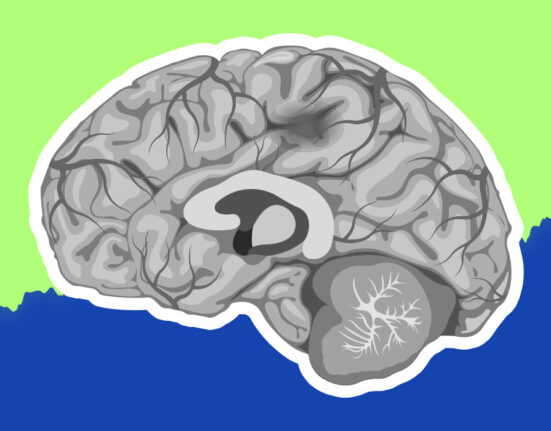
Until recently, the primary interest in serotonin was focused on its impact on mood/emotion regulation. Current research indicates that the serotonergic systems also play an important role in the auditory pathways (Hurley & Hall, 2011). Researchers have discovered that there is a vast projection of serotonergic neurons from the brainstem through the cochlear nucleus, inferior colliculus and auditory cortex, thereby providing serotonergic pathways for the brain to modulate processing, filtering and interpreting sounds.
Serotonin does more than just excite or inhibit neurons; it also modulates activity in a highly context-dependent manner. Depending on the subtype of serotonin receptor activated, auditory neurons may either increase their response to incoming sounds or decrease their response (Tang & Trussell 2017). This variability means that when SSRIs increase the level of serotonin, they can produce changes in Pereira’s auditory processing that are unpredictable and may lead to abnormal sound perception. Main Roles of Serotonin in Hearing:
- Modulation of auditory information processing
- Effect on sensory filtering system
- Modulation of neural excitability in response to acoustic stimulation
- Role in attentive and perceptual processing of sound
- Interaction with other neurochemicals involved in auditory processing (Hurley & Hall, 2011)
Read More: Role of Serotonin in the Human Mind
How SSRIs May Intensify Tinnitus Symptoms
Selective serotonin reuptake inhibitors are prescribed to increase the levels of serotonin within the neurosensory systems via inhibiting reuptake of serotonin by the presynaptic neuron. Blockage of the presynaptic serotonin transporter seems to be a viable treatment for both depressive and anxiety-related conditions; serotonin pathways in the entire brain, including ones directly related to the auditory system, will be affected (Stahl, 2013). For an already vulnerable ear, higher levels of serotonin within the brain will most probably increase the neural process of perceiving tinnitus.
Research has shown that too much stimulation of the serotonin system can upset the balance of excitation and inhibition in the auditory circuits (Tang and Trussell, 2017). Inhibitory processes typically inhibit the transmission of irrelevant neural signals, but changes to serotonin signalling may decrease the amount of inhibition provided by these processes and thus allow for spontaneous activity in the brain to be consciously understood as sound, causing tinnitus to become louder and/or more persistent even after a patient’s mood/emotional function improves. Putative mechanisms for SSRI-induced tinnitus:
- Increased spontaneous activity of auditory neurons
- Decreased inhibitory tone within auditory pathways
- Augmented neural synchrony of the tinnitus state
- Altered mechanisms of sensory gating
- Increased sensitivity to the sound heard internally (Ziai et al., 2017)
Read More: 9 Foods that Boost Serotonin
The Role of Serotonin Receptors and Neural Plasticity
What adds to the paradox is that there are many kinds of serotonin receptors found within the human brain, and each kind of serotonin receptor causes a different physiological response (Nichols and Nichols, 2008). According to studies, different types of auditory receptors may trigger the release of different neurotransmitters, but can also increase the amount of spontaneous firing from neurons, which is what constitutes tinnitus (Tang & Trussell, 2017).
This receptor-specific effect may be the reason why some patients see a deterioration in their symptoms, whereas other patients report either no change or even improve with their symptoms; genetic variance in the expression of receptors may play a role in the individual differences between the two groups. SSRI medications can also impact neural plasticity, the adjustment of the brain’s ability to change the way it interacts with its environment and adapt over time; while the development of neural plasticity is generally beneficial for healing from depression, maladaptive plastic changes within auditory systems can also strengthen the circuits involved in tinnitus (Eggermont & Roberts, 2015). Individual variation due to:
- Genetic variability in serotonin receptors
- Previous hearing damage
- Degree of pretreatment tinnitus
- Length of antidepressant treatment
- Individual variability in neural plasticity (Eggermont & Roberts, 2015)
Read More: The Role of Neuroplasticity in Personal Growth and Success
Clinical Implications for Patients and Practitioners
The serotonin and tinnitus paradox also poses significant challenges to health care providers. Depression, anxiety, and tinnitus occur together, creating a complicated treatment situation (Langguth et al., 2013). If a person has not treated their depression, symptoms related to tinnitus will likely become more severe. However, there may be some persons with tinnitus who will develop more severe symptoms when they begin to take an antidepressant.
Clinicians need to use a personalised treatment plan for each patient who has both conditions. Close monitoring during the beginning stages of SSRI therapy with patients who have been diagnosed with chronic tinnitus would be necessary. If the patient’s symptoms worsen significantly, clinicians can use alternative treatments such as non-SSRI antidepressants, psychotherapy, cognitive behaviour therapy (CBT), or specific tinnitus-related interventions (Fuller et al., 2020).
People taking antidepressant medications should know that everyone’s response to these medications will vary. Some people’s tinnitus will actually get worse with treatment, although others will experience symptom relief due to reductions in anxiety, stress, and emotional reactivity. The goal should not be to completely avoid using any selective serotonin reuptake inhibitors (SSRIs), but rather to help the patient understand the potential risks and to tailor treatment based on those risks (Langguth et al., 2013).
Read More: When Nothing Feels Good: Understanding Anhedonia in Mood Disorders
Conclusion
The paradox relating to serotonin and tinnitus illustrates the complexity of the nervous system in humans. People commonly view serotonin as the “feel-good” chemical. However, it has many more functions than just affecting mood. Serotonin also influences some sensory processing and auditory systems. New studies show that SSRIs increase serotonin levels when people use them. This can affect how the auditory circuits function in different patients. In turn, this may result in worsening tinnitus symptoms (Tang & Trussell, 2017).
The idea behind these findings disproves that a simple model can explain how neurotransmitters function within an organism, and shows that we must consider all of the various systems within the brain as a single network, rather than divided along certain lines/paths/discounting some connections/understanding the full scope of a system’s operation.
Researchers have even more knowledge about the ways in which serotonergic signalling can influence auditory processing (the auditory cortex) and neural plasticity (how neurons form new connections) as our understanding of neuroscience advances. More studies will reveal if certain receptor targets or genetic markers predict who will develop SSRI-induced tinnitus. This could lead to more individually tailored treatment options.
In the meantime, knowledge of the serotonin-tinnitus paradox will be a critical component for physicians and patients. It will help them weigh their options in finding an effective mental health treatment while providing optimal auditory well-being (Eggermont & Roberts, 2015; Fuller et al., 2020).
References +
- Baguley, D., McFerran, D., & Hall, D. (2013). Tinnitus. The Lancet, 382(9904), 1600–1607. https://doi.org/10.1016/S0140-6736(13)60142-7
- Eggermont, J. J., & Roberts, L. E. (2015). Tinnitus: Animal models and findings in humans. Cell and Tissue Research, 361(1), 311–336. https://doi.org/10.1007/s00441-014-1992-8
- Fuller, T. E., Haider, H. F., Kikidis, D., Lapira, A., Mazurek, B., Norena, A., Rabau, S., Tavora-Vieira, D., & Cima, R. F. F. (2020). Different teams, same conclusions? A systematic review of existing clinical guidelines for the assessment and treatment of tinnitus in adults. Frontiers in Psychology, 11, 25. https://doi.org/10.3389/fpsyg.2020.00025
- Hurley, L. M., & Hall, I. C. (2011). Context-dependent modulation of auditory processing by serotonin. Hearing Research, 279(1–2), 74–84. https://doi.org/10.1016/j.heares.2010.12.018
- Langguth, B., Kreuzer, P. M., Kleinjung, T., & De Ridder, D. (2013). Tinnitus: Causes and clinical management. The Lancet Neurology, 12(9), 920–930. https://doi.org/10.1016/S1474-4422(13)70160-1
- Nichols, D. E., & Nichols, C. D. (2008). Serotonin receptors. Chemical Reviews, 108(5), 1614–1641. https://doi.org/10.1021/cr078224o
- Prasher, D., Ceranic, B., Sulkowski, W., Guzek, W., Olszewski, J., Kostrzewski, M., & Misiak, P. (2020). Tinnitus and pharmacological interventions: A review of clinical evidence. International Journal of Audiology, 59(8), 561–570. https://doi.org/10.1080/14992027.2020.1732965
- Robinson, S. K. (2007). Antidepressant therapy in tinnitus. Hearing Journal, 60(12), 20–25.
- Stahl, S. M. (2013). Stahl’s essential psychopharmacology: Neuroscientific basis and practical applications (4th ed.). Cambridge University Press.
- Tang, Z.-Q., & Trussell, L. O. (2017). Serotonergic modulation of sensory representation in central auditory circuits. Frontiers in Neural Circuits, 11, 73. https://doi.org/10.3389/fncir.2017.00073
- Ziai, K., Moshtaghi, O., Mahboubi, H., Djalilian, H. R., & Ghavami, Y. (2017). Tinnitus patients suffering from anxiety and depression: A review. International Tinnitus Journal, 21(1), 68–73. https://doi.org/10.5935/0946-5448.20170013